
Matcha may look like a simple green drink, but there is more behind that bright color than most people realize.
Many tea lovers choose matcha as an alternative to coffee, yet still think how much caffeine they are actually getting from each cup.
The matcha tea caffeine content can change depending on factors like serving size, preparation style, and the amount of powder used.
I enjoy trying different beverages and understanding what makes each one unique, which helps me break down these details clearly.
In this blog, you will learn how matcha compares with coffee and other teas while finding what affects its caffeine levels.
How Much Caffeine is in Matcha Tea?
Matcha tea usually contains around 36–90 mg of caffeine per serving, depending on how much powder you use and the type of matcha.
A standard serving made with 1 teaspoon (about 2 grams) of matcha powder generally falls within this range.
Since matcha uses the entire ground tea leaf instead of only steeping the leaves, it delivers more caffeine than regular green tea.
But the exact amount can vary between brands, preparation styles, and café drinks. A stronger matcha latte made with extra powder may contain caffeine levels closer to a cup of coffee.
What is Matcha, and Why Does It Hit Differently?
Matcha is a finely ground green tea powder made from specially grown Camellia sinensis leaves. Before harvesting, the tea plants are shaded for several weeks, which helps increase their chlorophyll and certain natural compounds.
Unlike regular green tea, where leaves are steeped and removed, matcha powder is whisked into water, meaning you consume the entire leaf.
This is why matcha delivers more caffeine than most brewed teas. The caffeine naturally present in the tea leaves remains in the powder, giving matcha its energizing effect.
The amount you get depends mainly on the serving size, powder quality, and preparation method.
Matcha Caffeine Content by Serving Size
Matcha’s caffeine content varies widely depending on quality grade, serving size, and how you prepare it.
A typical serving still falls short of a cup of coffee, but matcha’s pairing with L-theanine is what gives it a reputation for steady energy rather than a jolt.
| Category | Details | Caffeine Content | Notes |
|---|---|---|---|
| Ceremonial Grade | 1 tsp (2g) serving | 36-60 mg | Highest quality, younger leaves, smooth flavor |
| Premium Grade | 1 tsp (2g) serving | 50-76 mg | Mid-range quality, balanced profile |
| Culinary Grade | 1 tsp (2g) serving | 60-90 mg | Older leaves, stronger and more bitter, are common in lattes |
| Café Latte (typical) | 1-2 tsp (2-4g) with milk | 70-140 mg | Often made with culinary-grade powder |
| Brewed Coffee (comparison) | 8 oz cup | 80-100 mg | FDA reference figure can run higher in strong brews |
| Steeped Green Tea (comparison) | 8 oz cup | 25-50 mg | Matcha runs roughly 2-3x higher |
If you want the fuller breakdown, including calories and the vitamin and mineral profile, I’ve laid all of that out separately in my guide to matcha’s nutrition facts.
What Factors Affect Matcha Caffeine Content?
The caffeine level in matcha is not the same in every cup. I have noticed that even two matcha brands can taste similar but deliver different energy levels. The difference usually comes down to how the tea is grown, processed, measured, and prepared.
- Amount of Matcha Powder Used
- Growing Conditions (shade grown tea plants develop different caffeine levels based on sunlight exposure, soil quality, and cultivation methods)
- Harvest Timing (younger tea leaves often contain different caffeine compared with mature leaves)
- Matcha Grade
- Preparation Style (Café lattes often use extra matcha powder, making them stronger than a traditional homemade serving)
None of these factors work alone. A ceremonial-grade matcha made with a heavy scoop can still out-caffeinate a culinary-grade matcha made light.
Matcha Caffeine vs Coffee: Which Has More Caffeine?
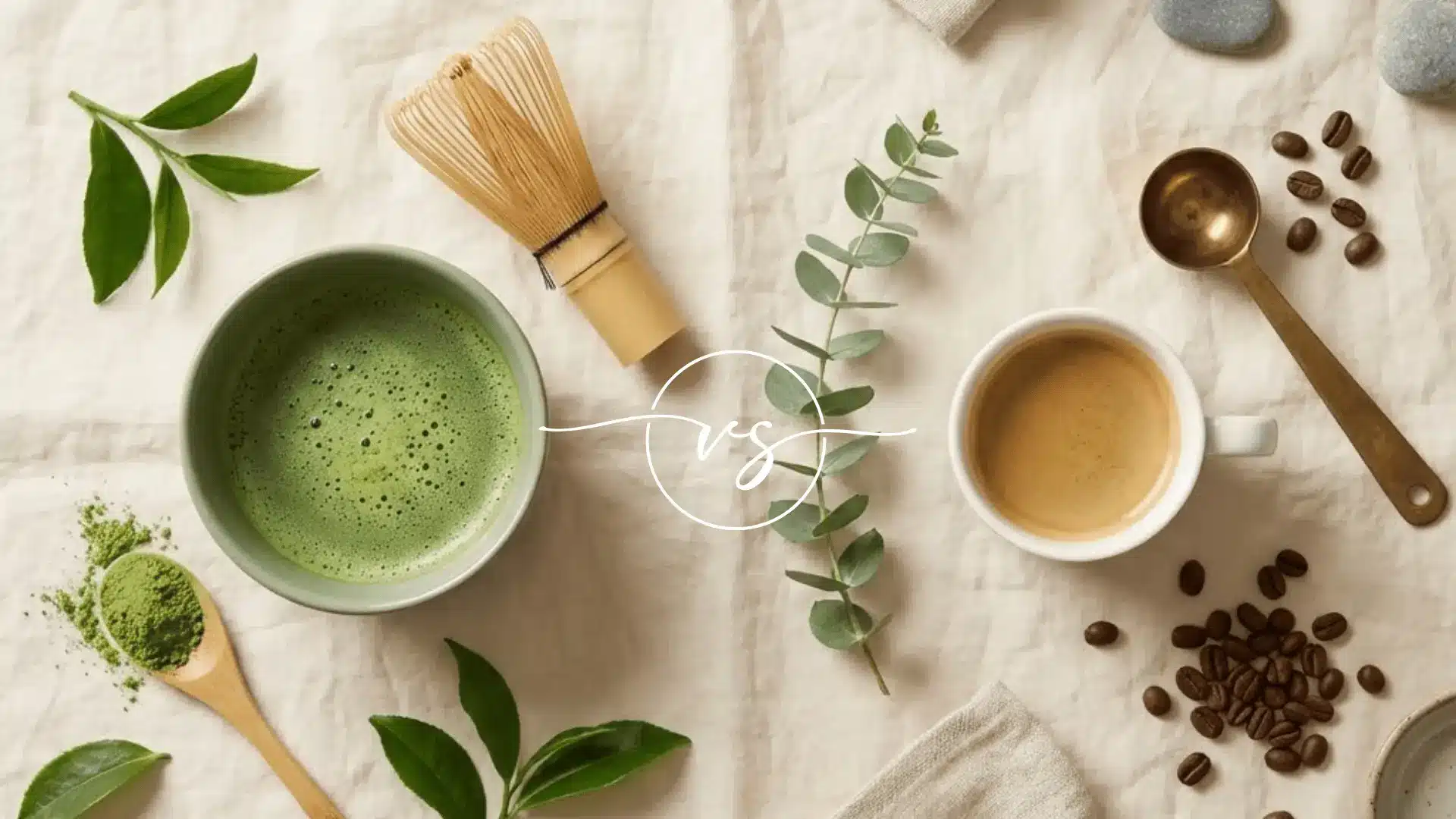
When comparing matcha caffeine vs coffee, coffee usually comes out higher in a standard serving.
An 8-ounce cup of brewed coffee typically contains around 80–100 mg of caffeine, while a regular matcha serving made with 2–4 grams of powder generally provides about 40–80 mg.
In my experience reviewing different matcha preparations, the biggest difference appears with café-style drinks.
A matcha latte made with extra powder can reach similar caffeine levels as coffee. I usually recommend comparing the actual serving size rather than the drink name alone because a strong matcha can easily compete with a regular cup of coffee.
Matcha vs Green Tea and Black Tea
| Drink | Common Serving | Approx Caffeine |
| Matcha tea | 1 tsp powder | 36-90 mg |
| Strong matcha latte | 2 tsp powder | 72-180 mg |
| Brewed coffee | 8 oz | 80-100 mg |
| Espresso | 1 shot | roughly 60-75 mg |
| Green tea | 8 oz | 25-50 mg |
| Black tea | 8 oz | 30-50 mg |
If you’re curious where a milder tea fits into that same daily total, I’ve covered oolong’s caffeine range in a separate guide.
How to Measure and Control Caffeine in Your Cup
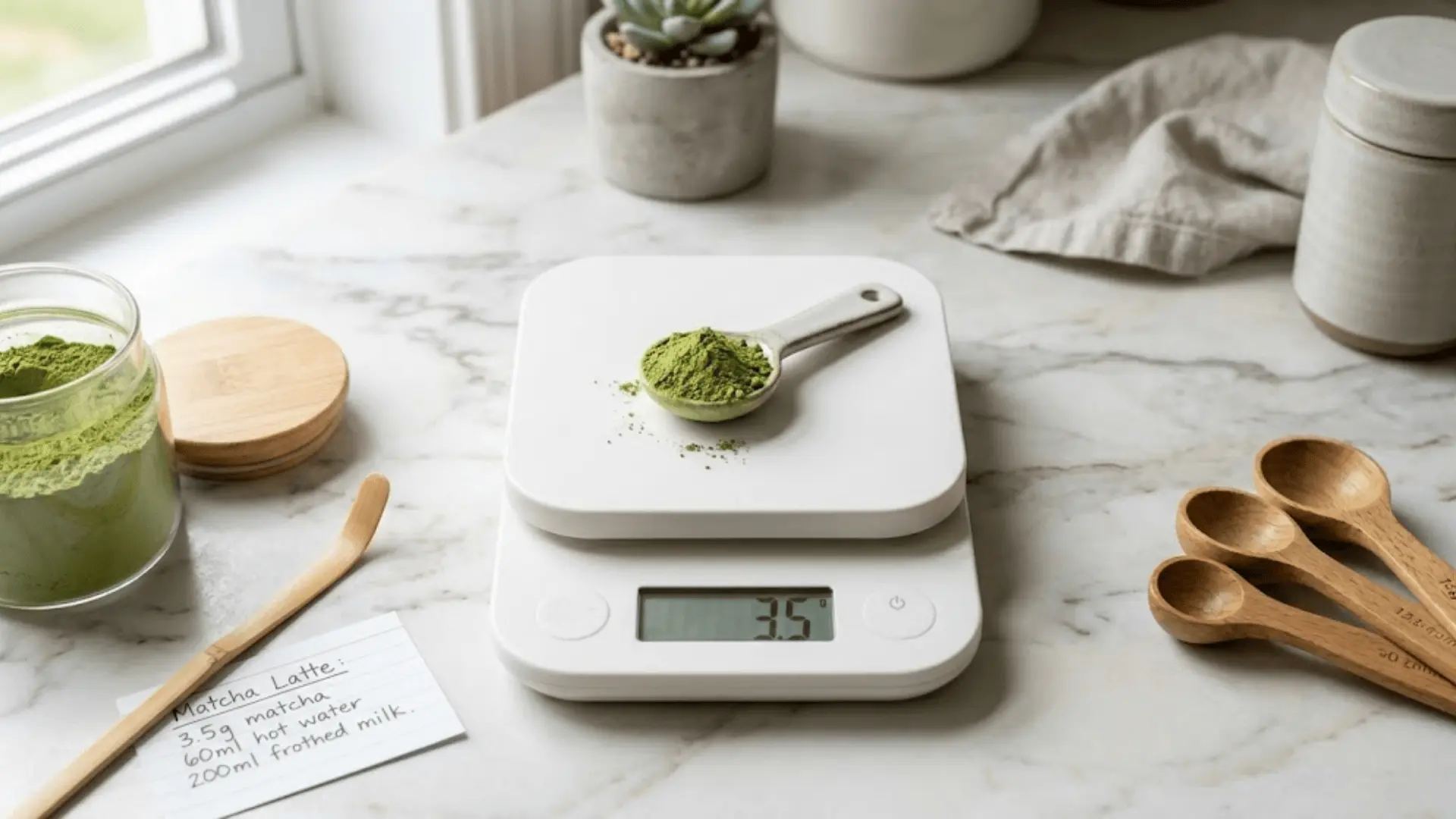
Controlling matcha’s caffeine is easy because the amount of powder is the main lever. Unlike steeped tea, where brewing time changes the strength, matcha delivers its caffeine the moment you drink it, since you’re consuming the whole leaf.
- Step 1: A standard teaspoon holds about 2g of matcha. A kitchen scale gives you a more consistent read than eyeballing a scoop.
- Step 2: Start with 1 tsp (2g) for traditional tea, which lands around 36-90 mg of caffeine depending on grade.
- Step 3: Whisking longer or using hotter water changes texture more than it changes caffeine extraction. Powder quantity is what really moves the number.
- Step 4: Roughly speaking, ½ tsp (1g) gets you 18-45 mg, 2 tsp (4g) gets you 72-180 mg, and 1 tbsp (6g) gets you 108-270 mg.
- Step 5: Pay attention to how each amount affects your energy, and adjust accordingly. Most people I’ve talked to settle around 1-2 tsp.
If you’re still deciding which powder to start with, I’ve broken down how to pick a quality matcha powder in more detail elsewhere.
Matcha Preparations and Their Caffeine Content
Straight matcha tea and café-style lattes can land in very different places depending on how much powder goes in.
Traditional preparations typically use 1-2 g with water, while café lattes often use 2-4 g so the matcha flavor holds up against the milk.
| Preparation | Powder Amount | Caffeine Range | Basic Recipe |
|---|---|---|---|
| Light Usucha | ½-1 tsp (1-2g) | 18-90 mg | 1 tsp powder + 2 oz hot water, whisked |
| Standard Usucha | 1-2 tsp (2-4g) | 36-180 mg | 2 tsp powder + 3 oz hot water, whisked |
| Thick Koicha | 2-3 tsp (4-6g) | 72-270 mg | 3 tsp powder + 1.5 oz hot water, kneaded |
| Iced Matcha Latte | 1-2 tsp (2-4g) | 36-180 mg | 2 tsp powder + 8 oz milk over ice |
| Hot Matcha Latte | 2 tsp (4g) | 72-180 mg | 2 tsp powder + 2 oz water + 8 oz steamed milk |
| ⚡ Caffeine Note: Café lattes and “double matcha” drinks often use more powder than a home cup, so the caffeine in a bought matcha can run noticeably higher than the per-teaspoon numbers above suggest. |
Matcha’s Other Benefits Beyond Caffeine
Beyond caffeine, matcha provides plant compounds like catechins and L-theanine that contribute to its unique nutritional profile and potential wellness benefits
- Antioxidant support
- Metabolic support
- Cardiovascular health
- Blood pressure
- Cognitive support
How Much Matcha is Too Much?
For most healthy adults, drinking 1–2 servings of matcha daily is generally considered a moderate amount.
The FDA suggests that up to 400 mg of caffeine per day is safe for most adults, but individual sensitivity can differ.
I have found that some people feel comfortable with multiple cups, while others notice caffeine effects after one strong serving.
A regular matcha made with about 1 teaspoon of powder usually fits easily within daily limits.But café drinks with extra scoops can add much more caffeine than expected, so it helps to count matcha along with coffee, tea, and other caffeinated foods.
Signs Your Matcha Has Too Much Caffeine
A matcha serving that feels too strong can show up through noticeable changes in how you feel.
Common signs include jitters, restlessness, headaches, nausea, stomach discomfort, a faster heartbeat, anxiety, or difficulty falling asleep.
I suggest paying attention to your body instead of focusing only on the caffeine number because tolerance differs from person to person.
If you notice these effects after drinking matcha, try reducing the amount of powder, choosing a smaller serving, or having it earlier in the day.
Switching to regular green tea can also be a simple option when you want a lighter caffeine boost.
Conclusion
Matcha is more than just a trendy green drink. It has become a favorite for many people because it offers a different kind of caffeine experience compared with coffee and other teas.
The matcha tea caffeine content can change depending on how much powder you use and how you prepare your drink.
A lighter cup may work well for a calm afternoon boost, while a stronger serving may feel closer to coffee. The best choice comes down to what suits your routine and caffeine tolerance.
Have you tried matcha before, and how does it compare with your usual drink? Share your thoughts in the comments below.
Frequently Asked Questions
Is Decaf Matcha Available?
Decaf matcha exists but is far less common than regular matcha, and it may still carry small traces of caffeine depending on how it’s processed.
Does Matcha Caffeine Change if It is Baked?
Baking doesn’t fully remove caffeine from matcha. Heat can affect flavor and color, but caffeine is fairly stable through normal cooking and baking, so a baked matcha recipe still counts toward your daily intake.
Can Matcha Cause Dehydration?
A normal serving of matcha is unlikely to cause dehydration in most healthy adults; it still adds fluid to your day.
Is Matcha Safe to Drink While Pregnant?
Matcha can be enjoyed during pregnancy, but it counts toward your daily caffeine intake. ACOG recommends staying under 200 mg caffeine daily, so check with your healthcare provider.