

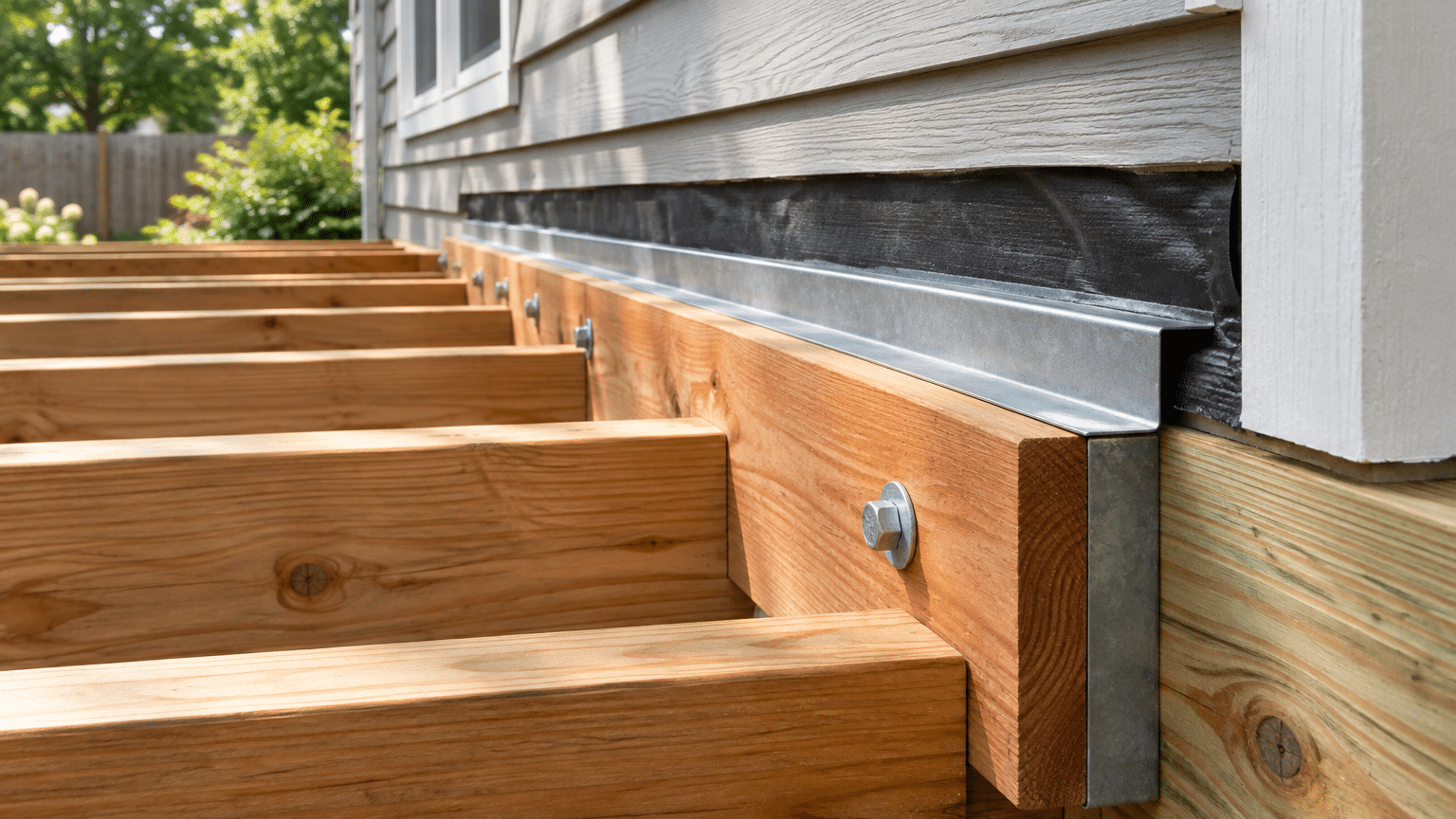
As you start building a new outdoor deck for your home, there is no doubt that most of the focus will go into the elements that can be seen: the beautiful colored decking material, fancy railings, lights, or built-in benches. But the fact is that the actual structural strength of any deck attached to your house completely depends on one element that is not visible to you at all. The ledger board, the wooden board that connects the deck to the rim joist of your house, is the part where half the load of your deck gets transferred. Without proper care, this element is susceptible to massive water damage and wood rot. Working with an experienced custom deck contractor ensures that proper flashing is installed at this crucial junction, protecting your home and deck from hidden, catastrophic rot.
The Hidden Vulnerability of the Ledger Board
The ledger board fits snugly against the side of your house to form a very tight seam, which allows the easy accumulation of rainwater, melted snow, and moisture from the atmosphere. Due to the fact that there is very limited sunlight and poor air circulation at this location, the moisture gets trapped there and does not get a chance to evaporate. In due course of time, the moisture seeps into the wooden ledger board, house siding, and even structural framing behind the ledger board. What makes ledger rot such a hazardous condition is the fact that it is very stealthy in nature.
How Flashing Acts as the Ultimate Waterproof Shield
Flashing is a manufactured process of waterproofing whereby water is redirected away from the ledger board and the house framing. Contemporary flashing systems comprise the installation of rigid metal or thick vinyl Z-flashing combined with a self-adhesive waterproof membrane. This membrane forms a seal right on top of the home’s sheathing, thus sealing up any spaces that may have been created by lag screws or ledger bolts. The Z-flashing is placed on top of the ledger board, fitting under the house weather barrier that sits on top of it.
Avoiding Common Installation Flaws
Good materials may even result in failure due to improper flashing. The reasons why flashing may fail could be using metals that do not fit together, thus causing corrosion due to treated lumber, poor overlapping of flashing joints, or using caulk as the only permanent solution. Caulk ages because of exposure to hot and cold conditions and cracks, allowing water to penetrate inside. A deck building company knows how to combine treated wood fasteners and flashing materials, thus making sure that all the layers of flashing are properly overlapped in accordance with building code standards.
Preventing Costly Structural Repairs and Safety Hazards
Neglecting the flashing of the ledger board results in problems that go far beyond the replacement of some rotten boards. The structural decay of the connection between the ledger and the structure is the major factor responsible for the collapse of the decks in North America. If the ledger board rots, it means that the bolts become loose from the rim joist of the house and, consequently, the deck gets disconnected due to the additional pressure. Moreover, the water that goes through the non-flashed ledger can penetrate inside the walls of your house and result in interior mold and damage to the insulation and the sub-flooring.
Conclusion
A beautiful deck should be a safe, long-lasting extension of your home where you can relax without worrying about hidden decay. While stylish finishes catch the eye, it is the hidden craftsmanship, specifically faultless ledger board flashing, that keeps your structure safe, dry, and solid over the years. By partnering with a qualified custom deck contractor, you ensure that your deck is built to code with superior moisture management, protecting your financial investment and providing total peace of mind every time you step outside.