
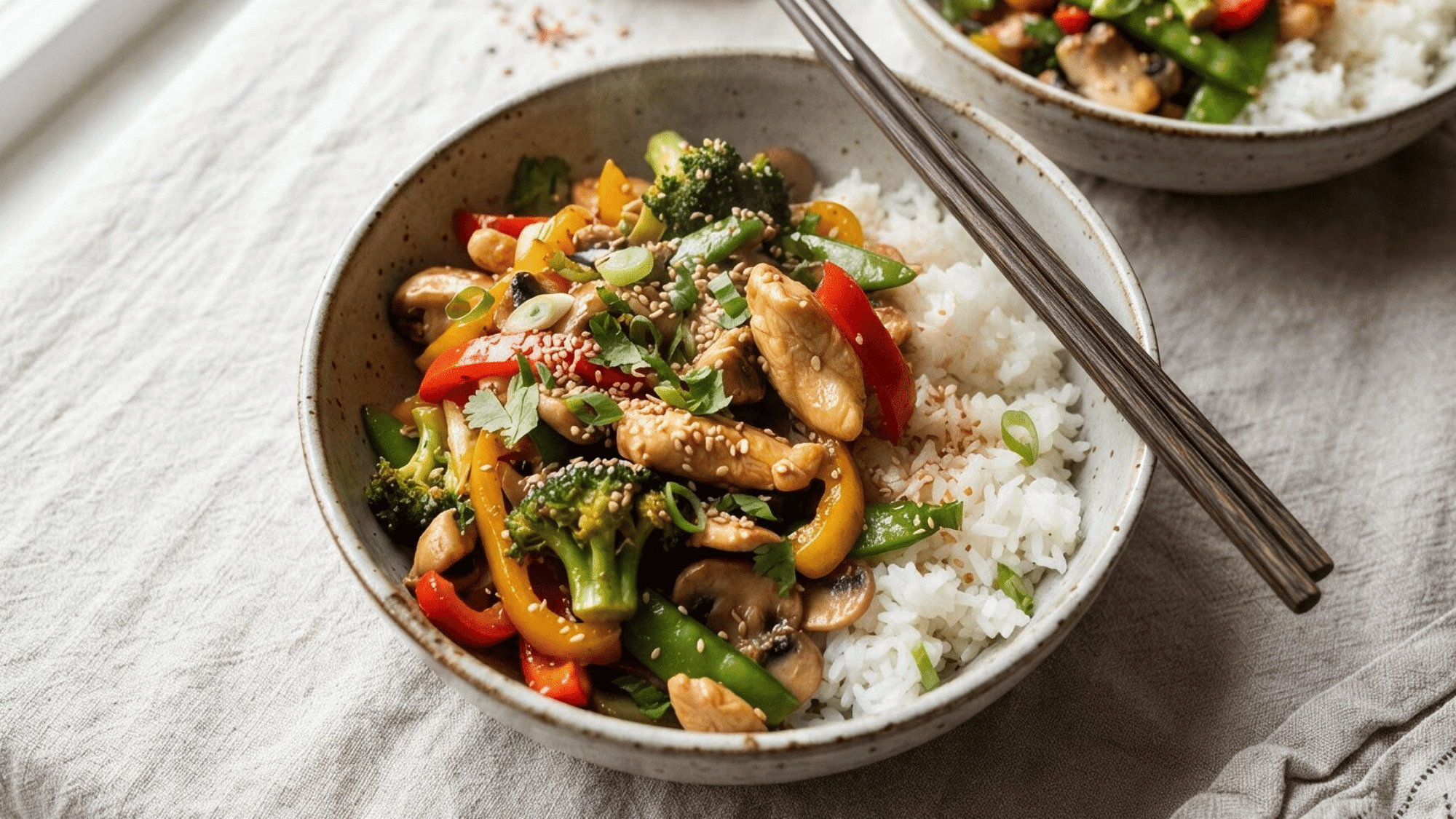
Some dinners earn a permanent spot in my weekly rotation simply because they don’t ask much from me. A hot pan, some chicken, whatever vegetables are waiting in the fridge, and dinner is already looking promising.
That’s exactly what I like about a good chicken stir-fry recipe.
It’s colorful, packed with different textures, and easy to adjust depending on what you have at home.
The real magic happens when the chicken gets beautifully browned, the vegetables stay crisp, and that savory sauce coats every bite.
Best of all, it’s the kind of meal that makes a busy evening feel a little more manageable.
Jump To Recipe
Ingredients for Chicken Stir Fry
The measurements below make 6 servings.
- 3 skinless, boneless chicken breasts, thinly sliced
- 2 tablespoons sesame oil, divided
- 1 head broccoli, cut into small florets
- 1 medium onion, cut into large chunks
- 1 cup carrots, thinly sliced
- 1 green bell pepper, cut into matchsticks
- 1 (8-ounce) can water chestnuts, drained
- 1 tablespoon fresh ginger, minced
- 1 tablespoon garlic, minced
- ⅔ cup low-sodium soy sauce, or to taste
- ¼ cup brown sugar
- 1 tablespoon cornstarch
- ¼ teaspoon red chili flakes
- 2 tablespoons water, if needed to adjust consistency
|
Serve: 6 | Prep: 15 mins | Cook Time: 15 mins Total Time: 30 mins |
|---|
How to Make Chicken Stir-Fry?
Step 1: Prepare the Chicken
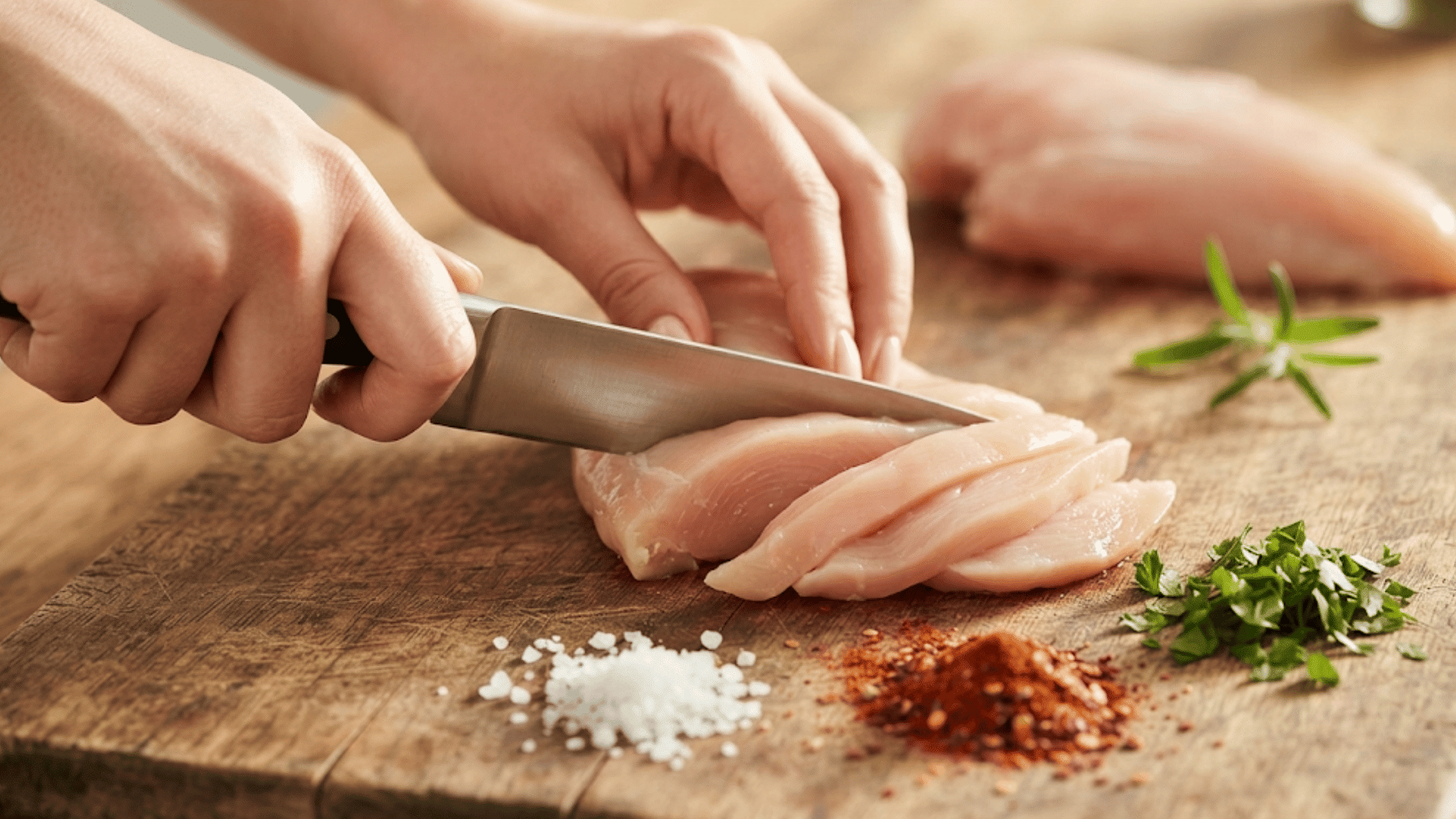
Thinly slice the chicken breasts into bite-sized pieces, using the same basic motion used to cut chicken breast into tenders, so they cook quickly and evenly. Pat the chicken dry with paper towels, then place it in a bowl.
Add 2 tablespoons of the soy sauce (reserve the rest for the sauce in Step 3), along with the minced ginger, garlic, and red pepper flakes. Toss well to coat and let it rest for at least 15 minutes.
Step 2: Prepare the Vegetables
Wash and prepare all the vegetables before heating your wok or skillet. Cut the broccoli into small florets, the onion into large chunks, the carrots into thin slices, and the bell pepper into matchsticks.
Drain the water chestnuts thoroughly. Keeping everything ready allows you to add each ingredient quickly without leaving the pan unattended.
Step 3: Make the Stir-Fry Sauce
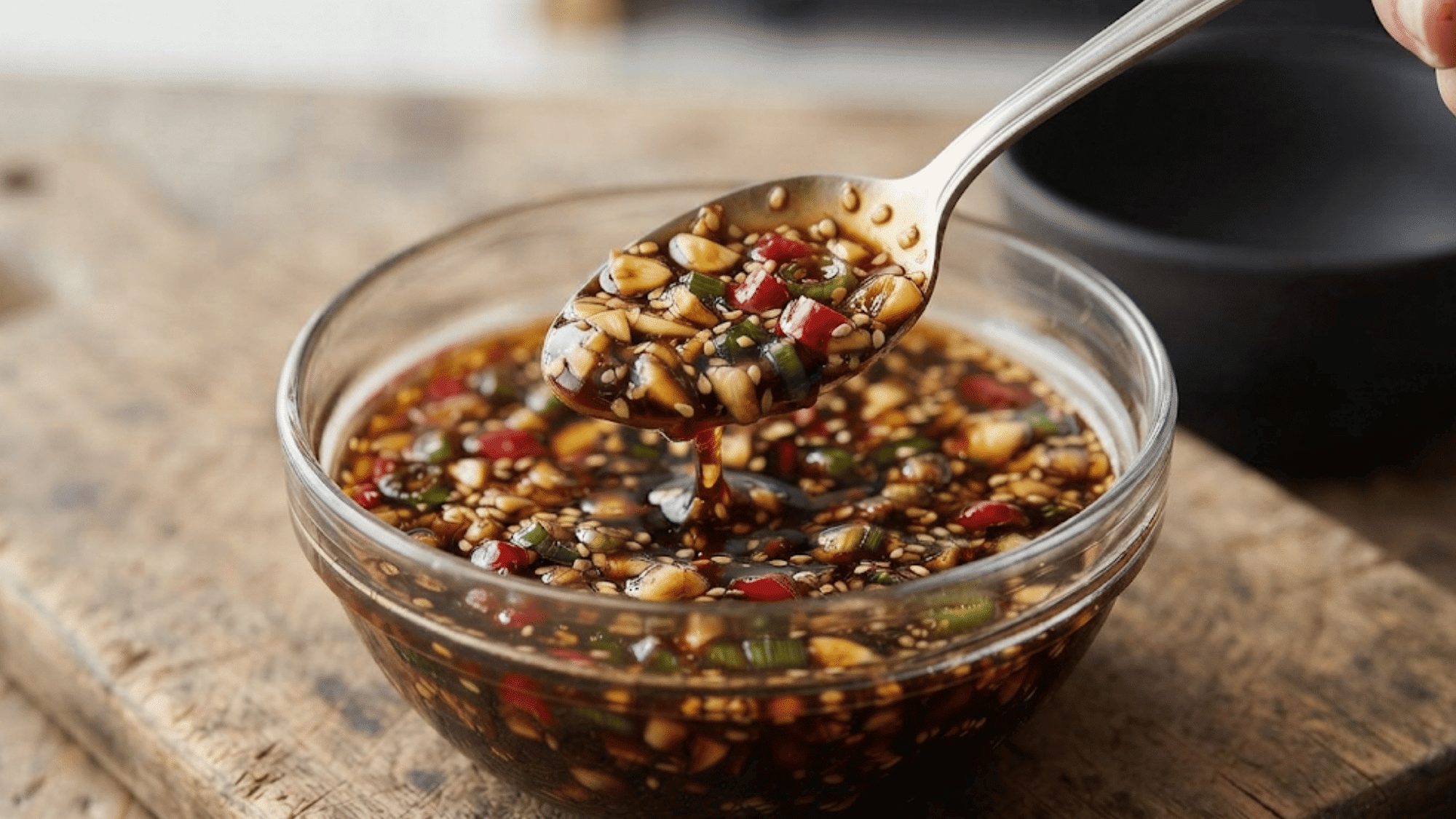
In a medium bowl, whisk together the remaining low-sodium soy sauce, brown sugar, cornstarch, and a little water until smooth.
Stir until the cornstarch is fully dissolved and no lumps remain. The cornstarch helps the sauce thicken as it cooks, while the brown sugar balances the salty flavor of the soy sauce.
Step 4: Cook the Vegetables
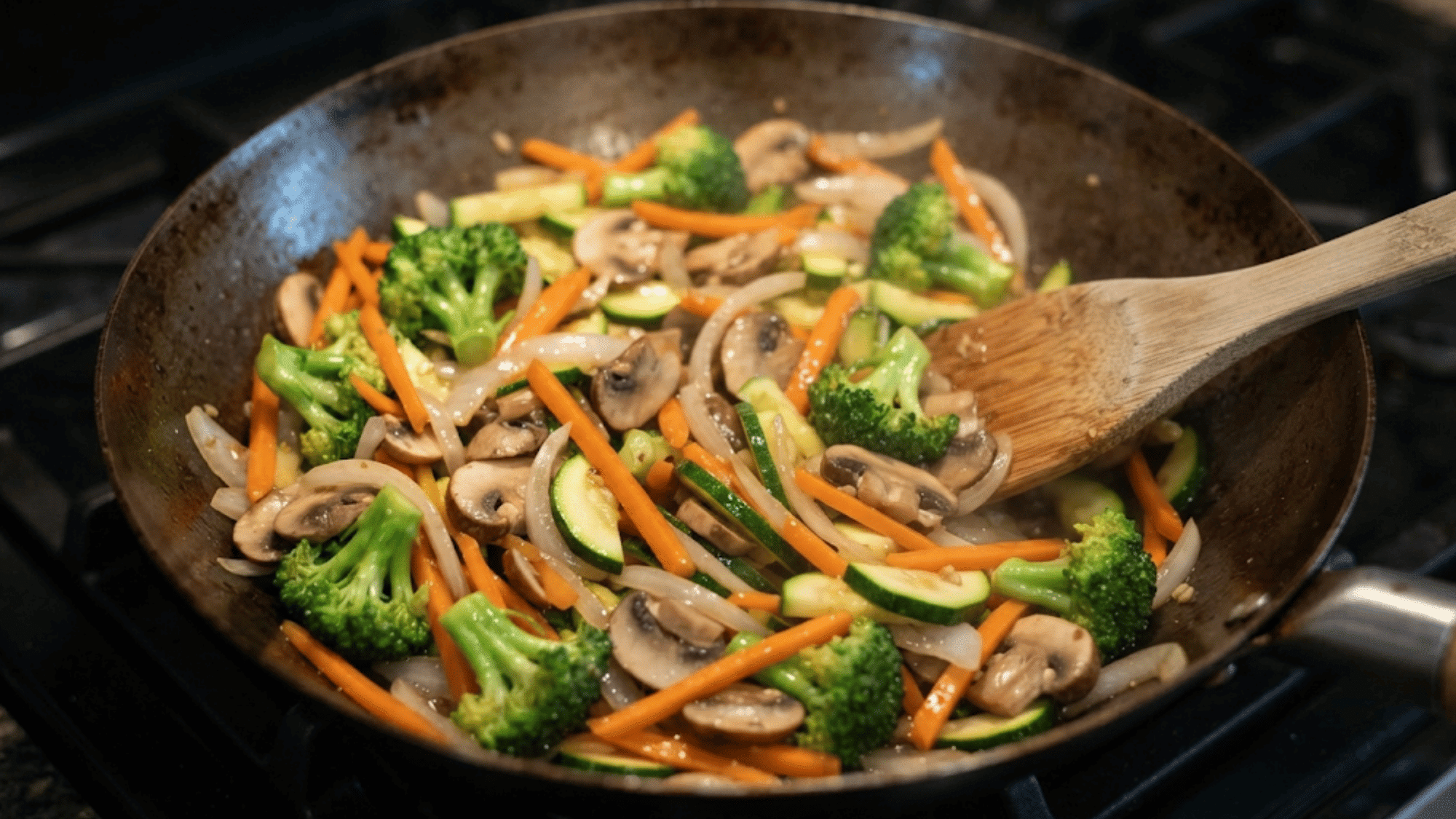
Heat 1 tablespoon of sesame oil in a large wok or skillet over medium-high heat. Add the broccoli, onion, carrots, water chestnuts, and bell pepper.
Stir frequently and cook for about 5 minutes, or until the vegetables are just tender but still slightly crisp. Transfer them to a clean dish and set aside.
Step 5: Cook the Chicken
Heat the remaining 1 tablespoon of sesame oil in the same wok or skillet. Add the marinated chicken in a single layer, working in batches if necessary to prevent overcrowding.
Cook for about 2 minutes per side, stirring occasionally, until the chicken is lightly browned and nearly cooked through. Keep the heat medium-high.
Step 6: Combine the Chicken, Vegetables, and Sauce
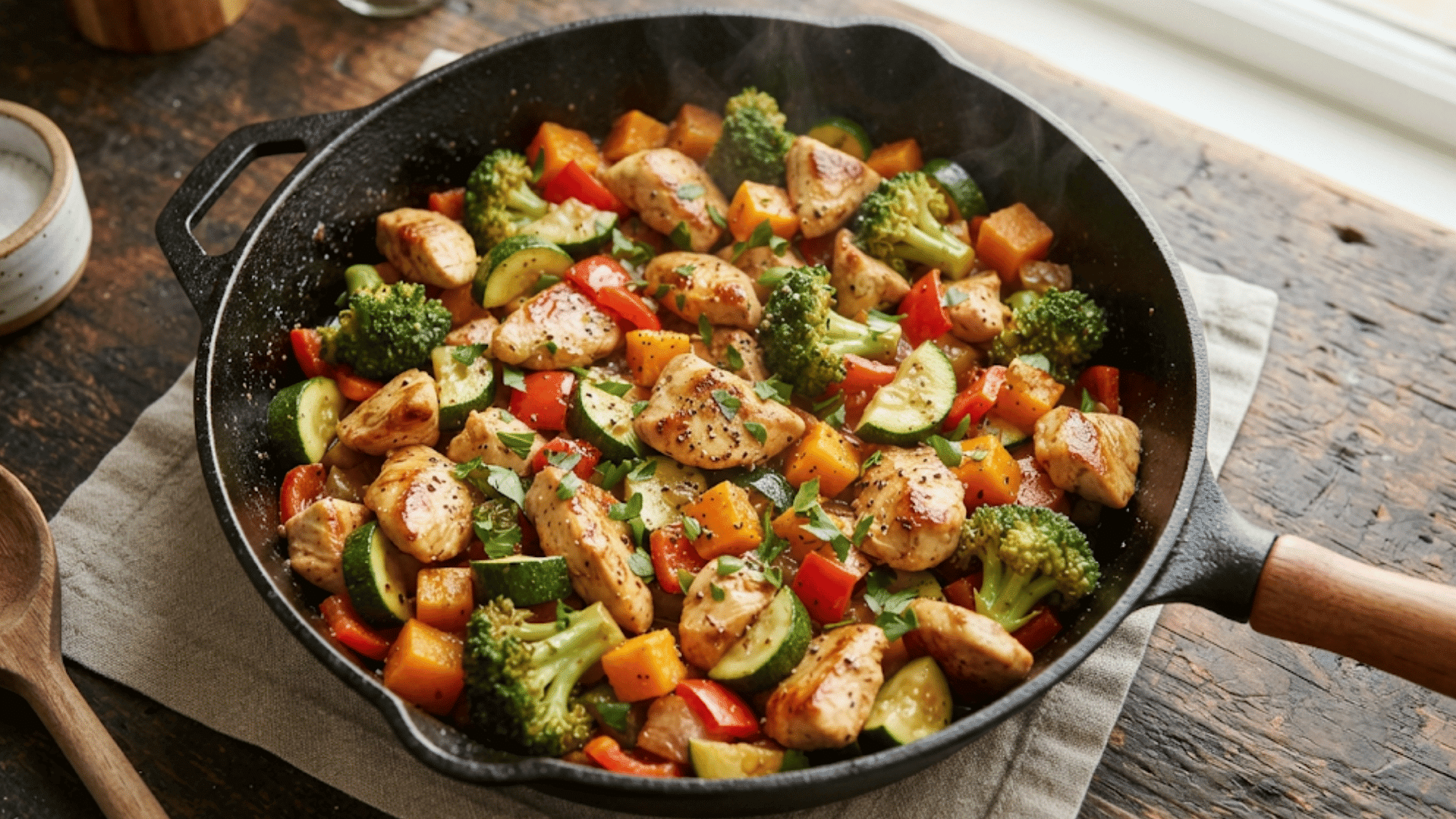
Return the cooked vegetables to the wok with the chicken. Give the prepared sauce another quick stir, then pour it over everything.
Toss continuously as the sauce comes to a gentle boil and thickens. Continue cooking for about 5 to 7 minutes, until the chicken is completely cooked and the vegetables are tender-crisp.
Step 7: Serve the Chicken Stir-Fry
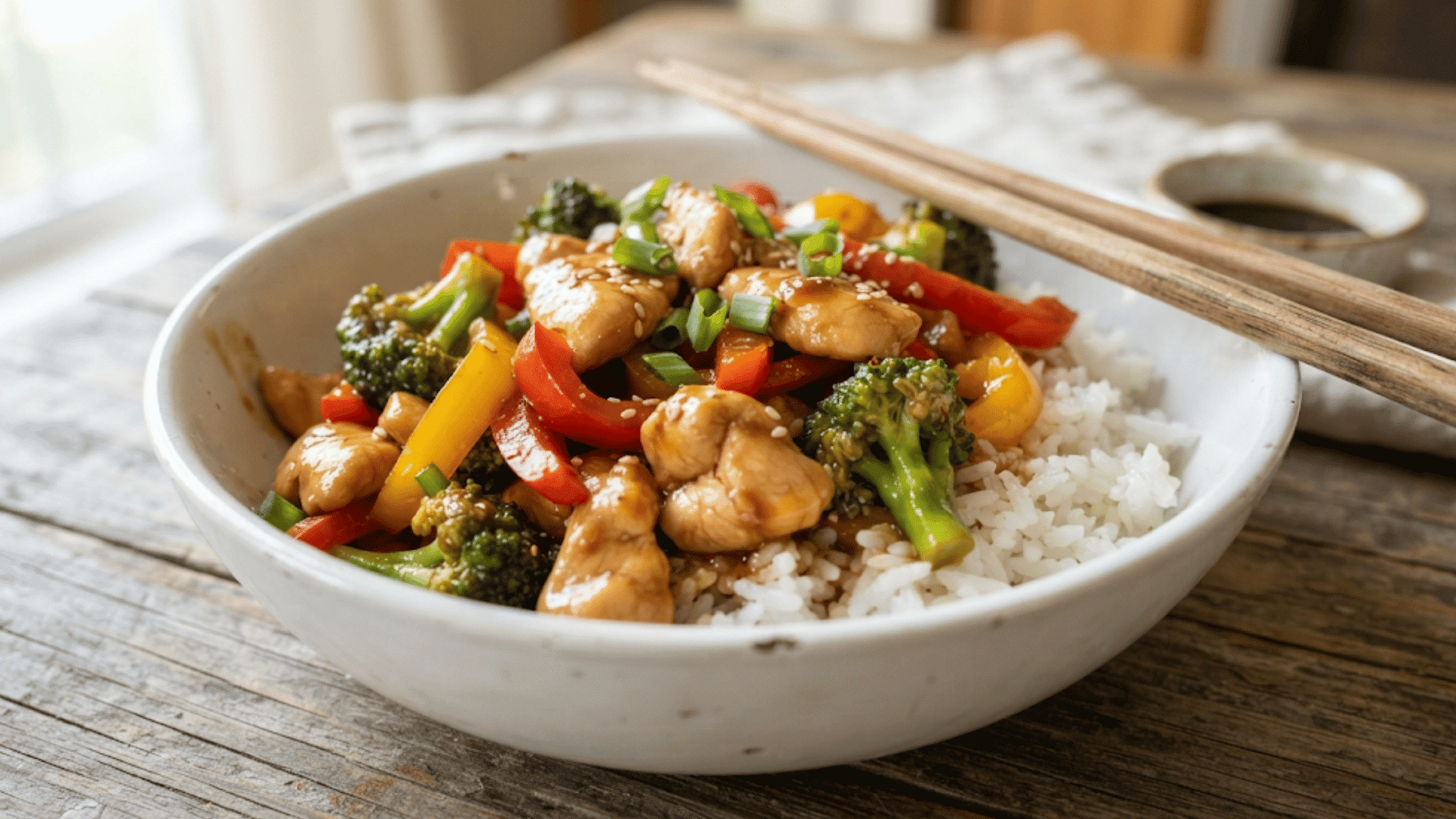
Remove the chicken stir-fry from the heat once the sauce has thickened and everything is evenly coated. Spoon the hot mixture over cooked white rice, or serve it with your preferred noodles.
Add a sprinkle of red pepper flakes or sliced green onions if you want extra flavor before serving.
Tips for The Best Chicken Stir-Fry
A few simple techniques can make your stir-fry more flavorful, balanced, and enjoyable. Use these extra tips to improve the finished dish without adding complicated steps.
- Choose the right pan: Use a wide wok or skillet with enough surface area to let the ingredients cook without steaming.
- Add toppings after cooking: Finish with sliced green onions, sesame seeds, or red pepper flakes for extra flavor and texture.
- Check chicken with a thermometer: The USDA Food Safety and Inspection Service (FSIS) recommends cooking poultry to 165°F, measured with a food thermometer, rather than relying on appearance alone.
- Serve soon after cooking: Stir-fry is best enjoyed immediately while the vegetables remain crisp and the sauce is glossy.
- Don’t rinse the cooked chicken: Keeping the cooked chicken as is helps preserve its browned surface and flavor before combining it with the vegetables and sauce.
Is This Chicken Stir-Fry Low in Calories?
Yes, this chicken stir-fry recipe is naturally on the lighter side, especially before you add rice or noodles.
Because it leans on lean chicken breast and low-calorie vegetables like broccoli, carrots, and bell pepper, most of the calories come from the sauce and cooking oil rather than the chicken itself.
Based on the ingredient amounts above and USDA nutrition data for chicken breast, I’d estimate roughly 260 to 300 calories and 25 to 28 grams of protein per serving for the chicken and vegetables alone.
(Your exact numbers will shift with the brands you use, so run it through a nutrition calculator if you’re tracking closely.)
To trim it further, cut the sesame oil back to a light coating, swap half the brown sugar for a sugar-free sweetener, and add extra vegetables in place of some of the chicken.
If you like rotating protein-forward dinners through the week, our high-protein shrimp dinners use the same quick, one-pan approach.
Easy Chicken Stir Fry Vegetable Variations
You can easily switch up the vegetables in this chicken stir-fry based on what you have available. These options add different colors, textures, and flavors while keeping the recipe simple.
|
Vegetable Variation |
What It Adds |
|---|---|
|
Snap Peas |
Crisp texture and mild sweetness |
|
Mushrooms |
Earthy flavor and tender texture |
|
Zucchini |
Mild flavor with a soft, juicy bite |
|
Cabbage |
Light crunch and subtle sweetness |
|
Baby Corn |
Crisp texture and mild sweetness |
|
Snow Peas |
Fresh crunch and delicate sweetness |
What to Serve with Chicken Stir Fry
Pair your chicken stir-fry with simple sides that complement its savory sauce and tender vegetables. From fluffy rice to noodles and fresh sides, these options can make the meal more filling and satisfying.
- White Rice
- Brown Rice
- Noodles
- Cauliflower Rice
- Steamed Vegetables
- Spring Rolls
If you want a lighter dipping sauce to go alongside your rice or noodles, a lightened-up yum yum sauce uses the same kind of simple ingredient swaps to cut calories without losing flavor.
How to Store and Reheat Chicken Stir Fry
Store leftover chicken stir-fry in a clean, airtight container to help preserve its flavor and texture.
The USDA Food Safety and Inspection Service (FSIS) recommends refrigerating leftovers within 2 hours and using most cooked leftovers within 3 to 4 days.
When reheating, warm only the portion you plan to eat in a skillet over medium heat or in the microwave until heated through.
If the sauce becomes thick, add a small splash of water while reheating to loosen it and restore its consistency.
Conclusion
This chicken stir-fry brings together tender chicken, crisp vegetables, and a savory homemade sauce in one satisfying meal.
With simple ingredients and straightforward steps, it’s easy to prepare for a weeknight dinner or whenever you need something filling without spending hours in the kitchen.
You can switch the vegetables, adjust the sauce, and serve it with rice or noodles to suit your taste. Proper storage also makes leftovers easy to use for another meal.
I hope this recipe becomes one you enjoy making, with plenty of room to add your favorite flavors and fresh ingredients.
Frequently Asked Questions
Can I Make Chicken Stir Fry without A Wok?
Yes, a large, deep skillet works well for chicken stir-fry. Choose one with enough surface area to cook the ingredients evenly without crowding.
Should I Use Chicken Breast or Chicken Thighs for Stir Fry?
Both work well; chicken breast is lean and cooks quickly, while chicken thighs are juicier and more forgiving if slightly overcooked.
Why Is My Chicken Stir Fry Watery?
Excess moisture from vegetables, overcrowding, or an overly thin sauce can cause this. Cook over adequate heat and allow the sauce to thicken before serving.
Can I Freeze Cooked Chicken Stir Fry?
Yes, let it cool completely, place it in an airtight freezer-safe container, and freeze for up to 3 months for the best quality.
How Can I Make Chicken Stir Fry Less Salty?
Use low-sodium soy sauce and avoid adding extra salt. You can also balance the flavor with a little water or additional unsalted ingredients.