
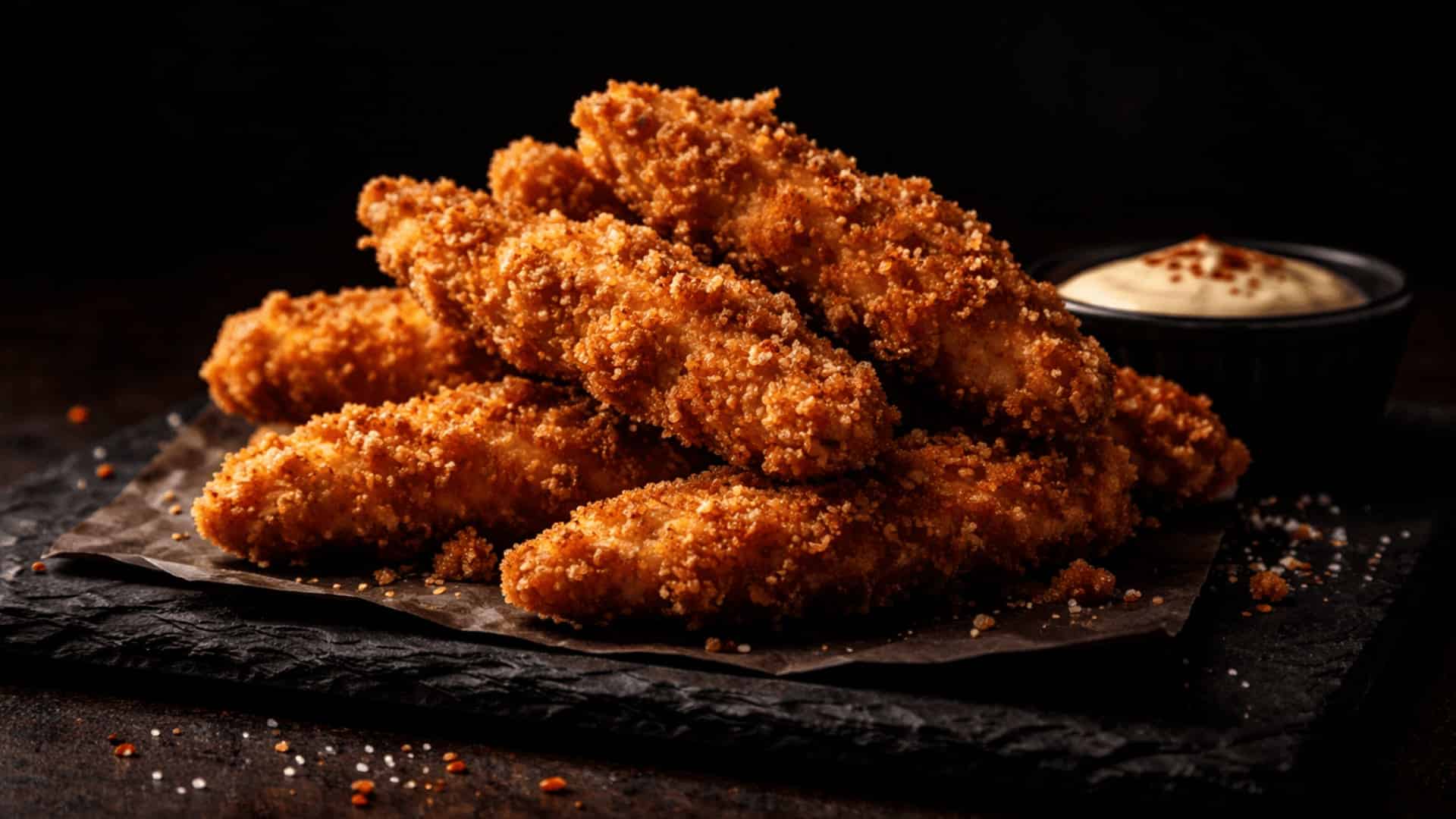
I ruined more batches of chicken tenders than I’d like to admit before I figured out that the cut matters as much as the seasoning.
Uneven strips cook at wildly different speeds: the thin end turns dry and stringy while the thick end stays underdone in the middle, and no marinade fixes that after the fact.
Once I started paying real attention to how to cut chicken breast into tenders instead of just hacking at it with whatever knife was closest, dinner got a lot more consistent.
A little care at the cutting board means every strip crisps, bakes, or grills at the same rate, which is most of the trick behind restaurant-style tenders.
In this blog post, you’ll find four cutting methods, the right thickness for each cooking style, the mistakes that ruin texture, and how to handle a chicken breast safely from board to pan.
How to Prepare Chicken Breast Before Cutting?
Proper preparation makes cutting chicken breast easier, safer, and more precise. Before reaching for the knife, take a few minutes to set up your workspace and properly prepare the meat. These small steps help you create even, tender cuts and reduce mess while cutting.
Here’s what to have on hand before you start:
| Tool | Purpose |
| Sharp chef’s knife or boning knife | Cuts cleanly through the meat instead of tearing it |
| Stable cutting board | Keeps the chicken from sliding while you cut |
| Damp kitchen towel | Placed under the board to stop it from slipping |
| Paper towels | Dries the chicken so your grip stays secure |
| Instant-read thermometer | Confirms cooked chicken has reached 165°F |
- Pat the chicken breast dry with paper towels to remove excess moisture and improve knife control.
- Place the chicken on a clean cutting board with a damp towel underneath to prevent slipping.
- Remove visible fat, excess skin, or tough connective tissue before slicing.
- Chill the chicken in the freezer for 10–15 minutes to firm it up and make it easier to cut.
Once prepared, the chicken will be easier to handle, allowing you to make cleaner cuts and more uniform tenders.
How to Cut Chicken Breast Into Tenders?
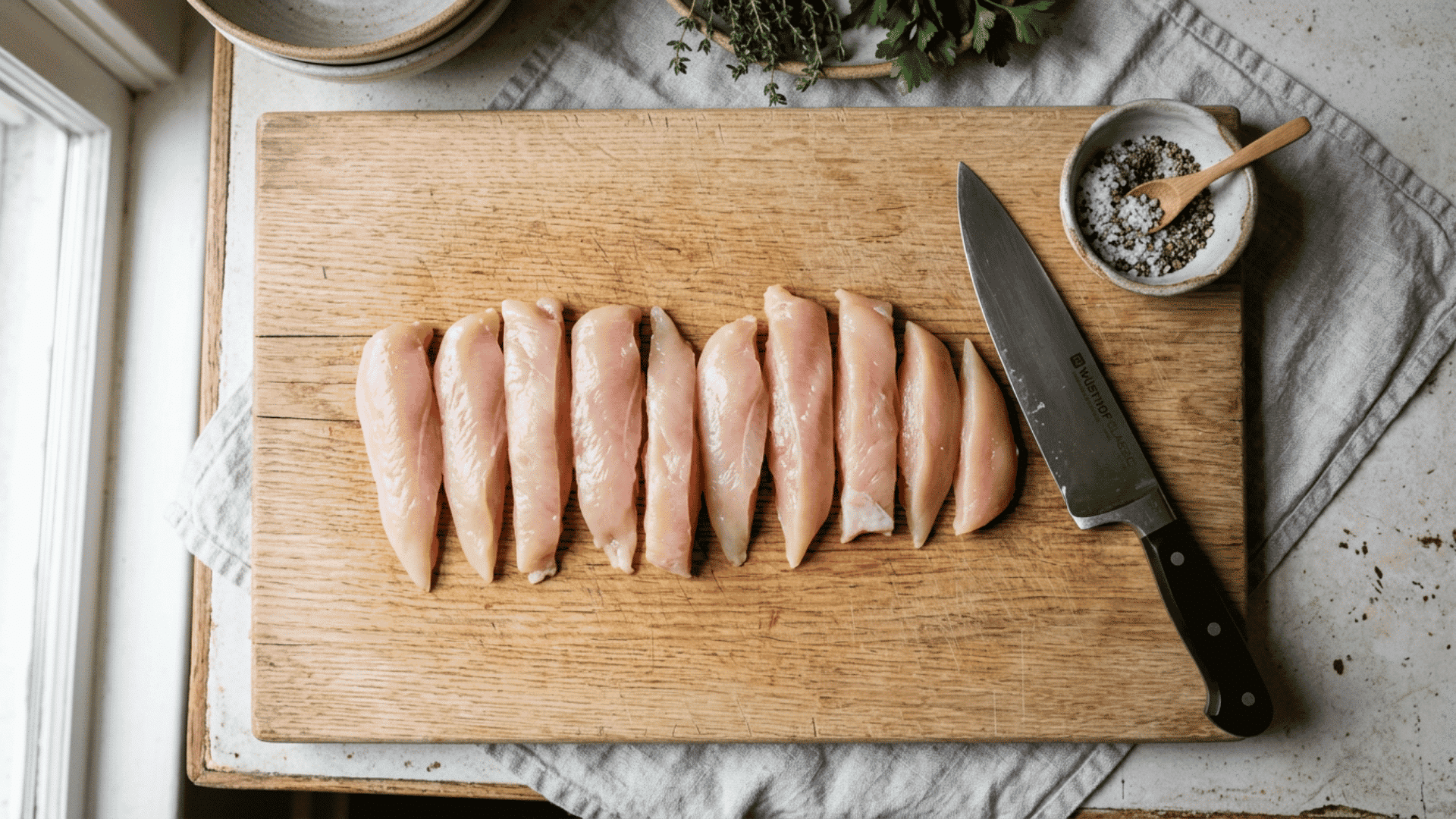
Follow these simple cutting steps to turn a chicken breast into evenly sized tenders while improving texture, cooking consistency, and preparation results at home.
1. Remove the Tenderloin First
Every chicken breast has a small, loose strip of meat tucked underneath it — that’s the tenderloin, and it’s already naturally tender.
Lay the breast flat, feel along the underside, and you’ll notice it’s held on by just a thin strip of connective tissue. Run your knife lightly along that line, and it lifts right off. No sawing needed.
Pull these aside first so you don’t accidentally cut through them later while slicing the rest of the breast.
2. Even Out the Breast Thickness
Most chicken breasts are thicker at one end than the other, which is exactly why tenders cook unevenly.
Slice off the thin, tapered end first and set it aside. Then take the thicker chunk, find the halfway point through its height, and slice horizontally right through the middle, keeping your knife flat and steady.
You’ll end up with pieces that are roughly the same thickness, so nothing dries out while something else is still raw in the middle.
3. Cut Into Strips for Frying or Baking
Once your chicken is evenly thick, slicing it into strips is simple. Cut lengthwise, keeping each strip about the same width so they all cook at the same speed.
This is the classic tender shape, great for pan-frying, oven-baking, dredging in breadcrumbs, or tossing sliced into a protein-packed salad for lunch.
Try to resist rushing this part. Strips that are wildly different in size are the number one reason people end up with a few perfect pieces and a few sad, dry ones on the same tray.
4. Cut Into Chunks for Stir-Fries
If you’re making a stir-fry, bowl, or kebabs, chunks work better than long strips. Start with your strips from the last step, then turn them and cut straight across into bite-sized pieces.
Cutting across the fibers this way, rather than along them, keeps the chicken tender once it hits the hot pan.
Aim for pieces that are close in size so they all finish cooking at roughly the same time, instead of some going rubbery while others catch up.
5. Butterfly for Thin, Even Cutlets
Butterflying sounds fancier than it is. Lay the breast flat, hold your knife level with the cutting board, and slice into the middle without cutting all the way through.
Open it up like a book. You’ll get one wide, thin piece that cooks fast and evenly, perfect for sautéing or pounding out further for schnitzel-style dishes.
Just keep the blade flat as you cut. If it drifts up or down, one side ends up thicker than the other.
How Thick Should Chicken Tenders Be for Cooking?
The right thickness depends on how the chicken is cooked. A small adjustment in strip size can make a real difference in the final texture and juiciness.
| Cooking Method | Ideal Thickness | Why It Works |
|---|---|---|
| Frying | 1 inch | Holds up to heat, stays juicy inside while the outside crisps up |
| Baking | ¾ to 1 inch | Even sizing ensures the whole batch finishes at the same time |
| Air Frying | ½ to ¾ inch | Thinner strips allow hot air to circulate faster for a crispier result |
| Grilling | 1 inch or more | Prevents drying out over direct heat and keeps the texture juicy |
If you’re frying, a well-seasoned cast iron pan holds heat evenly and helps the crust turn deep golden without burning in spots. Getting the thickness right doesn’t take much extra effort, and a small adjustment before cooking saves a lot of fixing after.
Common Mistakes to Avoid
A few simple cutting mistakes can affect the texture and cooking results of chicken tenders, but they are easy to avoid with proper preparation.
- Cutting with the grain: Slicing in the same direction as the muscle fibers can make chicken tenders chewy. Always cut across the grain for a softer texture.
- Using a dull knife: A dull blade can tear the chicken rather than make clean cuts. A sharp knife helps you slice smoothly and safely.
- Skipping the chilling step: Slightly chilling chicken for 10–15 minutes before cutting makes it firmer and easier to slice evenly.
- Making uneven pieces: Different-sized tenders cook at different speeds, which can leave some pieces dry and others undercooked. Keep the cuts similar in size.
- Using an unstable cutting board: A slipping board makes cutting harder and less safe. Place a damp kitchen towel underneath to keep it steady.
None of these is hard to fix; they just need a little attention the first time. Get these right once, and they become second nature from then on.
Chicken Tenderloin vs Chicken Tenders vs Strips
Chicken tenderloins and chicken tenders are often used interchangeably, but they are not exactly the same cut. Knowing the difference helps you choose the right option for different recipes and cooking methods.
| Feature | Chicken Tenderloin | Chicken Tenders | Chicken Breast Strips |
| What It Is | A natural muscle attached beneath the chicken breast | Often another name for chicken tenderloins, though the term may also refer to breaded products | Slices cut from the main chicken breast |
| Location | Under the chicken breast | Usually under the breast, if referring to the natural cut | Cut from the larger breast muscle |
| Shape | Naturally long and narrow | Long and narrow when natural or varies if processed | Uniform strips cut to size |
| Texture | Very tender and delicate | Tender when natural or varies if processed | Slightly firmer with more structure |
| Fat Content | Slightly higher than breast meat | Similar to tenderloin if natural | Leaner than tenderloin |
| Best Uses | Pan-searing, breading, quick cooking | Breading, frying, baking, or quick meals | Grilling, baking, stir-fries, fajitas, salads |
Because breast strips are the leaner of the two, they’re also part of why chicken breast shows up so often on lists of the highest-protein meats per calorie.
Can You Cut Cooked Chicken Into Tenders?
Yes, you can cut cooked chicken into tender-like strips, but the cutting method is slightly different from raw chicken.
Cooked chicken is firmer and holds its shape better, making it easier to slice into clean pieces. Before cutting, allow the chicken to rest for a few minutes so the juices settle and the texture stays moist.
Use a sharp knife and slice across the grain to shorten the muscle fibers and keep the strips tender.
Cutting with the grain can make the chicken feel chewy and stringy. For the best results, use smooth cutting motions instead of pressing down or dragging the knife through the meat.
Is It Safe to Wash Raw Chicken Before Cutting?
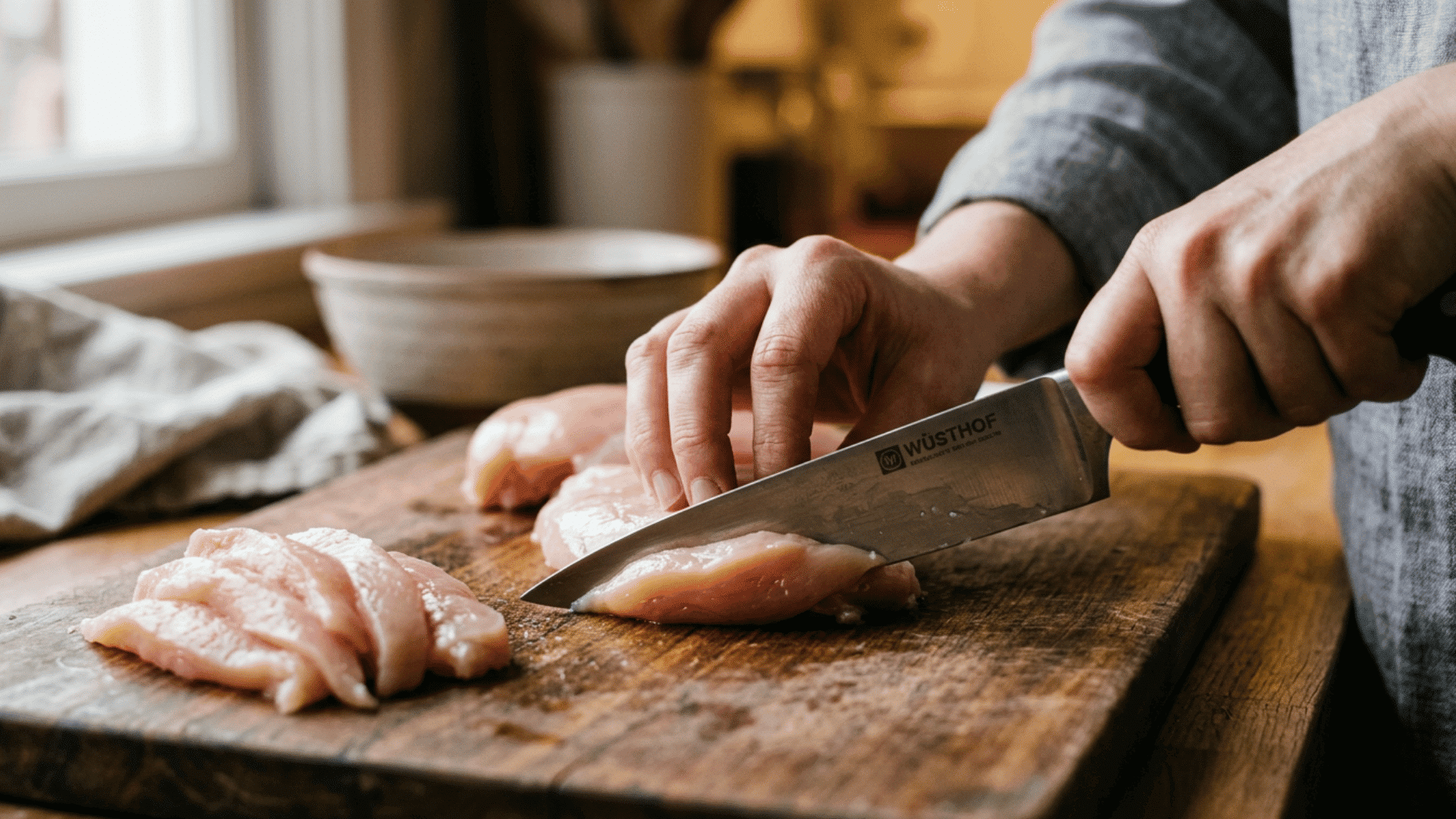
No. Rinsing raw chicken under the tap doesn’t remove bacteria the way people tend to assume, and it can actually spread it further around the kitchen.
Water splashes off the meat and lands on the sink, the counter, and anything nearby, including produce or utensils that won’t get cooked afterward.
USDA food safety guidance has recommended against washing raw poultry for exactly this reason: cooking the chicken to 165°F is what kills harmful bacteria, not a rinse under cold water.
Skip the wash, pat the breast dry with a paper towel instead, and go straight to cutting. If the chicken looks visibly dirty or has bone fragments from packaging, wipe it down with a paper towel rather than running it under water.
Conclusion
Cutting chicken breast at home has become one of those simple kitchen skills that can improve the way meals turn out.
I’ve found that using the right knife, keeping the pieces even, and paying attention to the grain direction helps create better texture and more consistent cooking results.
Learning how to cut chicken breast into tenders also makes meal preparation more flexible, whether I’m preparing chicken for frying, grilling, or quick weekday meals. Once the technique becomes familiar, the process takes only a few minutes and feels much easier.
Have you tried cutting your own chicken tenders before? Share your experience in the comment section and let others know your helpful tips.
Frequently Asked Questions
Is it Easier to Cut Chicken Breast When it’s Cold?
Yes, slightly cold chicken is much easier to cut cleanly. Placing the chicken breast in the freezer for 10–15 minutes firms up the texture without freezing it solid.
How Many Tenders Does One Chicken Breast Yield?
A single large chicken breast usually yields four to six strips, depending on how thick you cut them and the size of the breast itself.
Do You Need Special Knives or Tools to Cut Chicken Tenders?
No special equipment is required, just a sharp chef’s knife or fillet knife and a stable cutting board.