
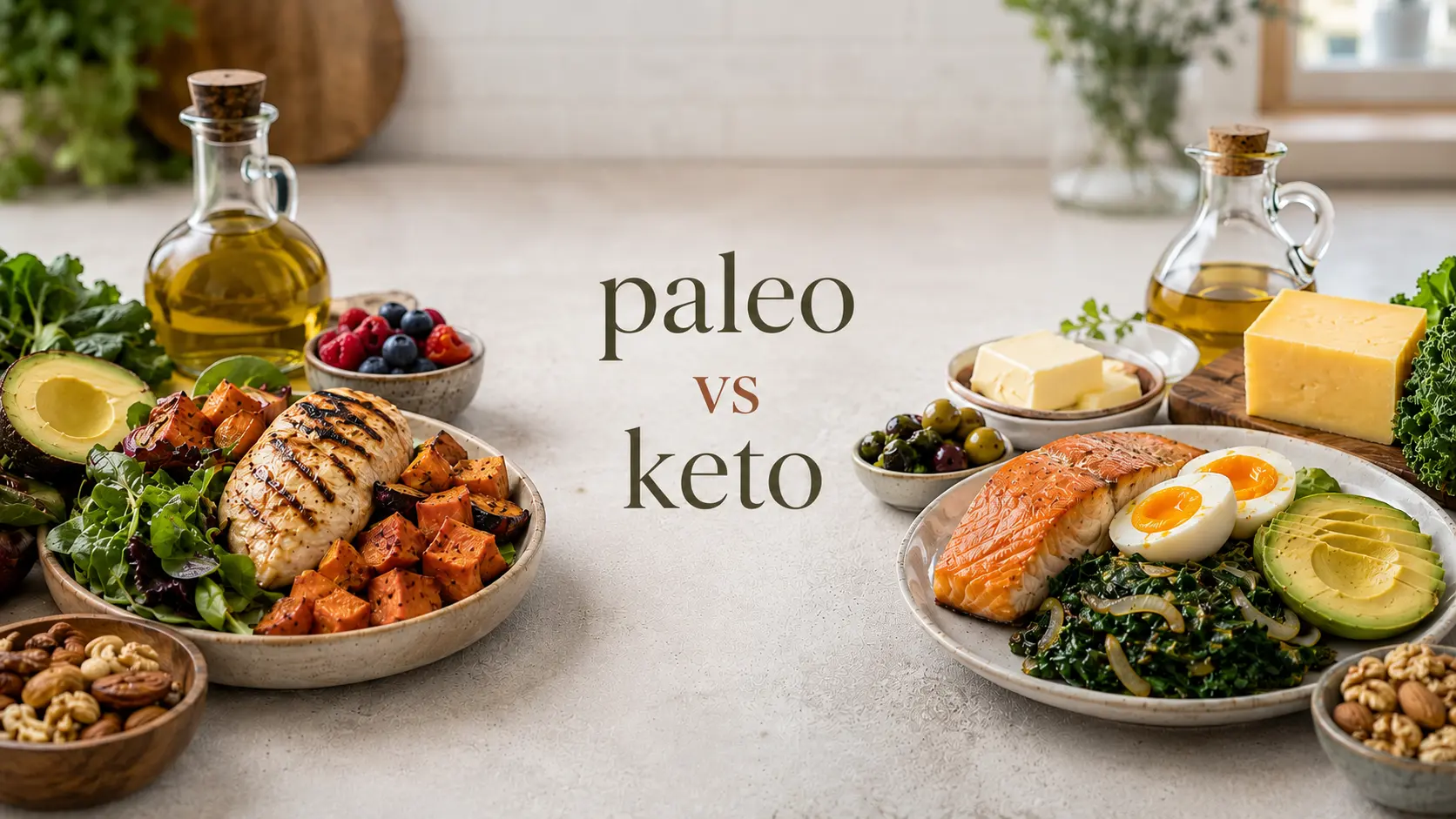
Ever looked at paleo and keto and thought, “Wait, aren’t they basically the same?” I used to think the difference was mostly about carbs, but it’s more than that.
One focuses more on the types of foods you eat, while the other pays much closer attention to how many carbs, fats, and proteins end up on your plate.
So, if you’re stuck comparing paleo vs keto, you’re probably thinking about which one actually fits your life. Your favorite foods, daily routine, health goals, and tolerance for food rules all matter.
Once you see how each diet works, the choice starts to feel much clearer.
Paleo vs Keto for Different Goals and Lifestyles
|
Goal or Lifestyle Factor |
Paleo |
Keto |
|---|---|---|
|
Weight loss |
May support weight loss by reducing processed foods |
May support short-term weight loss through strict carb restriction |
|
Blood sugar control |
May improve some metabolic markers, but evidence is mixed |
May help lower blood sugar but needs medical guidance with diabetes medications |
|
Carb flexibility |
Allows fruit and starchy vegetables |
Keeps carbohydrates very low |
|
Active lifestyle |
Offers more carbohydrate options for exercise |
May require adjustment for high-intensity activity |
|
Food tracking |
Usually requires little or no macro tracking |
Often requires carb and macro tracking |
|
Less restrictive eating |
More flexible with carbohydrate intake |
More restrictive because ketosis requires very low carbs |
|
Dairy preference |
Usually excludes dairy |
Often allows low-carb dairy |
|
Long-term simplicity |
May feel easier for people who prefer whole foods without counting macros |
May suit people comfortable maintaining strict carb limits |
What Is the Paleo Diet?
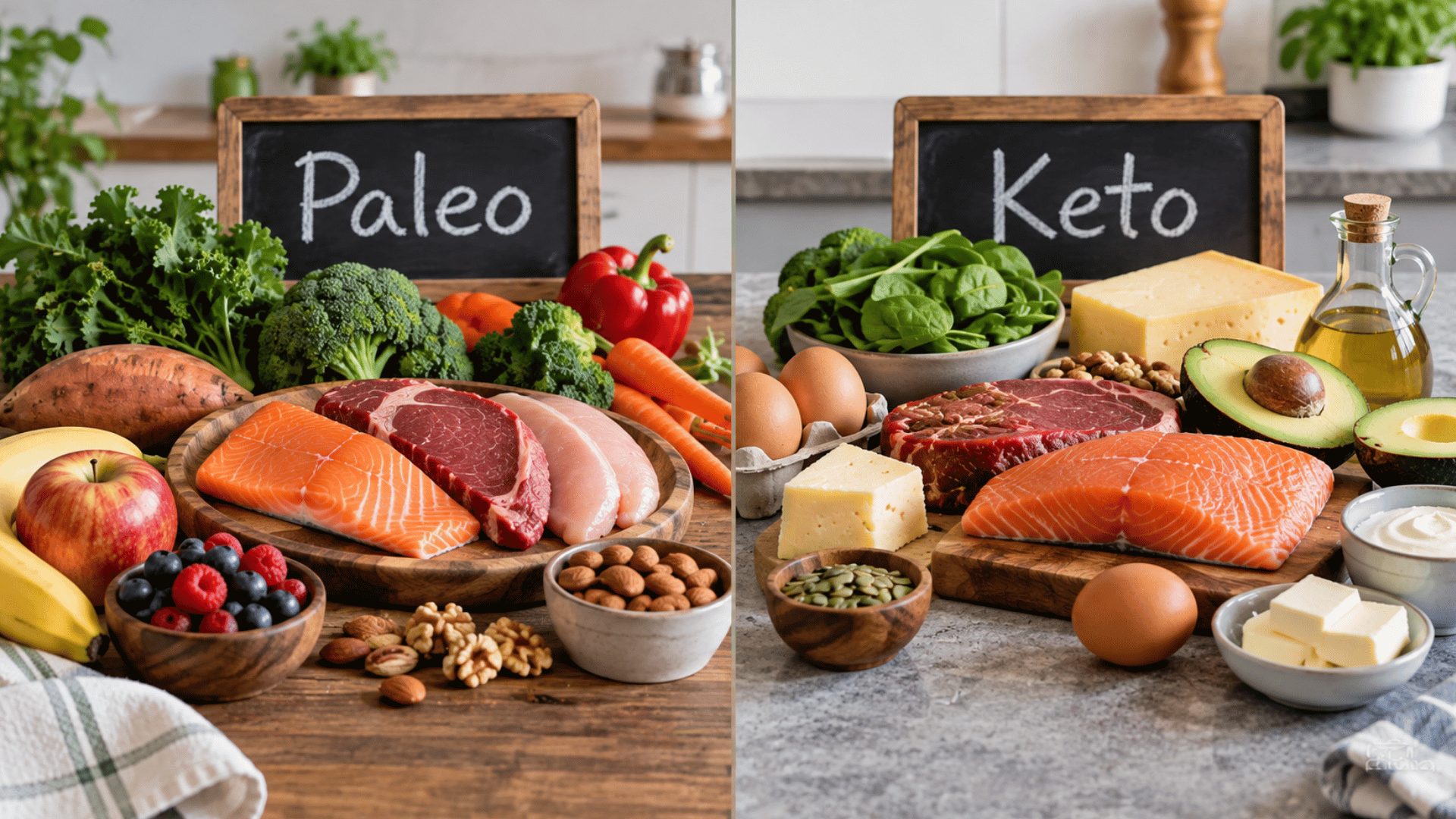
The paleo diet is an eating pattern centered around whole, minimally processed foods. It typically includes meat, fish, eggs, vegetables, fruits, nuts, seeds, and certain healthy fats.
There is no set requirement to count calories or follow a specific balance of carbohydrates, protein, and fat. Instead, the main focus is on choosing simple, nutrient-rich foods and limiting heavily processed options.
On a typical day, paleo eating includes:
- Meat, fish, and eggs, among the highest-protein foods you can build a plate around
- Vegetables such as broccoli, carrots, and sweet potatoes
- Fruits like berries, apples, and bananas
- Nuts and seeds, including almonds, walnuts, and chia (peanuts are the exception, since they’re technically a legume)
- Healthy fats such as olive oil, avocado oil, and coconut oil
What’s off the table: grains like wheat and rice, legumes such as beans and lentils, dairy products, and refined sugar. None of these were part of a Paleolithic diet, so paleo eating leaves them out entirely.
What Is the Keto Diet?
The keto diet is a very low-carbohydrate, high-fat eating plan designed to shift the body into ketosis, a metabolic state where it relies on fat and ketones for fuel instead of glucose.
Because carbs stay so low, most keto followers track their daily macronutrient intake closely.
A typical keto plate includes:
- Meat, fish, and eggs
- Cheese and other high-fat dairy, like butter and heavy cream
- Nuts and seeds such as almonds, walnuts, and chia
- Low-carb vegetables, including leafy greens, broccoli, and cauliflower
- Healthy fats such as olive oil, avocado oil, and coconut oil
Grains, sugary foods, and most starchy vegetables and fruits get heavily restricted, since even small amounts of carbs can knock the body out of ketosis.
Small portions of berries are usually the exception. That includes carb-heavy snacks like popcorn, which add up faster than most people expect.
What Do Paleo and Keto Have in Common?
Paleo and keto share several similarities, especially when it comes to cutting back on refined sugar and highly processed foods.
Both diets commonly include meat, fish, eggs, nuts, seeds, healthy fats, and plenty of non-starchy vegetables.
They also tend to reduce carbohydrate intake by limiting foods such as bread, pasta, and other grain-based products. However, neither diet is automatically healthier just because it restricts certain foods.
The overall quality and variety of foods you choose still matter when following either eating pattern.
Paleo vs Keto: What Are the Biggest Differences?
1. Carbohydrate Intake
Keto keeps carbohydrate intake very low so the body can enter and maintain ketosis. Foods such as bread, pasta, rice, potatoes, and many fruits are heavily restricted.
Paleo has no fixed carb limit, allowing carbohydrate-rich whole foods such as fruits, sweet potatoes, squash, and other vegetables to remain part of the diet.
2. Dairy
Dairy is one of the clearest differences between the two diets. Traditional paleo plans generally exclude milk, cheese, yogurt, and other dairy products.
Keto is more flexible with dairy, particularly options that are high in fat and low in carbohydrates, such as butter, cheese, heavy cream, and some unsweetened yogurts.
It’s still worth checking the carbs in cream cheese or other packaged dairy before building meals around them, since brands vary.
3. Fruits and Starchy Vegetables
Paleo allows a broader selection of fruits and starchy vegetables, including bananas, apples, squash, carrots, and sweet potatoes.
Keto limits many of these choices because their carbs can add up quickly. Instead, keto meals often feature lower-carb options such as berries, leafy greens, zucchini, broccoli, cauliflower, and other non-starchy vegetables.
4. Macronutrient Tracking
Following keto often means paying close attention to how much carbohydrate, fat, and protein you eat each day. Some people track these macronutrients to stay within their carb target.
Paleo takes a food-based approach instead, focusing on which foods you include or exclude without requiring a specific daily macronutrient ratio.
5. Main Dietary Goal
Keto is structured around reducing carbohydrates enough for the body to produce ketones and enter ketosis.
Paleo follows a different framework, emphasizing whole or minimally processed foods while excluding several food groups. Instead of targeting a specific metabolic state, its rules mainly determine which foods fit the eating pattern.
6. Food Quality vs. Metabolic State
Paleo focuses mainly on the quality and type of foods you choose, favoring whole or minimally processed options while excluding certain food groups.
Keto focuses more on reaching and maintaining ketosis through strict carbohydrate restriction. Because of this, a food may fit keto based on its macros but not meet paleo guidelines.
Paleo vs Keto: Differences at a Glance
|
Factor |
Paleo |
Keto |
|---|---|---|
|
Main Focus |
Whole, minimally processed foods |
Very low-carb, high-fat eating |
|
Carbohydrates |
Flexible |
Very low |
|
Fat Intake |
Moderate to high |
High |
|
Protein |
Flexible |
Moderate |
|
Grains |
Avoided |
Usually avoided |
|
Legumes |
Avoided |
Usually limited |
|
Dairy |
Avoided |
Often allowed |
|
Fruits |
Generally allowed |
Mostly limited |
|
Starchy Vegetables |
Allowed |
Usually limited |
|
Macro Tracking |
Usually not needed |
Often used |
|
Ketosis |
Not required |
Main goal |
Paleo vs Keto for Blood Sugar and Metabolic Health
Both diets may affect blood sugar and other metabolic markers, but the evidence differs.
Keto sharply limits carbohydrates, and a systematic review of ketogenic diets in people with type 2 diabetes by the National Library of Medicine found improvements in HbA1c (a blood test that reflects average blood sugar over the past two to three months) after as little as three weeks, though longer-term evidence is still developing.
I’m not certain how these results generalize to everyone, since adherence and medical supervision varied across the studies reviewed, so this is worth verifying with your own care team.
Paleo may improve some metabolic markers, but results for blood sugar and insulin control remain mixed compared with other healthy diets.
People with diabetes who take glucose-lowering medication should speak with their healthcare provider before making a major change in carbohydrate intake.
Nutritional Concerns to Consider Before Choosing Either Diet
Both paleo and keto restrict certain food groups, so it is important to consider how those restrictions may affect your overall nutrient intake.
- Fiber intake: Cutting out grains and legumes can reduce common fiber sources, while keto may limit additional high-carb fruits and vegetables.
- Vitamins and minerals: Removing entire food groups may make it harder to get certain nutrients from your everyday meals.
- Saturated fat: A keto diet can become high in saturated fat if it relies heavily on butter, cream, cheese, and fatty meats.
- Digestive changes: Lower fiber and major changes in carbohydrate intake may cause constipation or changes in bowel habits for some people.
Can You Combine Paleo and Keto?
Yes, paleo and keto can be combined, but doing so creates a more restrictive eating pattern. A paleo-keto approach focuses on paleo-friendly whole foods while keeping carbohydrate intake low enough to support ketosis.
This typically means eating meat, fish, eggs, non-starchy vegetables, nuts, seeds, and healthy fats.
At the same time, higher-carb paleo foods such as bananas, sweet potatoes, and other starchy produce would need to be limited, while dairy and grains generally remain excluded.
A paleo-keto plate might look like grilled salmon, roasted broccoli, and avocado with olive oil, since it fits both frameworks without added grains, dairy, or sugar.
Who Should Be Cautious About Paleo or Keto?
Paleo and keto can be quite restrictive, so they may not be appropriate for everyone. Extra care may be needed for:
- People with diabetes, especially those taking insulin or glucose-lowering medication.
- People with kidney, liver, or heart conditions.
- Pregnant or breastfeeding women.
- People with a history of eating disorders.
- Anyone taking medications that may be affected by major dietary changes.
- People with specific nutrient deficiencies or dietary requirements.
Disclaimer: If you have an existing health condition or take medication, discuss major dietary changes with your doctor or registered dietitian first.
Paleo vs Keto: How to Choose Based on Your Goals
|
If Your Priority Is… |
What to Consider |
|---|---|
|
Eating mostly whole foods |
Paleo’s food-based framework |
|
Maintaining ketosis |
Keto’s strict carbohydrate limits |
|
Avoiding macro tracking |
Paleo |
|
Greater fruit flexibility |
Paleo |
|
Including full-fat dairy |
Keto may allow it |
|
Following a medically prescribed ketogenic therapy |
Work with the specialist managing the condition |
|
Long-term sustainability |
Consider which restrictions realistically fit your lifestyle |
To Sum Up
When it comes to paleo vs keto, the right choice depends on what fits your goals, food preferences, and everyday routine.
Paleo focuses more on whole foods and offers greater flexibility with fruits and starchy vegetables, while keto follows stricter carbohydrate limits to maintain ketosis.
Before choosing either approach, consider how realistic its restrictions will be for you over time. A diet that provides balanced nutrition and works with your lifestyle is generally easier to maintain.
If you have a health condition or take medication, speak with a healthcare professional before making major dietary changes.
Frequently Asked Questions
Which Diet Is Easier to Follow Long Term?
Paleo may be easier for some people because it allows more carbohydrates and does not require ketosis or strict macro tracking.
Is Paleo Healthier Than Keto?
Neither diet is inherently healthier. The better option depends on your nutritional needs, health conditions, food choices, and how well you can maintain the diet.
Can You Lose Weight on Paleo and Keto?
Yes, both diets may support weight loss when they help you maintain a calorie deficit, but results and long-term sustainability vary from person to person.
Can You Eat Dairy on Paleo or Keto?
Traditional paleo excludes dairy. Keto generally allows low-carb, higher-fat dairy such as cheese, butter, and cream, provided it fits within your daily carbohydrate intake.