

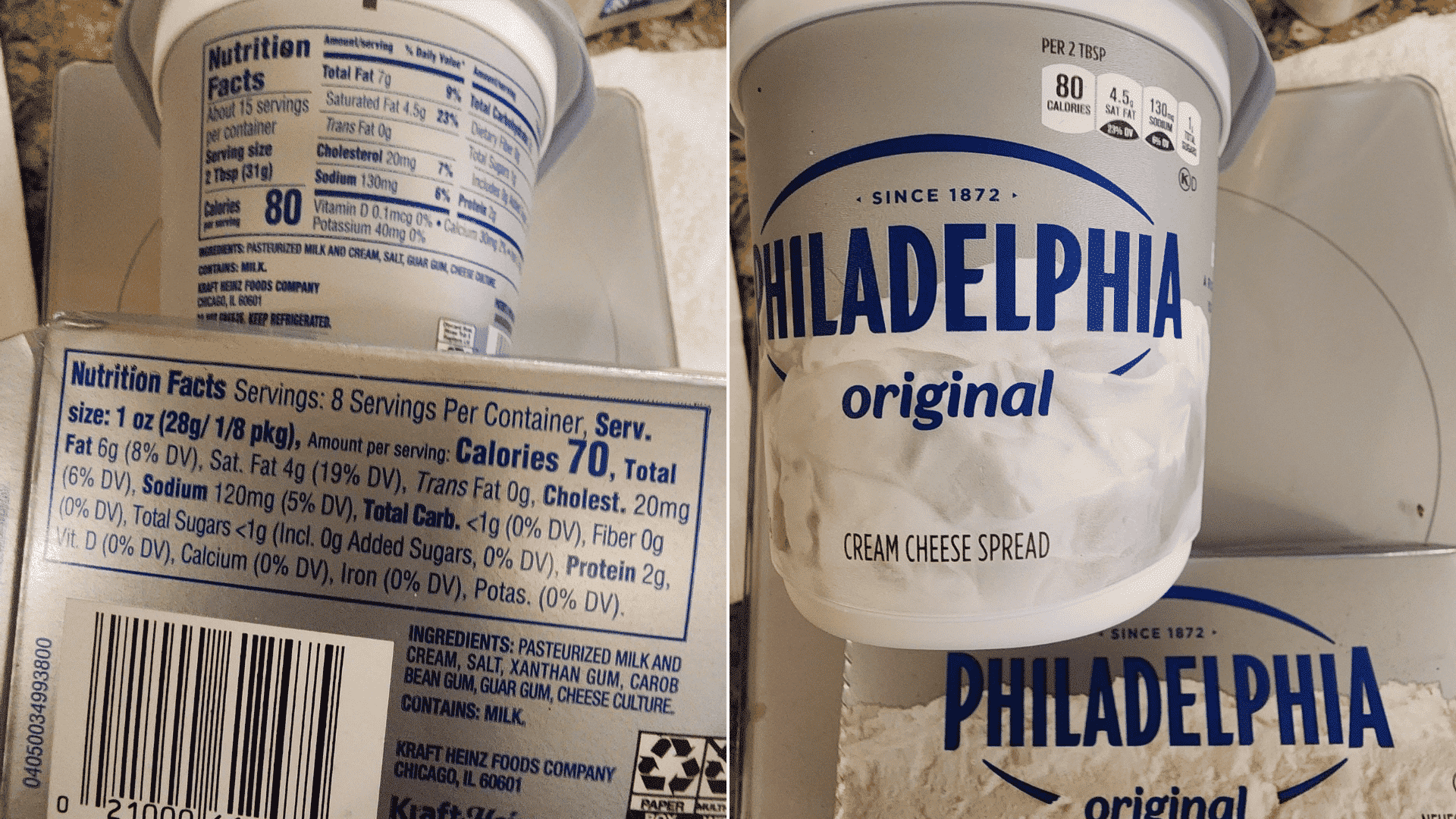
Cream cheese looks simple, but the carb count can vary more between products.
Plain, full fat cream cheese generally contains about 1 to 2 grams of carbohydrates per ounce, while whipped, light, fat-free, and flavored versions can run noticeably higher.
If you are trying to work out how many carbs are in cream cheese, the type of tub in your fridge matters just as much as the serving size on the label.
This blog post breaks down the carb counts by portion, variety, and brand, helping you choose an option that suits your eating goals without making the process confusing.
It also covers keto and blood sugar questions, since those decisions often depend on the exact numbers rather than a single rounded figure.
Cream Cheese Carb Count
| Cream Cheese Serving | Approximate Total Carbs | Approximate Net Carbs |
|---|---|---|
| 1 tablespoon | 0.8 g | 0.8 g |
| 2 tablespoons | 1.6 g | 1.6 g |
| 1 ounce | 1.6 g | 1.6 g |
| 100 grams | 5 to 6 g | 5 to 6 g |
How Many Carbs Are in Cream Cheese?
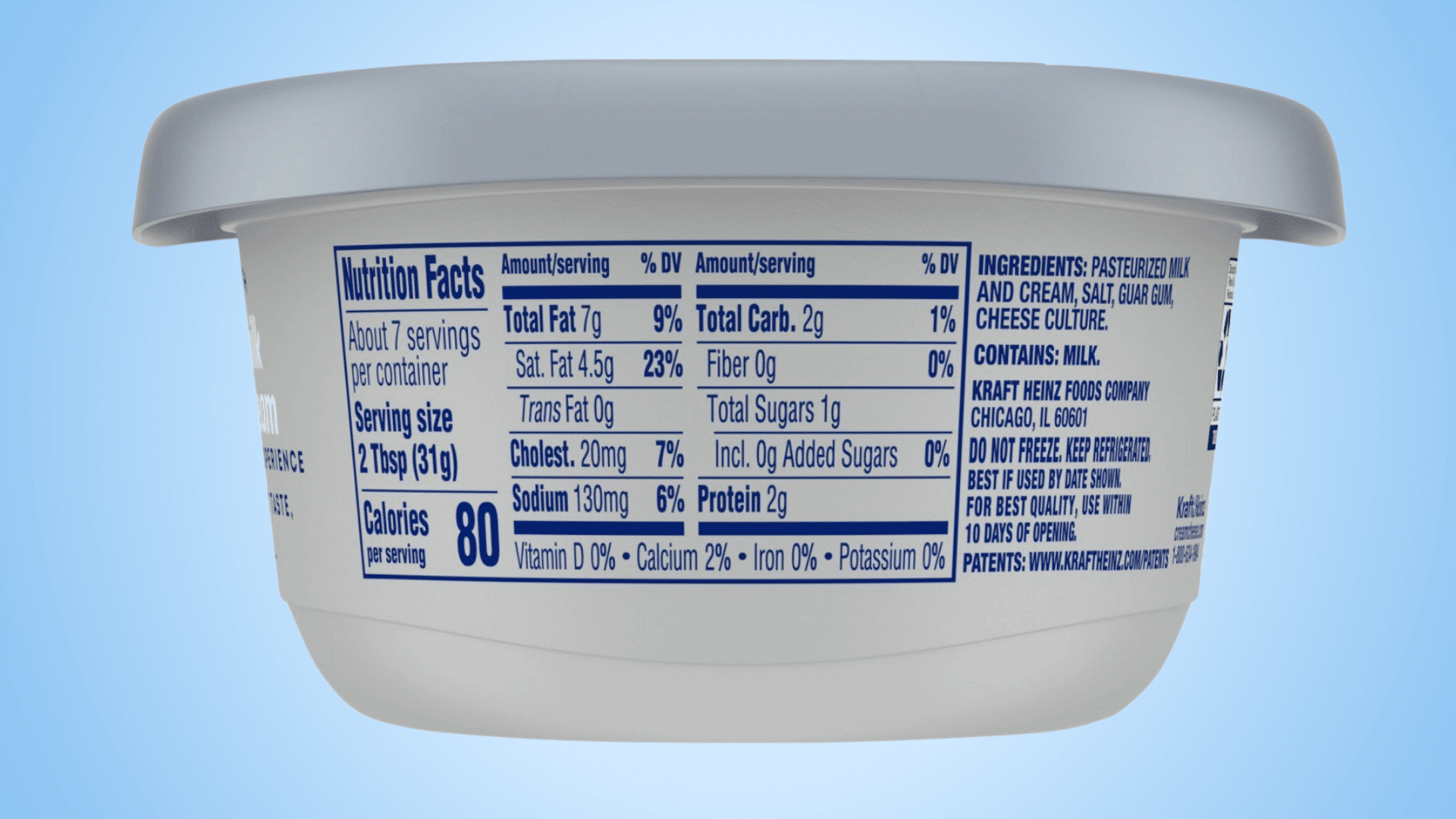
Plain cream cheese contains about 1.5 to 2 grams of carbohydrates per ounce, which is roughly 2 tablespoons.
A 1-tablespoon serving usually has around 0.8 grams. Since cream cheese contains little to no fiber, total carbs and net carbs are generally the same. I usually check the serving size first because some labels use 1 tablespoon, while others list 2 tablespoons.
Plain full-fat cream cheese is often the lowest-carb choice.
Flavored, whipped, and reduced-fat versions may contain more carbohydrates because of added sugar, milk solids, or thickeners.
That low carb count is also why cream cheese comes up so often for people managing diabetes, and whether it affects blood sugar is worth understanding before you make it part of a daily routine.
Why Do Cream Cheese Carb Counts Differ Between Labels?
Nutrition labels do not always show a product’s exact carbohydrate count. Under FDA rules, values may be rounded up or down before appearing on the package.
As a result, two products with nearly identical carb content may show different numbers, especially when the listed serving size is small.
Serving weight is another factor. A tablespoon of whipped cream cheese usually weighs less than a tablespoon of block cream cheese because whipping adds air, so the carb count per tablespoon can look lower even when the product is not truly lower in carbs.
Light and fat-free versions sometimes add milk solids, starches, or gums to replace fat, and these ingredients can raise the carbohydrate count.
Flavored spreads often contain added sugar, and manufacturers reformulate recipes over time, so a label you checked last year may not match today’s package.
Cream Cheese Carb Comparison by Type
Different types of cream cheese contain varying amounts of carbohydrates. Here’s a quick breakdown to help you compare options at a glance.
| Type | Serving Size | Total Carbs | Sugar | Notes |
|---|---|---|---|---|
| Plain / Original (full-fat) | 2 tablespoons (1 oz) | 1.6 g | 1 g | Lowest carb option overall |
| Light / Reduced-fat | 2 tablespoons (1 oz) | 2-3 g | 2 g | Slightly higher due to added fillers |
| Whipped | 2 tablespoons | 1-2 g | 1 g | Varies by brand and air content |
| Flavored Sweet (berry, brown sugar) | 2 tablespoons | 5-7 g | 4-6 g | Sweet flavors increase carbs quickly |
| Savory Flavored (chive/onion, herbs) | 2 tablespoons | 2-3 g | 1-2 g | Mild increase from added ingredients |
Does Block Cream Cheese Have Fewer Carbs than Spreadable Cream Cheese?
Block cream cheese and tub style spreadable cream cheese often use different processing methods, but neither format is automatically lower in carbohydrates.
Block cream cheese tends to have a shorter ingredient list, while tub spreads may include added moisture, stabilizers, or gums to keep a scoopable texture.
Whipped cream cheese takes this further by mixing in air, which changes how much a tablespoon actually weighs.
Because of this, comparing tablespoons across formats can be misleading.
Putting each product on a scale to the same 28-gram weight before comparing gives a more reliable carbohydrate figure.
If a recipe calls specifically for block cream cheese, a whipped substitute at the same weight will usually behave similarly in terms of carbs, but check the label first, since fillers vary by brand.
Does Cream Cheese Raise Blood Sugar?
Plain cream cheese contains very little carbohydrate, so it is unlikely to cause a significant rise in blood sugar on its own for most people.
The American Diabetes Association generally recommends looking at the entire meal rather than judging a single ingredient, since fiber, protein, fat, added sugar, and portion size all shape the overall response.
Bagels, toast, crackers, and jam usually affect blood sugar more than the cream cheese itself.
Saturated fat and calorie content are still worth considering, particularly for anyone managing weight or heart health alongside blood sugar.
Individual responses to any food can vary, so anyone managing diabetes should discuss specific portions and pairings with a registered dietitian or their care team.
Cream Cheese Nutrition Per Ounce
A full nutrition snapshot makes it easier to see how carbs fit alongside everything else in a typical serving.
| Nutrient | Approximate Amount per 1 oz |
| Calories | 90-100 |
| Total carbohydrates | 1-2 g |
| Fiber | 0 g |
| Sugar | About 1 g |
| Protein | About 2 g |
| Total fat | 9-10 g |
| Saturated fat | About 5-6 g |
| Sodium | Varies by brand |
| Vitamin A | Small but useful amount |
Values vary by brand and formulation. Figures are based on general ranges reported in USDA FoodData Central; check your own package for exact numbers.
Cream Cheese Carb Comparison by Brand
Carb counts are fairly similar across most plain cream cheese brands, but light and whipped versions can differ, so comparing equal serving sizes matters too.
- Philadelphia Original: Contains about 2 grams of carbohydrates per 2-tablespoon serving. It is one of the most commonly used plain cream cheeses and a reliable low-carb choice.
- Philadelphia Light: Usually provides 2 to 3 grams of carbohydrates per 2 tablespoons. The slightly higher carb content comes from ingredients added to replace some of the fat.
- Philadelphia Whipped: Typically contains 1 to 2 grams of carbohydrates per 2 tablespoons. Since it is whipped with air, the serving feels larger, but comparing equal weights gives a more accurate picture.
- Great Value Original: Offers about 2 grams of carbohydrates per 2 tablespoons, making it very similar to other plain full-fat cream cheese products.
- Aldi Happy Farms Original: Usually contains around 2 grams of carbohydrates per 2-tablespoon serving. It is a comparable option if you are looking for a budget-friendly plain cream cheese.
- Organic Valley Cream Cheese: Generally has about 2 grams of carbohydrates per 2 tablespoons. The ingredient list is often shorter, but the carbohydrate content stays close to other original varieties.
Note: Recipes can change over time, so I recommend checking the Nutrition Facts label to confirm the carbohydrate content of the product you buy.
Cream Cheese vs Other Spreads: Which Has Fewer Carbs?
Comparing equal one-ounce servings makes it easier to see where cream cheese sits among common spreads.
| Spread (1 oz) | Approx. Carbs | Notes |
| Cream cheese, plain | 1-2 g | One of the lowest of this group |
| Butter | 0 g | Virtually no carbs, but no protein |
| Peanut butter | 3-4 g | More protein; some brands add sugar |
| Almond butter | 3 g | Similar profile to peanut butter |
| Hummus | 4-6 g | Plant-based, more fiber |
| Ricotta | 2-3 g | Higher protein than cream cheese |
| Jam | 13-14 g | Much higher, mostly sugar |
Butter has fewer carbs than cream cheese, but it offers no protein. Among savory spreads, cream cheese and butter sit near the bottom of the carb range, while jam sits far higher.
Is Cream Cheese Keto-Friendly?
Yes, cream cheese can fit a keto diet when portions are planned carefully. Its main advantage is that most calories come from fat rather than carbohydrates, which suits the basic structure of keto eating.
My suggestion is to use it as part of a meal, not as the meal itself. Pair it with eggs, smoked salmon, cucumber, celery, or low-carb wraps to add flavor and creaminess.
Portion size still matters because cream cheese is calorie-dense and can be high in saturated fat. Sweetened spreads and dessert-style varieties are less suitable, as they can quickly use up your daily carb allowance.
How Much Cream Cheese Are You Actually Eating?
Real portions rarely match a perfectly measured tablespoon. This is what typical servings look like in practice:
- Thin layer on toast: about 1 tablespoon
- Standard measured serving: about 2 tablespoons
- Heavily spread bagel: 3 to 4 tablespoons
- Cheesecake or cream cheese frosting: depends on the full recipe, often more than a spread serving
Putting your serving on a kitchen scale is the most reliable way to know your actual carb intake, since eyeballed portions usually run larger than the label serving size.
Nutritional Benefits and Limitations of Cream Cheese
Cream cheese can add useful nutrients to a meal in sensible portions. It supplies vitamin A, which supports vision, immune function, and skin health, along with small amounts of calcium and protein.
Its fat content also helps the body absorb fat-soluble vitamins from other foods on the plate, and its low carbohydrate content makes it easy to include in lower-carb meals without adding much sugar.
That said, cream cheese has real limitations. It is calorie-dense and relatively high in saturated fat compared with many other dairy products.
It is not a strong source of protein or calcium compared with Greek yogurt, cottage cheese, or hard cheeses, and it contains almost no fiber, so it will not keep you feeling full on its own.
Sodium varies by brand, so check the label and pair cream cheese with whole grains, vegetables, or fruit.
Cream Cheese Substitutes and Their Carbs
The closest substitute depends on the recipe. Here’s how common options compare per ounce:
| Substitute | Approx. Carbs per 1 oz | Best Use | Key Difference |
| Neufchâtel | About 2 g | Spreads and baking | Lower fat than cream cheese |
| Mascarpone | About 1 g | Desserts and sauces | Richer and higher calorie |
| Greek yogurt (full-fat) | About 2-3 g | Dips and spreads | More protein, tangier |
| Blended cottage cheese | About 1-2 g | Dips and fillings | More protein |
| Dairy-free spread | About 2-5 g | Vegan recipes | Highly brand-dependent |
When I compare substitutes, I look at how each one behaves in a recipe as much as the raw carb count. Mascarpone works well for richness in desserts, while Greek yogurt gives a lighter, tangier finish on toast or a bagel.
These are approximate values, and brand formulations can shift the numbers slightly.
Final Thoughts
Cream cheese fits many eating styles, and the best choice depends on the product, the portion, and what it’s served with.
Plain, full-fat varieties keep carbs modest, while flavored options, fat-free versions, and some substitutes can change the numbers more than expected.
I compare products using a 28-gram serving because tablespoon sizes vary by brand. Checking your package’s Nutrition Facts panel is the most reliable way to know exactly what you are eating.
Cream cheese can still add flavor and texture to a meal without complicating your carb count.
Which variety do you usually buy, and have you noticed a difference between brands at your store? Share your favorite option or serving idea in the comment section below.
Frequently Asked Questions
Can People with Diabetes Eat Cream Cheese?
Cream cheese can fit into a diabetes-friendly meal because it is low in carbohydrates, but portions and the foods served with it influence the overall blood sugar response.
Does Cream Cheese Contain Sugar?
Plain cream cheese contains a small amount of naturally occurring milk sugar called lactose. Sweetened and flavored varieties usually contain more sugar because extra ingredients are added.
Is Cream Cheese Spread Different from Block Cream Cheese in Carbs?
Not automatically. Tub spreads may contain extra moisture or stabilizers compared with block cream cheese, but neither format is guaranteed to be lower in carbohydrates. Compare labels at the same weight to be sure.
Can You Freeze Cream Cheese?
Yes, cream cheese can be frozen, although its texture may become grainy after thawing. It works better in cooked dishes, sauces, and baking than as a spread.
Is Cream Cheese Lactose-Free?
No. Regular cream cheese contains a small amount of lactose, although some people with lactose intolerance may tolerate modest portions well. Lactose-free cream cheese products are also available for anyone who needs to avoid lactose entirely.