
Children often struggle with big emotions, restlessness, and distractions that can make learning and daily routines feel overwhelming. As someone who works closely with children’s development, I’ve seen how even small, structured tools can create a noticeable shift in how they respond to stress and focus.
Mindfulness activities for kids offer simple, practical ways to help children slow down, notice what they’re feeling, and build better emotional control through breathing exercises, sensory awareness, gentle movement, and guided attention.
In this list, I’ve gathered easy mindfulness activities that work well at home, in classrooms, or in therapy settings, so you can quickly find what best supports your child’s needs, personality, and environment.
Which Mindfulness Activities Actually Help Kids Calm Down and Focus?
The honest answer: breathing-based and sensory activities that take two to five minutes, repeated daily, do the most for a child’s attention and emotional control. Longer or more complex “programs” aren’t necessary, and they often fail simply because a child won’t sit through them.
I get asked about this constantly, usually by a parent or teacher who’s already tried telling a child to “just calm down” and watched it not work.
Big emotions, restlessness, and distraction aren’t a discipline problem. They’re a nervous system that hasn’t learned how to downshift yet, whether the trigger is a loud classroom, a sibling fight, or something bigger like settling into a new home. Mindfulness is one of the more reliable tools for teaching that skill.
| Health Note: This article is for general information and isn’t medical advice. Mindfulness can support focus and emotional regulation, but it isn’t a replacement for treatment of anxiety, ADHD, or other diagnosed conditions. If a child’s distress or attention difficulties are significant or persistent, talk with a pediatrician or child mental health professional. |
What the Research Actually Shows
Anxiety is common enough in kids that this isn’t a niche concern. As of 2022 to 2023, CDC data show that roughly 11% of U.S. children ages 3 to 17 had a current, diagnosed anxiety condition, and the rate is higher among girls than boys.
Behavior disorders and depression show up at meaningfully lower but still notable rates in the same age range. If a family is already due for a checkup, it is reasonable to raise this during a routine wellness visit rather than waiting until something feels urgent.
On the mindfulness side, the National Center for Complementary and Integrative Health has reviewed the pediatric research and found that, while the pool of randomized controlled trials in children is still small, the existing studies point to real benefits: reduced anxiety and negative affect, better emotion regulation, and improved attention and focus.
A 2016 review found that mindfulness reduced psychological symptoms and improved kids’ ability to stay present rather than ruminating.
That’s consistent with what I see anecdotally in the activities below: the ones that work fastest are the ones that give a child something concrete to pay attention to (a breath, a texture, a sound) rather than asking them to “clear their mind,” which is a hard ask at any age.
Mindfulness Activities for Kids at Home
Home is where most of a child’s emotional swings happen, so this is where short, low-effort mindfulness habits earn their keep.
1. Balloon Breathing
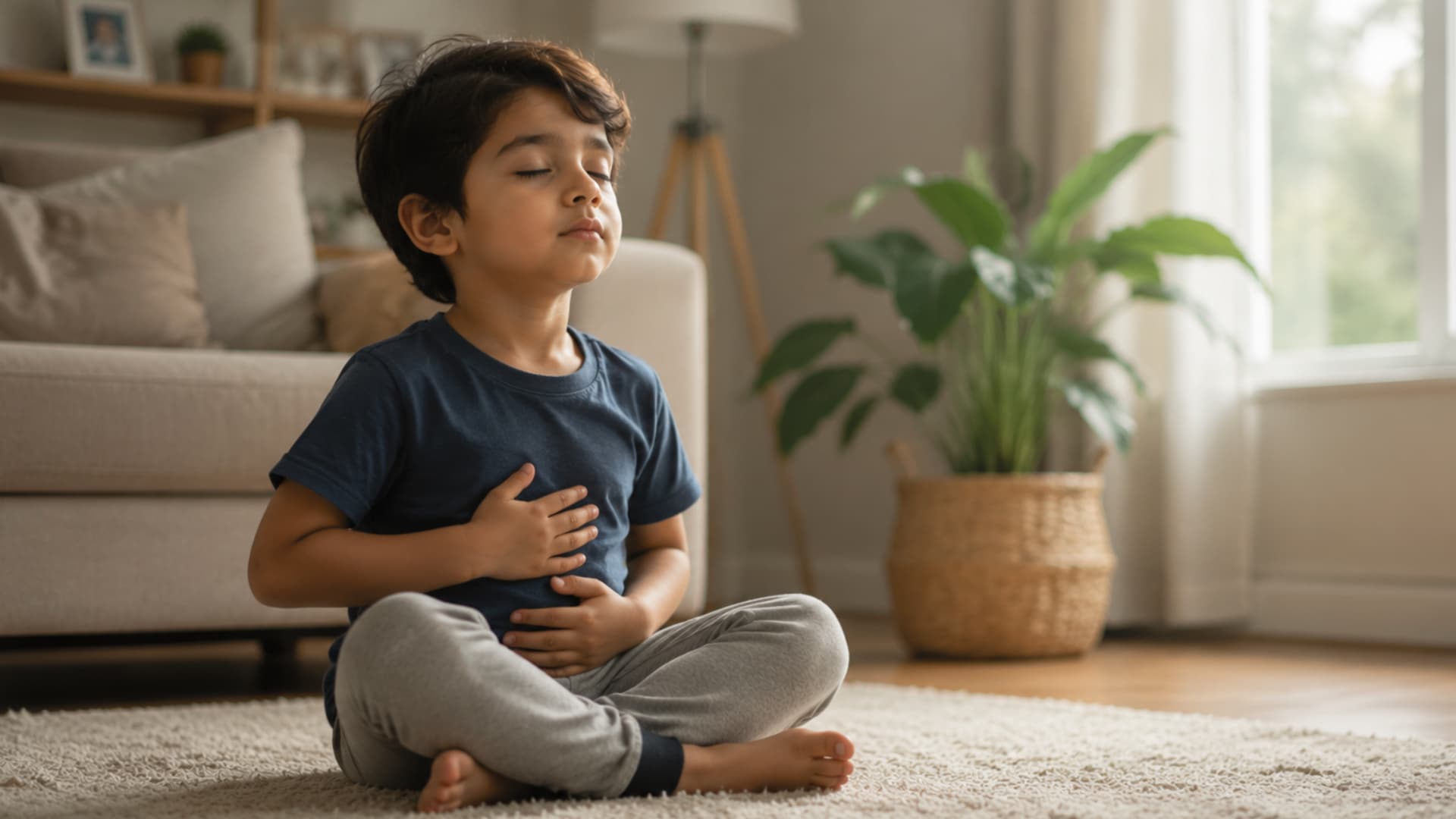
Have the child place both hands on their belly and imagine it filling like a balloon on the inhale, then slowly deflating on the exhale. This is a form of slow, diaphragmatic breathing that activates the parasympathetic nervous system, the body’s built-in brake pedal for stress.
Four or five slow rounds are usually enough to bring a visibly lower heart rate and a calmer body language, which is why I recommend this one first for anger or overstimulation.
2. Five Senses Check-In
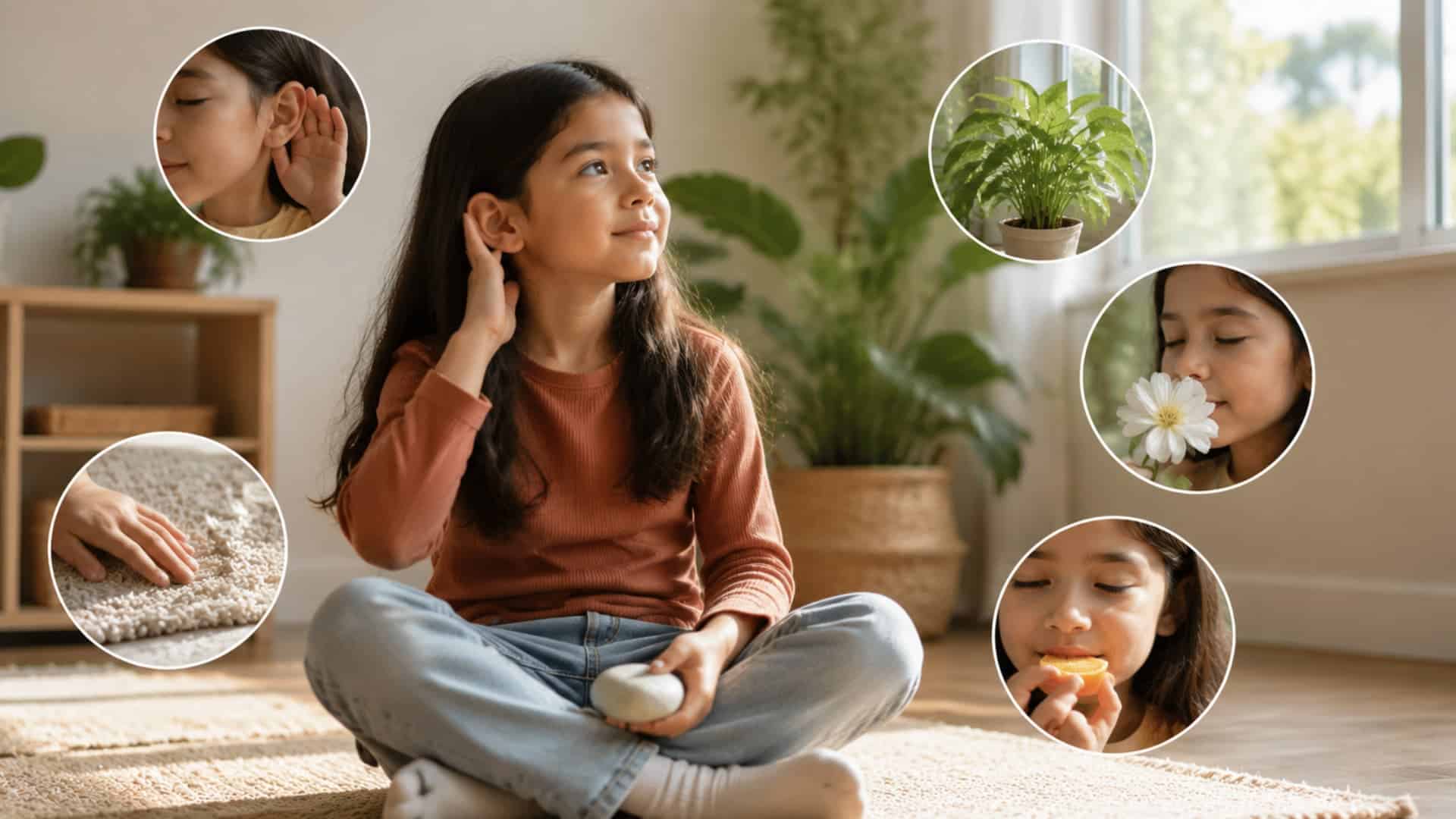
Walk the child through naming five things they can see, four they can hear, three they can feel, two they can smell, and one they can taste.
Because it uses five different senses at once, it’s hard for a busy, anxious mind to keep spinning while doing it, which is exactly the point: you’re interrupting overthinking by giving attention somewhere concrete to land.
3. Glitter Jar Calm-Down
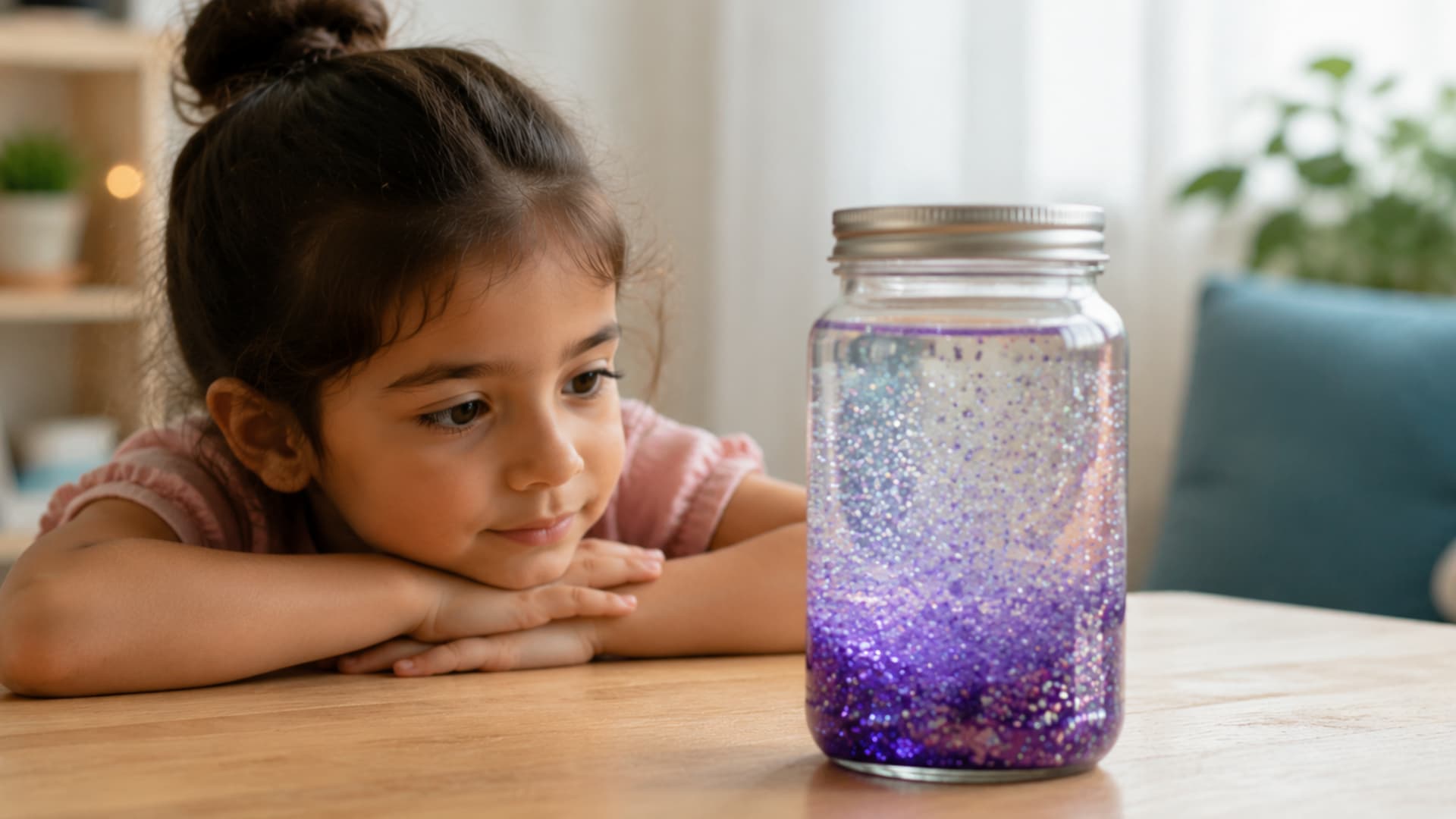
Shake a jar of water, a spoonful of glue, and glitter, then watch together as it settles. I keep the script short: “Watch how fast the glitter is moving, that’s like your thoughts when you’re upset.
Let’s breathe slowly and watch it settle.” No further explanation needed; the visual does the teaching.
4. Mindful Eating
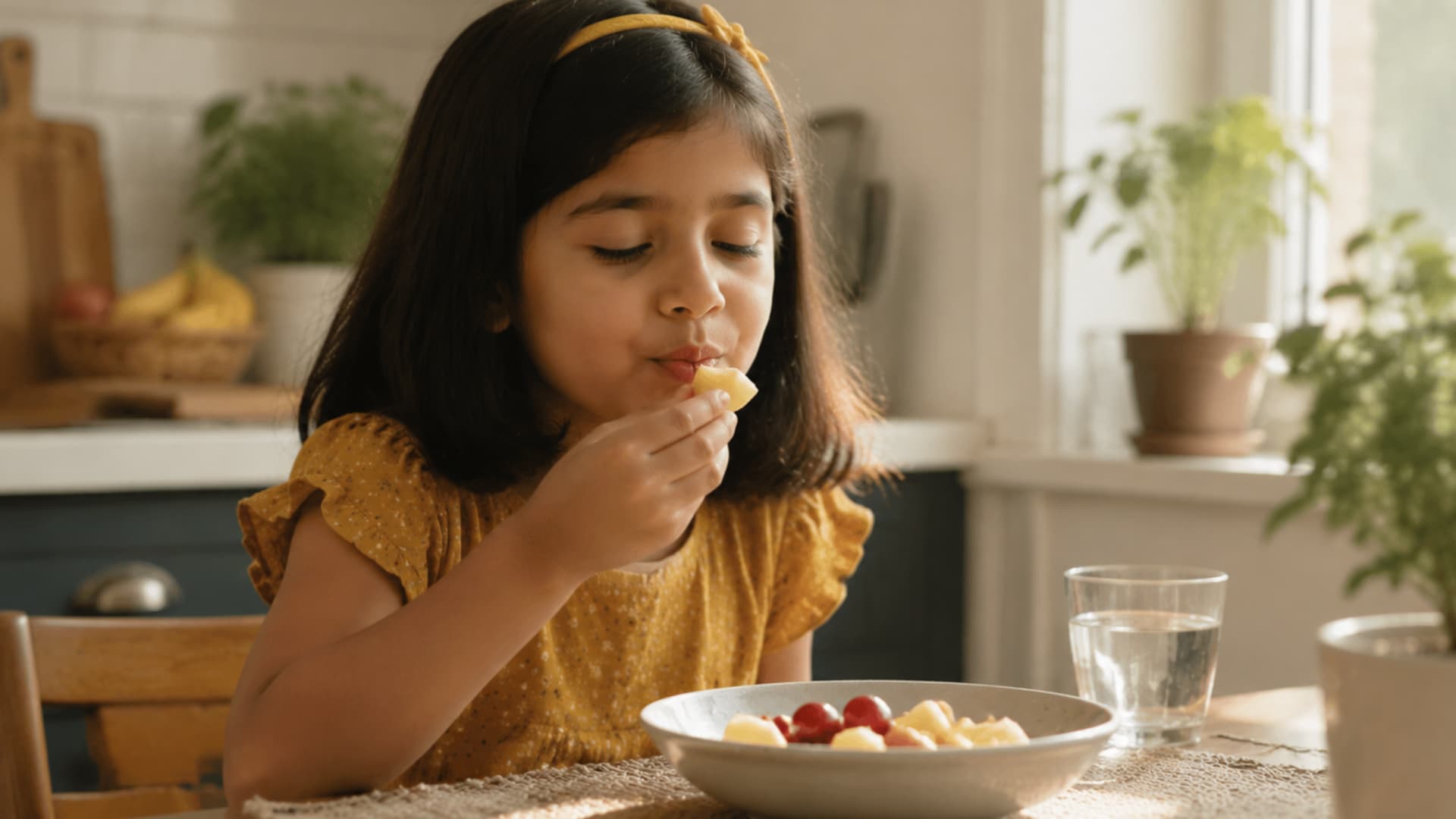
Give the child one small snack; a raisin or a cracker works well, and ask them to notice the texture, smell, and sound before each bite, pausing between bites instead of eating on autopilot.
This pairs naturally with a simple after-school snack setup, since the same slow, unhurried habit carries over from the plate to the rest of the routine.
5. Bedtime Body Scan
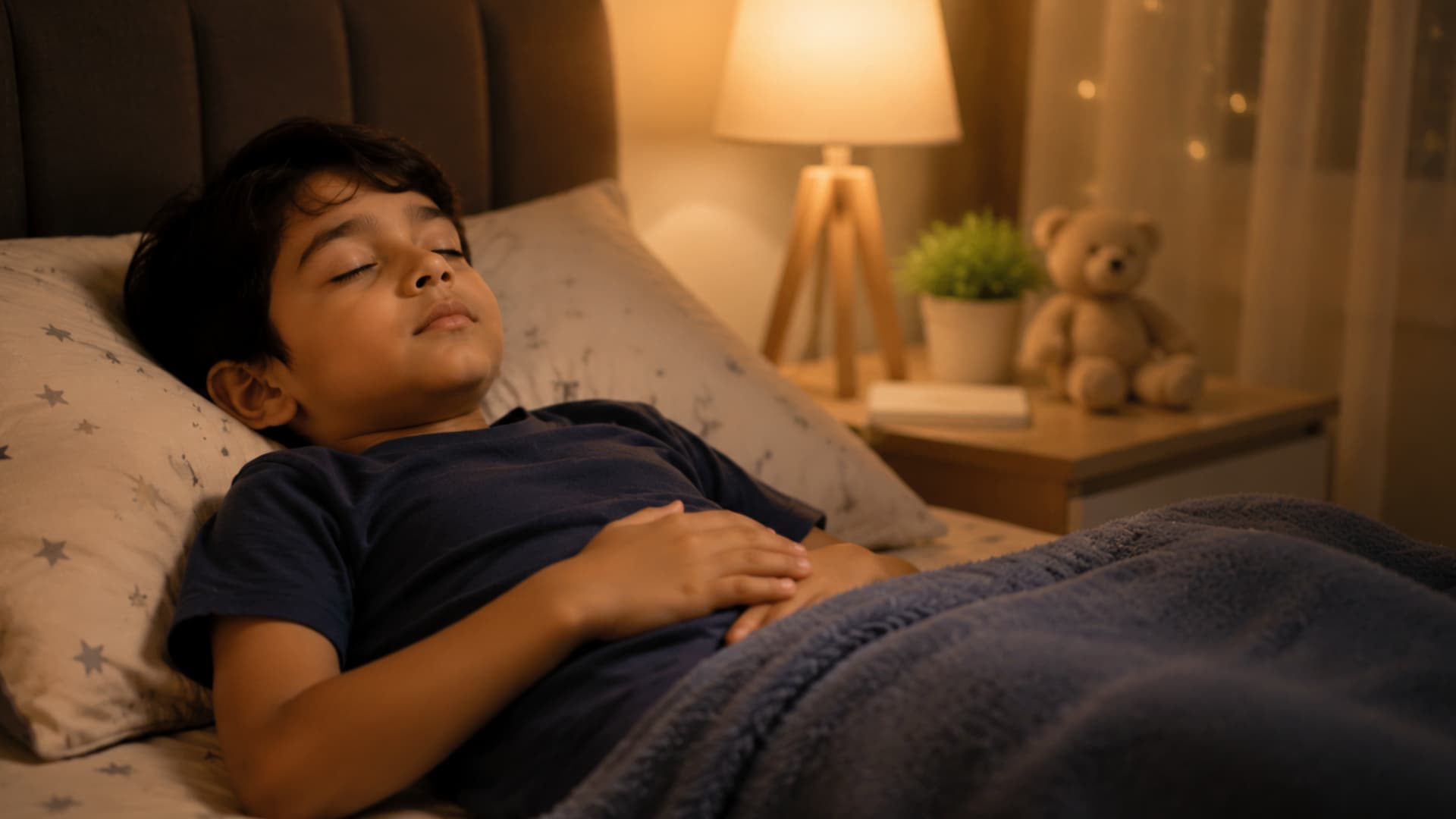
Lying down, guide attention slowly from forehead to shoulders, arms, stomach, legs, and feet, noticing tension without trying to fix it. This is one of the better tools for a child who struggles with nighttime restlessness.
Mindfulness Activities for Kids in School
Classrooms move fast, and kids don’t get much room to reset between transitions. These are the ones I’d hand a teacher first.
6. Pinwheel Breathing
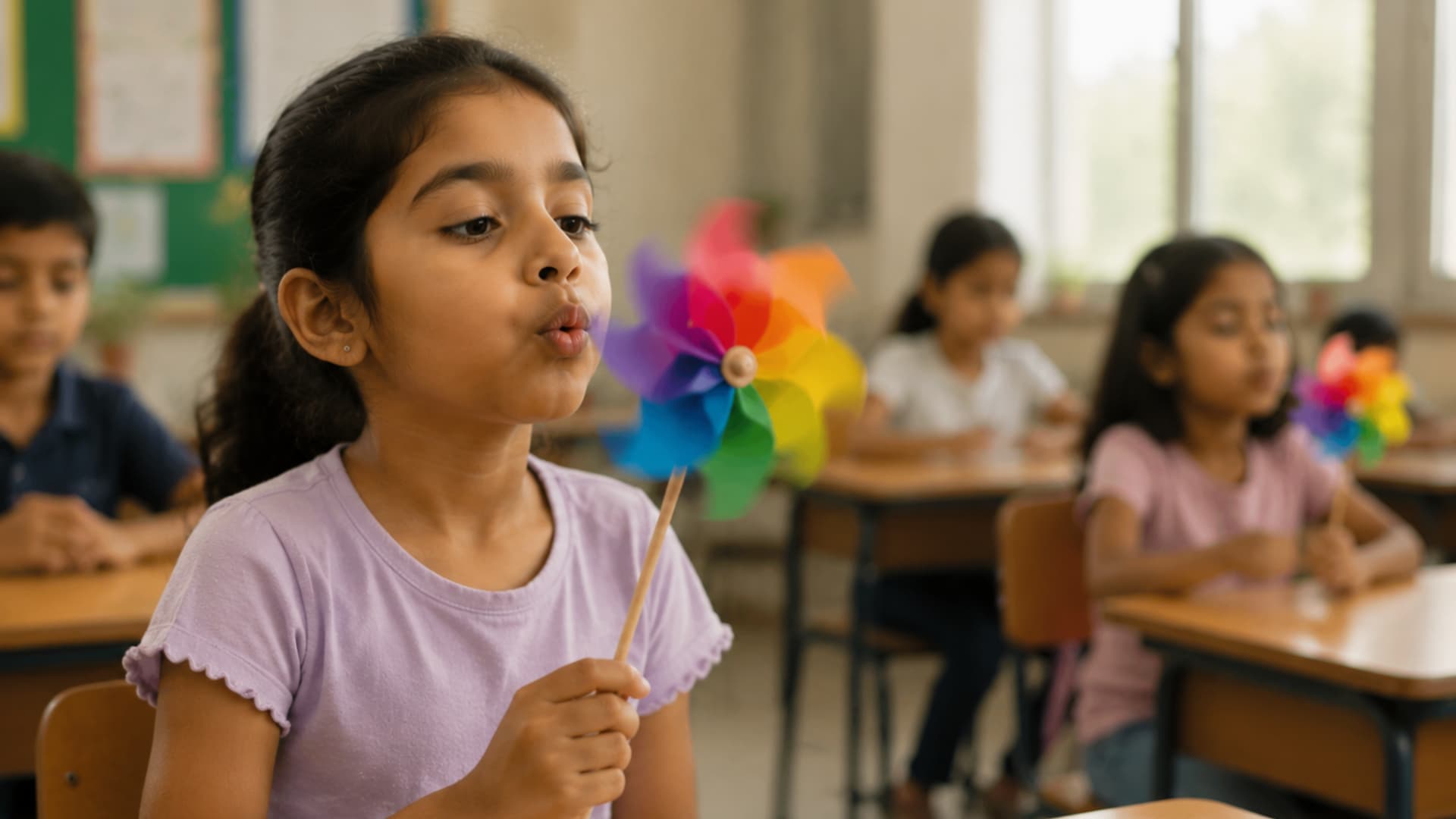
Kids blow on a pinwheel and work on keeping it spinning steadily rather than fast, which trains slow, controlled exhales. It’s a good pre-test or pre-transition reset because it’s fast and doesn’t require sitting still with eyes closed, which some kids resist.
7. Silent Bell Listening
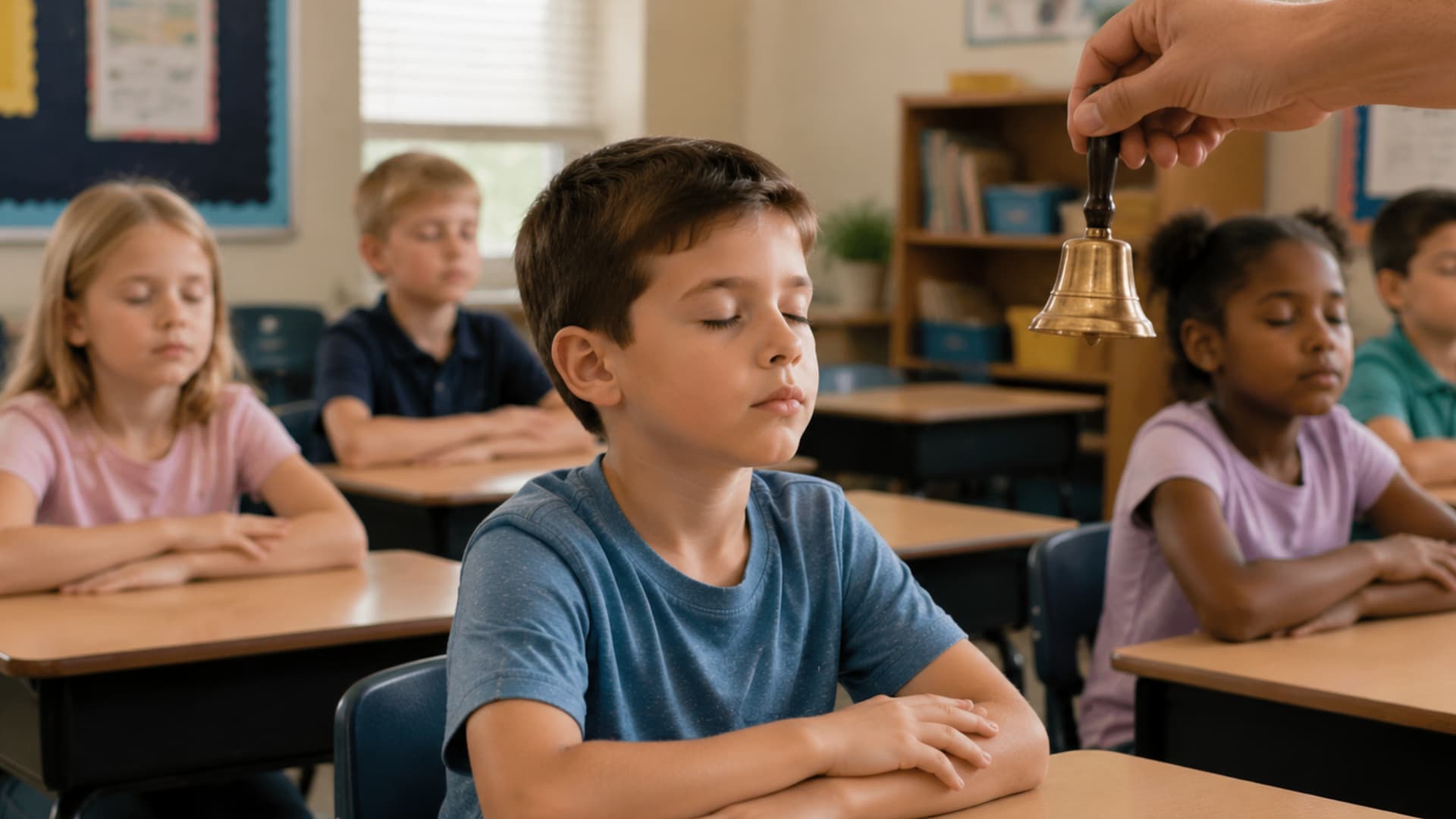
Ring a bell or chime, and have students stay silent until they can no longer hear it, then raise a hand when the sound fades completely.
It’s a simple way to build sustained attention to a single input, a skill that transfers directly to classroom listening.
8. Freeze and Notice
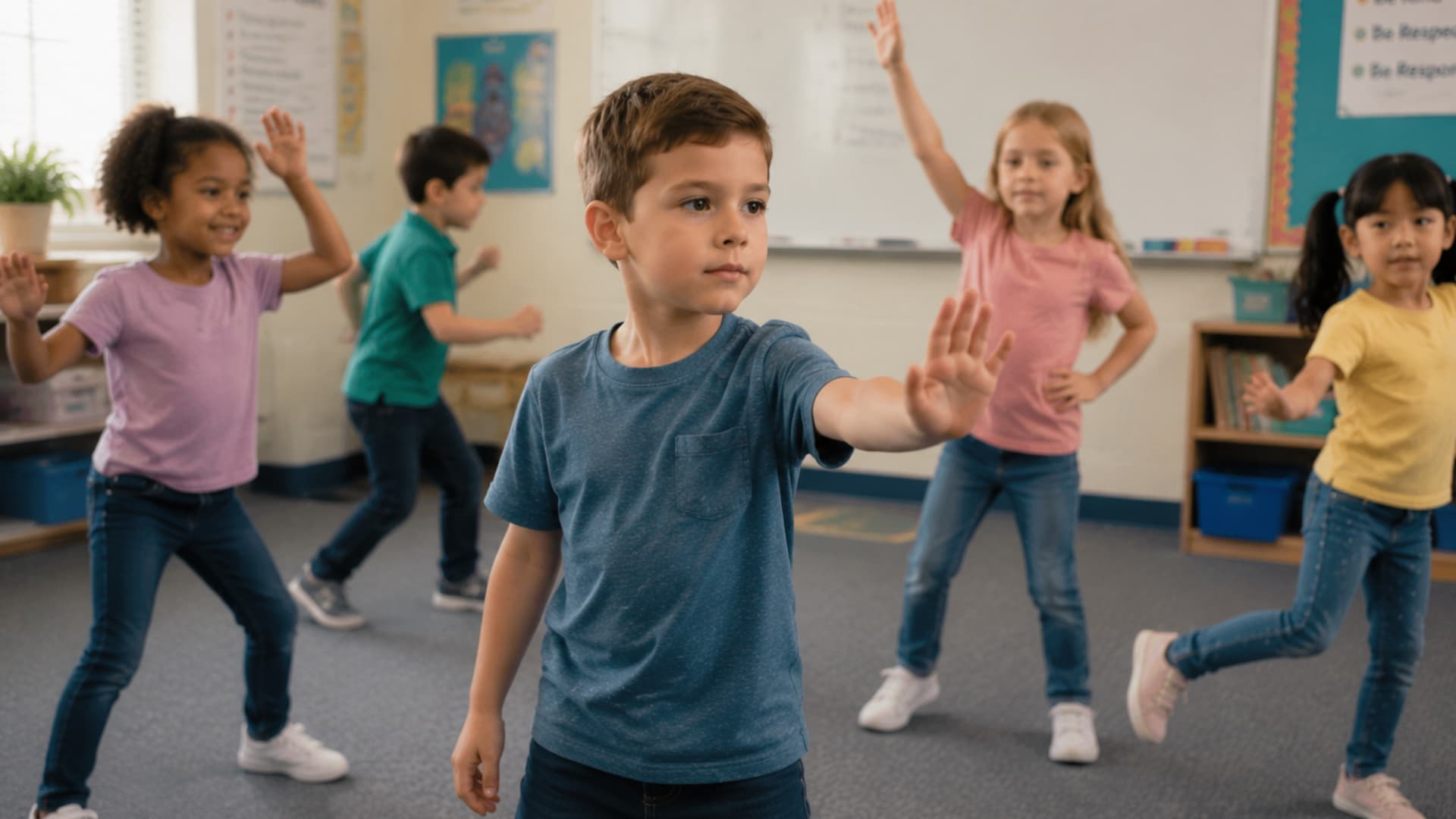
Play music, let kids move freely, then have them freeze the instant it stops and notice how their body feels.
The contrast between motion and stillness is what teaches the self-regulation skill here, and it works especially well for kids who find sitting-still mindfulness boring.
9. Classroom Transition Breathing
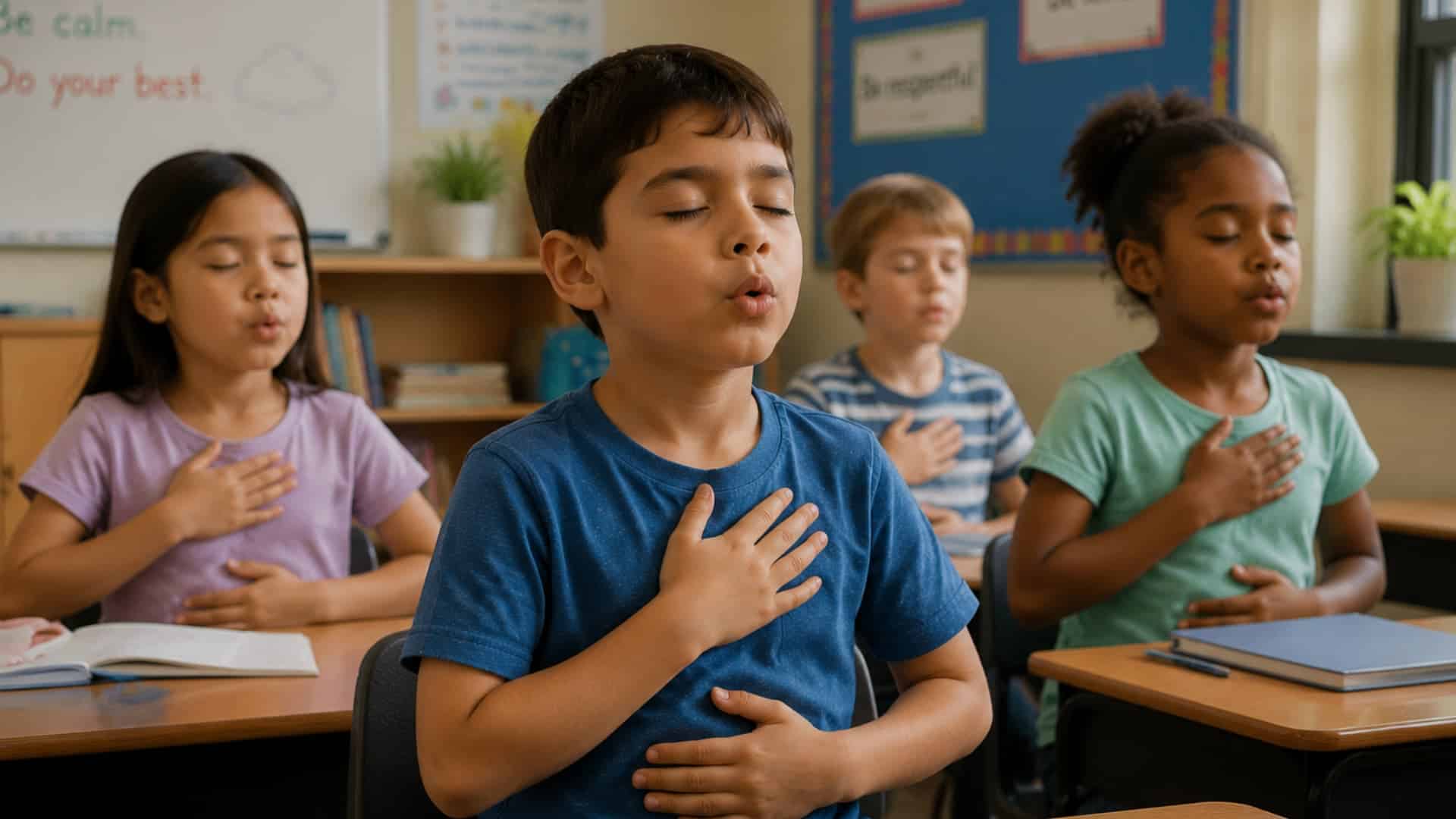
Before switching subjects, have the class take three slow breaths together, in through the nose and out through the mouth. Three breaths is genuinely enough; the point is the reset, not the duration.
10. Grounding Pause
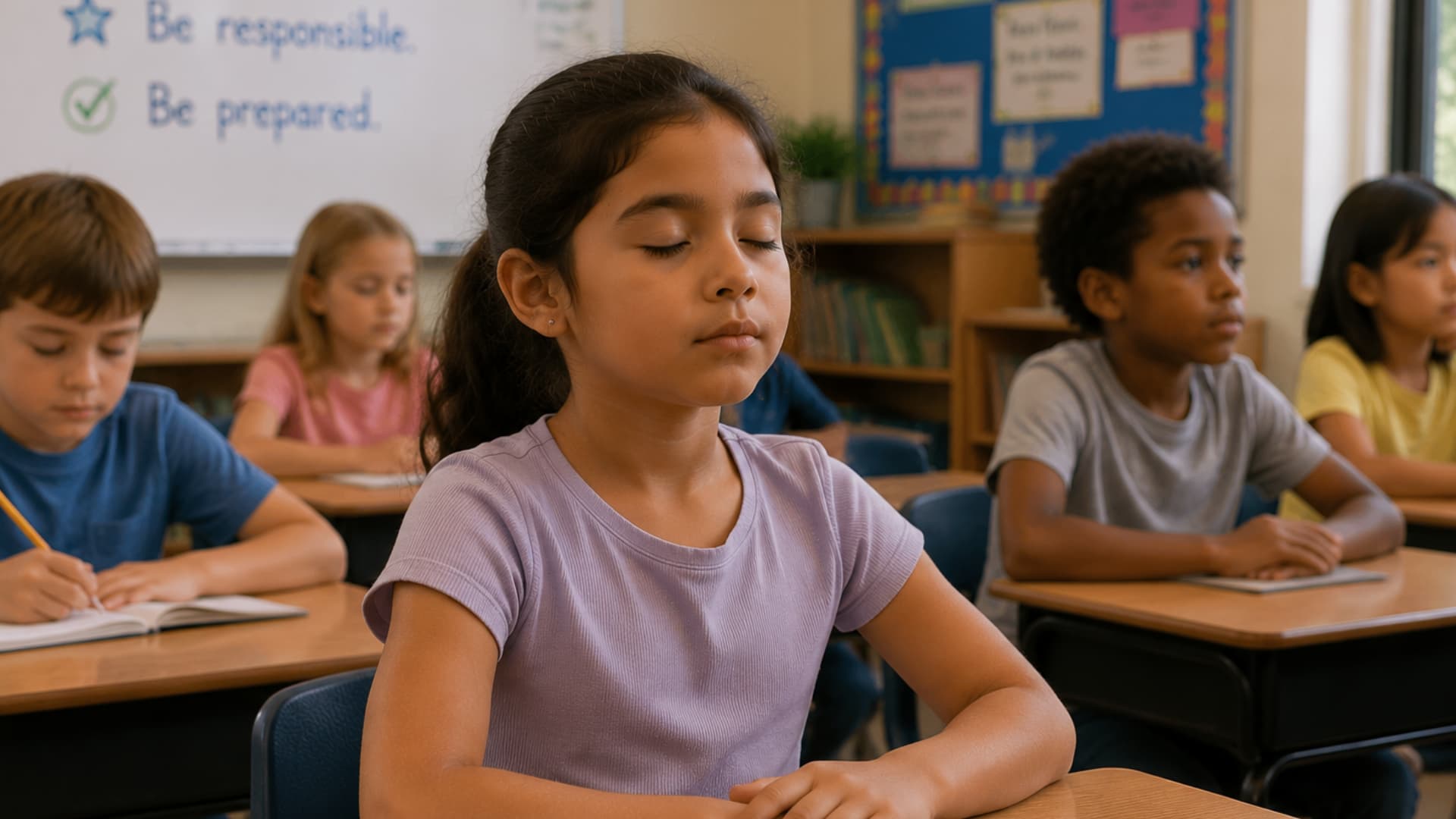
Feet flat on the floor, hands resting. Have students identify three different sounds in the room. It’s a low-effort way to pull scattered attention back before starting a new task.
Mindfulness Activities for Therapy or Emotional Support Settings
11. Teddy Belly Breathing
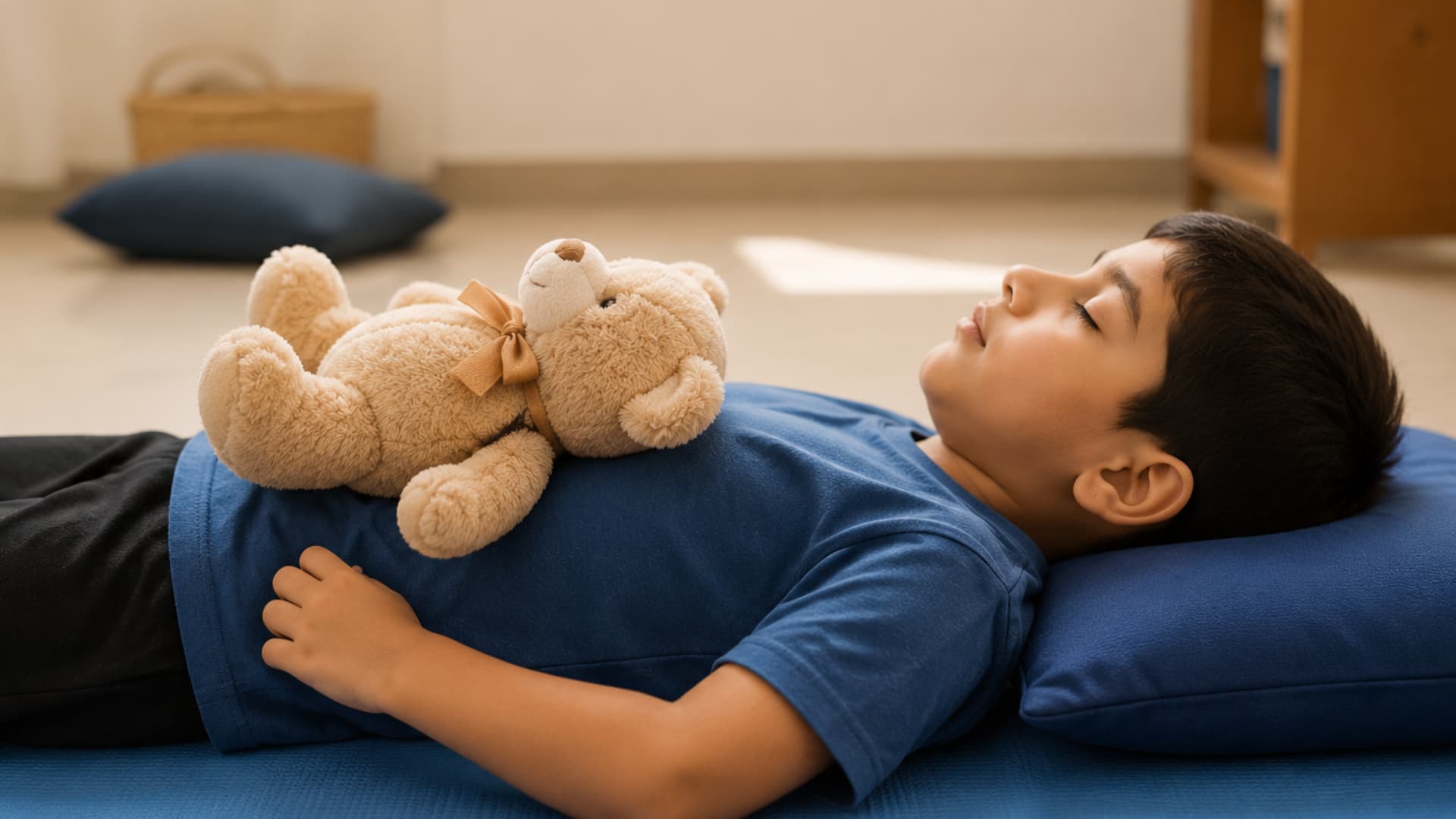
A stuffed toy on the belly rises and falls with each breath, giving a child visual proof that slow breathing is happening. The comfort object also softens the exercise for kids who find straightforward breathing instructions too clinical or bare.
12. Emotion Naming
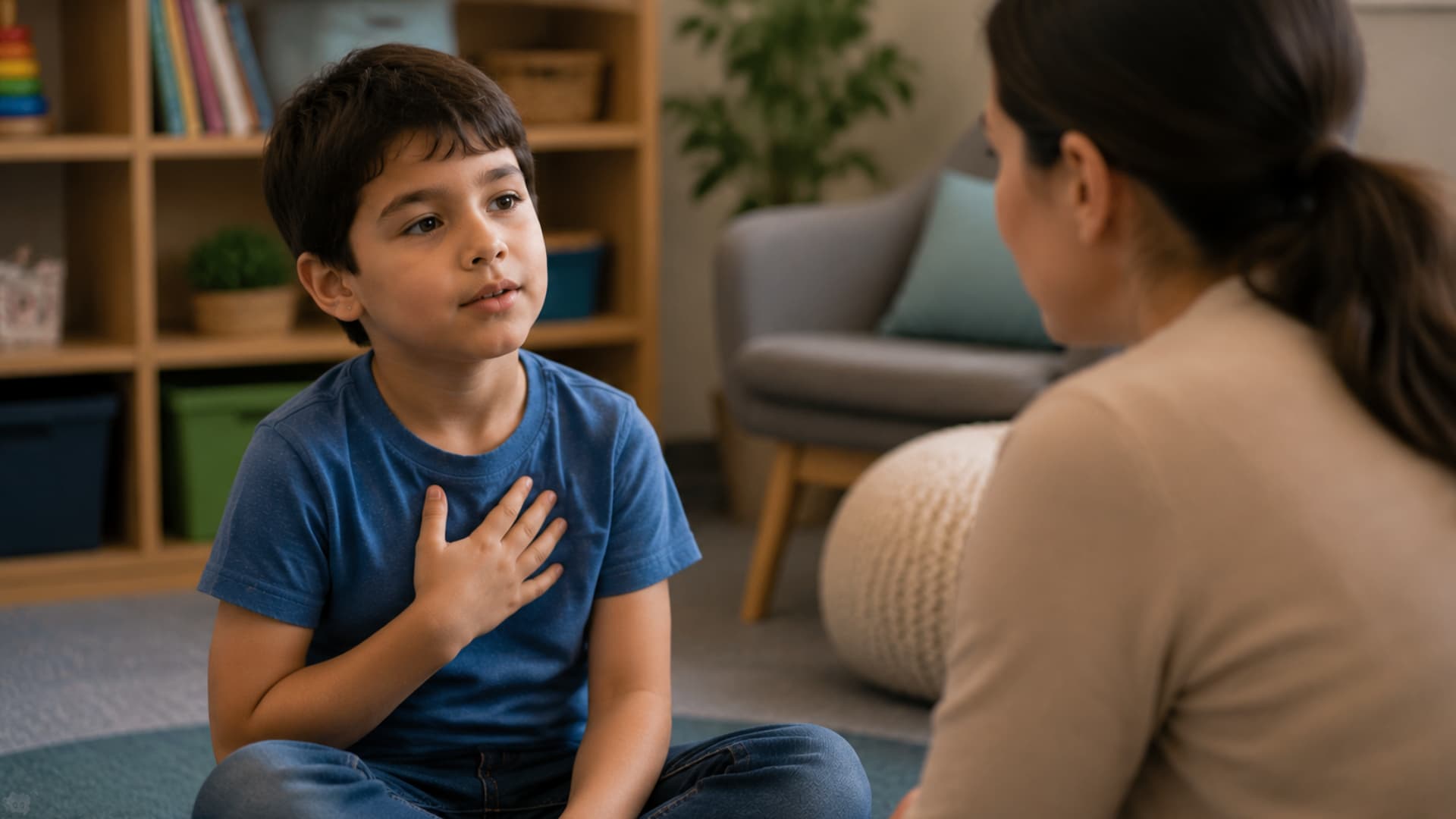
Encourage the child to say “I feel angry” or “I feel worried” without judgment. That small act of naming creates a pause between the feeling and the reaction, which over time builds a working emotional vocabulary instead of frustration or withdrawal as the default response.
13. Thought Cloud Visualization
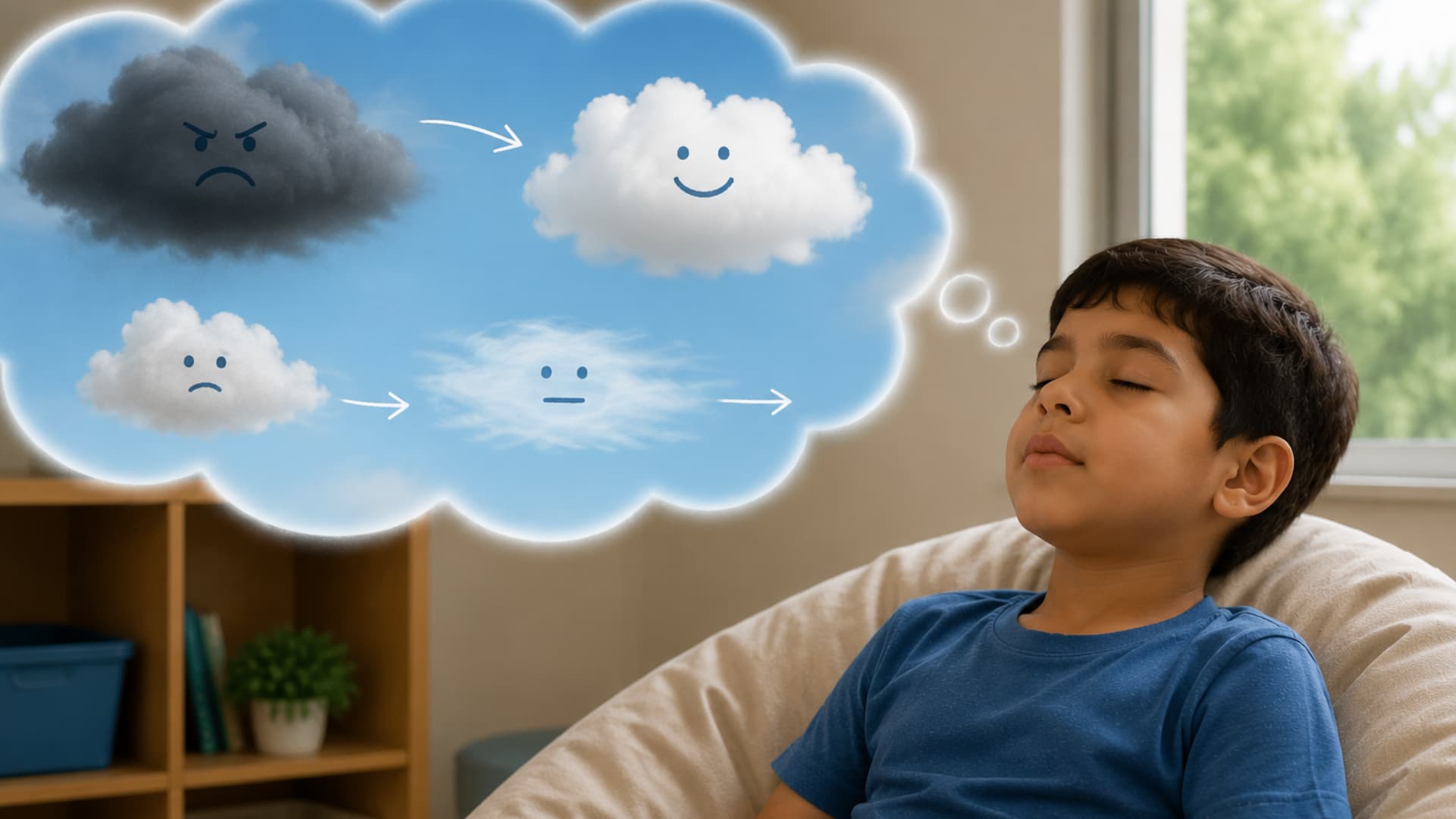
Ask the child to picture thoughts as clouds passing across the sky, some dark, some light, all temporary. This gives kids emotional distance from a difficult thought without needing to argue with it or fight it off.
14. Muscle Relax and Release
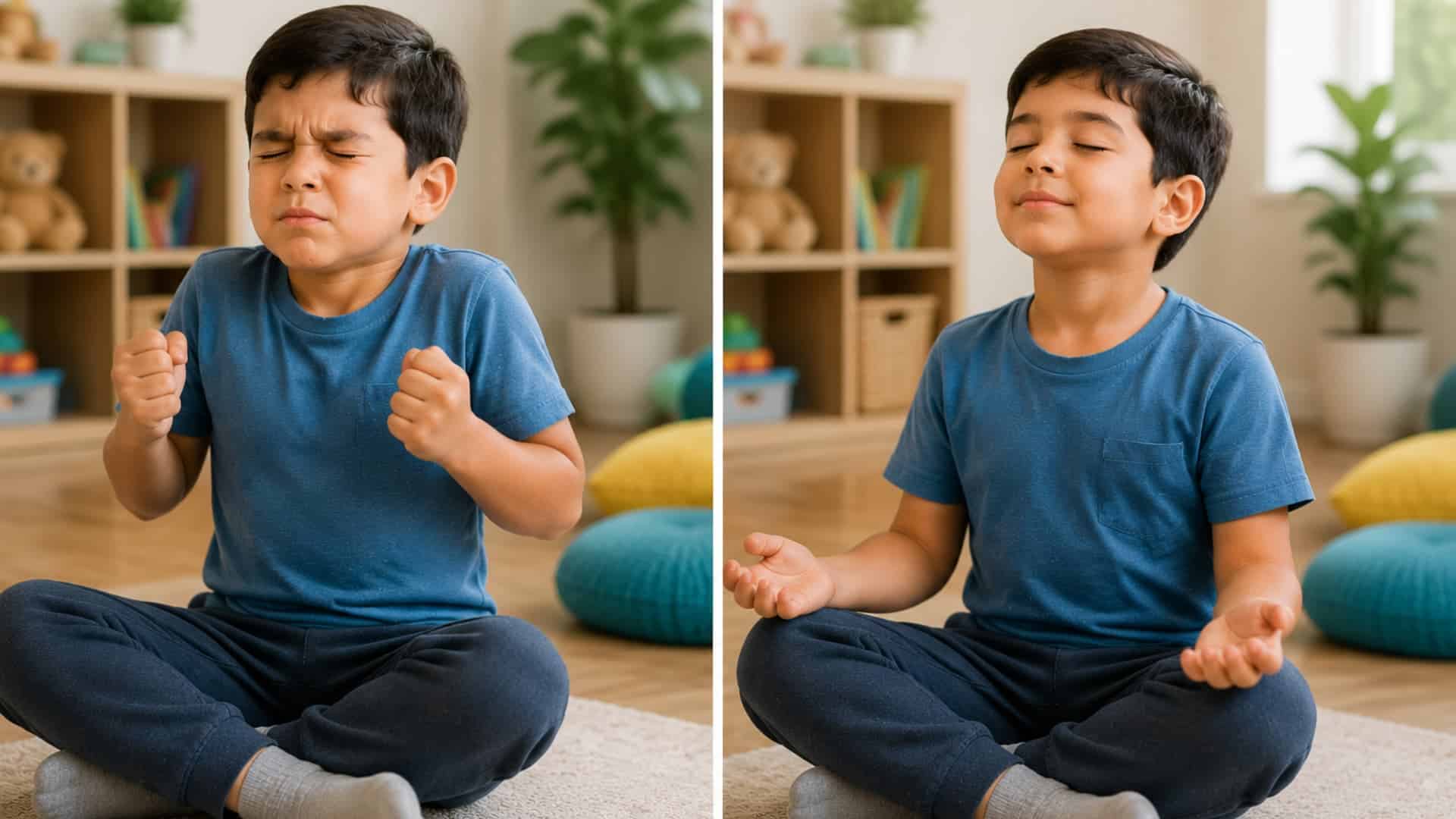
Tighten a muscle group, fists, shoulders, or legs, for about 5 seconds, then let go completely. This is progressive muscle relaxation in its simplest form, and it’s one of the more direct ways to release physical tension tied to frustration or overstimulation.
15. Safe Place Visualization

Guide the child to imagine somewhere they feel completely safe, real or invented, and fill in small details like colors, sounds, and temperature. This gives them a mental “pause space” to return to during anxiety or overwhelm.
Movement-Based Mindfulness Activities
Some kids simply can’t do stillness, and that’s fine. These build body awareness without asking for it.
16. Mindful Walking
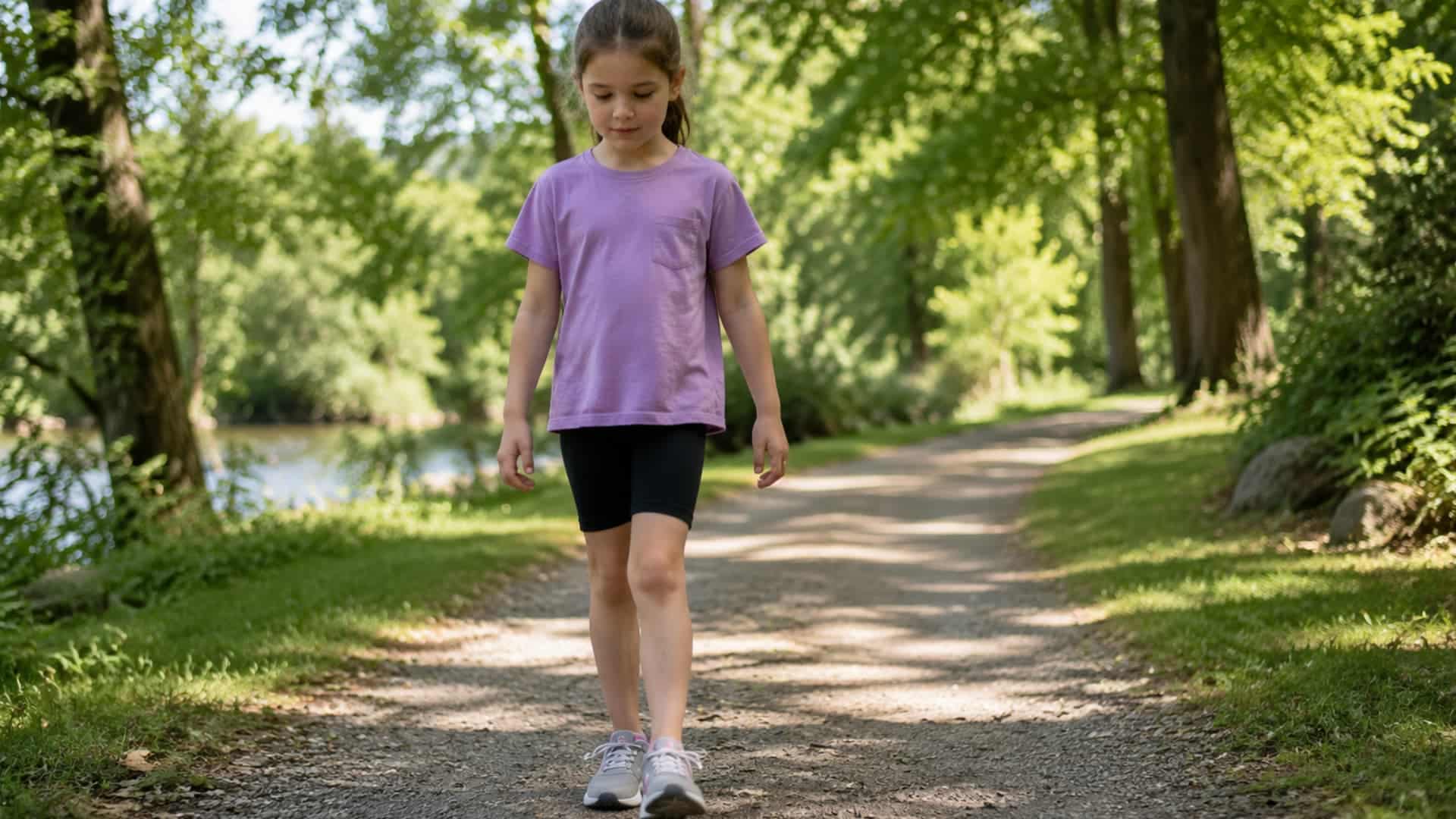
Encourage the child to walk slowly and naturally while paying attention to each step, the feeling of their feet touching the ground, and the rhythm of their movement. It supports emotional regulation by connecting movement with present-moment attention.
Guide them to also notice their breathing and surrounding sounds, such as footsteps, wind, or nearby voices, without judging or reacting to them. This activity helps children develop grounding skills and improves body awareness.
17. Animal Movement Breathing
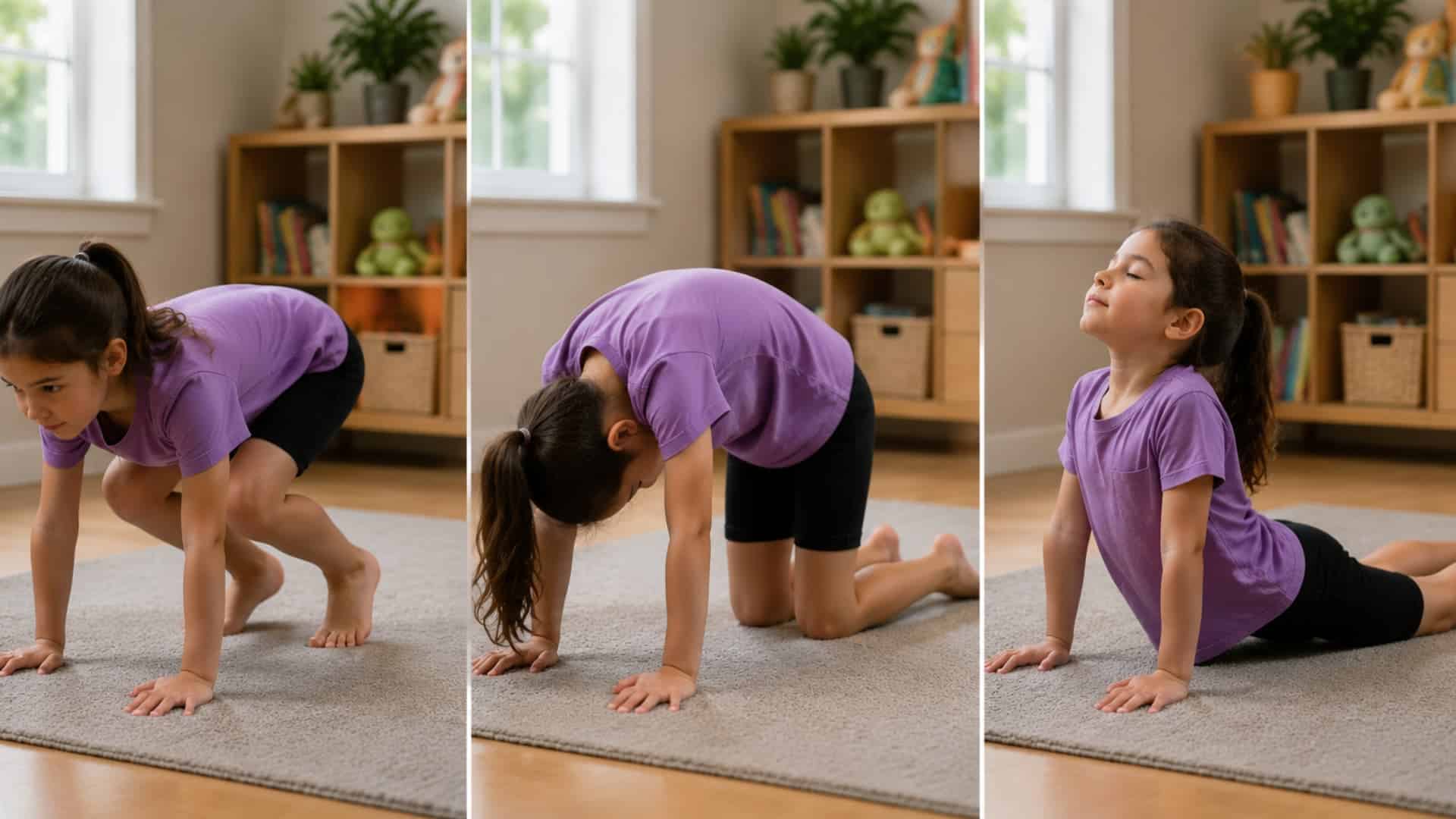
Encourage children to move slowly like different animals, such as a heavy bear, a gentle turtle, or a stretching cat, while matching each movement with their breathing.
Instead of focusing on how the movement looks, guide them to notice internal shifts—like changes in balance, energy, and effort—as they move. This activity supports body awareness, improves coordination with the breath, and helps release built-up energy in a controlled way.
Sensory Mindfulness Activities for Kids
Sensory mindfulness helps slow this response and brings their attention back to what they are directly experiencing. These activities use touch, sound, sight, smell, and movement to ground children in the present moment.
18. Texture Bag Exploration
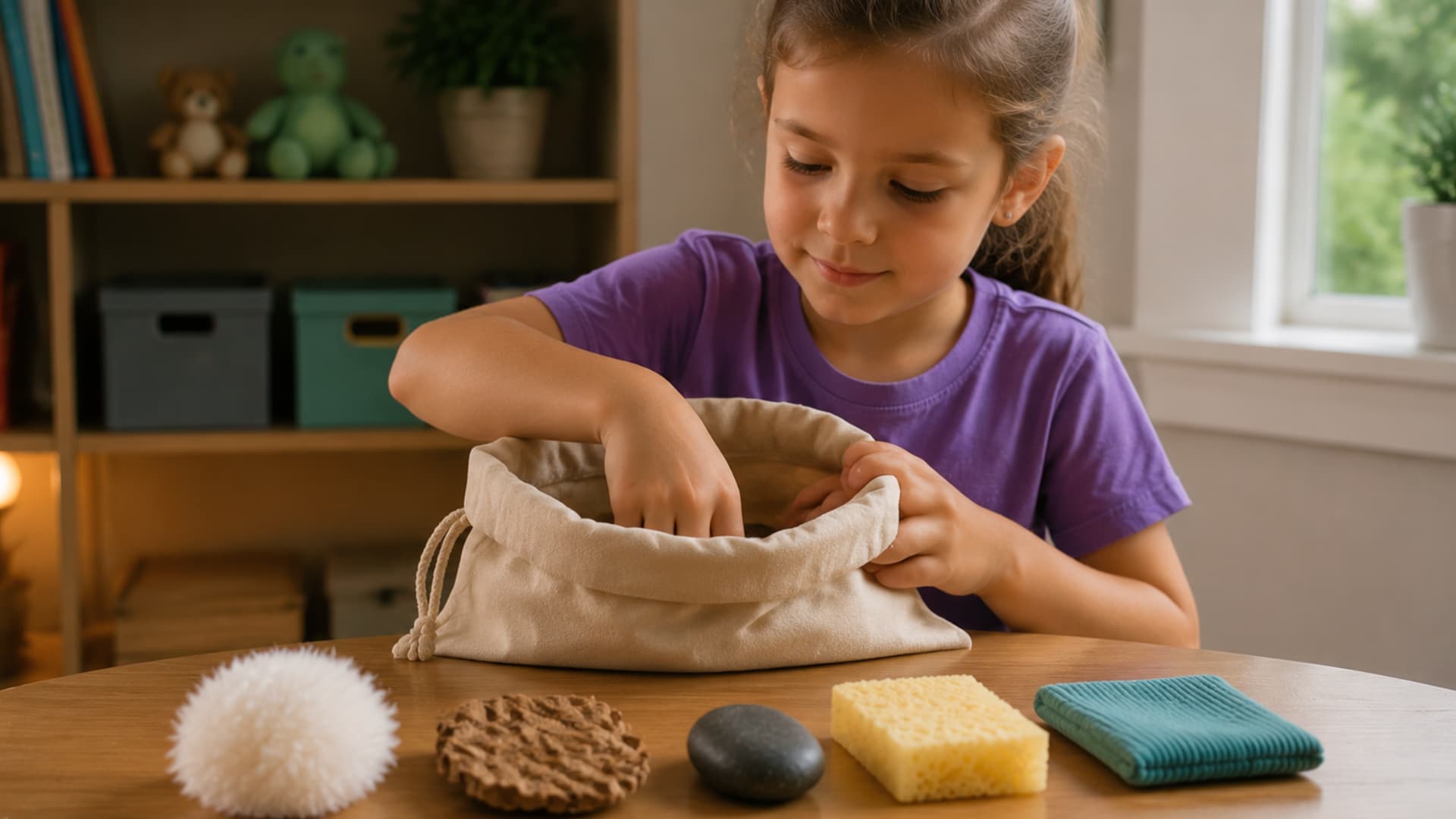
Place a variety of safe objects with different textures inside a bag, such as soft fabric, rough paper, smooth stones, or sponges, and ask the child to explore them using only touch without looking inside.
Let them slowly move from one object to another, paying attention to how each one feels against their fingers and comparing the sensations. This activity strengthens tactile sensory awareness, improves concentration, and helps children stay present by focusing attention on one sense at a time.
19. Sound Awareness Challenge
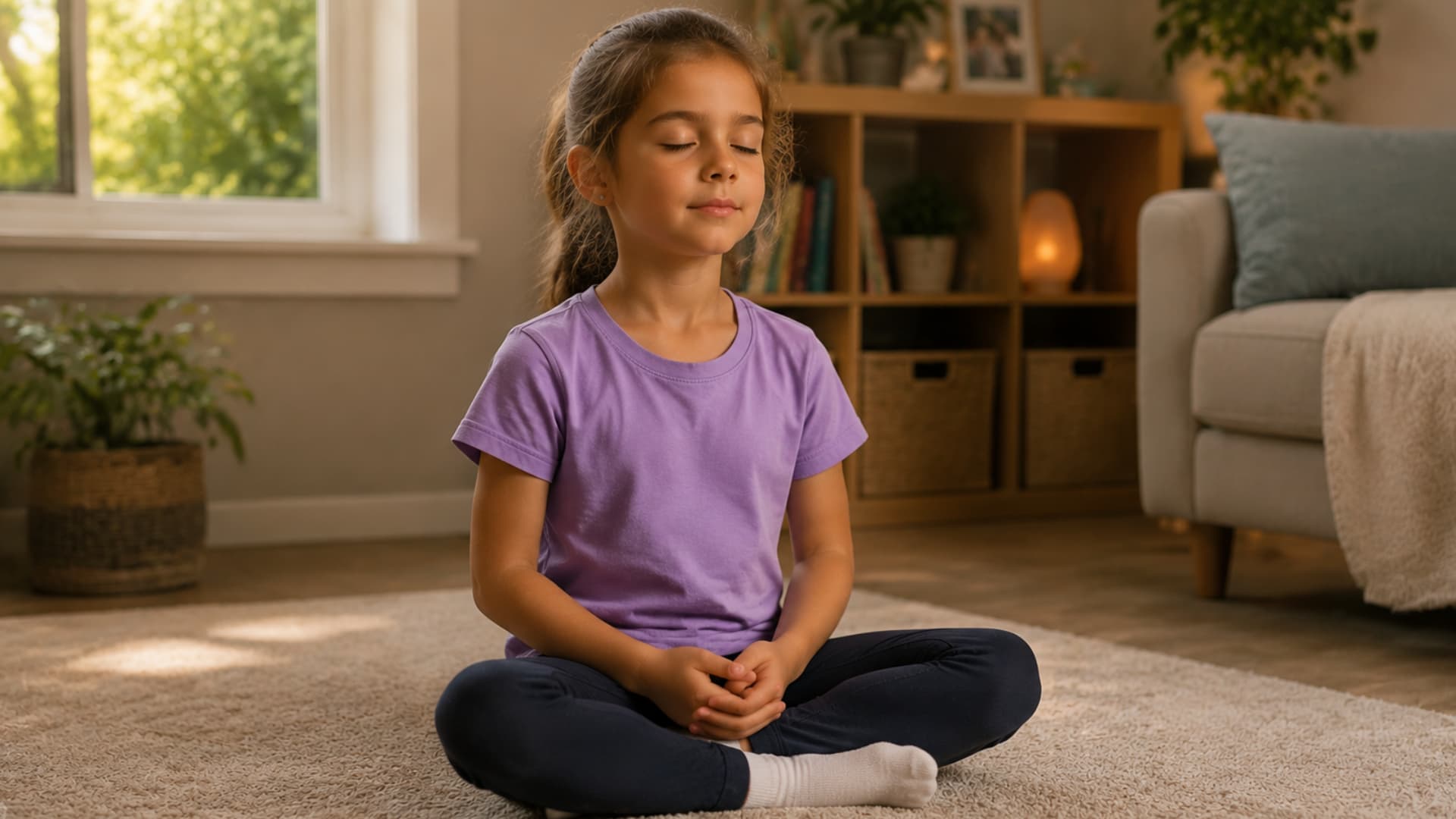
Ask children to close their eyes and listen carefully to the sounds around them, noticing both nearby and distant noises such as voices, movement, nature sounds, or everyday background activity.
Guide them to observe how each sound appears, changes in intensity, and slowly fades away, without reacting to it or labeling it as good or bad. The focus is only on listening, not judging or analyzing.
This practice strengthens auditory attention, improves concentration, and helps children stay grounded in the present moment. It is especially useful for calming a busy mind, reducing distraction, and building awareness of the environment in a gentle, non-stimulating way.
20. Color Focus Observation
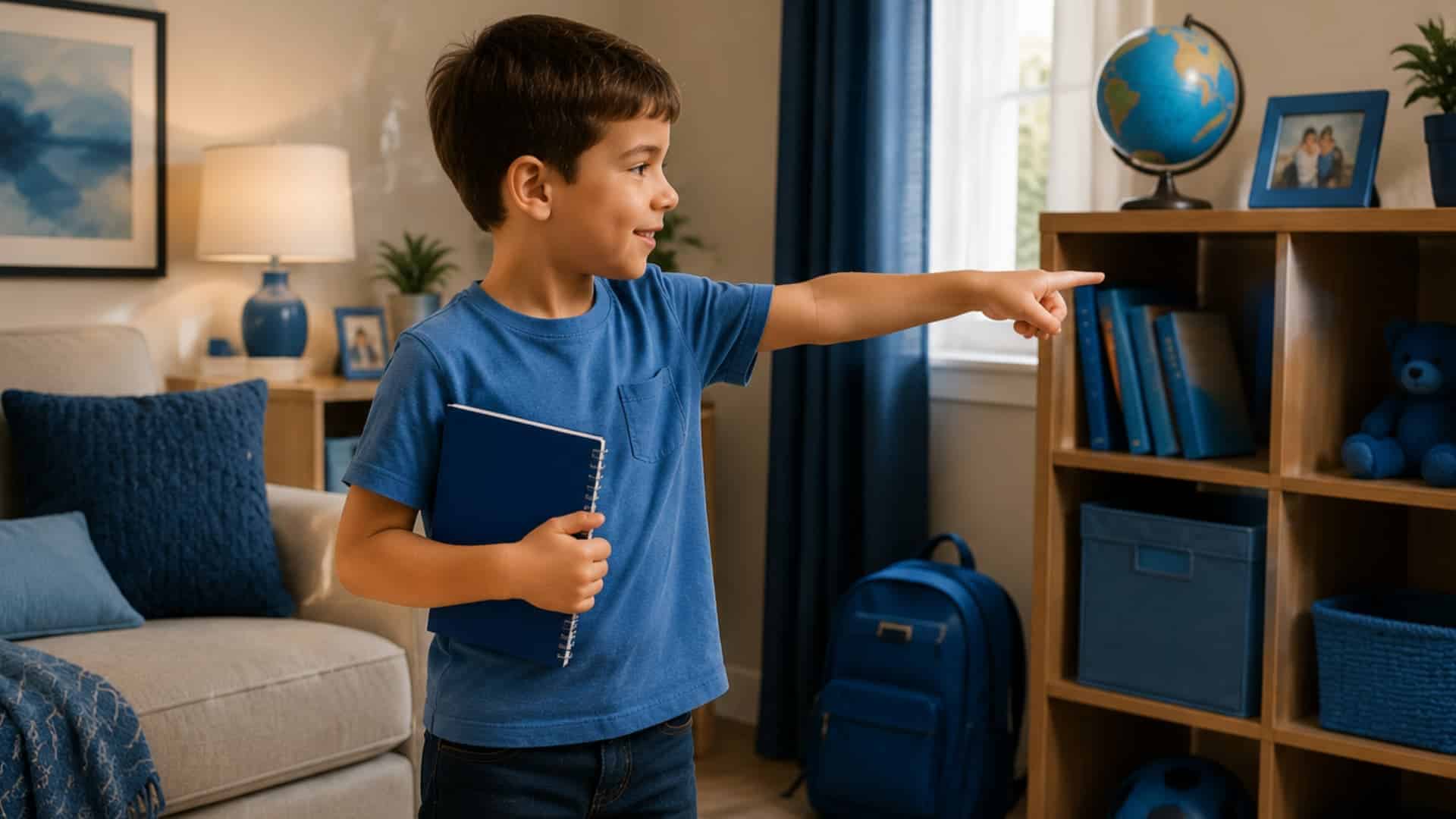
Let children choose one color and search for it in their surroundings, identifying as many objects of that color as they can both indoors and outdoors. Encourage them to slow down as they find each item and notice how their focus becomes more steady and intentional over time.
Ask them to observe where the color appears most frequently and whether it shows up in unexpected places. This helps children train their visual attention to stay on one simple target instead of jumping quickly between distractions.
Over time, this activity supports better concentration, reduces scattered thinking, and builds the ability to sustain focus in both learning environments and everyday situations.
21. Smell and Memory Connection
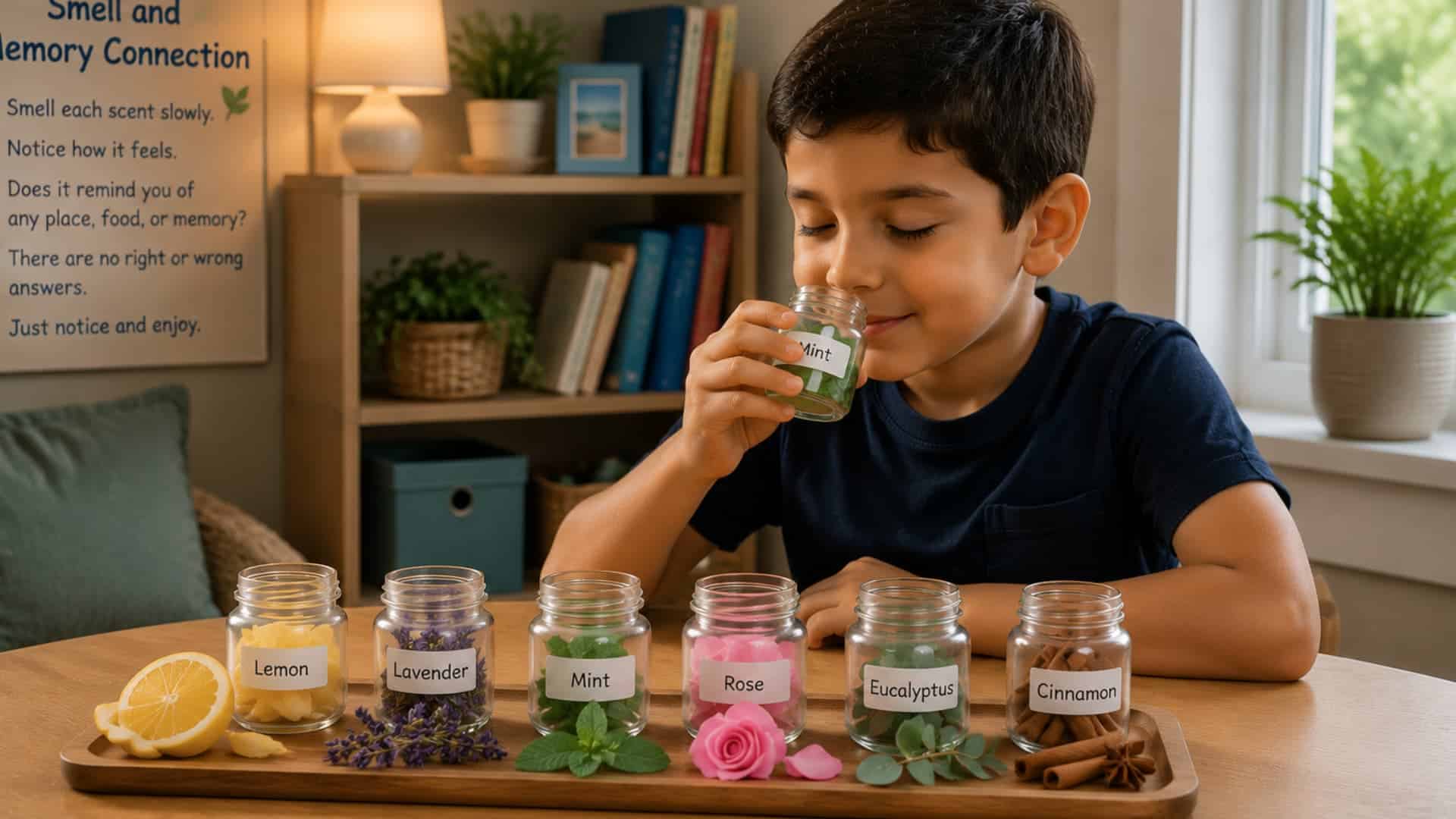
Provide children with safe natural scents, such as citrus peels, herbs, flowers, or mild essential oils on cotton balls, and ask them to gently smell each one at turn.
Encourage them to notice how each scent feels and whether it reminds them of any place, food, or memory without forcing a specific answer or judgment. The focus stays on slow, mindful smelling and noticing the body’s reactions.
This activity enhances olfactory awareness, strengthens sensory focus, and helps children ground themselves by linking present sensations with calm attention and gentle memory recall.
Tips for Using Mindfulness Activities with Kids
- Keep sessions short: two to five minutes is the right range for younger children’s attention spans.
- Use playful language: frame it as a game, not an assignment.
- Practice together: a child is more likely to stay with it if an adult is doing it too.
- Repeat daily: consistency matters more than duration for building the underlying skill.
- Allow movement: don’t force stillness on a child who regulates better through motion.
When used with flexibility and consistency, these small practices become part of a child’s natural routine, helping them manage emotions, improve focus, and feel more grounded throughout the day.
Frequently Asked Questions
At what age can kids start practicing mindfulness?
Most preschool-age children, around 3 to 4 years old, can handle very short, sensory-based activities like a glitter jar or a simple breathing exercise. Breath and body-awareness practices tend to work better once a child is 5 or older and can follow multi-step instructions.
How long should a mindfulness session be for a child?
Two to five minutes is the practical range for most kids. Longer sessions usually backfire because the child disengages before the activity finishes, which undercuts the habit you’re trying to build.
Can mindfulness help kids with ADHD?
There’s growing evidence that mindfulness supports attention and self-regulation in kids with ADHD, though the National Center for Complementary and Integrative Health notes the research base is still developing. It works best as a complement to an existing treatment plan, not a replacement for one.
Do mindfulness activities require adult supervision every time?
Young kids need initial guidance to understand an activity, but many can eventually do simple exercises independently. In classrooms or therapy settings, adult supervision should continue to ensure that technique and emotional safety remain consistent.
How quickly will I see results from mindfulness practice with my child?
Some children show small improvements in focus and calmness within days. Deeper emotional regulation tends to build over several weeks of consistent, short daily practice rather than occasional long sessions.
What’s the best time of day for mindfulness practice with kids?
Morning sessions tend to support focus for the day ahead, while evening practice supports winding down for sleep. Short mindfulness breaks also work well between tasks or right after an emotional moment, whenever the reset is actually needed.
Can mindfulness activities help with a child’s anxiety specifically?
Current research suggests mindfulness can meaningfully reduce anxiety symptoms and improve emotional regulation in children, though study sizes remain small. For a child with a diagnosed anxiety condition, mindfulness works best alongside professional treatment rather than in place of it.
Final Takeaway
When I look at how children respond to daily stress, I notice that small, consistent practices often make the biggest difference. You don’t need complex tools or long routines to help a child feel more balanced and aware.
Across different settings, mindfulness activities for kids support emotional regulation, improved focus, and a calmer approach to handling strong feelings. I’ve seen how even a few minutes of simple breathing, sensory, or movement-based exercises can shift how a child reacts in real situations.
If you start with just one or two activities and practice them regularly, you will see gradual but meaningful changes. Try these ideas with your child, adapt them to your routine, and share your experience or explore more related guides for additional support.