
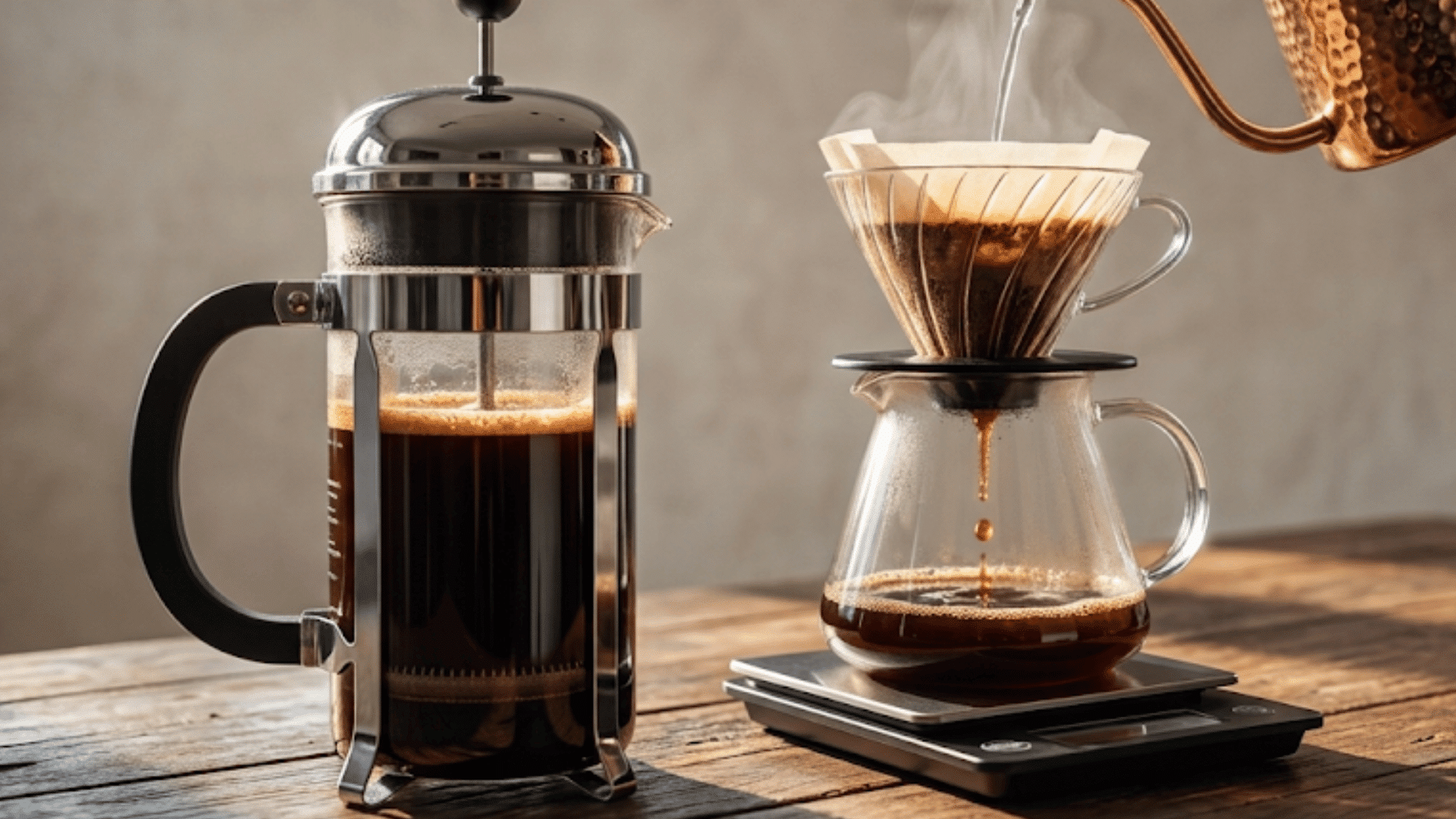
Choosing between a French press and a drip coffee maker can be more difficult than it first appears, as both can produce an excellent cup of coffee.
The better option depends on flavor, texture, brewing time, cleanup, and the type of coffee experience you enjoy.
A French press creates a rich, full-bodied cup, while a drip coffee maker offers consistent results with minimal effort.
Understanding how these brewing methods differ makes it easier to choose the one that fits your taste preferences, lifestyle, and everyday coffee routine.
What Is French Press Coffee?
French press coffee is a method that makes coffee by steeping coarse coffee grounds in hot water before separating them with a metal mesh plunger.
It does not use a paper filter, so more of the coffee’s natural oils and fine particles remain in the cup. This creates a fuller body, richer flavor, and thicker texture.
Brewing usually takes about four minutes, making it a simple process that requires only a French press, hot water, and coffee grounds.
According to the National Coffee Association’s Coffee Brewing Guide, using the proper grind size, coffee-to-water ratio, and water quality helps produce a more balanced and consistent cup of coffee.
What Is Drip Coffee?
Drip coffee is a brewing method where hot water slowly passes through ground coffee held in a paper or reusable filter before dripping into a carafe or cup.
As the water flows through the grounds, it extracts the coffee’s flavor while the filter traps most oils and fine particles.
Most drip coffee is made using an automatic coffee maker, making it convenient for brewing several cups at once.
French Press vs Drip: What’s the Difference?
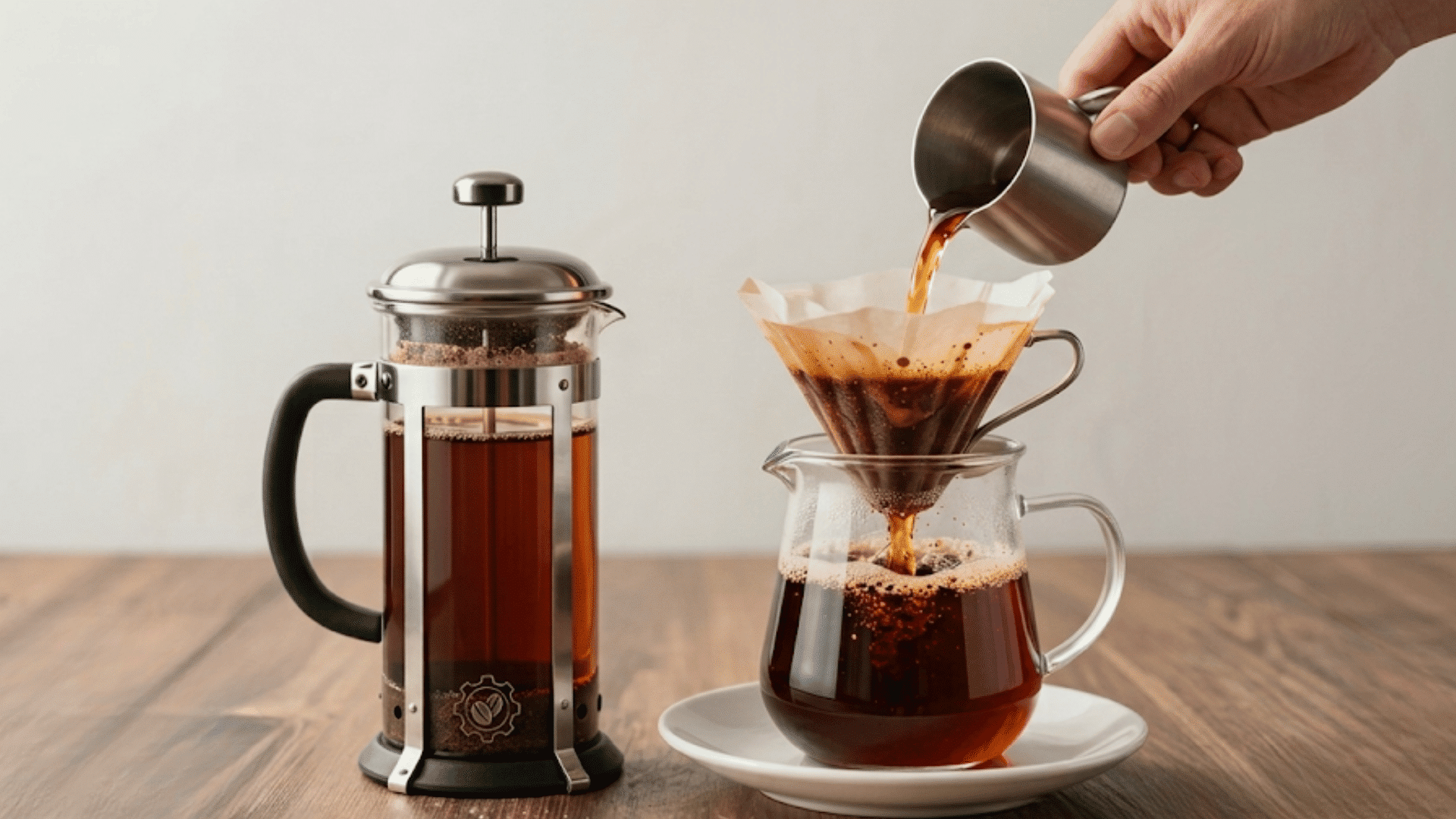
1. Taste and Flavor
French press coffee delivers a rich, bold flavor because the metal filter allows natural oils and fine coffee particles to remain in the cup. This creates a deeper and more rounded taste.
Drip coffee uses paper or reusable filters that remove most oils, resulting in a cleaner, smoother flavor with greater clarity.
Pro Tip: Use a 1:15 to 1:17 coffee-to-water ratio for either brewing method to maintain balanced flavor and consistent strength.
2. Body and Mouthfeel
French press coffee has a full-bodied texture because natural oils and microscopic coffee particles remain after brewing. This creates a richer and heavier mouthfeel.
Drip coffee feels lighter because paper filters remove most oils and sediment before the coffee reaches the cup. The result is a cleaner finish with less texture.
Pro Tip: Match the grind size to your brewer. A coarse grind works best for a French press, while a medium grind helps drip coffee extract evenly.
3. Aroma
French press brewing preserves more aromatic oils because its metal filter allows them to remain in the coffee. As a result, it produces a fuller and more pronounced aroma.
Drip coffee, especially when brewed with paper filters, removes many of these oils, creating a lighter and cleaner aroma.
I often notice that the aroma from a French press lingers longer in my kitchen, making the brewing experience feel more satisfying.
Drip coffee still has an inviting smell, but I find its cleaner aroma is usually lighter and less intense.
4. Coffee Clarity
Coffee clarity refers to how clean and transparent the flavor appears in the cup. French press coffee contains fine particles and natural oils that create a slightly cloudy appearance with more texture.
Drip coffee passes through paper or reusable filters that remove most sediment before brewing finishes. This creates a brighter appearance and cleaner flavor separation.
5. Coffee Strength
Coffee strength depends on extraction, brewing ratio, and body rather than caffeine alone.
French press coffee often tastes stronger because it contains more oils and suspended particles, which create a richer mouthfeel.
Drip coffee generally tastes lighter, although strength can easily be adjusted by changing the coffee-to-water ratio.
Both methods can produce strong coffee when brewed correctly
6. Acidity and Bitterness
French press coffee often has lower perceived acidity because the retained oils create a smoother and fuller texture.
Drip coffee usually highlights brighter acidity because filtration produces a cleaner cup that emphasizes delicate flavor notes.
I find that the fuller body of French press coffee can make it taste gentler, even when the beans are the same. With drip coffee, the brighter acidity often stands out more clearly, especially in lighter roasts.
Quick Note: Brew with water between 195°F and 205°F (90–96°C) for balanced extraction and to help reduce excessive bitterness or sourness.
7. Brewing Time
French press brewing usually takes about four to five minutes, including steeping and plunging. The process is simple but requires manual attention from start to finish.
Drip coffee makers generally brew within five to ten minutes, depending on machine size and the amount of coffee prepared.
8. Ease of Use
French press brewing involves measuring coffee, heating water, timing the steep, and pressing the plunger manually. Each step gives the user greater control but also requires more attention.
Drip coffee makers simplify the process by automating water flow and brewing time after the ingredients are added.
Many models include programmable features for additional convenience.
Beginners often find drip coffee easier to master because consistent brewing requires fewer manual adjustments, while experienced users may enjoy the control offered by a French press.
9. Cleanup and Maintenance
French press cleanup requires removing wet coffee grounds, rinsing the filter assembly, and washing the carafe after every use, as coffee oils can accumulate if cleaning is delayed and affect future brews.
Drip coffee makers are generally easier to clean because paper filters collect the used grounds for simple disposal.
However, the machine still requires periodic descaling to remove mineral buildup and maintain performance.
10. Equipment Cost
French presses are generally less expensive because they have a simple design without electrical components or automated features.
Drip coffee makers range from basic machines to premium models with programmable settings, built-in grinders, and thermal carafes, resulting in a wider price range.
I like that a French press offers a low-cost way to brew great coffee without sacrificing quality.
French Press vs Drip for Different Coffee Drinks
- Black Coffee: French press produces a richer, fuller-bodied cup, while drip coffee highlights cleaner flavors and brighter tasting notes.
- Milk-Based Coffee: French press coffee provides a stronger base that pairs well with milk or cream, whereas drip coffee produces a lighter, smoother drink.
- Iced Coffee: French press coffee retains a bold flavor after the ice melts, while drip coffee produces a clean, refreshing iced drink.
- Brewing Multiple Cups: Drip coffee makers automatically prepare larger batches, making them practical for families or groups.
- Single or Small Servings: A French press is well-suited for brewing one to four cups without a large machine.
- Everyday Coffee Routine: Choose a French press if you enjoy manual brewing, or choose drip coffee for quick preparation and consistent daily results.
Can French Press and Drip Taste Similar?
Yes, French press and drip coffee can taste similar when brewed with the same high-quality beans, the correct grind size, a balanced coffee-to-water ratio, and the proper water temperature.
However, they still produce noticeable differences due the how each method filters and extracts coffee.
A French press uses a metal filter that allows natural oils and fine coffee particles to remain in the cup, creating a fuller body and richer texture.
Drip coffee, particularly with a paper filter, removes most oils and sediment, producing a cleaner cup with greater clarity.
These differences continue to influence flavor, aroma, mouthfeel, and the overall coffee experience, even when the same beans and brewing conditions are used.
How Does Brewing Method Influence Coffee Quality?
- Filtration affects flavor and body: French press metal filters retain natural oils and fine coffee particles, creating a richer, fuller cup. Paper filters used in most drip coffee makers remove much of these oils, resulting in a cleaner and brighter flavor.
- Brewing consistency varies: Drip coffee makers automate much of the brewing process, helping produce more consistent results. French press brewing relies more on grind size, steeping time, water temperature, and technique.
- Fresh beans make a difference: Freshly roasted beans and grinding them just before brewing help preserve flavor, aroma, and natural sweetness in both brewing methods.
- Good brewing habits improve quality: Using filtered water, measuring coffee accurately, and cleaning your equipment after every use help maintain better flavor over time.
Conclusion
Both French press and drip coffee can produce an excellent cup, but each offers different strengths.
A French press creates a richer body and fuller flavor, while drip coffee provides a cleaner cup with greater convenience and consistent results.
Comparing flavor, brewing process, equipment, and everyday use makes it easier to choose the option that best suits your coffee preferences.
The right choice depends on the taste, brewing style, and level of convenience that matter most to you.
Select the method that fits your routine, use quality coffee beans and proper brewing techniques, and enjoy a consistently satisfying cup every time.
Frequently Asked Questions
Does French Press Coffee Have More Caffeine than Drip Coffee?
Not necessarily. Caffeine depends mainly on the coffee-to-water ratio, bean type, and serving size rather than the brewing method itself.
Can Regular Ground Coffee Be Used in a French Press?
Regular pre-ground coffee works, but a coarse grind delivers better results by reducing sediment and improving extraction during brewing.
Which Coffee Beans Work Best for French Press and Drip?
Medium and medium-dark roasts suit both methods well, though personal taste and freshly roasted beans have the greatest influence on the final flavor.
Is a French Press More Environmentally Friendly than a Drip Coffee Maker?
A French press typically creates less waste because it does not require disposable paper filters or electricity for the brewing process itself.