
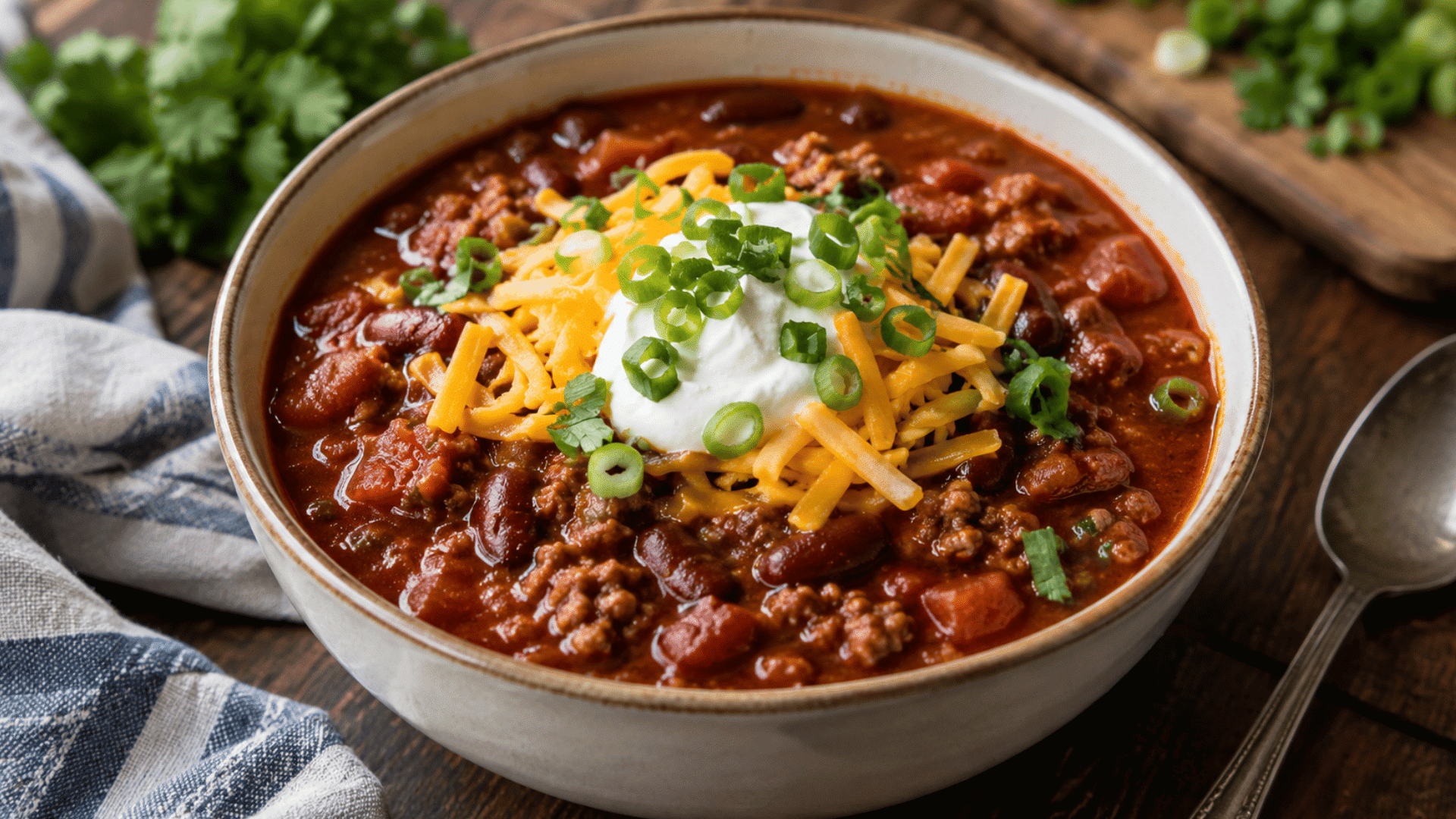
There’s something about a warm bowl of chili that makes it easy to go back for another spoonful without thinking much about what’s actually in the bowl.
Between the meat, beans, tomatoes, cheese, and toppings, though, the numbers can add up differently than you might expect.
If you’re curious about calories in a bowl of chili, there isn’t one number that fits every recipe. I like looking at what goes into the bowl rather than focusing only on the final calorie count.
Portion size, meat choice, beans, toppings, and even how the chili is prepared can all change what you’re getting in each serving.
Origin of Chili
Chili, often called chili con carne, has strong roots in Texas and the American Southwest, with influences from Mexican and Indigenous cooking traditions.
Early versions centered on dried chiles and meat rather than the tomato-and-bean combinations common today.
By the late 1800s, chili became especially associated with San Antonio, where vendors known as “Chili Queens” sold bowls of the spicy dish in public plazas, according to the Texas State Historical Association.
San Antonio was also home to William Gebhardt, who launched the country’s first widely distributed commercial chili powder in 1896, a detail documented in the Handbook of Texas, which helped standardize the flavor most people now associate with the dish.
Over time, chili spread across the United States and developed into many regional variations, including Texas-style chili, Cincinnati chili, bean chili, and white chicken chili.
Chili Nutrition Facts
This nutrition table is based on a 1-cup serving of beef and bean chili.
|
Nutrient |
Approximate Amount |
|---|---|
|
Protein |
18–25 g |
|
Carbohydrates |
25–35 g |
|
Fiber |
6–10 g |
|
Fat |
8–15 g |
|
Saturated Fat |
3–6 g |
|
Sodium |
500–900 mg |
Chili can provide a filling combination of protein and fiber, particularly when made with meat and beans. Actual nutrition will vary based on ingredients, serving size, and toppings.
How Is Chili Prepared?
Making chili is mostly about building flavor step at step, then letting everything simmer together in one hearty pot.
-
Brown the meat: Cook ground beef, turkey, or chicken in a large pot until browned.
-
Cook the vegetables: Add chopped onions, bell peppers, and garlic, then cook until they begin to soften.
-
Add the chili ingredients: Stir in tomatoes, beans, broth, chili powder, and your preferred seasonings.
-
Let it simmer: Lower the heat and simmer for about 20–30 minutes, stirring occasionally as the chili thickens.
-
Taste and serve: Adjust the seasoning if needed, then serve the chili warm with your favorite toppings.
How Many Calories Are in a Bowl of Chili?
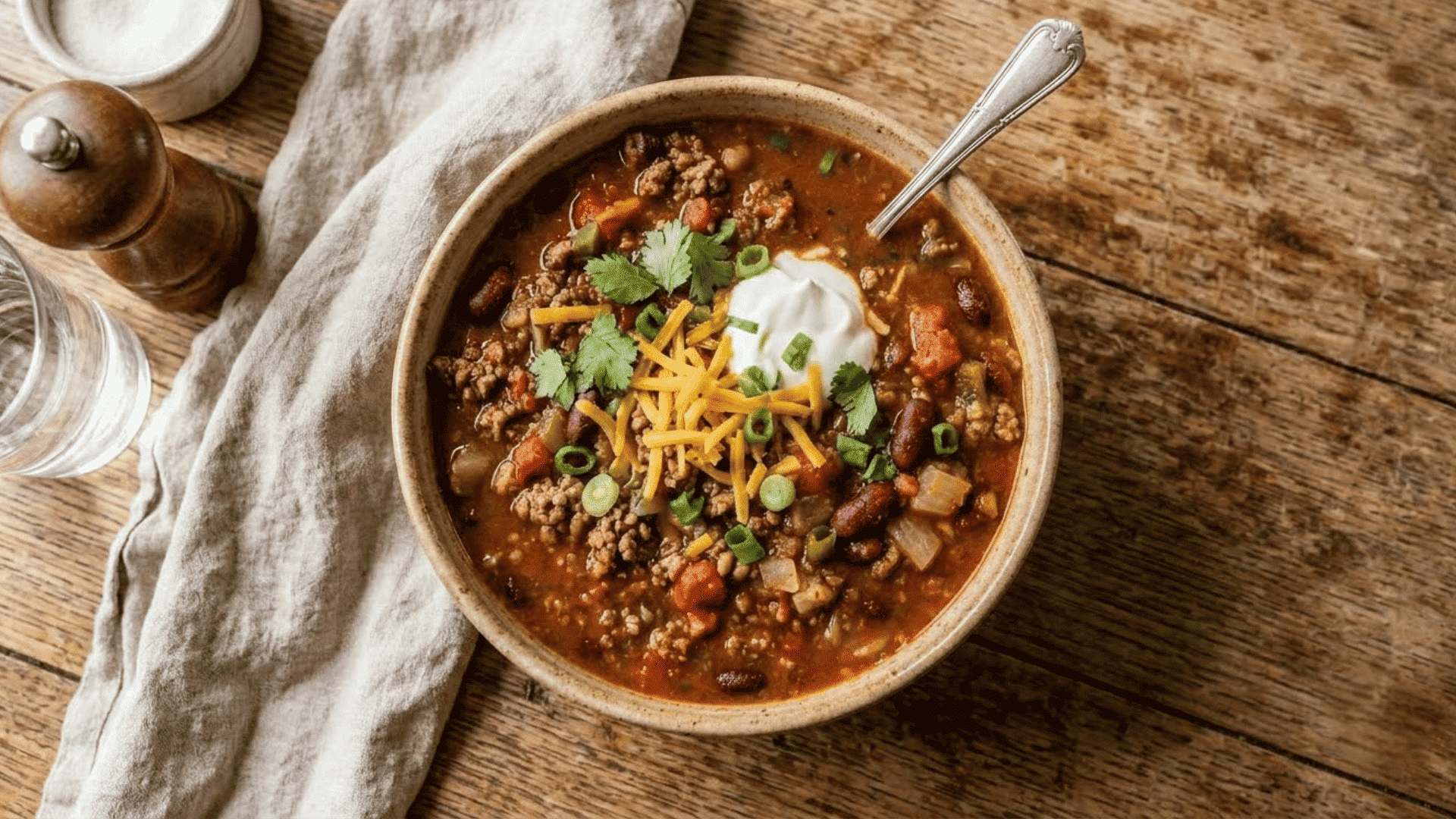
A typical bowl of chili contains around 250 to 500 calories, but the exact amount depends on the recipe and portion size.
A 1-cup serving of beef and bean chili often has about 250 to 300 calories, while a larger 2-cup bowl may reach 400 to 600 calories.
Ingredients such as fatty beef, cheese, sour cream, and extra toppings can quickly raise the total.
For a more accurate estimate, measure your serving and consider everything added to the bowl.
Chili Calories at Restaurants, Chains, and Packaged Brands
Here’s how some of the most-searched restaurant, chain, and canned chili options compare, based on each brand’s own published nutrition data where it’s available.
|
Restaurant or Brand |
Menu Item / Size |
Approx. Calories |
|---|---|---|
|
Small Chili |
280 |
|
|
Wendy’s |
Large Chili |
370 |
|
Chili Cup |
200 |
|
|
Cracker Barrel |
Chili Bowl |
390 |
|
Chili Bean Bowl |
330 |
|
|
Original Chili Bowl with Cheese (16 oz) |
760 |
|
|
Hormel (canned) |
Chili with Beans, 1 cup |
270 |
How to Calculate Calories in Homemade Chili
To calculate the calories in homemade chili, start by checking the calories for each ingredient in your recipe, including meat, beans, vegetables, oil, sauces, and seasonings.
Add these numbers together to get the calories for the entire pot. Then divide the total by the number of equal servings.
Calories per serving = Total calories in the entire pot ÷ Number of servings
Example: If your homemade chili contains 1,800 calories in total and makes 6 servings:
1,800 ÷ 6 = 300 calories per serving
If you measure by cups, you can also use:
Calories per cup = Total calories in the pot ÷ Total cups of chili
Calories in Different Chili Variations
The calorie count in chili can vary quite a bit depending on the meat, beans, vegetables, toppings, and serving size. This is a general comparison for about 1 cup of chili:
|
Chili Variations |
Approximate Calories Per Cup |
|---|---|
|
Beef Chili With Beans |
250–350 |
|
Beef Chili Without Beans |
300–400 |
|
Turkey Chili |
200–300 |
|
Chicken Chili |
200–300 |
|
White Chicken Chili |
250–350 |
|
Vegetarian Chili |
180–280 |
|
Three-Bean Chili |
200–300 |
These are estimates since recipes and portion sizes can differ significantly.
What Changes the Calories in Chili?
The calories in chili mainly change based on the type and amount of meat, beans, cooking fat, toppings, and portion size. A larger serving or calorie-dense toppings can quickly increase the total.
For example, chili made with fattier ground beef may contain more calories than versions using lean turkey or chicken.
Beef, turkey, and chicken all bring solid protein to the bowl, though the exact grams shift by cut. I compared the numbers across common proteins in this protein-by-meat rundown if you want the specifics.
Cooking oil adds calories, while toppings such as cheese, sour cream, avocado, tortilla chips, and crackers can noticeably affect the final bowl.
Some Toppings That Affect Your Chili Calories :
|
Chili Topping |
Approx. Calories |
|---|---|
|
Shredded cheese |
100–120 per ¼ cup |
|
Sour cream |
50–60 per 2 tbsp |
|
Avocado |
80 per ¼ cup |
|
Tortilla chips |
70–100 per small handful |
|
Green onions |
5–10 per 2 tbsp |
Is Chili High in Sodium?
Yes, chili can be high in sodium, especially when it includes canned beans, broth, packaged seasonings, or processed ingredients.
Restaurant and canned chili may contain even more because sodium is often added for flavor and preservation.
To reduce it, choose no-salt-added tomatoes and beans, rinse canned beans the same way you would for a batch of chickpea salad, use low-sodium broth, and season gradually.
The American Heart Association recommends no more than 2,300 mg of sodium a day, with an ideal limit closer to 1,500 mg for most adults, so a single loaded restaurant bowl can already eat up a big share of that.
If you’re managing blood pressure or another condition where sodium matters, it’s worth checking labels closely or asking your doctor or a registered dietitian what daily sodium range fits your situation.
How to Make Chili Lower in Calories?
-
Choose lean meat: Swap regular ground beef for one of the leaner cuts of meat, like 90% lean ground beef, ground turkey, or chicken, to cut fat without losing much protein per serving.
-
Add more vegetables: Mix in peppers, tomatoes, onions, or zucchini to increase volume with fewer calories.
-
Use less oil: Measure cooking oil and use only what you need for browning.
-
Limit creamy ingredients: Reduce cheese, cream, and sour cream. You can replace sour cream with plain Greek yogurt.
-
Watch your portion: Keep portions moderate, especially when serving chili with bread, rice, or other sides.
Wrap Up
The calories in a bowl of chili depend on where that bowl came from and what went into it.
A homemade cup lands close to what you put in the pot, restaurant and chain bowls swing widely with cheese and portion size, and canned chili sits somewhere in between.
I usually find it easier to think in measured cups instead of just one bowl; it doesn’t matter if that bowl is homemade, ordered, or straight from a can.
If you make chili at home, add up the calories in the whole recipe and divide by the servings. For restaurant or canned chili, check the current nutrition label or menu guide before you dig in.
Do you usually eat chili homemade, from a restaurant, or straight from the can? Tell me in the comments, and let me know if there’s a chain or brand you’d like me to add to the comparison above.
Frequently Asked Questions
Does Chili without Beans Have Fewer Calories?
Not necessarily; removing beans may reduce some calories, but a meat-heavy beanless chili can still be calorie-dense depending on the meat and fat used.
Is Turkey Chili Lower in Calories than Beef Chili?
It can be, particularly when lean turkey replaces higher-fat beef. However, the complete recipe, cooking fat, beans, portion size, and toppings determine the final calories.
How Many Calories Are in Chili with Cheese?
It depends on the chili portion and amount of cheese. Calculate your base chili first, then add the calories from the measured cheese serving separately.