A kitchen tells you how well it works when dinner is underway. A cupboard opens for a mixing bowl, a splash lands near the sink, and flour finds its way onto a lower cabinet rail. These ordinary moments reveal details that are easy to miss when choosing doors from a photograph.
Cabinet doors cover much of the room’s visible surface. Their design should suit your taste, feel comfortable to use, and fit the time you want to spend maintaining them.
Read the Door Profile Before Choosing the Color
On a framed cabinet door, the horizontal pieces are called rails, and the vertical pieces are stiles. Together, they surround the center panel. Their width, depth, and edge details influence the appearance of the cabinetry.
Before settling on a color, explore different door designs and compare how those details change from one option to another. A recessed panel sits behind its surrounding frame. A raised panel has a shaped center that projects forward from its edges. Simpler profiles have fewer decorative transitions, while more elaborate versions introduce molding and additional contours.
Inset describes a door that sits within the cabinet’s face frame, with its front flush with the frame. It can have a simple or detailed panel. This construction creates a furniture-like appearance; cleaning demands depend on the profile and finish you choose.
Look Closely at the Places a Cloth Must Reach
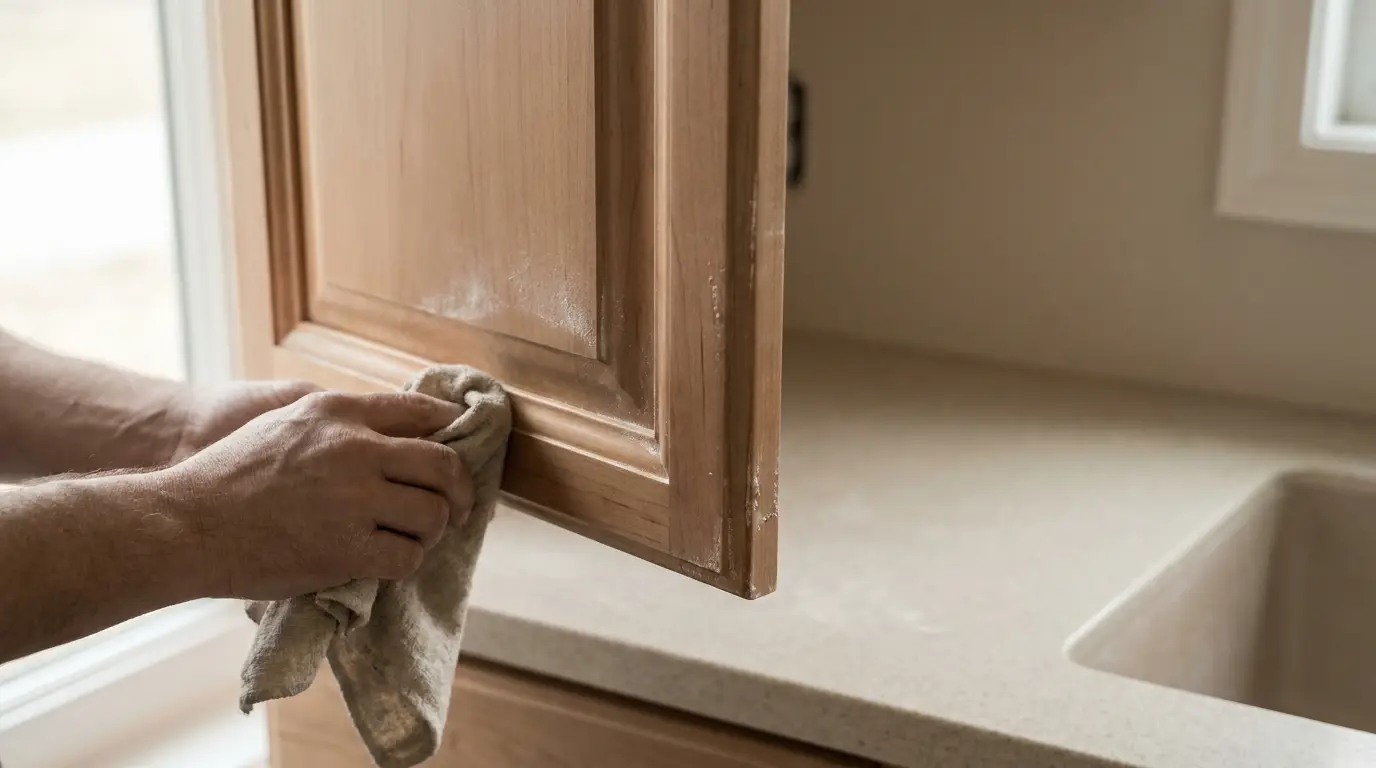
Imagine wiping down each candidate after making pancakes or preparing a sauce. An uninterrupted surface gives a cloth a straightforward path. Framed doors introduce corners and horizontal ledges where flour, dust, or splashes may settle. Narrow grooves and layered molding require more attention to reach thoroughly.
Decorative doors can suit enthusiastic cooks who are comfortable spending longer cleaning a shaped panel. If you prefer a quick evening wipe-down, broader, shallower contours may be easier to manage.
Inspect a full door sample if possible. Follow the lower rail and inside corners with a clean, dry cloth. Notice whether the fabric reaches the recesses comfortably or catches around intricate details. Look at the outer edge as well, since that surface is easy to overlook in a front-facing photograph.
Judge the Finish Alongside the Shape
A door’s color and sheen affect how visible marks are; the coating type determines which cleaning methods are appropriate. A smooth-looking surface is not automatically suitable for strong cleaners.
Dark, uniform colors may make pale flour or water spots conspicuous. Light colors can reveal darker food splashes. Wood grain and tone variations can make some marks less obvious, although lighting and the finish affect the result.
Ask for written care instructions before ordering. General surface care guidance emphasizes following cleaning product labels and the care instructions supplied for the surface. Find out which cleaners are approved, how to dry the door, and which products could damage the coating.
Check the Doors Beside Your Busiest Cooking Areas
Consider where each door will sit. The cupboard beside the sink may receive frequent water splashes. Doors near the dishwasher can be exposed to moisture, while countertop appliances may direct steam or heat toward nearby cabinetry.
Ask the supplier whether the proposed door material and finish suit these locations and what precautions are needed. Door style alone cannot make cabinetry waterproof or heatproof. Ask what the panel and frame are made from, how the edges are finished, and whether the sample represents the exact specification you would receive. Also request the warranty terms, including any care or installation conditions. Keep this information with your quotation so you can compare options on the same basis, rather than assuming that similar-looking doors have identical construction.
Check how the doors operate in those locations, too. At a corner, a projecting handle may meet an adjacent front. Beside an appliance, the door and its hardware need room to open as intended. Confirm clearances with the installer and follow the appliance manufacturer’s installation requirements.
Try the Handle With the Door Sample
Test hardware on a mounted sample door if one is available. A handle that looks balanced in a photograph may leave too little space for your fingers or feel uncomfortable when opening the door.
Check whether you can grip the proposed knob or pull without pressing your fingertips against the finished face. Assess how its mounting points sit on the rails or stiles, and whether there is room to wipe around its base.
Projecting handle ends may catch clothing as you move past, while closely fitted decorative hardware can create small spaces that take more effort to clean.
For inset cabinetry, confirm hardware placement and hinge compatibility with the supplier or installer before drilling. Precise fitting supports the finished look and helps the doors operate properly.
Compare Your Final Choices in Your Own Kitchen
Once you have narrowed the options, view full door samples upright in the room. Place them beside the countertop and backsplash materials, with a sample of the intended hardware. Look in daylight and again under the lights you normally use while cooking.
Step back to assess the proportions. Compare the chosen design on a small door and a larger one: a wide frame can feel substantial on a large front but dominate a smaller one. Deep profiles create shadows that may look stronger across a whole run of cabinetry than on a single sample.
Consider how the door shape works with your preferred palette. For example, white cabinets with warm metal accents can accommodate several profiles. A simpler face places more attention on the hardware, while a shaped panel adds another decorative element.
Choose the Doors You Will Enjoy Living With
Make the final decision by comparing your shortlisted doors against your cooking routine and preferred level of upkeep. If a favorite design has intricate details, be realistic about the attention they require. If easy maintenance is your priority, let that guide the profile and finish you select.
Before ordering, confirm the design, material, finish, hardware, and fitting requirements with the supplier. A considered choice should look right in the room and remain comfortable to use through the daily cycle of cooking and cleaning.