
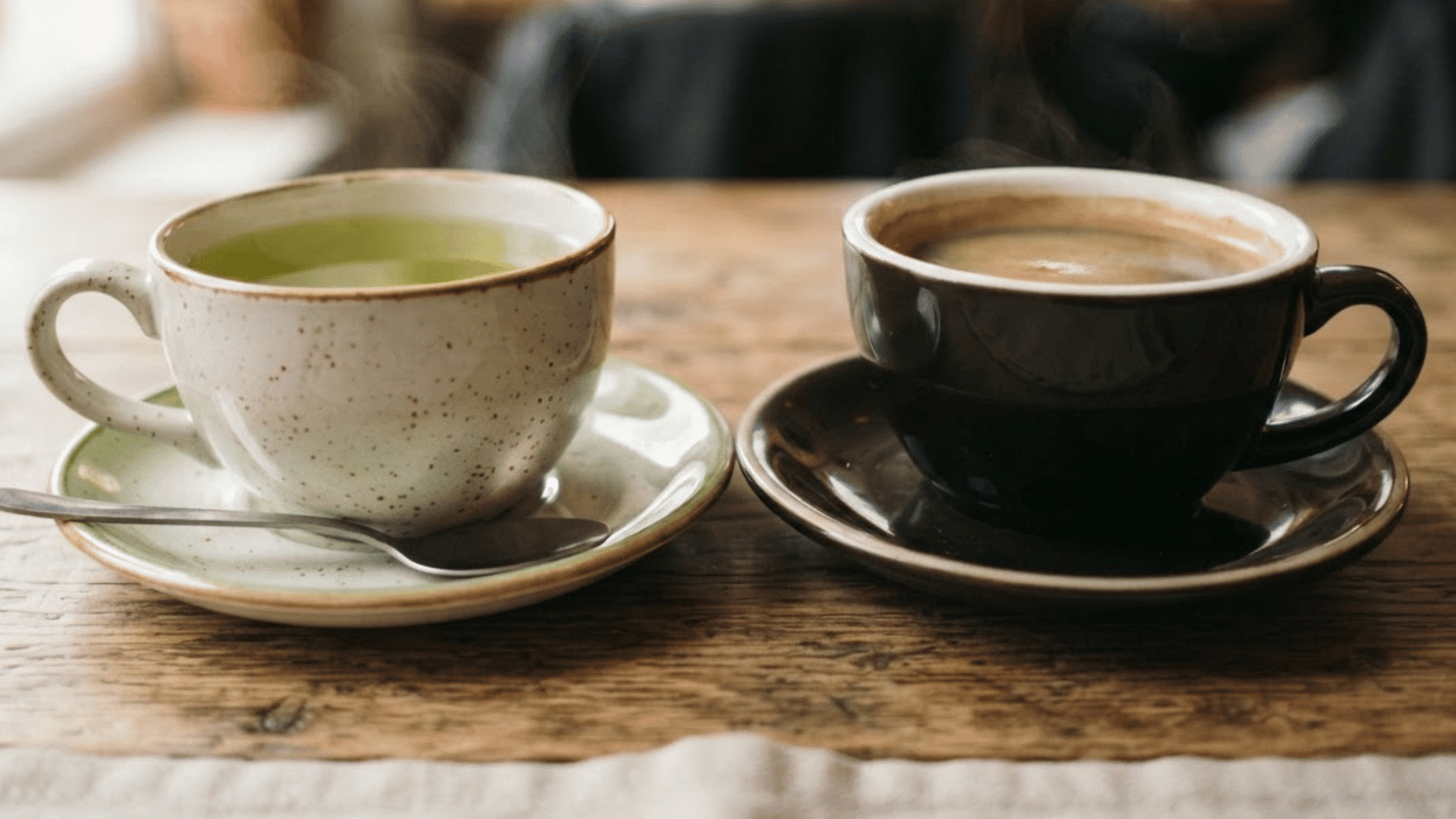
Some mornings call for a strong cup of coffee, while others feel better with something lighter.
I have always found the caffeine difference between coffee and green tea interesting because the size of the cup alone does not tell the whole story.
If you are asking, does green tea have more caffeine than coffee, the answer depends partly on what you brew, how you prepare it, and how much you drink.
Regular green tea is typically much lower in caffeine than brewed coffee, although options such as matcha can narrow that gap.
Quick Answer: Does Green Tea Have More Caffeine Than Coffee?
No, green tea does not have more caffeine than coffee. An 8-ounce cup of brewed coffee contains about 96 mg of caffeine, compared with around 29 mg in the same amount of brewed green tea.
The exact amount can vary based on the type of tea or coffee, serving size, brewing method, water temperature, and steeping time.
Matcha is an exception because you consume the powdered tea leaves rather than removing them after steeping, so it can contain considerably more caffeine than regular brewed green tea.
Is Caffeine a Concern?
Yes, too much caffeine can cause sleep problems, restlessness, headaches, nervousness, and overstimulation, especially in people who are sensitive to it.
For most healthy adults, up to 400 mg of caffeine per day is generally not associated with negative effects, according to the U.S. Food and Drug Administration (FDA).
However, caffeine tolerance can vary from person to person. Regular consumption may also lead to physical dependence.
Suddenly reducing or stopping caffeine intake can cause withdrawal symptoms, including headaches, fatigue, irritability, difficulty concentrating, and changes in mood.
Pregnant or breastfeeding people and those taking certain medications or managing health conditions should limit caffeine and consult a healthcare professional about appropriate intake.
Green Tea vs Coffee: Caffeine at a Glance
The difference becomes clearer when you compare similar serving sizes.
| Drink | Typical Serving | Approximate Caffeine |
|---|---|---|
| Brewed coffee | 8 oz | About 96 mg |
| Instant coffee | 8 oz | About 62 mg |
| Espresso | 1 oz | About 63 mg |
| Brewed green tea | 8 oz | About 29 mg |
| Matcha | Prepared serving | Often around 40–70+ mg |
| Decaf coffee | 8 oz | About 1–2 mg |
| Decaf green tea | 8 oz | Small amount |
Why Does Coffee Usually Have More Caffeine Than Green Tea?

Coffee usually has more caffeine per cup because brewing coffee typically uses much more ground coffee than the amount of tea leaves used for green tea.
Although dry tea leaves can contain substantial caffeine by weight, that does not mean the finished tea contains more caffeine.
The amount that reaches your drink depends on how much coffee or tea you use, along with water temperature, brewing time, grind or leaf size, and preparation method.
For a practical comparison, the caffeine in the finished cup matters more than caffeine levels in dry tea leaves or coffee beans.
What Changes the Caffeine Level in Green Tea?
The caffeine in green tea can vary considerably from one cup to another. Tea variety, preparation, and growing conditions all influence how much caffeine ends up in your drink.
- Type of Green Tea: Sencha, gyokuro, bancha, and matcha can have different caffeine levels. Matcha is typically higher because you consume the powdered tea leaves.
- Amount of Tea Used: Using more tea leaves or matcha powder increases the amount of caffeine available in the finished drink.
- Water Temperature: Hotter water generally extracts caffeine more efficiently, while cooler water may result in a lower-caffeine brew.
- Steeping Time: Longer steeping can extract more caffeine, although it may also make green tea taste more bitter or astringent.
- Growing and Harvest Conditions: Leaf age, harvest time, shading, tea variety, and growing conditions can influence the natural caffeine content.
- Brewing Style: Tea bags, loose-leaf tea, cold brew, and powdered matcha use different preparation methods, which can affect the final caffeine level.
Does Caffeine From Green Tea Feel Different From Coffee?
No, caffeine in green tea is not chemically different from caffeine in coffee. The caffeine molecule is the same, but green tea also contains compounds such as L-theanine, which may influence how the drink affects attention and cognition.
L-theanine combined with caffeine may offer small-to-moderate improvements in certain measures of attention and cognitive performance, although more research is needed.
This may help explain why some people experience green tea and coffee differently. However, the effects also depend on caffeine dose, individual sensitivity, sleep, food intake, and how quickly the drink is consumed.
How to Reduce Caffeine Without Giving Up Tea or Coffee?
Cutting back on caffeine doesn’t mean giving up your favorite drink entirely. A few small, practical changes can lower your daily intake without much sacrifice.
- Choose a smaller cup: A smaller serving size automatically lowers the total caffeine you take in, even if the brew strength stays exactly the same.
- Switch one coffee for green tea: Replacing a single daily cup of coffee with green tea can meaningfully cut your total caffeine without eliminating your routine.
- Use fewer grounds or tea leaves: Brewing with less coffee or tea reduces caffeine extraction directly, giving you a lighter cup without changing your drink of choice.
- Try decaf: Decaf coffee and decaf green tea keep the flavor and ritual you enjoy while cutting out nearly all the caffeine most days.
- Avoid stacking drinks: Combining coffee, tea, energy drinks, or caffeinated sodas in the same day adds up quickly, even when each drink feels moderate on its own.
- Check labels: Some sodas, supplements, and pre-workout products contain hidden caffeine, so reading labels helps you track your real daily total accurately.
Summing It Up
So, does green tea have more caffeine than coffee? Generally, no. Coffee usually contains significantly more caffeine per cup, while green tea offers a milder amount that may work better when you want a gentler boost.
For me, choosing between the two depends on how much caffeine I need and how my body responds to it. Brewing time, serving size, tea variety, and preparation method can all affect the amount of caffeine in your cup.
Green tea can be a lighter choice, while coffee may suit mornings when you want more caffeine. We can enjoy either, as long as we keep our overall intake in mind.
Which one do you prefer? Share your favorite in the comments below!
Frequently Asked Questions
Does Green Tea Have More Caffeine Than Black Coffee?
No, regular black coffee generally contains considerably more caffeine than brewed green tea. Mayo Clinic lists about 96 mg per 8-ounce brewed coffee compared with approximately 29 mg for brewed green tea.
Does Green Tea Have More Caffeine Than Black Tea?
Usually not. Mayo Clinic lists approximately 48 mg of caffeine in 8 ounces of brewed black tea and 29 mg in the same amount of brewed green tea, although preparation can change the numbers.
Does Green Tea Keep You Awake Like Coffee?
It can. Green tea contains caffeine and may affect sleep, particularly if you are sensitive to caffeine or drink it later in the day. Its typical caffeine content is lower than coffee.