

Knowing where your family members are shouldn’t require a phone call every hour. The best location sharing apps solve that problem quietly, running in the background while you get on with your day. But picking the right one is trickier than it looks. Battery drain, privacy concerns, and the very real risk of misuse all factor in. After reviewing dozens of options across verified reviews, feature depth, and safety design, this guide narrows it down to five apps worth your time.
The shortlist methodology
Each app was evaluated based on what users actually said about it on review platforms, what the official product pages claimed, and what real-world case studies showed. Only options with a proven track record in the mobile apps space made the cut. Apps without consistent user reviews or meaningful real-world results were left off the list.
→ See the full research breakdown
- iSharing – Best for real-time family location sharing and personal safety
- Glympse – Best for temporary, no-account location sharing and delivery visibility
- GeoZilla – Best for family tracking with battery-saving GPS
- AirDroid – Best for enterprise mobile device management and Android endpoint control
- mspy – Best for parental control monitoring across multiple devices and platforms
What’s at Stake when Location Sharing Apps Are Overlooked
Picking a location app without thinking it through can create more stress than it relieves. A slow refresh rate means the map shows where someone was ten minutes ago, not where they are now. That gap matters when a teenager is driving home late, or a family member is traveling alone in an unfamiliar city.
Battery drain is another real cost. An app that eats through a phone’s charge by midday isn’t one anyone will keep running. And if users feel uncomfortable with how their location data is handled or stored, they’ll turn the app off entirely, which defeats the purpose.
The right app balances GPS accuracy down to a useful number of meters, keeps location update delays low enough to be actionable, and stays light enough on battery to run all day. Those three things together are what separate a genuinely useful tool from one that sounds good on the app store page but falls apart in daily life.
Top 5 Location Sharing Apps: Specs at a Glance
Note: All data in this table is sourced from review platforms and the official websites of the listed companies.
|
Company Name |
Years Operating |
Team Size |
Headquartered In |
|---|---|---|---|
|
iSharing |
Since 2010 |
9 |
Irvine, CA |
|
Glympse |
Since 2008 |
~25 |
Seattle, WA |
|
GeoZilla |
Since 2015 |
33 |
Palo Alto, CA |
|
AirDroid |
Since 2011 |
51-200 |
Singapore |
|
mspy |
Since 2010 |
51-200 |
Edinburgh, Scotland |
iSharing – Best for Real-Time Family Location Sharing and Personal Safety
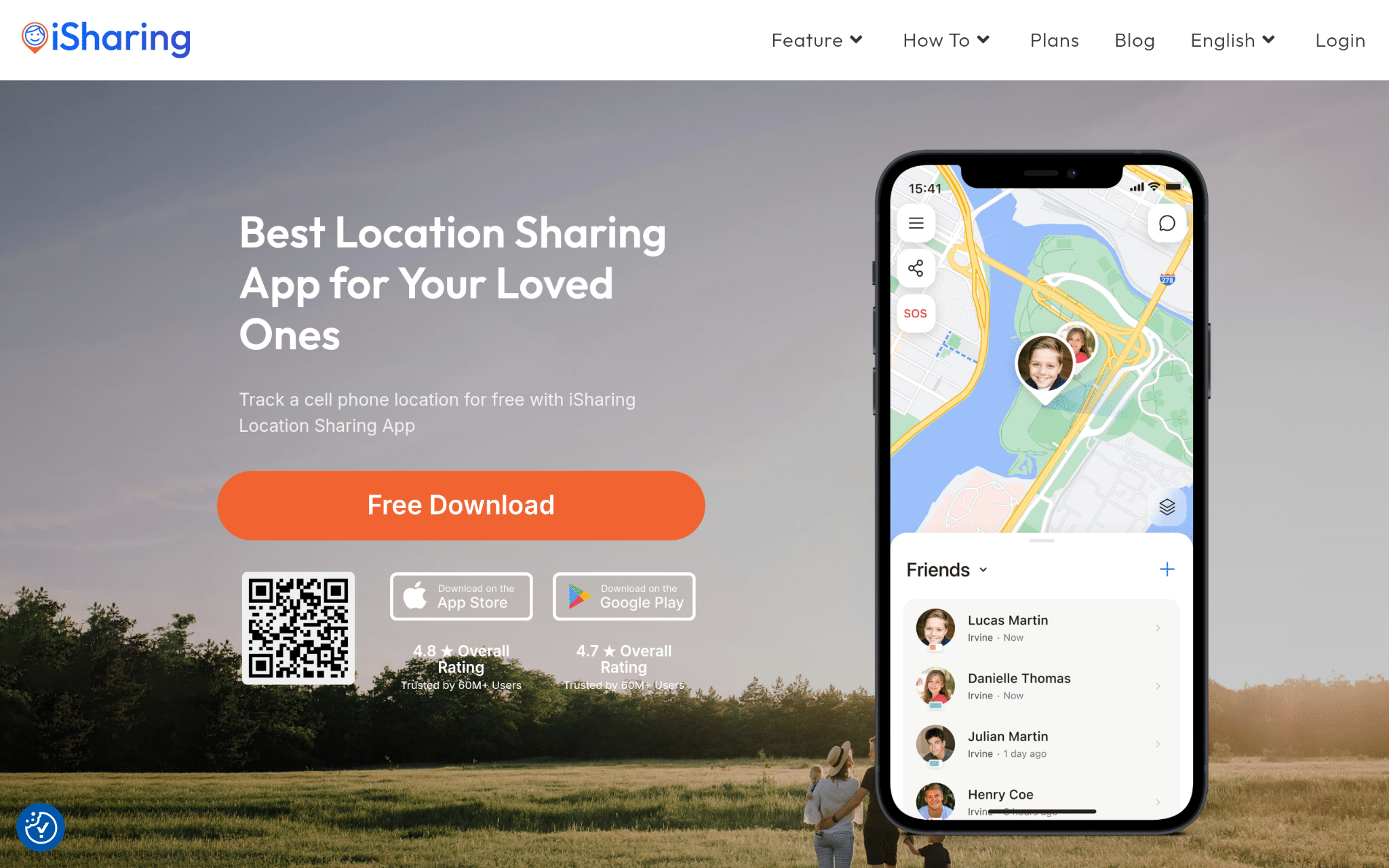
What is iSharing’s main function?
iSharing is a real-time location sharing app built for families and close friend groups who want to stay connected privately. It lets members of a shared circle see each other’s positions on a live map, set up place alerts for arrivals and departures, view location history, and send panic alerts when something feels off. With over 50 million downloads and a 4.60-star rating across more than 224,000 reviews, its track record in the family safety space is hard to ignore.
What’s iSharing’s Real Advantage for Location Sharing Apps?
The problem iSharing solves isn’t just tracking. It’s doing it in a way that feels trustworthy to every person in the circle, not just the one watching. Few apps at this price point (there’s a solid free tier, with premium features available) have managed to stay this consistently rated after more than a decade of use.
Customer Review Snapshot:
Users keep coming back to two things: how simple the app is to set up and how reliably it updates. The freemium model gets mentioned often, with many users noting the free version handles everyday family check-ins without needing an upgrade. That kind of sustained satisfaction across 224,000 reviews is rare in a space where privacy concerns tend to drive complaints.
Glympse – Best for Temporary, No-Account Location Sharing and Delivery Visibility
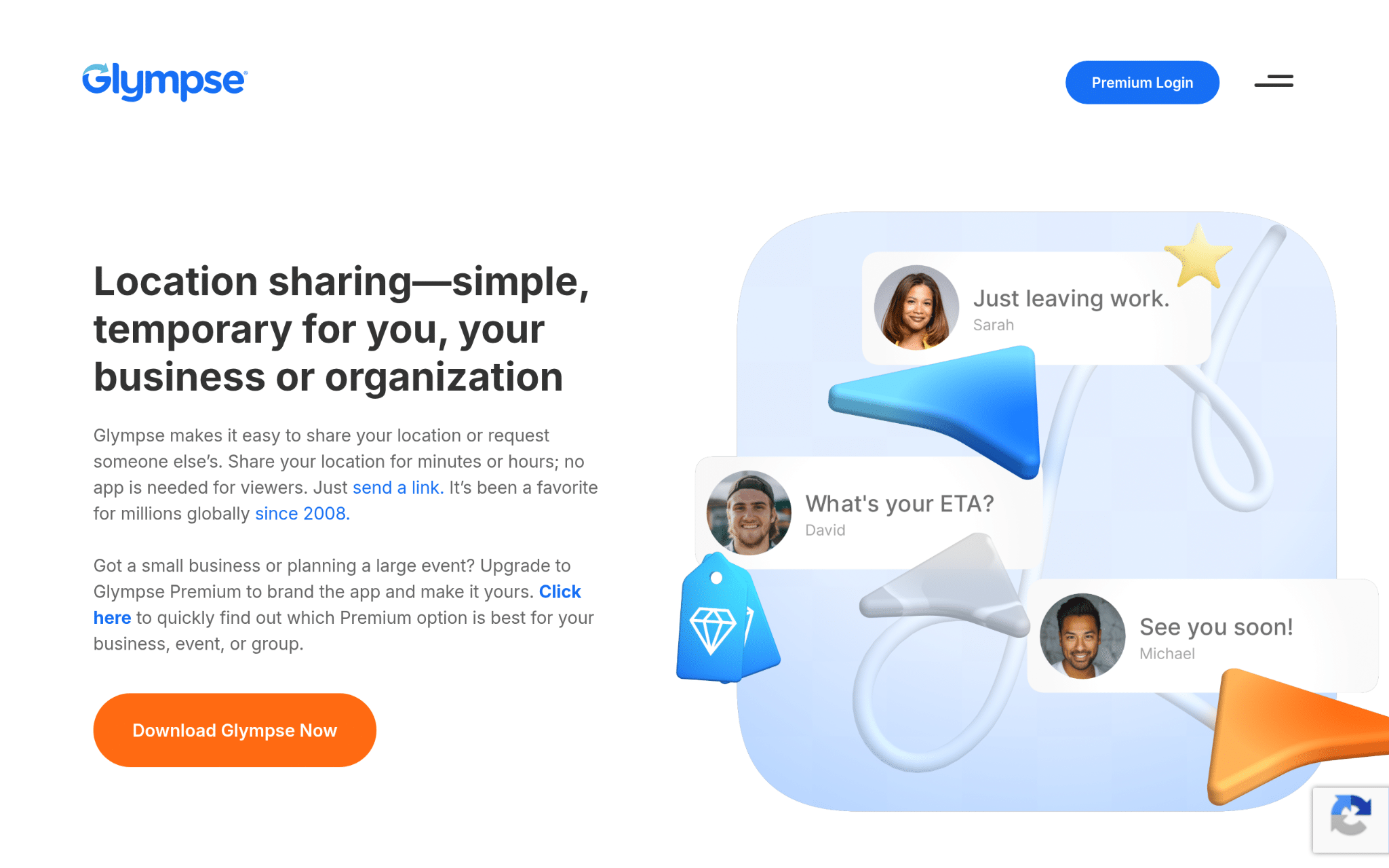
What is Glympse’s main function?
Glympse started in 2008 with a simple idea: let someone see where you are for a set amount of time, then stop sharing automatically. No permanent tracking, and the recipient doesn’t need an account. That approach has since expanded into enterprise territory, with products serving delivery fleets, field operations teams, and customer-facing arrival experiences. Glympse operates across 135 countries, supports 46 languages, and carries SOC 2 Type II certification (not cheap to maintain, but worth it for privacy-conscious users).
What’s Glympse’s Real Advantage for Location Sharing Apps?
Glympse handles the specific problem of sharing your location for a moment without creating a permanent tracking relationship, which most family-focused apps aren’t designed for. That approach tends to work well for travel scenarios where someone needs to track an arrival without setting up ongoing monitoring.
Customer Review Snapshot:
Glympse’s enterprise reputation is built on measurable outcomes, with at least one customer citing a 21% drop in service calls within 90 days of deployment. Consumer users tend to highlight how low-friction the experience is, especially the no-account-needed model for recipients. What sets Glympse apart from most apps on this list is that it works just as well for a one-time airport pickup as it does for a large delivery operation.
GeoZilla – Best for Family Tracking with Battery-Saving GPS
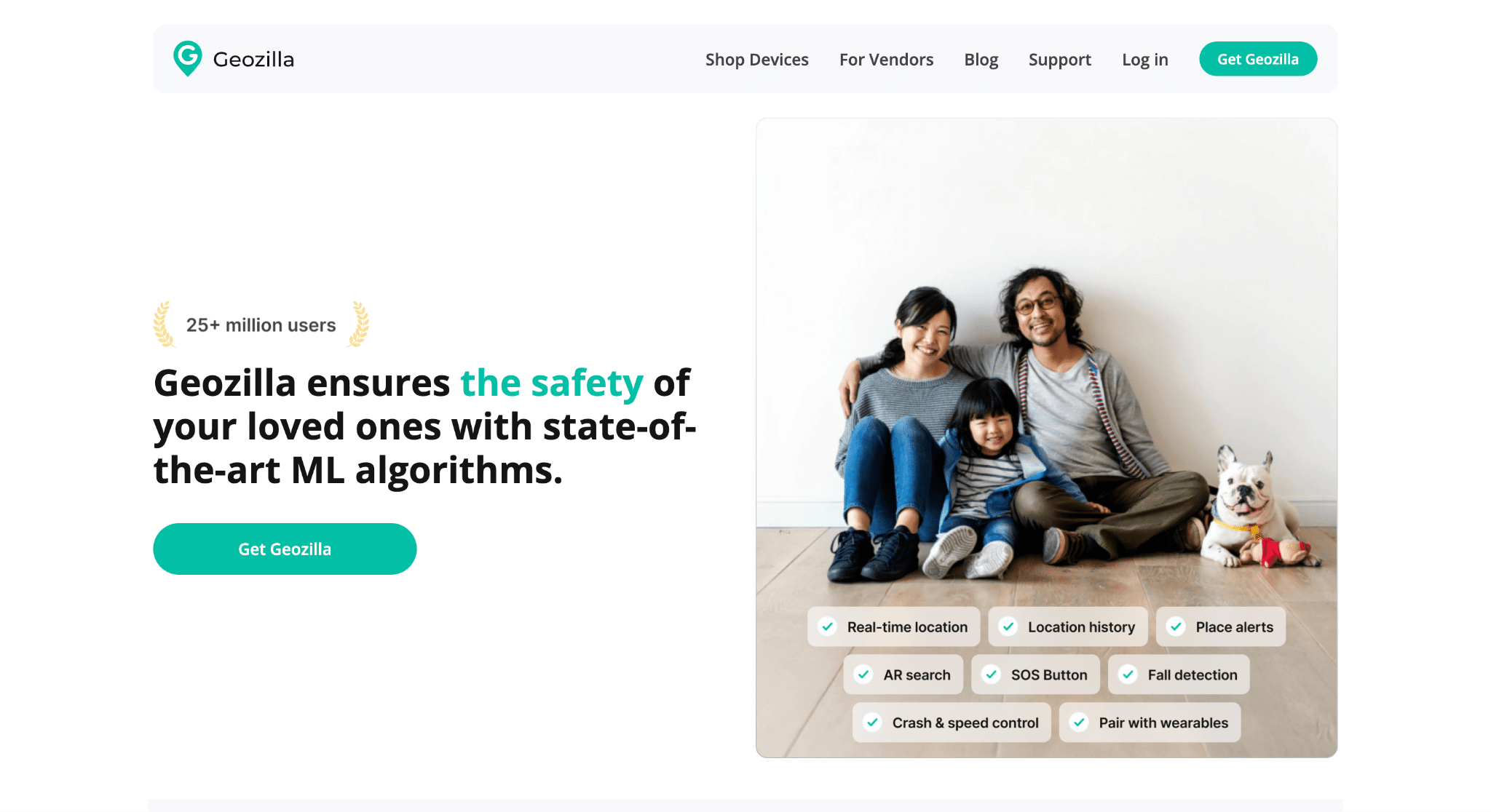
What is GeoZilla’s main function?
GeoZilla is a family location app that uses AI to do more than just show a dot on a map. Its algorithms learn movement patterns over time, so the app can flag when something looks off, like a family member who hasn’t arrived at a usual destination. Features cover GPS tracking, geofencing alerts, driver safety, and even pet tracking. With over 10 million active users and a documented 60% improvement in day-one retention through smart work on the product experience, GeoZilla has clearly figured out how to keep users engaged past the download.
What’s GeoZilla’s Real Advantage for Location Sharing Apps?
GeoZilla tackles something most location apps ignore: constant GPS polling wrecks phone batteries fast. Its battery-saving algorithms make it more realistic for users to keep location sharing on throughout the day without worrying about running dry by afternoon.
Customer Review Snapshot:
GeoZilla’s user reviews consistently mention smart alerts that feel useful rather than noisy. Users who’ve tried multiple family tracking apps often note that GeoZilla’s behavioral learning cuts down on false alerts. That reduced alert fatigue is a real differentiator for families who want background peace of mind, not constant interruptions.
AirDroid – Best for Enterprise Mobile Device Management and Android Endpoint Control
What is AirDroid’s main function?
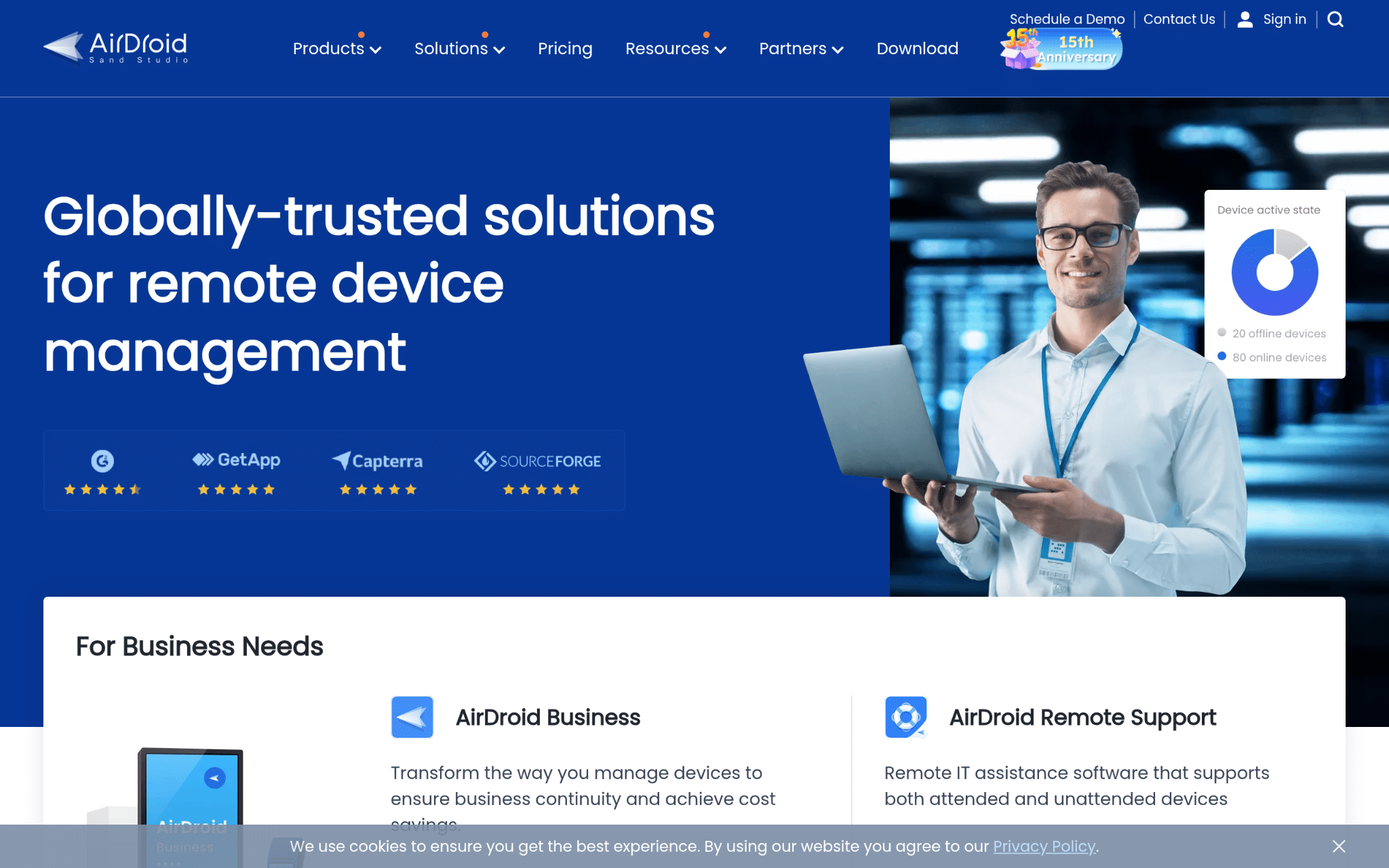
AirDroid is a mobile device management platform built by Sand Studio, originally launched as a file transfer and remote control tool in 2011 before expanding into enterprise MDM territory with AirDroid Business in 2018. Today it manages Android and Windows endpoints across 100+ countries, with tools covering policy management, kiosk mode, remote support, parental controls, and app distribution. It holds a 4.9-star aggregate rating and a perfect 5 out of 5 on Capterra (the full feature set runs at enterprise pricing, though entry tiers are more accessible).
What’s AirDroid’s Real Advantage for Location Sharing Apps?
AirDroid solves the problem of managing location-aware devices at scale, something a consumer family app simply isn’t built to handle when you’re deploying across dozens or hundreds of company-owned phones. Its proprietary Black Screen Mode is a genuine differentiator, letting IT teams run remote sessions without displaying anything on the device screen, which matters in customer-facing or public environments.
Customer Review Snapshot:
Reviewers consistently call out AirDroid’s customer support as a standout, which matters in the MDM space where setup complexity tends to frustrate teams. BBC, CNET, and Capterra have all recognized the platform, and users across healthcare, retail, and transportation mention how well it handles diverse device environments. For organizations rather than families, AirDroid operates in a different category from the other apps on this list.
mspy – Best for Parental Control Monitoring Across Multiple Devices and Platforms
What is mspy’s main function?
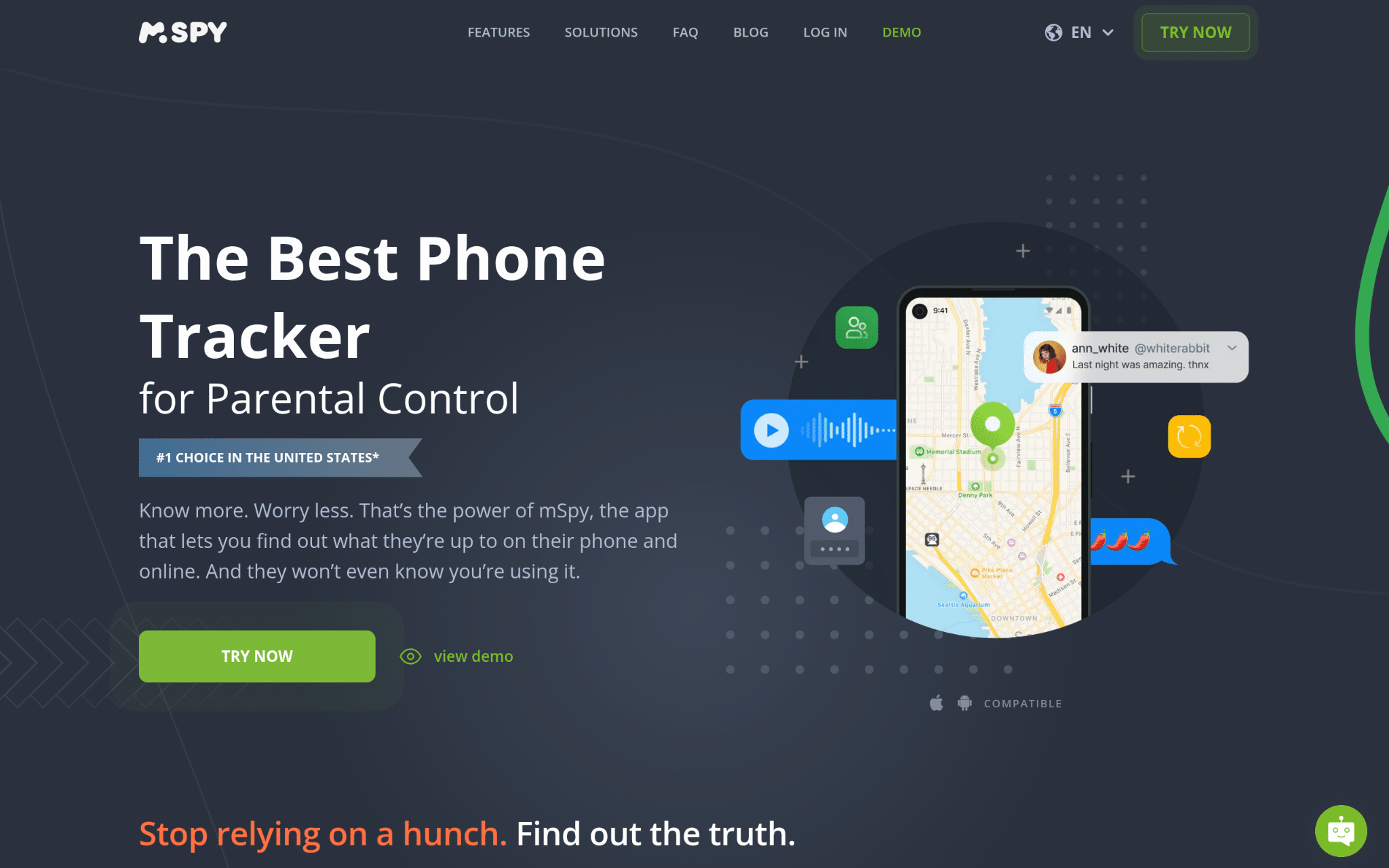
mSpy is a parental control and monitoring app supporting iOS, Android, Windows, and macOS. Parents can track GPS location, set geofences, monitor browser history, review installed apps, and see messages from platforms like WhatsApp, Snapchat, and Telegram. It operates in over 100 countries and comes with a 14-day money-back guarantee. The platform has received industry recognition including the kidSAFE Certified Seal, though it has also faced scrutiny over data security incidents in past years.
What’s mspy’s Real Advantage for Location Sharing Apps?
mSpy covers encrypted messaging apps alongside location tracking, which fills a gap that pure GPS tools leave open for parents who need fuller visibility into a child’s online activity. That broader monitoring scope sets it apart from apps on this list that focus solely on location data.
Customer Review Snapshot:
Parents who use mSpy for legitimate child safety purposes tend to rate it positively for depth of features and cross-platform coverage. That said, the reputation around past data breaches is something prospective users consistently bring up, and it’s worth factoring into any decision about trusting a monitoring tool with sensitive family data. The feature set is strong, but the security history adds a layer of due diligence that shouldn’t be skipped.
How These Options Were Tested and Ranked
The Data Collection Phase Explained
The process started by pulling together a broad list of location sharing and family safety apps from app store rankings, tech review publications, software directories, and community forums where parents and travelers discuss their experiences. No app was excluded at this stage. The goal was a wide pool that could be filtered down by evidence rather than assumptions. Sources included both major platforms and niche review sites where real users describe day-to-day performance in specific use cases.
Determining Qualified Candidates to Proceed
Apps without enough verifiable feedback were removed early. A strong download count alone wasn’t enough. What mattered was a pattern of consistent reviews over time, not just a spike at launch. Apps that showed review patterns suggesting artificial inflation, or that had no presence outside their own marketing pages, were cut. Each remaining candidate needed documented real-world performance from people who’d used it in family, travel, or safety contexts.
Confirmation of Information Accuracy
Claims pulled from official app websites were cross-checked against third-party reviews and independent coverage. Where a company stated something about their accuracy, refresh rate, or safety features, that claim was compared to what users actually reported. Discrepancies between marketing language and user experience were flagged. The goal wasn’t to assume companies were misleading users, but to separate confirmed strengths from unverified talking points.
Reading the Authority Signals
Apps that had received coverage from recognized publications, earned certifications, or appeared in curated industry lists carried more weight. This wasn’t about prestige for its own sake. When a platform like Capterra rates an app at 5 out of 5 with a large review base, or when a company holds SOC 2 Type II certification, those signals point to accountability. Awards and recognition from credible outlets were treated as supporting evidence, not a side factor, but they helped confirm what the review patterns already suggested.
Looking at Location Sharing Apps Specifically
General mobile apps with location features weren’t treated the same as tools built specifically for real-time location sharing. Each finalist was evaluated for dedicated location-specific features: geofencing, location history, panic alerts, arrival notifications, and accuracy under real-world conditions like indoor spaces or areas with weak GPS signal. Verified reviews from families, travelers, and safety-focused users carried more weight than general usability comments. Case studies showing measurable results in location-dependent scenarios were treated as strong evidence of a tool’s actual fit for this use case.
How to Match a Location Sharing App to Your Use Case
Not every location app on this list is built for the same situation. The right pick depends on who you’re tracking, why, and what you’re willing to pay. Here’s what to weigh before committing:
- Industry and Domain Experience: Look at how long the app has been specifically serving your use case. An app with a decade of family safety focus has worked through the edge cases a newer platform hasn’t encountered yet.
- Features: Match what the app can do to what you actually need. A family with young kids benefits from geofencing and panic alerts. A traveler coordinating with friends needs simple, temporary sharing without account setup friction.
- Pricing Structure: Most apps on this list offer a free tier. Check what’s actually included before assuming the free version covers your daily needs. Premium upgrades vary widely in what they unlock.
- Results Measurement: Consider how you’ll know the app is working. Location update speed, alert delivery speed, and GPS accuracy radius are the metrics that matter most in real use.
- Industry Knowledge and Compliance: Location data is sensitive. Look for apps that are clear about data storage policies, location data privacy laws, and children’s online safety regulations, especially if minors are part of the circle.
Summary
Choosing among the best location sharing apps comes down to matching the tool to the actual situation. iSharing fits families wanting reliable daily check-ins. Glympse handles temporary sharing without friction. GeoZilla brings smarter behavioral alerts. AirDroid serves organizations managing devices at scale. mSpy covers deeper parental monitoring. As location data privacy laws tighten and mobile hardware improves, the apps that balance real-time accuracy with user trust will keep pulling ahead.