
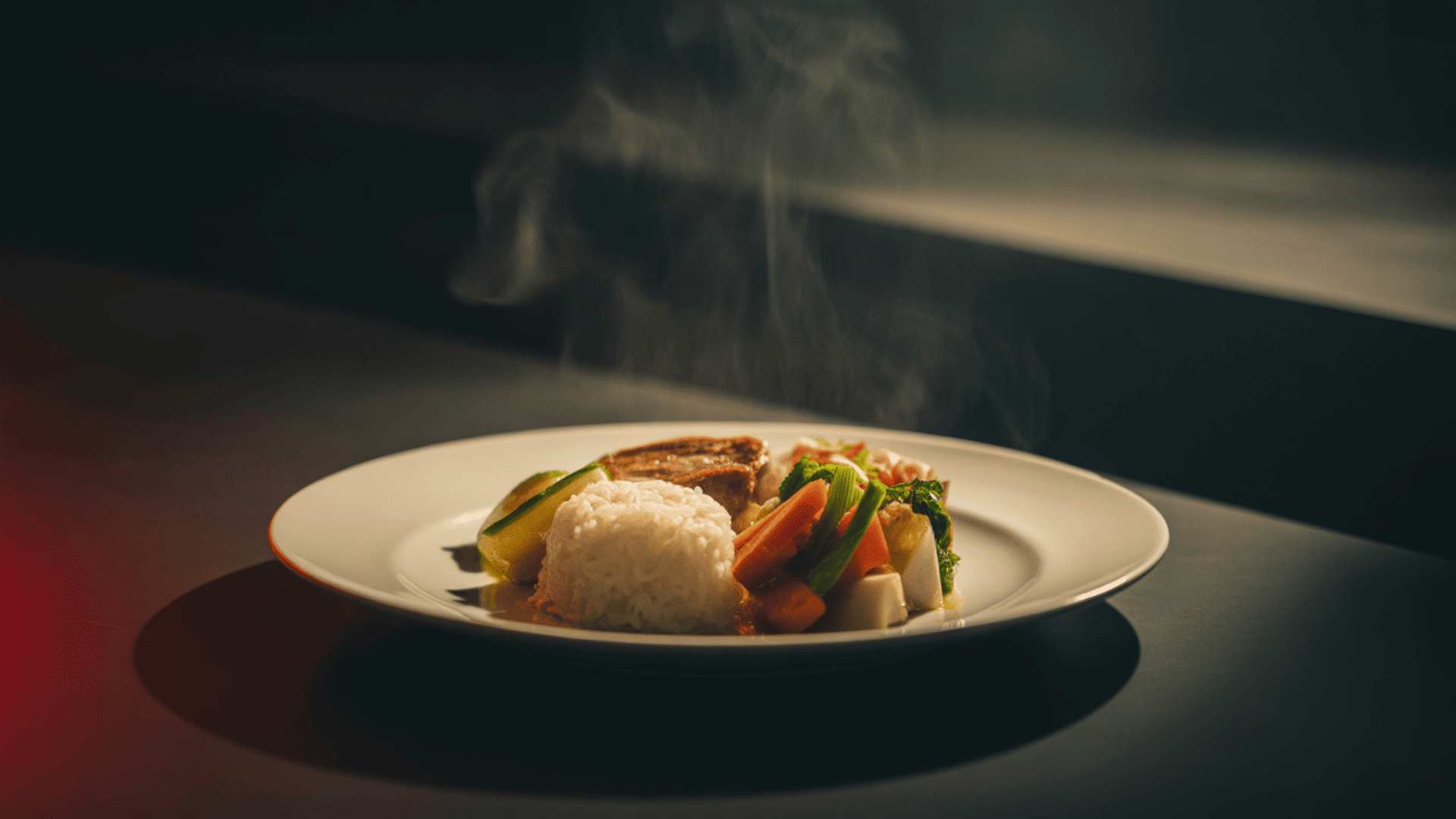
I watched workers pour into Madrid restaurants during lunch and understood why. The menú del día delivered three courses at budget prices within my lunch break, showing me Spain’s cheap set-lunch culture for busy workers.
When I started studying Peruvian cuisine, I learned how heat and flavor balance differently than in other traditions.
While Peruvian food is known for bold flavors, Spain quietly perfected affordable, high-quality food for workers.
This menu del dia guide covers timing, ordering strategies, and regional pricing so you can eat well without overspending or wasting your lunch break on tourist traps.
What Menu del Dia Actually Means?
Franco’s regime introduced this format in 1964 so working Spaniards could afford proper midday meals. Today, you get three courses, bread, and a drink for €10-16 across most of Spain.
The setup remains consistent everywhere: pick one starter, one main, and either dessert or coffee from 2-4 options per course. Kitchen prep ahead keeps service fast and costs remarkably low compared to ordering individually.
Most meals take 30-45 minutes from start to finish. The price includes everything—bread, wine or water, and all three courses without hidden charges or service fees added later.
This isn’t tourist convenience; it’s how millions of Spaniards eat lunch daily, making it one of Europe’s best food values when you know where to look.
Menu del Dia Timing and Availability
This lunch format operates weekdays only, 1:30 pm-3:30 pm. Arrive between 2 pm and 2:30 pm when locals eat. Earlier, the kitchens hadn’t finished prep. Later, popular dishes sell out.
Weekends shift to à la carte service. Restaurants focus on leisurely dining rather than quick lunches for workers. I showed up Saturday afternoon expecting the usual setup, staff looked at me like I’d asked for breakfast at midnight. Spotting quality spots:
- Chalkboard menus suggest daily-changing fresh ingredients rather than frozen options repeated weekly
- Packed tables at 1:30 pm mean locals race there, signaling above-average quality
- Construction workers and office staff eating together indicate genuine worker pricing, not tourist traps
- Handwritten signs usually mean smaller operations cooking from scratch versus chains reheating premade components
Walking 10 minutes from the main squares, prices drop by €3-5 without quality loss. I’ve found that Peruvian food and spices taste just as good in neighborhood spots, where locals eat, and traditional flavors shine through at a better value.
Course Breakdown and What to Order
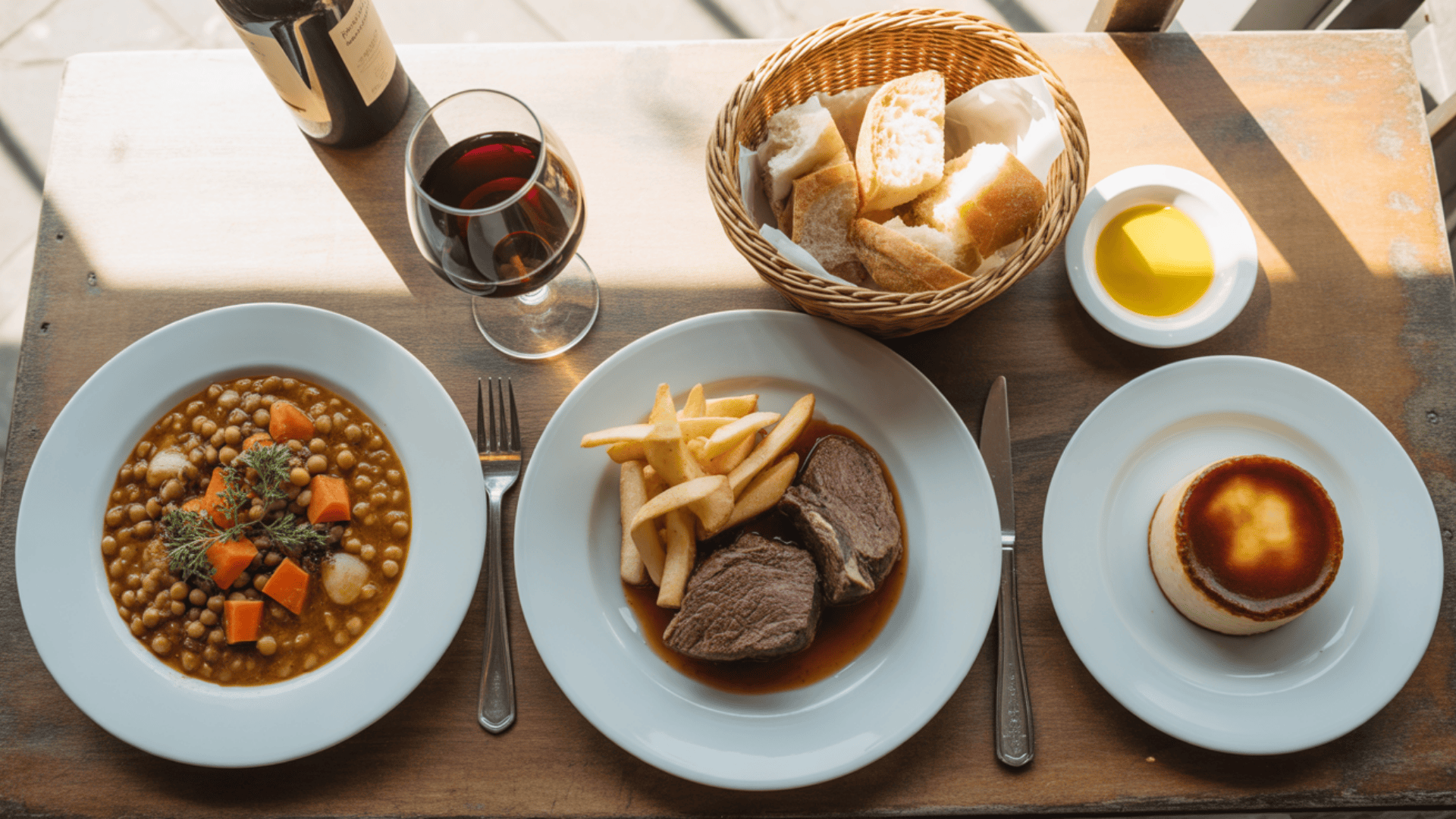
First courses focus on carbs and vegetables, such as salads, soups, lentil stews, pasta, and rice. These arrive in substantial portions designed to fill you before protein courses, not dainty appetizers.
Legume dishes deliver the most value when you’re hungry. Lentil and chickpea stews often come in communal pots with seconds available. I’ve watched servers refill bowls automatically at worker-focused spots.
Salads often include protein like tuna, ham, or cheese, making them more substantial than typical sides.
For mains, I learned slow-braised cuts (beef cheeks, pork shoulder) outperform grilled meats at this price point. Fish appears on nearly every menu, even inland.
Dessert reveals kitchen effort. In-house flan or rice pudding signals serious cooking. Most places swap dessert for coffee; I ask, “¿Café en lugar del postre?”
How Much Does Menu del Dia Cost Across Spain?
Menu del Dia pricing varies significantly across Spain based on local economies and tourist traffic. Here’s what you can expect to pay in different regions:
| Region | Average Price | Notes |
| Galicia | €10-11 | Cheapest nationwide, heavy on seafood |
| Madrid | €11.50-14 | Mid-range, varies by neighborhood distance fromthe center |
| Andalucía | €13-14 | Solid value with generous portions |
| Balearic Islands | €15-16 | Priciest due to tourism and island costs |
Price differences reflect local economies and tourist traffic, not quality. I’ve eaten €11 lunches in Madrid that outperformed €16 meals in Barcelona simply because the neighborhood restaurant catered to locals rather than visitors.
Note: These prices are for general reference only and may vary based on location, season, and restaurant type.
Language and Ordering Mechanics
Spanish uses “menú” specifically for fixed-price set meals. The full à la carte selection is “la carte.” If you ask for “the menu” expecting to browse everything, servers hand you the menú del día instead.
Essential phrases: “¿Hay menú del día?” (Do you have set lunch?) and “La carta, por favor” (I want the full menu). These two lines prevent most ordering confusion.
Some restaurants exclude drinks from advertised prices, adding €3-5 at checkout. VAT inclusion varies by establishment. Check signs before sitting to avoid surprise charges.
When Menu del Dia Makes Sense
The format works well in specific situations but isn’t always the best choice for every meal. Here’s when it makes sense and when you should skip it:
- You’re genuinely hungry for three courses: The menu delivers substantial portions across multiple courses, making it ideal when you want a full meal.
- You want predictable costs: Fixed pricing eliminates surprises, with everything included from bread to wine for one set price.
- You have 35-45 minutes available: Service moves fast with plates disappearing as you finish and the next course arriving immediately.
- You’re flexible with food choices: Daily offerings rotate based on what’s available, so you need to be open to whatever’s prepared.
I skip it when I only want one dish, need specific dietary accommodations, or prefer leisurely meals. A single main from la carta costs roughly the same but gives you exactly what you want without multiple courses.
Final Thoughts
The menú del día survives because it meets a real need: providing working people with quality food within time and budget constraints.
Office staff get complete nutrition without breaks. Manual laborers get calories for afternoon shifts. Students eat properly without breaking the bank.
The cheap set-lunch culture for busy workers runs like clockwork: chalkboards go up at noon, plates move fast, and everyone’s back when lunchtime is over. This menu del dia guide shows you why Spain’s 60-year-old system still works.
Many ask,’ Is Peruvian food spicy? My opinion is that the spiciness beats the variation of flavors. Share your thoughts and drop a comment below.