
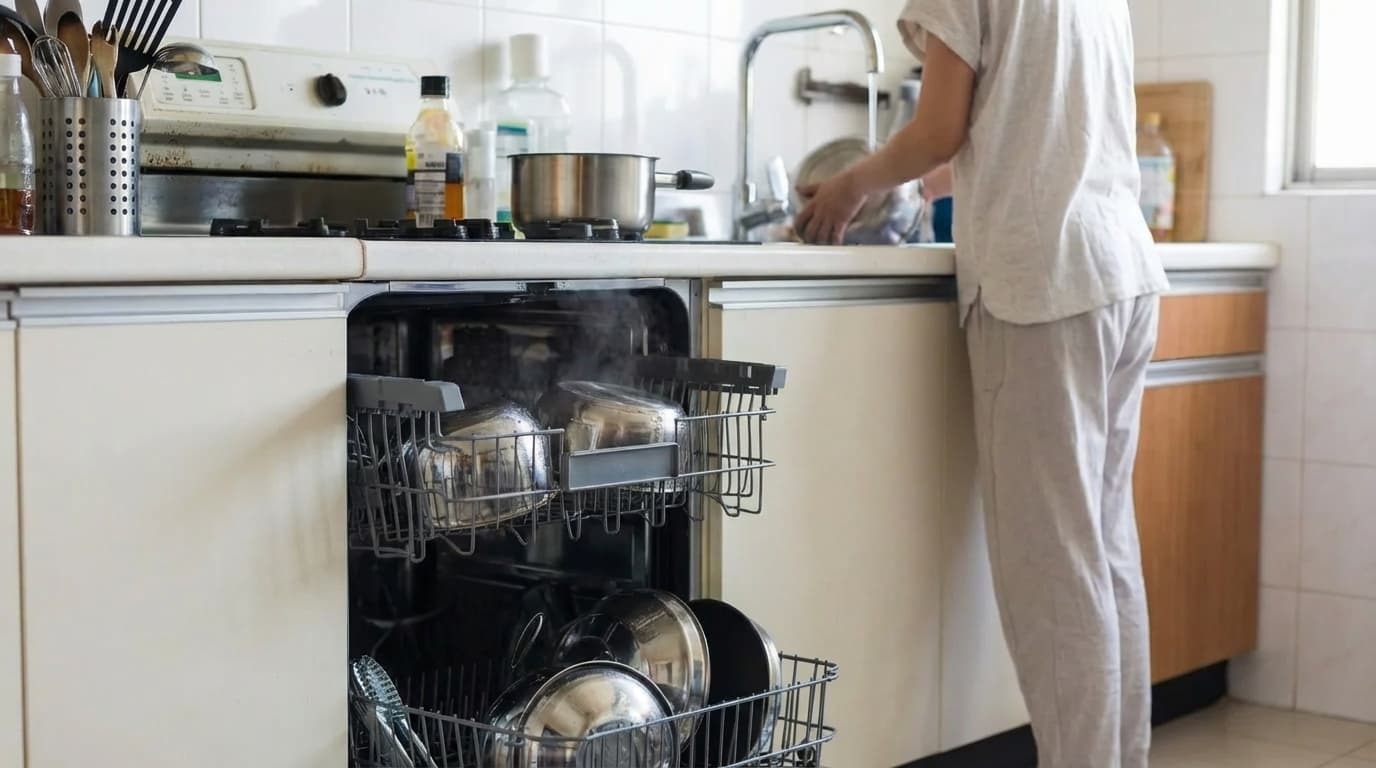
Not everything that survives the kitchen can survive the dishwasher, and stainless steel is no exception.
Most people load it in without a second thought, and for a while, everything seems fine. Then come the white spots, the dull finish, the faint rust that was not there before, and most never connect it back to the dishwasher.
If you have ever wondered whether stainless steel is dishwasher safe, the answer is yes, the dishwasher works for most stainless steel, but how you use it makes all the difference.
Here, you will find out which items can handle the dishwasher, which ones are better off hand-washed, and the simple steps that keep every piece in great shape long-term.
Is Stainless Steel Dishwasher Safe?
Most stainless steel cookware and utensils can go straight into the dishwasher without any issues.
High-quality stainless steel is built to handle heat, water, and detergent, so a standard wash cycle is rarely a problem.
That said, repeated dishwasher use does add up over time. Even the toughest pieces can start to show dull spots, minor discoloration, or a slightly worn finish after enough cycles. It’s not immediate, but it’s worth keeping in mind, especially for items you want looking good for years.
The grade of steel, the detergent strength, and how often you run a cycle all play a role.
Why Stainless Steel Usually Handles Dishwashers Well?
Stainless steel has a few built-in qualities that make it a solid choice for dishwasher use.
- Rust Resistance: Chromium forms a protective layer that resists rust and corrosion, even with regular exposure to water and detergents.
- Heat Tolerance: Withstands high dishwasher temperatures without warping, cracking, or degrading.
- Strong Surface: Tough enough to handle repeated wash cycles without scratching or wearing thin.
- Non-Porous Material: Does not absorb water, bacteria, or food particles, so it comes out cleaner and dries faster.
- Chemical Resistance: Holds up well against strong detergents without discoloring or breaking down.
- Long-Term Durability: Keeps its shape and structure far longer than most other kitchen materials.
Stainless Steel Items: Dishwasher Safe or Not?
Not every stainless steel item belongs in the dishwasher. Coatings, mixed materials, and insulation change everything.
1. Pots and Pans
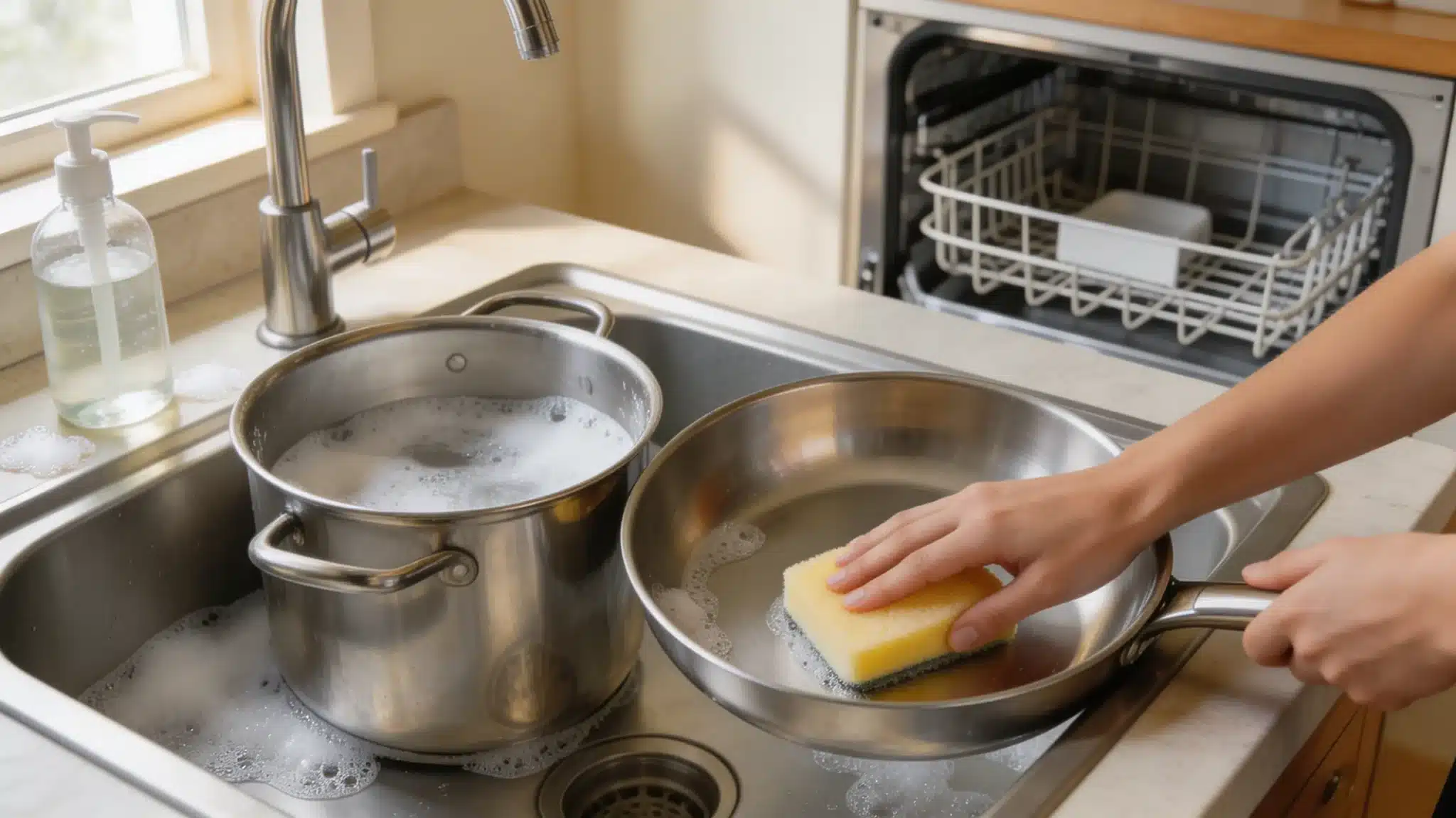
Best to hand wash. Most stainless steel pots and pans are technically dishwasher safe, but repeated machine washing dulls the finish and leaves water spots over time. High heat and strong detergents gradually affect surface quality.
Hand washing takes just a few minutes and keeps them in far better shape in the long term. Use the dishwasher only occasionally rather than making it a habit.
2. Utensils and Mixing Bowls
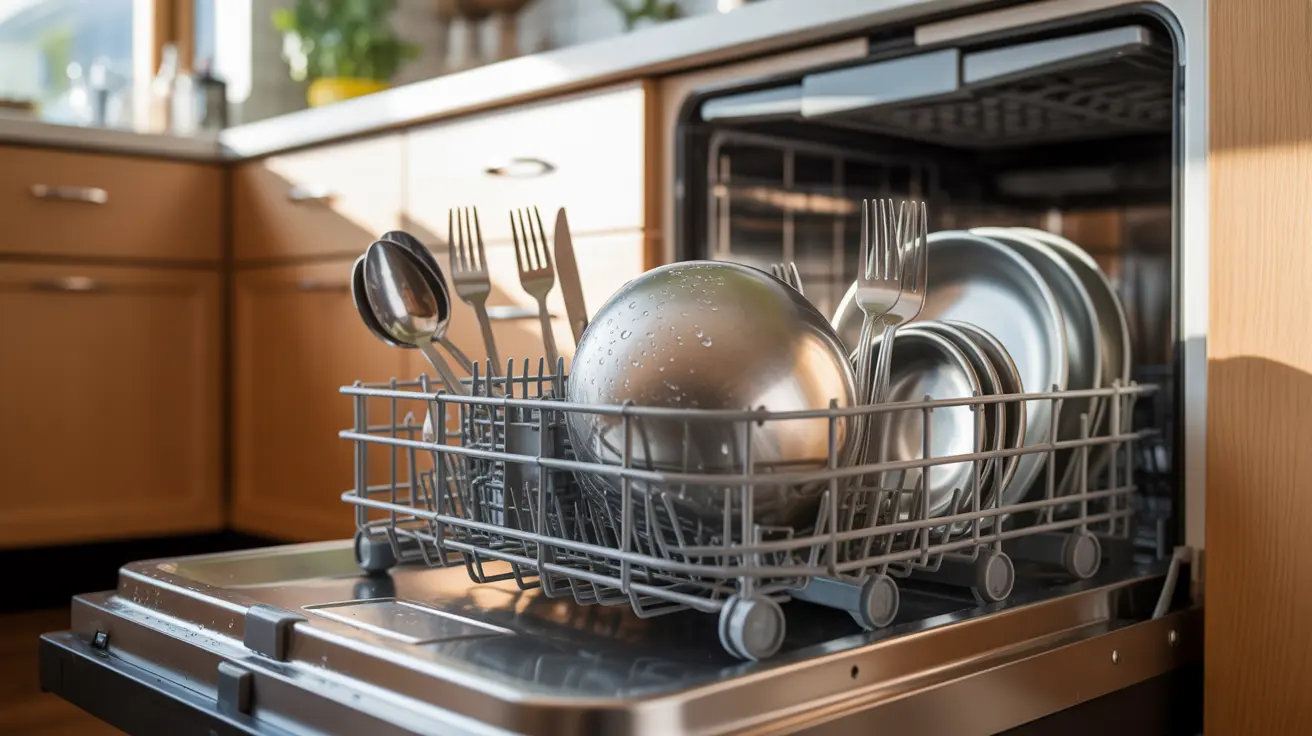
Safe for the dishwasher. Stainless steel cutlery and plain mixing bowls handle heat, water, and detergent well, making them the most dishwasher-friendly items in the kitchen. Load the cutlery with handles facing down for better cleaning, and remove it promptly after the cycle.
If a mixing bowl has a rubber base or grip attached, hand washing is safer, as rubber can loosen and deteriorate with repeated heat exposure.
3. Trainers and Colanders
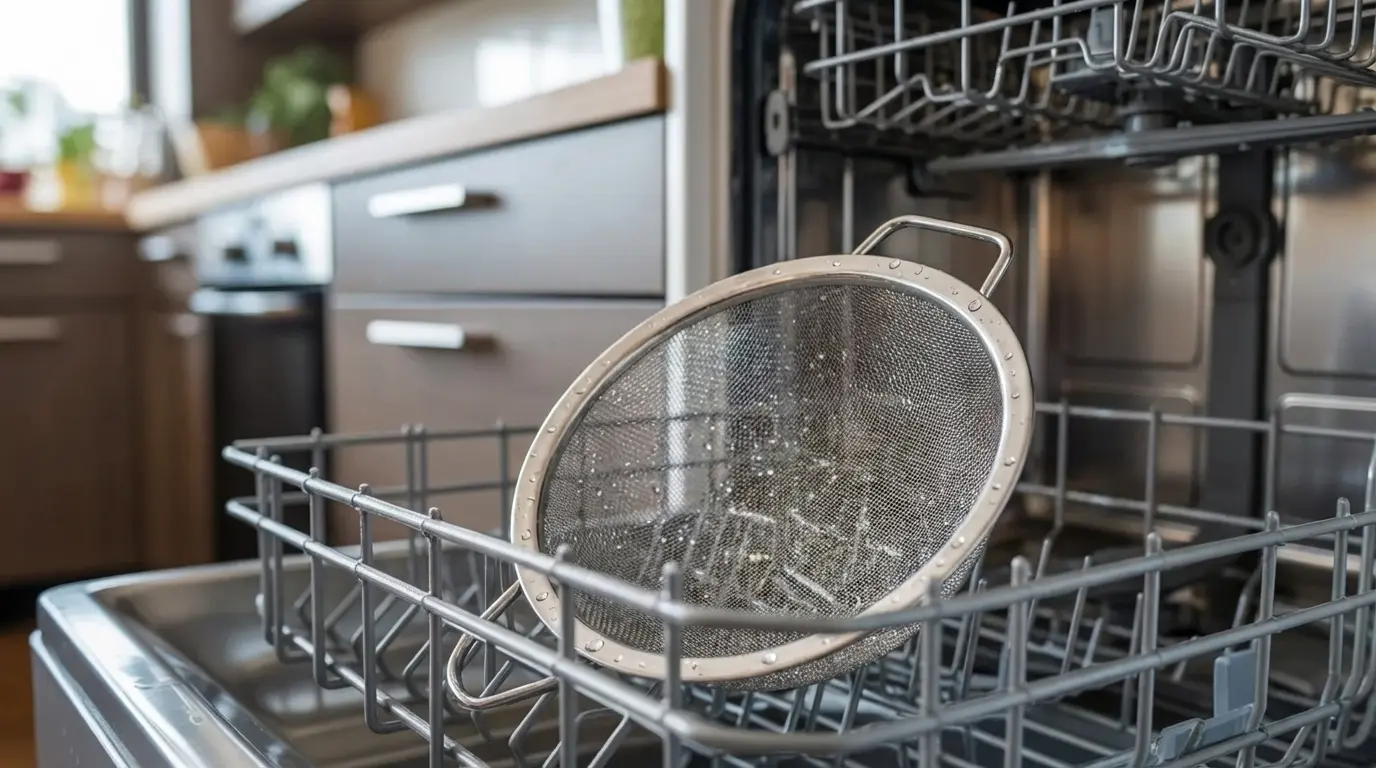
Safe for the dishwasher. The machine cleans small holes and mesh areas more effectively than hand washing ever could. Just check for plastic or rubber handles before loading, as they may not hold up well to repeated dishwasher cycles.
Remove promptly after the cycle ends and dry thoroughly to prevent any moisture from sitting in the mesh areas for too long.
4. Water Bottles, Thermos, and Travel Mugs
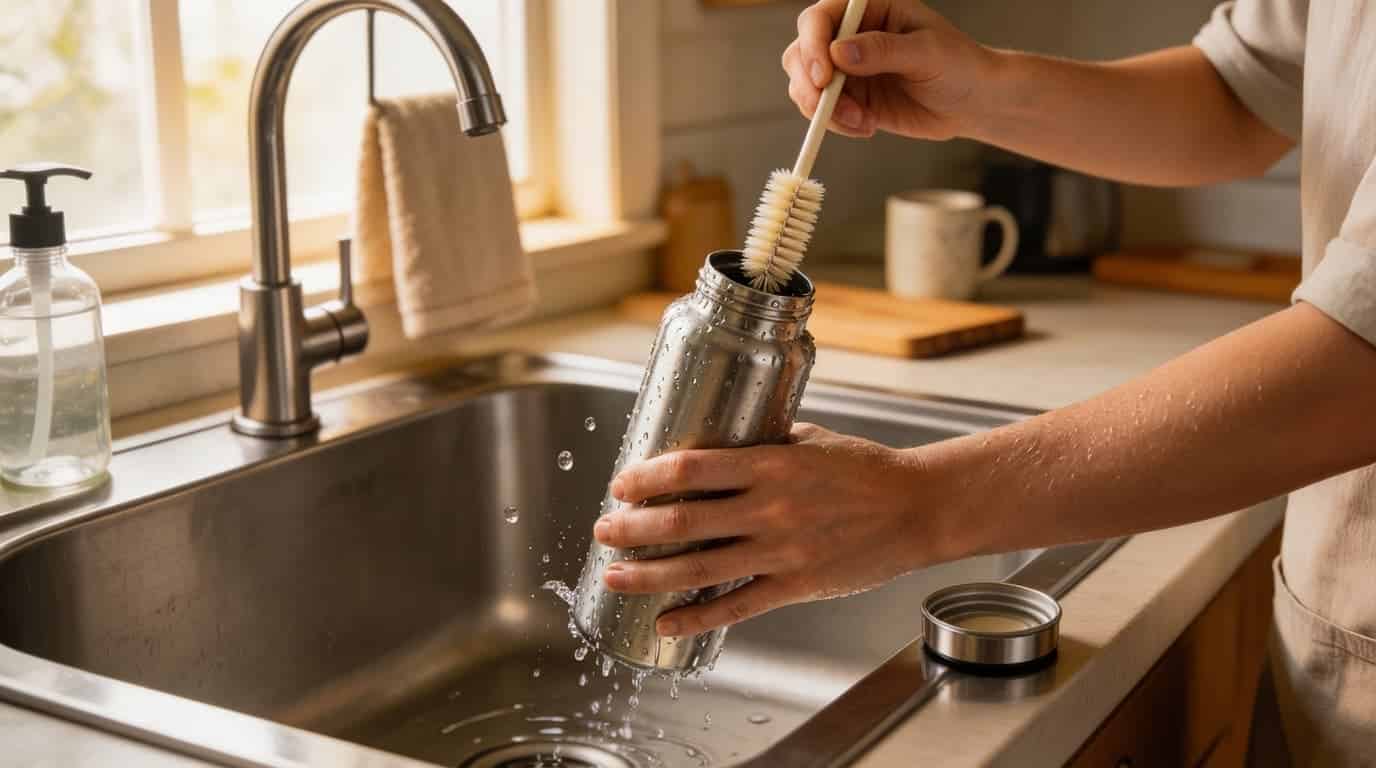
Avoid the dishwasher for insulated or painted versions. Dishwasher heat gradually breaks down the vacuum seal that keeps drinks hot or cold. Lids with rubber seals and plastic parts are also at risk of warping or cracking.
Plain stainless steel bottles with no coating or insulation are generally fine, but hand washing with a bottle brush remains the safest and most effective cleaning option.
5. Knives
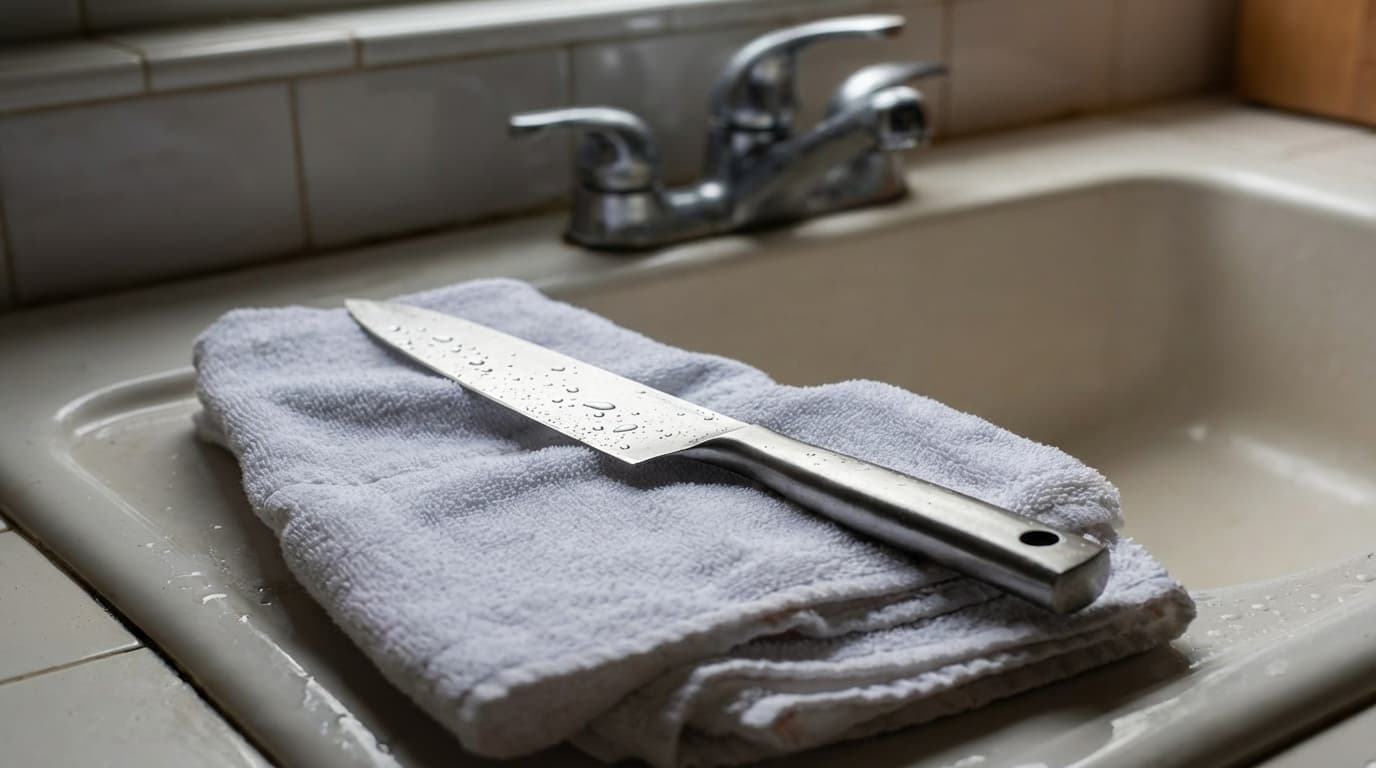
Avoid the dishwasher entirely. Heat, moisture, and movement wear down blade edges much faster than hand washing. Handles attached with adhesive or made from mixed materials can loosen or crack over repeated cycles.
A quick hand wash followed by immediate drying is always the better option. Keeping knives out of the dishwasher significantly extends their sharpness and overall lifespan.
6. Cutting Boards
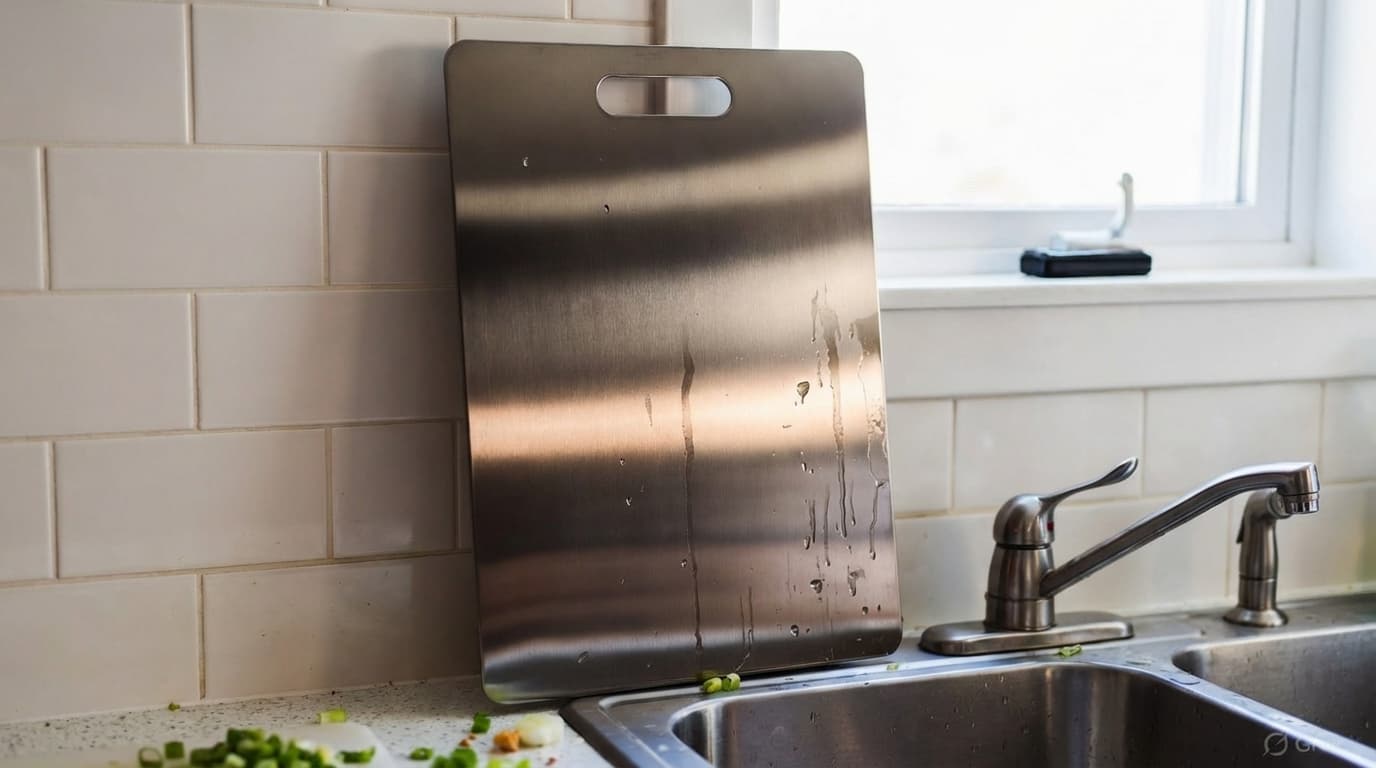
Not dishwasher safe, but hand-wash safe.Steel cutting boards are durable, non-porous, and resistant to bacteria, but prolonged exposure to heat and moisture in the dishwasher can cause warping or surface scratches over time. These scratches create grooves where bacteria can settle, directly affecting hygiene.
A simple hand wash with warm, soapy water after each use is enough to keep kitchen cutting boards clean, hygienic, and in good working order in the long term.
When Stainless Steel is NOT Dishwasher Safe
| Item Type | Why It’s a Problem | What Happens |
|---|---|---|
| Low-Quality or Thin Steel | Lacks the durability of higher grades | Warps under heat, stains easily, and loses shine faster |
| Items with Coatings or Finishes | High heat and detergent break down surface layers | Non-stick coatings peel, painted handles fade, and finishes crack |
| Mixed Materials | Wood, plastic, and glued parts react badly to heat | Handles crack, joints loosen, and parts break down over time |
| Insulated Items | Dishwasher heat breaks down the vacuum seal | Loses the ability to maintain temperature, and the lids warp or crack |
| Decorative or Embossed Pieces | Intricate surfaces trap detergent and react to heat | Finishes dull, patterns fade, and surface detail wears away quickly |
| Clad or Multi-Ply Cookware with Exposed Aluminum Rims | Alkaline detergents degrade exposed aluminum at the pan’s edge | Rim degrades over time, affecting appearance, heat performance, and in severe cases, induction compatibility |
When in doubt, hand washing is always the safer choice. A little extra effort at the sink goes a long way in keeping these items in good shape.
Dishwasher Damage: What Goes Wrong and How to Fix It
Even the toughest stainless steel can show signs of wear after repeated dishwasher use.
1. Water Spots
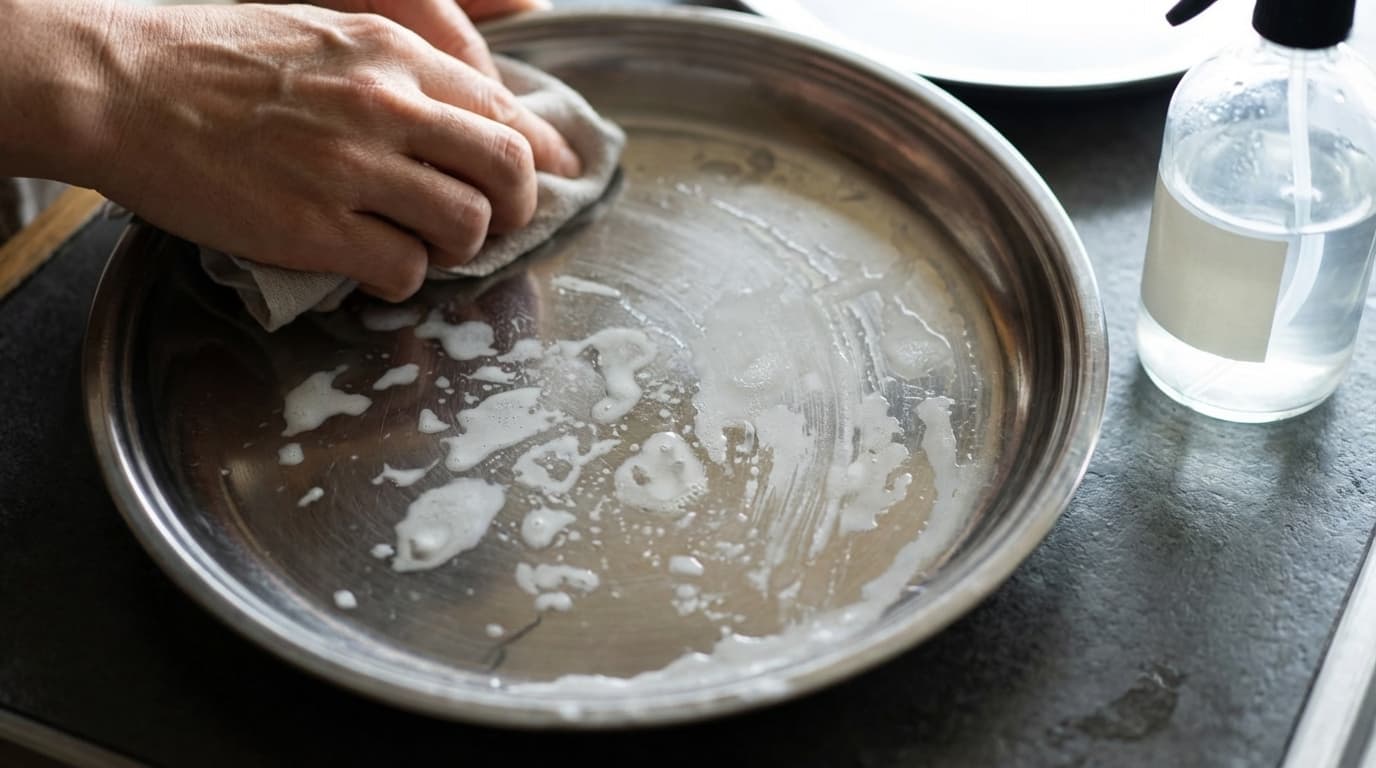
Small white or cloudy marks appear across the surface after drying. Hard water contains minerals like calcium and magnesium, which leave deposits as water evaporates during the drying cycle.
How to fix it:
- Dampen a soft cloth with white vinegar or a fresh lemon solution.
- Wipe gently across the affected surface in smooth strokes.
- Let the solution sit for a minute to dissolve mineral deposits.
- Dry thoroughly with a clean microfibre cloth immediately after.
2. Discoloration or Rainbow Stains
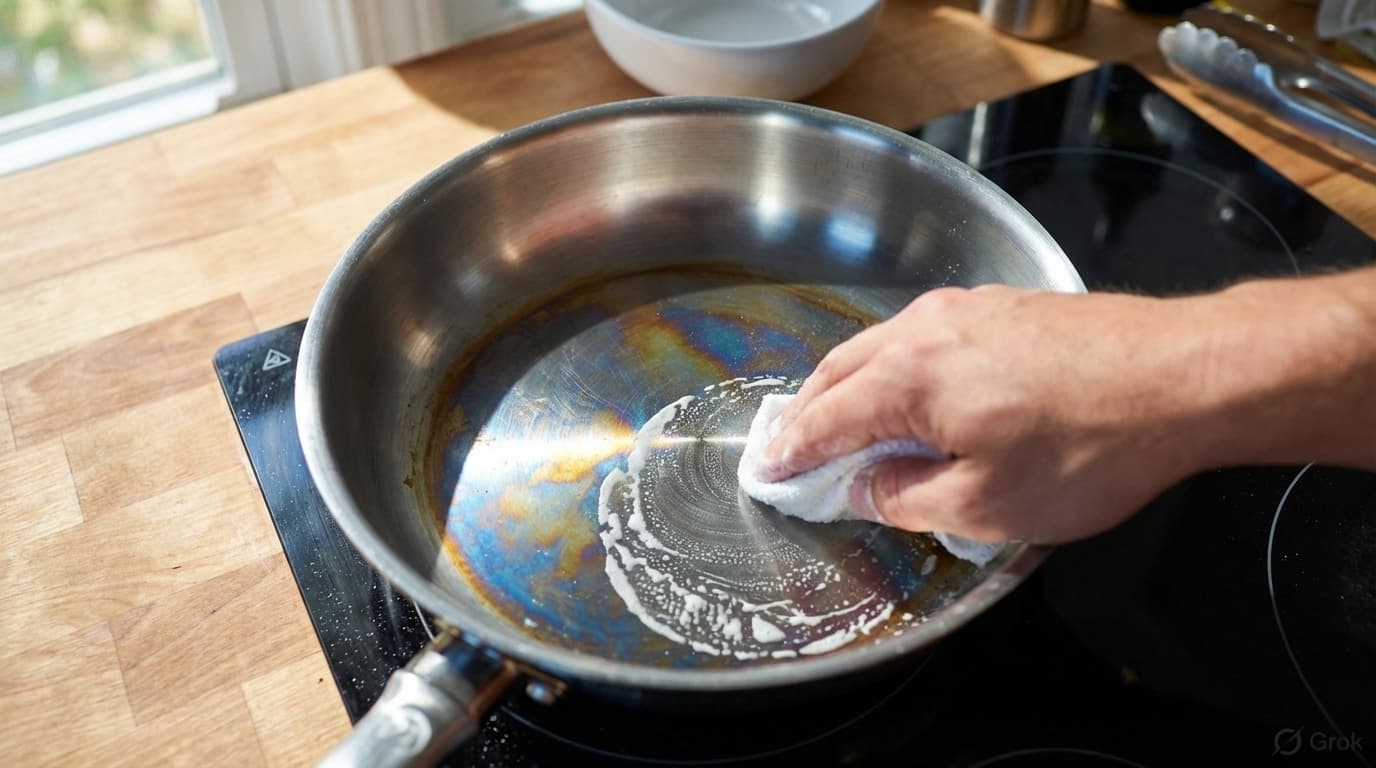
A bluish, yellowish, or rainbow-tinted film sits across the surface. High dishwasher heat combined with strong detergents triggers a chemical reaction on the steel, forming an oxidized layer that shows up as visible discoloration.
How to fix it:
- Mix baking soda and water into a smooth paste.
- Apply gently onto the stained area with a soft cloth.
- Rub in circular motions without applying too much pressure.
- Rinse clean with warm water and dry immediately.
3. Pitting and Corrosion
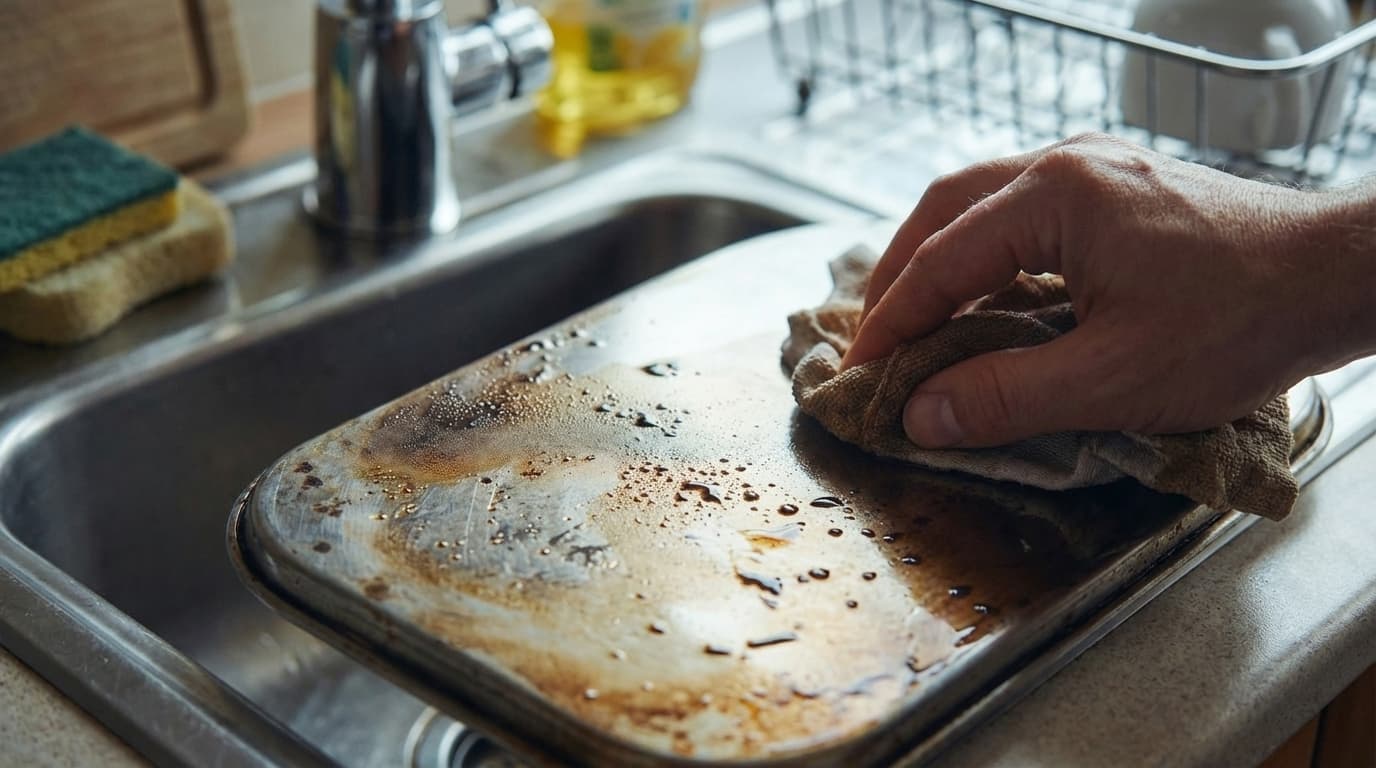
Small holes, rough patches, or dark spots form on the surface over time. Harsh detergents, salt from dishwasher tablets, and prolonged moisture break down the protective chromium layer, leaving the metal open to corrosion.
How to fix it:
- Switch to a mild, phosphate-free dishwasher detergent immediately.
- Remove items promptly after the cycle ends and dry thoroughly.
- Buff the surface with a soft cloth and a small amount of olive oil.
- For deeper corrosion, use a dedicated stainless steel polish along the grain.
4. Dull or Faded Finish
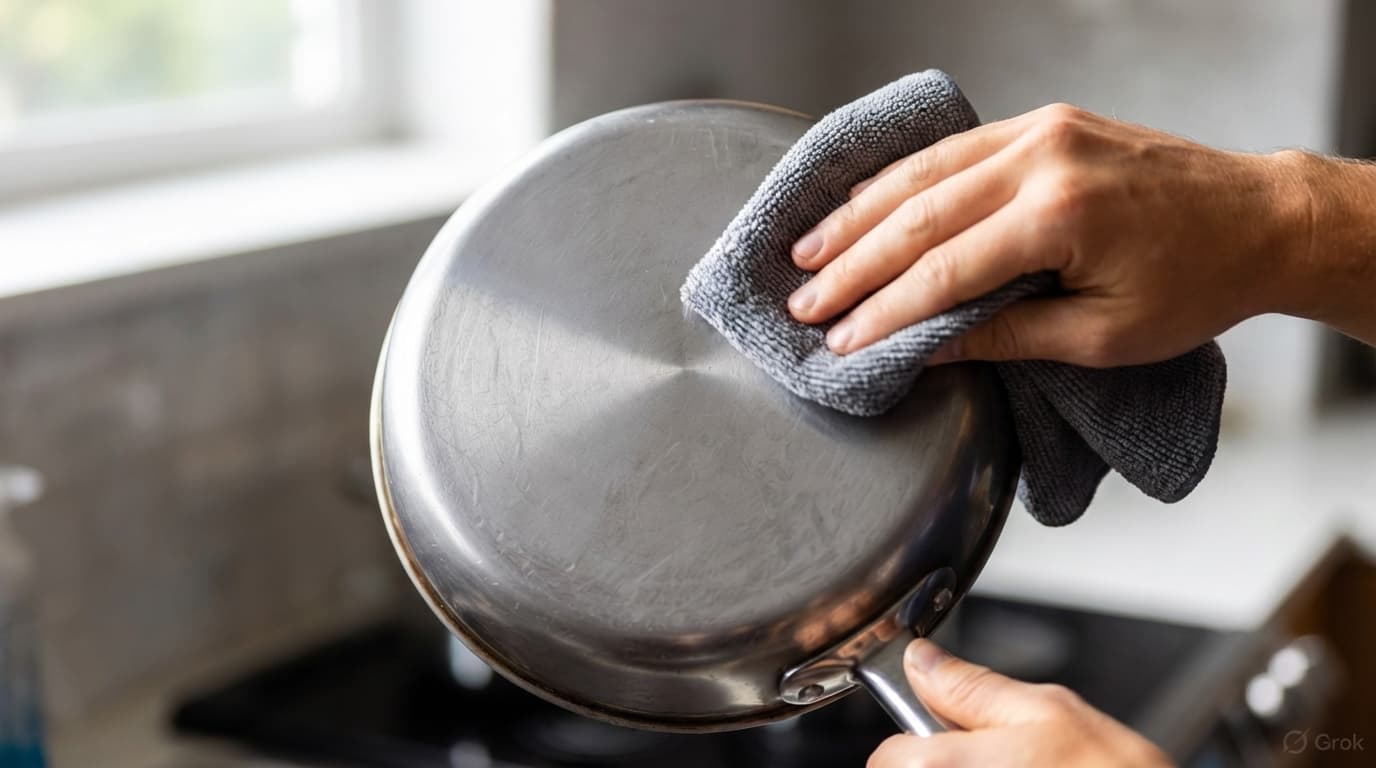
The surface loses its original shine and begins to look flat, grey, or worn. Repeated exposure to harsh detergents and high heat gradually strips away the polished finish, leaving it looking dull and lifeless.
How to fix it:
- Apply a small amount of stainless steel polish onto a microfibre cloth.
- Buff the surface in the direction of the grain.
- Wipe away any excess polish with a clean, dry cloth.
- Repeat regularly after each wash to maintain the finish long-term.
Catching these problems early makes a real difference. Most surface issues can be fixed with simple home remedies, but the longer they’re left, the harder they become to reverse.
Dishwasher or Hand Washing: Which is Better?
There’s no single right answer; it comes down to what you’re washing and how much you care about keeping it in good shape.
The dishwasher is convenient and time-saving. The dishwasher works well for everyday items like cutlery, bowls, and colanders. The trade-off is gradual wear, a dull finish, water spots, and surface exposure to heat and chemicals that accumulate over months.
Hand washing requires more effort, but it is better for long-term care. I always use warm, soapy water and a soft cloth, which gives full control over the surface and helps items hold their shine and condition far longer.
The best approach is to use the dishwasher for basics and hand-wash anything premium, coated, or insulated. That one small habit, I’ve found, makes a noticeable difference over time.
Tips To Maintain Stainless Steel After Washing
Small habits go a long way in keeping stainless steel in great shape. Here’s what actually makes a difference:
- Load Correctly: Leave space between items to prevent scratches during the cycle.
- Skip Heated Dry: Air dry instead; heated drying dulls the finish and causes water spots.
- Use Mild Detergent: Avoid bleach or chlorine-based detergents as they accelerate surface wear.
- Dry Immediately: Drying right after the cycle prevents water spots and mineral deposits.
- Clean Along the Grain: Always wipe in the direction of the grain to avoid fine scratches.
- Avoid Long Soaking: Extended soaking weakens the chromium layer, leading to staining.
- Keep the Machine Clean: Regular dishwasher cleaning, including the filter and spray arms, prevents mineral buildup that can transfer to your stainless steel items.
These small steps cost nothing but a little attention and go a long way in keeping every piece looking its best.
Summing Up
You already know stainless steel is tough, but how you clean it still makes a real difference. So, is stainless steel dishwasher safe? Yes, for most items, but not all.
I’ve found that quality, coatings, and how often you run cycles matter more than people think. You can safely use the dishwasher for basic utensils and bowls, but handwashing is better for knives, bottles, and premium pieces.
Small habits like using mild detergent and quick-drying products help prevent spots and dullness. This simple care keeps your items looking good for years. Try these tips next time you clean, and see the difference yourself.
Frequently Asked Questions
Does the grade of stainless steel affect dishwasher performance?
Yes. Higher grades like 304 and 316 handle dishwasher conditions far better than cheaper grades, which lack the chromium content needed to resist heat and detergent over time.
Can a damaged stainless steel surface affect food safety?
Yes. Deep scratches and pitting create grooves where bacteria can settle and are harder to clean, underscoring the importance of prompt surface care for hygiene.
Does dishwasher water temperature affect stainless steel?
Very high water temperatures above 75°C can accelerate finish wear on lower-grade steel. High-grade stainless steel handles standard dishwasher temperatures without issue.