
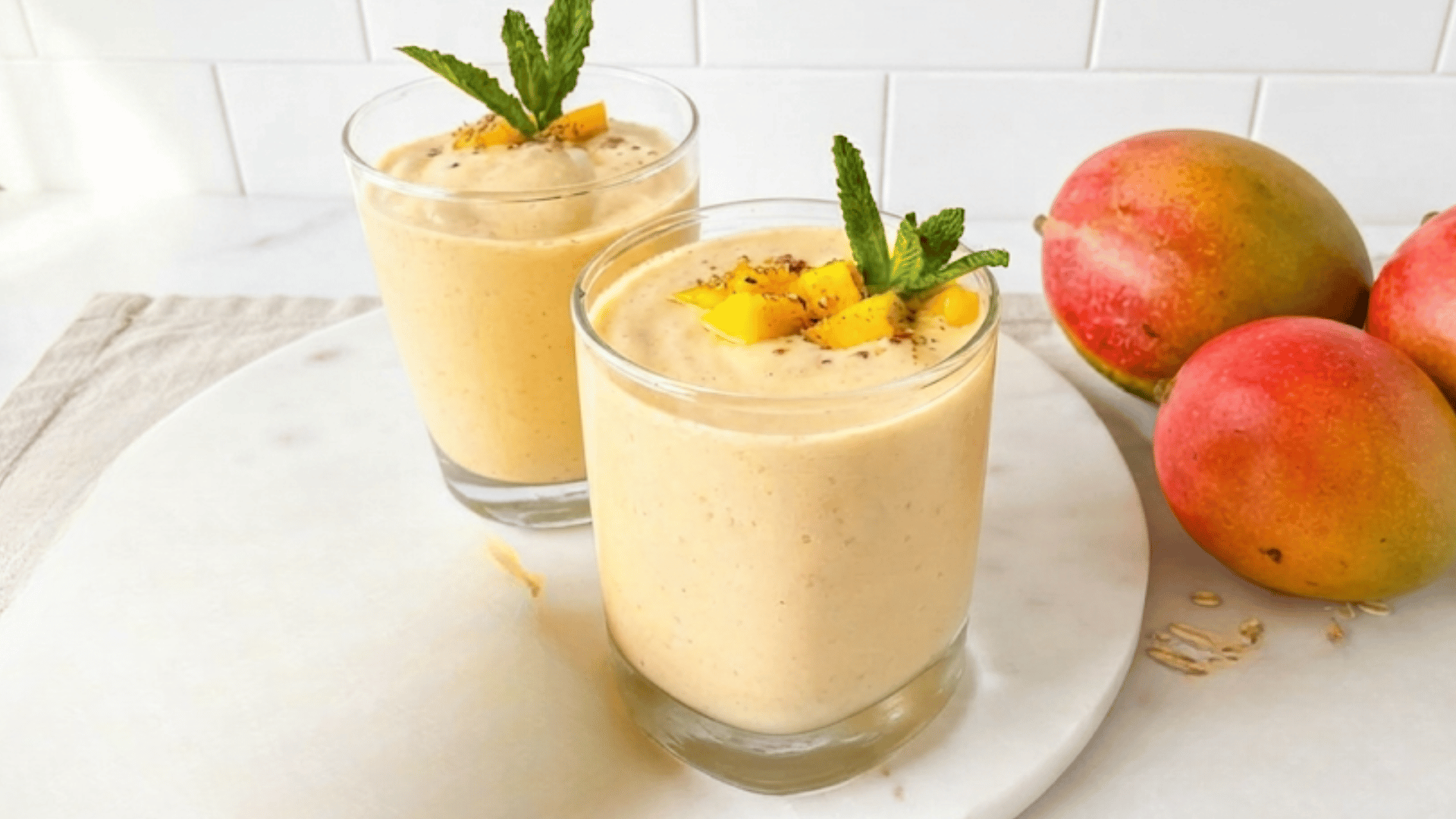
Nothing tastes quite like a cold, creamy mango smoothie made with ripe, naturally sweet fruit. It comes together in just a few minutes, making it a great option for busy mornings, an afternoon refreshment, or a light drink on warm days.
This mango smoothie with almond milk uses a handful of simple ingredients to create a smooth, refreshing texture without feeling heavy.
You can easily adjust the sweetness, thickness, or fruit combinations to match your preferences, and it works just as well with fresh or frozen mango.
If you enjoy simple recipes that are easy to adapt, this smoothie gives you plenty of ways to change the flavor, texture, and nutritional value while keeping preparation quick and easy.
Jump toRecipe
Ingredients Used for Making the Smoothie
- 1 Mango
- 1/2 cup almond milk
- Ice cubes
Optional:
- Banana or Yogurt
- Honey, Maple syrup, and Vanilla extract
- Chia or Flax seeds
Mango Smoothie Recipe in 3 Easy Steps
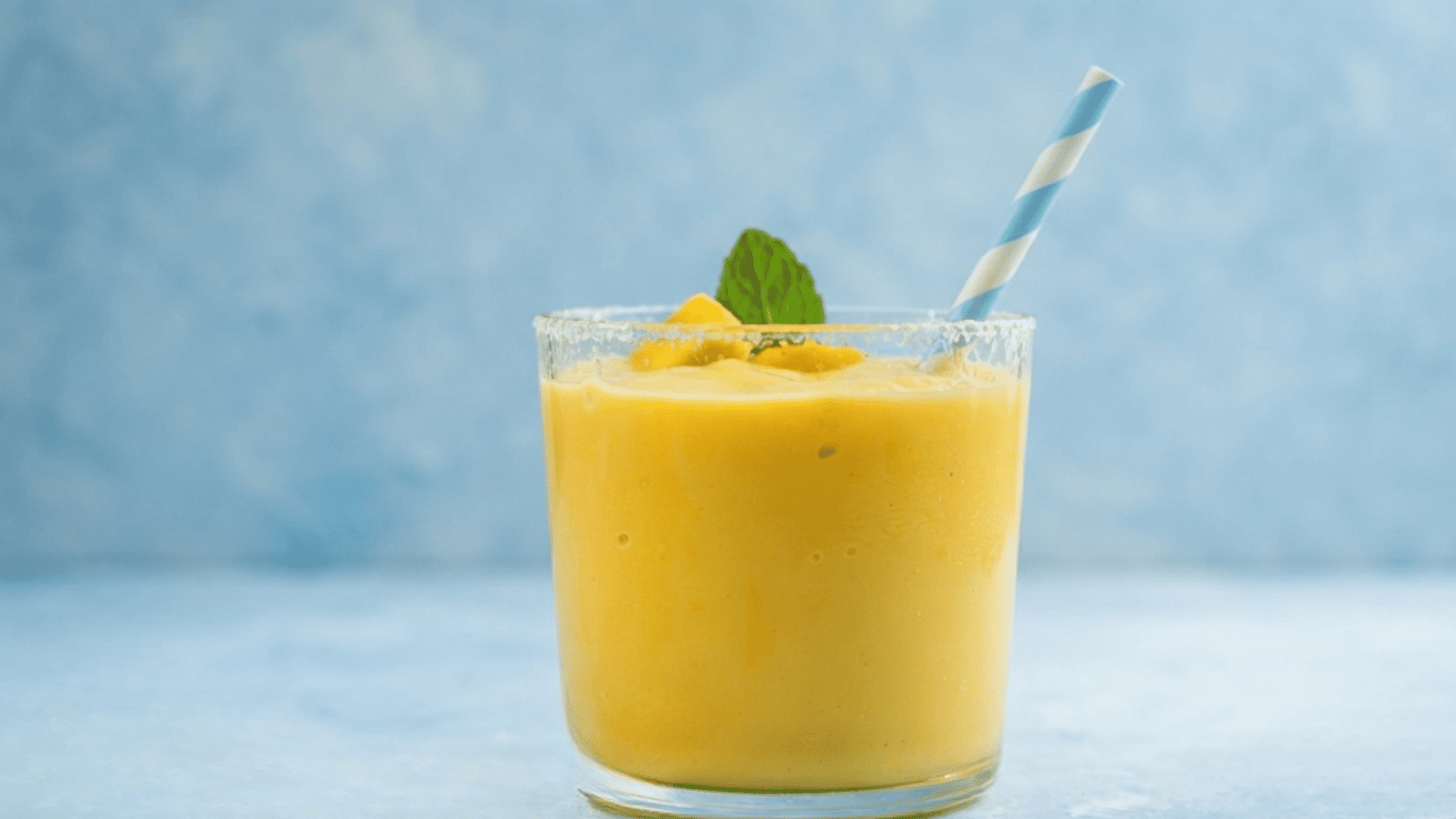
Grab your blender because this creamy mango smoothie comes together in just three easy steps.
Step 1: Prepare and Add the Ingredients
Peel and chop the ripe mango into chunks.
Pour the almond milk into the blender first, then add the mango, ice cubes, and optional ingredients such as banana, yogurt, honey, or vanilla extract.
Step 2: Blend Until Smooth
Start by blending the ingredients on low speed to combine everything evenly, then gradually increase to high speed.
Continue blending until the smoothie is completely smooth, creamy, and free of any fruit chunks.
If the mixture seems too thick or does not blend easily, add a small splash of milk and blend again until you reach your preferred consistency.
Step 3: Taste and Serve
Taste the smoothie and adjust the sweetness or thickness to suit your preference. If you prefer a sweeter flavor, add a little honey or maple syrup.
For a thinner consistency, blend in a splash of milk. Once you’re happy with the taste and texture, pour the smoothie into a chilled glass and serve immediately.
Enjoying it fresh gives the best flavor, creamy texture, and overall quality before the ingredients begin to separate.
Nutrition Facts
A typical serving of this smoothie provides the following approximate nutrients. Values may vary slightly depending on the ingredients, serving size, and any optional additions used.
| Nutrient | Approximate Amount (Per Serving) |
| Carbohydrates | 31 g |
| Protein | 2 g |
| Total Fat | 1.5 g |
| Saturated Fat | 0.1 g |
| Fiber | 3 g |
| Total Sugars | 27 g |
| Added Sugars | 0 g |
| Vitamin C | 65–70 mg |
| Vitamin A | 90 mcg RAE |
| Potassium | 350 mg |
| Calcium* | 230 mg |
| Sodium | 80–90 mg |
*Calcium is based on fortified unsweetened almond milk. Values may vary by brand and mango size.
What Is the Right Milk for Your Mango Smoothie?
Whole milk is the best choice for the creamiest mango smoothie, while almond, oat, soy, and coconut milk are excellent alternatives depending on your taste, dietary needs, and desired texture.
Whole milk creates a rich, smooth consistency that complements the natural sweetness of ripe mangoes.
Soy milk provides extra protein and blends well without overpowering the fruit.
Coconut milk gives the smoothie a richer, tropical flavor that pairs naturally with mango.
Why Is a Mango Smoothie with Almond Milk so Popular?
Some combinations just work, and a mango smoothie with almond milk is one of them. Sweet, juicy mango brings the tropical flavor, while almond milk keeps everything smooth and creamy without stealing the spotlight.
It feels refreshing instead of heavy, making it just as good for a quick breakfast as it is for a sunny afternoon pick-me-up.
The best part? It’s easy to make your own. Toss in a banana for extra creaminess, a handful of spinach for a nutrition boost, or a scoop of protein powder after a workout.
According to the National Institutes of Health (NIH) Office of Dietary Supplements, almond milk can contribute to daily calcium intake, although nutrient levels vary by brand and fortification.
Best Mangoes for Smoothies
The best mango for your smoothie depends on the flavor and texture you prefer. Ripe varieties blend smoothly, add natural sweetness, and create a creamy, refreshing drink.
| Mango Type | Best For |
|---|---|
| Fresh Mango | Bright, juicy flavor when fully ripe. |
| Frozen Mango | Thicker, creamier smoothies with less need for ice. |
| Ataulfo (Honey) Mango | Naturally sweet with a smooth, buttery texture. |
| Kent Mango | Rich, sweet flavor with very little fiber for a silky smoothie. |
| Keitt Mango | Mildly sweet, juicy, and ideal for larger batches. |
| Tommy Atkins Mango | Widely available with good flavor, though slightly more fibrous. |
Tips to Make the Creamiest Smoothie
A few simple techniques can make your smoothie smoother, thicker, and more flavorful. These tips help create a creamy texture while preventing the drink from becoming too thin or watery.
- Use frozen fruit for a thicker, colder smoothie without adding extra ice.
- Blend the liquids first before adding the remaining ingredients.
- Start with less milk and add more only if needed.
- Sweeten after tasting with honey or maple syrup, if desired.
- Choose fully ripe mangoes for better flavor and a creamier texture.
Easy Ways to Customize Your Mango Smoothie
This mango smoothie recipe is a solid base, but it also holds up well to add-ins if you want more protein, spice, or a different texture.
- Add protein powder: A scoop of vanilla or unflavored protein powder turns this into a full breakfast or post-workout drink.
- Try warming spices: A pinch of cardamom, ground ginger, or turmeric adds warmth without changing the base flavor much.
- Blend in greens: A handful of spinach adds nutrients without much taste, and it’s one of the gentle leafy greens that are easy on a sensitive stomach if digestion is a concern for you.
- Go fully dairy-free: Swap yogurt for full-fat coconut milk or silken tofu if you want the creaminess without any dairy at all.
- Mix in other fruit: Pineapple, strawberries, or a splash of orange juice all pair naturally with mango if you want to change the flavor without starting over.
Common Mistakes to Avoid
If the smoothie turns out too watery, use frozen mango, reduce the almond milk, or add a few frozen banana slices to thicken it.
If it becomes too thick, blend in almond milk a little at a time until it reaches the desired consistency. A bland smoothie can benefit from a splash of vanilla extract or a squeeze of fresh lime juice for a brighter flavor.
If it tastes too sweet, reduce the added sweetener and let ripe mango provide most of the sweetness.
For a grainy texture, blend the ingredients a little longer or use a high-powered blender for a smoother finish.
Go to the recipe in case you missed something.
Conclusion
This mango smoothie recipe proves that a refreshing homemade drink does not require complicated ingredients or long preparation.
With ripe or frozen mango, almond milk, and a few optional add-ins, you can blend a creamy smoothie in just minutes.
The simple steps make it easy to adjust the texture, sweetness, and flavor to suit your preferences, whether you want a protein-packed breakfast, a light afternoon snack, or a satisfying post-workout drink.
Pair it with other healthy snack ideasfor a more balanced meal or snack.
Try different combinations using your favorite fruits, seeds, or yogurt to create a version you will enjoy again and again.
Blend a fresh batch today and enjoy a delicious, wholesome mango smoothie whenever you need a quick, flavorful refreshment.
Frequently Asked Questions
Can a Mango Smoothie Be Made without a Banana?
Yes. Avocado, silken tofu, soaked cashews, or extra mango provide a creamy consistency while keeping the flavor balanced without using banana.
Is a Mango Smoothie a Good Pre-Workout Drink?
Yes. Natural carbohydrates from mango provide quick energy, making the smoothie a suitable option about 30 to 60 minutes before physical activity.
Can Coffee Be Added to a Mango Smoothie?
Yes. Chilled espresso or cold brew pairs well with mango, creating a refreshing flavor combination with a light coffee taste.
What Blender Speed Works Best for Fruit Smoothies?
Start at a low speed to break down ingredients, then increase to high speed until completely smooth for an even, creamy consistency.