
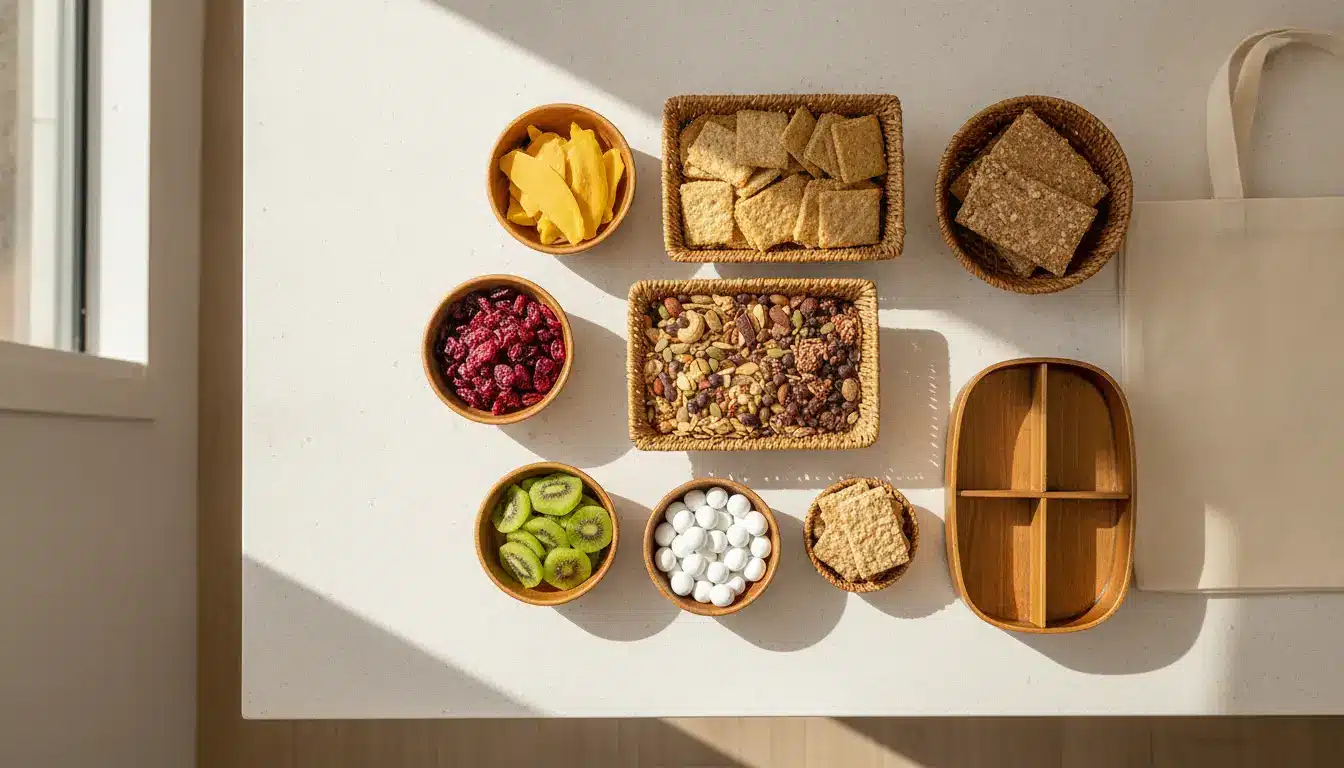
Busy days can make snacks feel harder than they need to be. A school morning starts early, a meeting runs long, or a study session stretches past the point where coffee is enough. When nothing easy is within reach, the next snack often becomes whatever is fastest or closest.
A simple snack setup takes some of that pressure off. It gives lunchboxes, backpacks, desks, dorm rooms, and homework spaces a few reliable options before hunger turns into a distraction. The goal is not to build a perfect system. It is to make everyday eating feel easier when routines get full again.
Why a Snack Setup Works Better Than Random Snacks
Snacks are easier to manage when they already have a place in the day. During long stretches of school, work, or study, planned snacks can help manage hunger between meals without turning every break into a rushed decision.
That is where a simple setup helps. A lunchbox can hold something small for the ride home. A desk drawer can cover the afternoon slump. A dorm bin can make late study sessions feel less scattered. When the options are already nearby, snacks become part of the routine instead of a last-minute search.
Start With the Places You Actually Reach for Food
The best snack setup starts with the places where hunger actually shows up. For some people, that means a lunchbox that needs one extra bite for the afternoon. For others, it is a backpack, a desk drawer, a dorm shelf, a car tote, or a kitchen basket near the homework area.
Think about the day in small zones. A school bag needs snacks that can handle being tossed around. A work drawer needs options that do not need a fridge. A study space needs something easy enough to grab without breaking focus. Once each spot has a clear purpose, it becomes much easier to choose snacks that fit real routines instead of filling the pantry with things nobody reaches for.
Build a Lunchbox Setup That Feels Easy to Use
A good lunchbox snack should be simple. It needs to be easy to pack, open, and finish during a short break. That could mean a small fruit snack, crackers, a yogurt-style bite, or something with a little crunch to make lunch feel more complete.
For school days, variety matters. The same snack can get ignored after a week, even if it worked perfectly at first. Try rotating simple categories instead of starting from scratch every morning: one fruit-forward option, one crunchy option, one lightly sweet option, and one backup to keep in the pantry. Yogurt-covered fruit bites, small oat bars, and snack-size crackers can all make a lunchbox feel more useful without making the morning harder.
Keep Backpack Snacks Simple and Low-Mess
Backpack snacks have to survive the day. They should not leak, crumble into dust, or leave everything sticky. The best options are usually compact, sealed, and easy to eat between classes, during a commute, or before an after-school activity.
Fruit-and-chia snacks, oat bars, dried fruit, roasted chickpeas, and small cracker packs can all work well here. For college students, the same idea applies to campus bags and study totes. A snack that can sit in a bag for a few hours is often more helpful than something that only works when the kitchen is nearby.
Keep Shelf-Stable Snacks Ready for Long Gaps
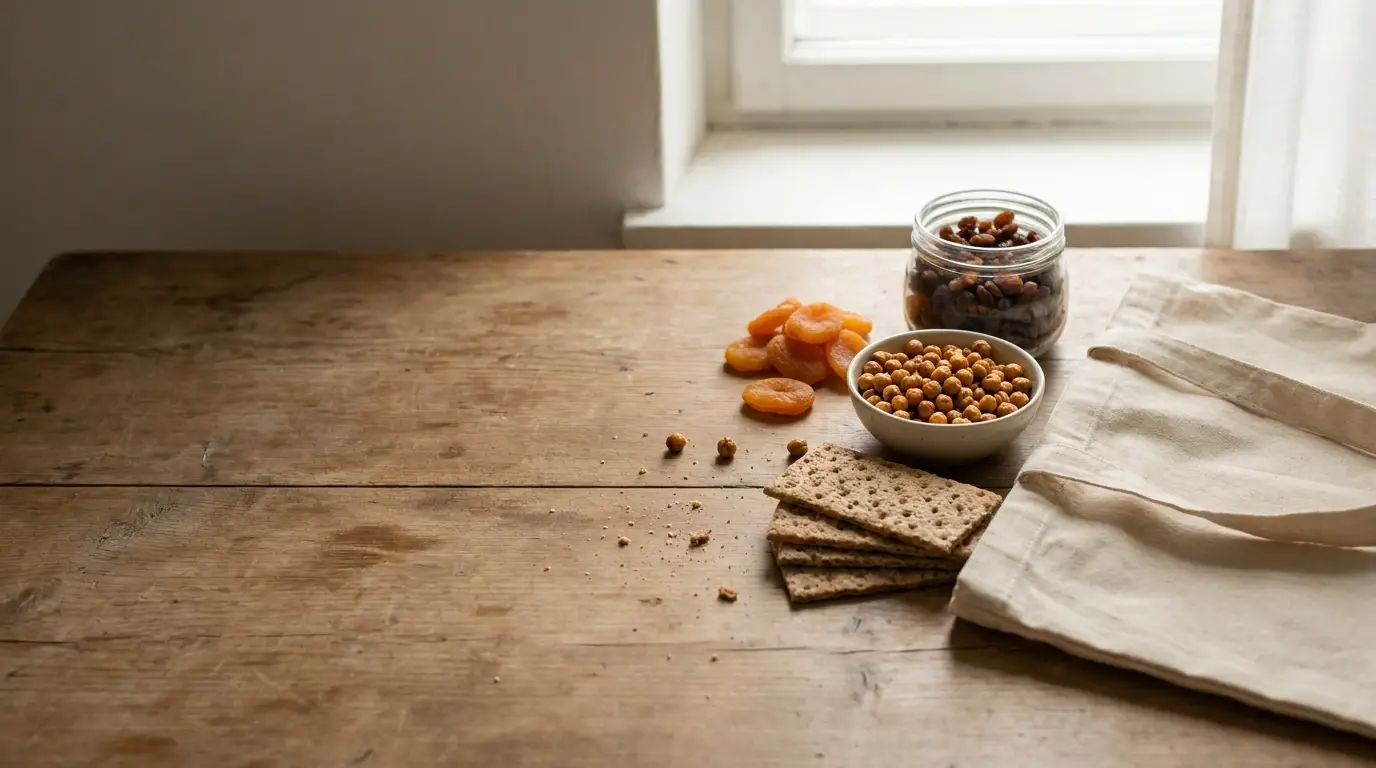
Some parts of the day are too long for a packed meal to carry everything. A late class, a long meeting, a commute, or an after-school activity can leave too much space between lunch and dinner. Shelf-stable snacks earn their spot in those gaps.
Keep a small mix of shelf-stable snacks in the places you use most, with whole-grain crackers, dried fruit, roasted chickpeas, and organic trail mix ready for the gap between lunch and dinner. Single-serve packs can be especially helpful in desk drawers, dorm bins, lunch bags, and backpacks because they keep portions simple and make restocking less of a project.
Make the Setup Work for Homework and Study Time
Homework and study time often go better when the space feels calm, stocked, and easy to reset. In a dedicated learning area, a small snack bin can support the same sense of order that makes an organized learning space easier to use day after day.
Keep this area simple. A few low-mess snacks, a water bottle, napkins, and one small bin are enough for most homes. The point is to give kids, teens, or college students something easy to reach for without sending them all back to the kitchen.
Rotate Sweet, Crunchy, and Filling Options
A snack setup works better when it has a little variety. If every option has the same texture or flavor, people stop noticing it after a few days. A simple rotation keeps the setup useful without complicating the refill list.
Try keeping one sweet option, one crunchy option, and one more filling option in each snack zone. Yogurt-covered fruit bites can handle the sweet spot, crackers or roasted chickpeas can bring crunch, and small trail mix packs can help when the next meal is still a few hours away. This kind of rotation makes it easier to restock lunchboxes, desks, dorm bins, and study baskets without having to guess every week.
Make the Setup Easy to Refill
The best snack setup is the one you can refill without having to think about it too much. Keep the list short, repeat what works, and leave a little room for variety when routines change. A lunchbox may need lighter snacks during the school week, while a desk drawer or dorm bin may need sturdier options that can sit for a few days.
A simple rhythm helps. Check the setup once or twice a week, remove anything no one is reaching for, and restock the snacks that fit the day. When the system is easy to see and refill, it becomes part of the routine rather than one more thing to manage.