

Most learning spaces don’t fall short because of a small budget or a tiny room; they fall short because the setup wasn’t built around how your family actually learns.
The right homeschool room idea can shift the entire dynamic of your school day, turning a cluttered corner into a space where focus comes naturally. I’ve put together practical ways to organize supplies, choose furniture that fits any space, create subject-specific zones, and keep daily messes under control.
Every suggestion here is grounded in setups that balance real-life functionality with comfort, giving you a clear starting point for building a learning environment that genuinely works for your children.
What Makes a Good Homeschool Room?
A great learning space isn’t about size or budget; it’s about function. Here’s what to look for before setting anything up. A good homeschool room should be:
- Quiet enough for focus: free from heavy foot traffic or background noise.
- Comfortable for long study sessions: proper seating, good lighting, and enough room to move.
- Easy to keep clean: simple storage, wipe-down surfaces, clutter-free layout.
- Flexible for different activities: shifts easily from reading to projects without a full reset.
- Stocked with daily supplies within reach: no scavenger hunts for basic tools.
In my experience, spaces that check at least three of these boxes run noticeably smoother from day one, even before any furniture is added or changed.
Homeschool Room Ideas That Are Worth Trying
Finding a setup that fits your home and your child’s learning style doesn’t have to be complicated. These ideas cover every kind of space and budget.
1. Dedicated Classroom Setup

A spare room can become a proper learning space with the right additions. Set up a dedicated desk, shelving for books and supplies, and a whiteboard to build a structured environment your child associates with focused learning.
Having a fixed, purposeful space helps children transition into school mode faster each morning and eliminates the daily effort of setting everything up and clearing it away once lessons are done for the day.
2. Living Room Corner Setup

You don’t need an entire room to create a functional learning space. One desk, a wall-mounted shelf, and a small bin for daily supplies can build a consistent spot without taking over your living room entirely.
Adding a small rug visually defines the area and gives it a sense of separation from the rest of the space, which makes a bigger difference than most people expect.
3. Kitchen Table Learning Space

If your home doesn’t have extra rooms to spare, your kitchen table is a perfectly solid starting point. It’s central, easy to reset, and works especially well for younger children who need to stay close during lessons.
I’d suggest keeping a dedicated supply basket on the counter so morning setup never eats into the first lesson of the day and after each session never turns into a drawn-out process.
4. Minimal Setup
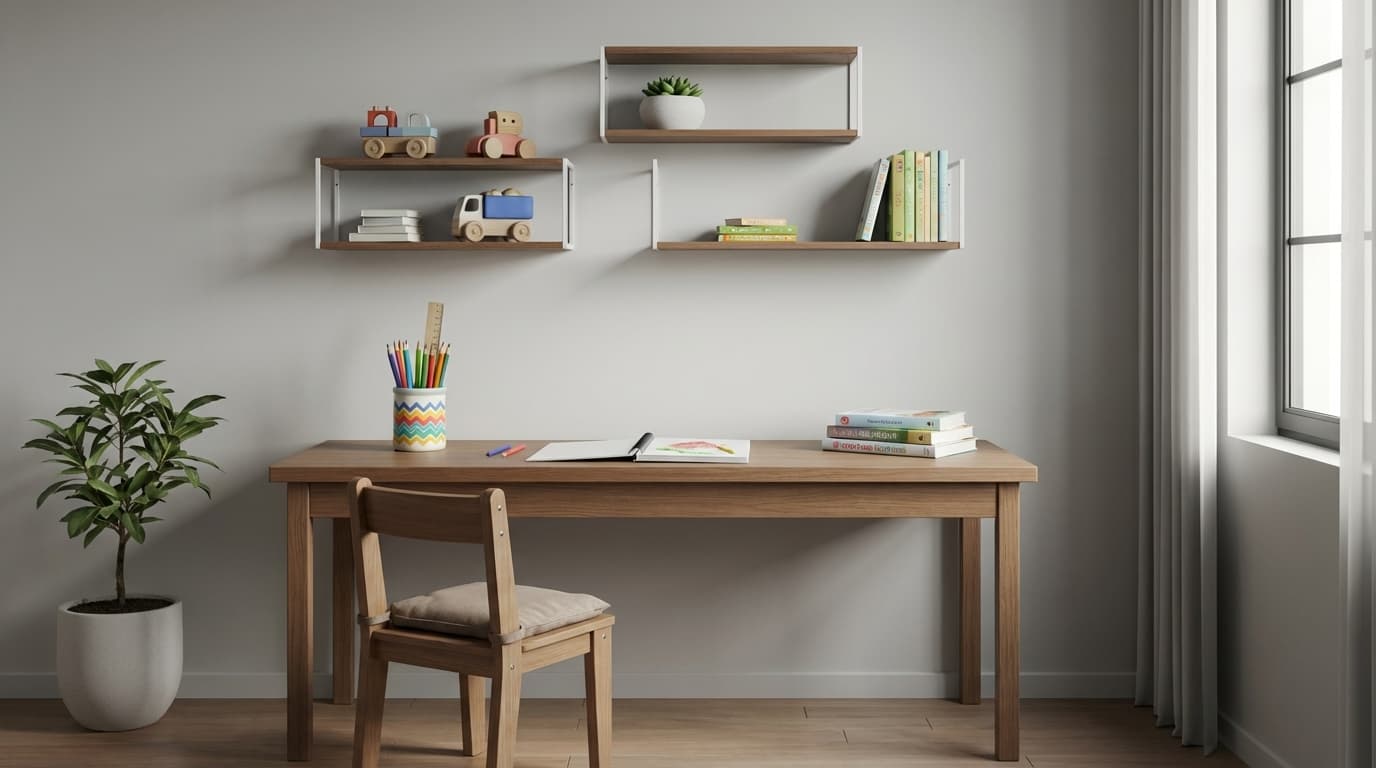
Sometimes the simplest homeschool room idea is also the most effective one. Strip your space down to only what gets used every day, a pencil cup, one notebook, and the current subject’s materials.
Fewer items on the desk means fewer distractions and a faster cleanup routine. Rotating supplies weekly based on current subjects keeps the space intentional and completely free from unnecessary clutter.
5. Shared Desk for Multiple Kids

Teaching more than one child doesn’t mean you need multiple rooms or twice the furniture. A long desk with individual labeled bins gives each child their own zone within the same space.
Color-coded supplies make it immediately clear whose materials are whose and help reduce the daily friction that naturally comes with shared spaces and slightly overlapping school schedules throughout the week.
6. Reading Nook

One of my favorite additions to any homeschool room is a dedicated reading nook. A bean bag, floor cushion, or small chair tucked into a quiet corner alongside a low book shelf creates a space children genuinely want to return to.
Keep a small lamp nearby for focused light and rotate the book selection every few weeks to keep curiosity alive well beyond scheduled lesson time.
7. Wall-Based Setup

If your floor space is limited, your walls are your best resource. Pegboards, floating shelves, and wall-mounted organizers keep everything visible and accessible without crowding the room. Labeling each section clearly means your child can find and return supplies independently.
Adding a small corkboard to display finished work gives the setup a personal touch that keeps kids feeling acknowledged and consistently motivated throughout the week.
8. Closet Classroom

This is one of those homeschool ideas that sounds unconventional until you actually try it. Remove the hanging rod, add a fold-down desk, and install a couple of shelves to create a study spot that completely closes out of sight when school ends.
Paint the interior a calm, neutral color to make it feel deliberate, and clip on a small light for visibility during lessons.I’ll be honest, this one sounds odd until you actually try it, and most families who do are surprised by how well it works.
9. Rolling Cart Setup

If your home doesn’t have a fixed learning space, a three-tier rolling cart might be the most practical solution you haven’t tried yet.
Stock each tier with a specific category, writing tools, art supplies, reference books, so everything has a clear home.Your child’s supplies can move from room to room as needed, and restocking the cart takes no more than five minutes.
10. Nature-Based Space

Positioning your child’s desk near a window and adding a few low-maintenance plants costs very little but changes the feel of the room entirely. Natural light noticeably improves mood and focus during long sessions.
I’d also suggest adding a nature journal or a small magnifying glass to tie the environment into your actual curriculum, extending the theme well beyond simple refined and into everyday learning.
11. Tech-Friendly Area

If devices are part of your daily curriculum, giving them a dedicated home makes your school day run more smoothly. Designate one spot for tablets, chargers, headphones, and learning apps.
A labeled charging station keeps everything organized and ensures nothing is ever dead at the start of a lesson. Containing all tech in one area also makes managing screen time significantly easier throughout the day.
12. Art Station

Messy projects deserve their own space, and your sanity will thank you for it. Setting up a separate corner with a washable mat, labeled supply bins, and access to a nearby sink makes cleanup far less stressful.
Storing supplies at child height means your kids can set up independently without waiting for you, which builds daily responsibility and saves real time between subject transitions.
13. Small Space Setup

A tight space doesn’t have to mean a compromised learning environment. I always recommend starting with foldable furniture to anyone working with a tight or shared space before investing in anything permanent.
Murphy-style fold-down desks are particularly useful if your child’s learning space shares a room with another function, such as a guest room, shared bedroom, or compact studio apartment layout.
14. Outdoor Learning Spot

Your balcony, patio, or backyard is a learning space you might be completely underusing. Reading, journaling, and nature-based lessons work beautifully outside, and a change of scenery can reset your child’s focus on slow or difficult days faster than almost anything else.
Keep a small weather-resistant supply bin outside so moving lessons outdoors requires zero extra preparation and can happen on a moment’s notice.
15. Bedroom Study Combo

When a separate room isn’t an option, a physical divider within the bedroom can do the job well. A bookshelf, curtain, or even a change in rug can separate the study area from the sleeping area and help your child mentally shift between rest and learning.
A loft bed with a built-in desk underneath remains one of the smartest space-saving solutions for a bedroom serving double duty.
16. Montessori-Inspired Setup

If you want your child to take real ownership of their learning, this approach is worth considering seriously. Low shelves, open trays, and child-height workstations put materials within reach and in plain sight at all times.
Children choose what to work on and move at their own pace, which gradually builds genuine self-direction. This setup works best for younger children who respond well to hands-on, independent learning structures.
17. Subject-Based Zones

Dividing your room into clearly defined areas, one for reading, one for writing, one for projects, removes a surprising amount of daily friction. Each zone stays stocked with subject-specific materials so your child always knows exactly where to go.
I’ve found this structure cuts transition time between subjects significantly and gives the room an overall sense of purpose that a single catch-all desk setup rarely achieves.
18. Gallery Wall Setup

Dedicating one wall to your child’s finished work, maps, timelines, projects, and artwork, turns an empty surface into one of the most useful parts of your homeschool room. It keeps key information visible throughout the day and serves as a running record of real progress.
Refreshing it regularly gives your child a tangible sense of accomplishment that quietly reinforces their motivation to keep going every day.
19. Sensory-Friendly Space

For children who are easily overstimulated, the environment itself is part of the curriculum. Soft lighting, muted wall colors, noise-canceling headphones, and minimal visual clutter create conditions where sensitive learners can actually focus without constant interference.
Adding a small fidget bin or a designated calm-down corner gives your child the tools to self-regulate during longer or more challenging lessons without disrupting the entire school day.
20. Multi-Age Learning Setup

Managing multiple grade levels in one space is genuinely one of the harder parts of homeschooling, but the right setup makes it far more doable. Give each child a color-coded supply bin, a labeled shelf section, and a personal task board.
Older children work independently at their own desk while younger ones stay close to you, keeping the day structured without requiring you to be in two places at once.
21. Cozy Cabin-Style Setup

Warm wood tones, soft textiles, and layered lighting can transform a learning space from functional to genuinely inviting. A wooden desk, a woven rug, and warm-toned shelving make the room somewhere your child actually wants to settle into each morning.
This setup works especially well if you want your homeschool space to blend seamlessly with the rest of your home rather than standing out as a separate, institutional-feeling classroom.
These ideas aren’t one-size-fits-all, mix and match based on your space, your child’s age, and what your school day actually looks like.
Tips to Organize Your Homeschool Room Efficiently
Keeping your homeschool room organized is less about perfection and more about having a system that’s simple enough to maintain every single day.
- Start with a clean slate: Clear everything out first so you can see exactly what needs to stay.
- Group similar items and give everything a fixed place: Books, stationery, and craft supplies each get their own section so tidying becomes a habit.
- Use bins, baskets, or drawers with clear labels: These contain loose items neatly and help your child find and return things independently.
- Keep daily-use items within reach and limit extras: Only what gets used every day belongs on the desk; everything else doesn’t need to be there.
- Create a cleanup routine and review items regularly: Five minutes daily and a quick monthly sort keeps clutter from building back up.
You don’t need a perfectly styled room to stay organized, I’ve noticed that families who skip the daily reset are almost always the ones reorganizing the entire room every few weeks.
Must-Have Items for a Functional Homeschool Room
Before setting anything up, knowing exactly what your space needs saves time, money, and a lot of second-guessing later.
| Category | Items Needed | Why It Matters |
|---|---|---|
| Furniture | Desk, ergonomic chair, study table | Supports focus and posture during long study sessions |
| Storage | Bins, shelves, drawers, rolling cart | Keeps supplies organized and reduces daily desk clutter |
| Learning Tools | Whiteboard, notebooks, planner, flashcards | Core daily tools that should always stay within easy reach |
| Tech Setup | Tablet, laptop, charger, headphones | Keeps devices charged and screen time easier to manage |
| Extras | Clock, lamp, pencil holder, sticky notes | Small additions that keep the workspace consistently functional |
| Art and Craft Supplies | Colored pencils, scissors, glue, sketchbook | Supports creative learning and should be stored separately |
| Reference Materials | Dictionary, atlas, subject guides, wall charts | Quick resources that reduce screen dependency during lessons |
You don’t need everything at once, From what I’ve seen, most families overbuy at the start and end up using only half of what they purchase in the first month.
Common Homeschool Room Mistakes to Avoid
I’ve seen the same patterns repeat across nearly every homeschool setup, and most of them come down to a few small, avoidable decisions made early on.”
- Overfilling the space with furniture or supplies your child rarely uses
- Mixing play and study areas until the boundary between the two completely disappears
- Leaving items without a fixed home and expecting your child to stay organized independently
- Skipping the daily reset until clutter builds up and the room becomes hard to work in
- Designing the entire room around your preferences without involving your child in the process.
Avoiding these mistakes won’t just save you from redoing your setup every few months, it will make your daily school routine noticeably smoother, and easier to maintain without constant Fixing.
Wrapping Up
Setting up a learning space doesn’t have to feel overwhelming. I hope the homeschool room ideas, organization tips, and setup steps covered here gave you a clear picture of where to start and what actually matters.
The right space isn’t about size, budget, or having everything perfectly in place from day one. It’s about building something functional that works for your child and fits naturally into your home. Start small, keep it simple, and adjust as you go.
Even one change to your current setup can make a noticeable difference in how your school days feel. If any of these tips worked for you or if you have a setup idea of your own, drop it in the comments below.
Frequently Asked Question
Do I need a separate room for a homeschool room idea to work?
No. A corner, closet, or kitchen setup works just as well. What matters is consistency, your child should always know where learning happens.
How do I make one homeschool room work for multiple subjects?
Use labeled zones or a rolling cart to separate subjects. Switching zones helps your child mentally transition without needing a separate room for each subject.
What’s the easiest homeschool room idea for a rented home?
Foldable furniture, removable wall hooks, and rolling carts work best, everything sets up and packs away without damaging walls or requiring permanent fixtures.
How often should I update my homeschool room setup?
Revisit the setup once a year. As your child’s grade level and independence grow, the layout and storage should shift to match their evolving needs.