
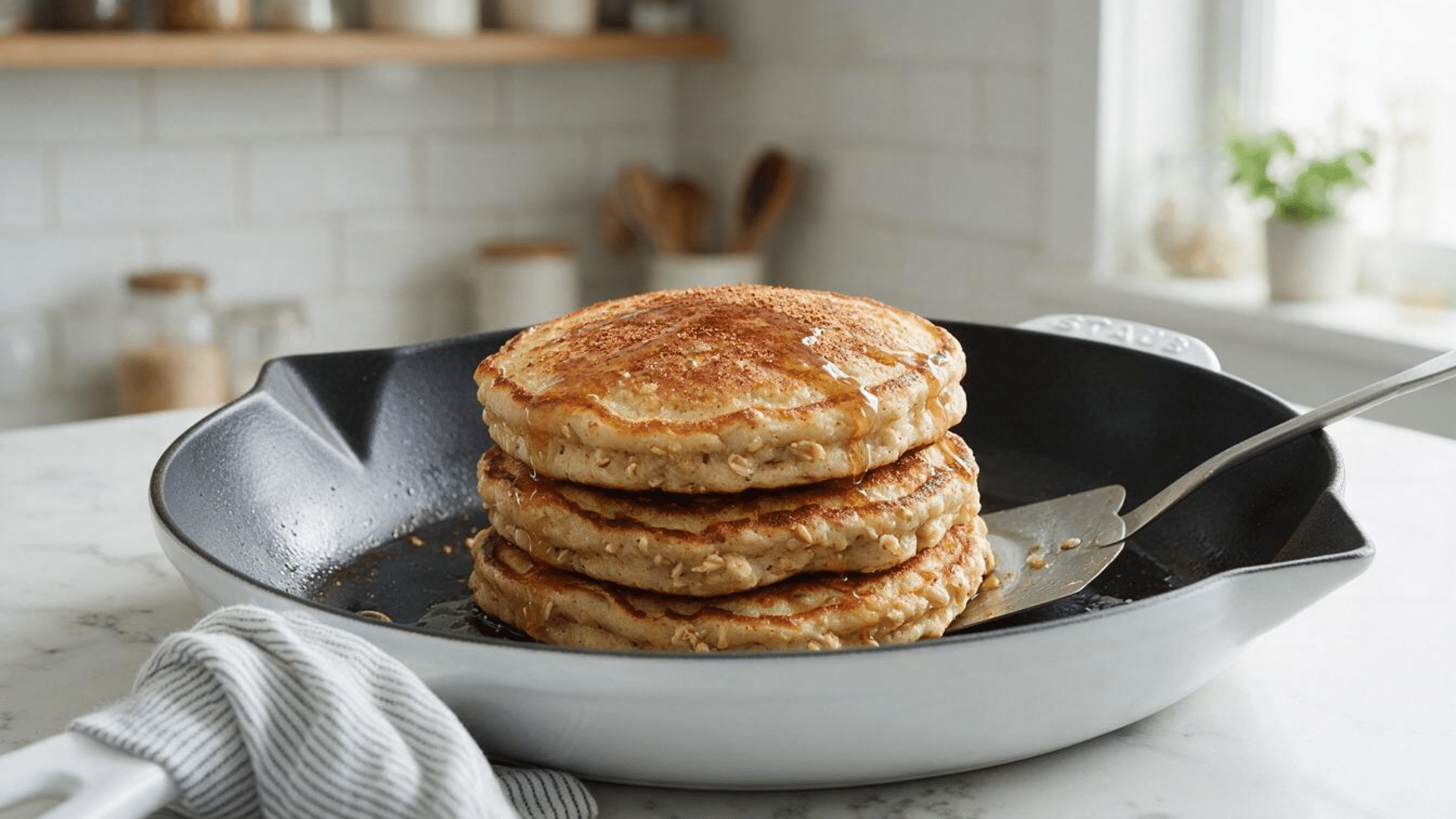
A stack of pancakes can make breakfast feel comforting and enjoyable, but many traditional recipes depend on refined flour and added sugar for texture and sweetness.
Oatmeal pancakes offer a simple alternative by using oats as the main ingredient while keeping the soft texture and familiar flavor of classic pancakes.
The type of oats you use can influence the texture, taste, and consistency of rolled oats pancakes.
Rolled oats create a balanced texture, while other oat varieties may change the final result.
I will share the ingredients, preparation method, cooking steps, storage tips, and variations to help you make soft, fluffy oatmeal pancakes that match your taste and dietary preferences.
Jump to Recipe
Why Oatmeal Pancakes Are a Healthy Breakfast Choice?
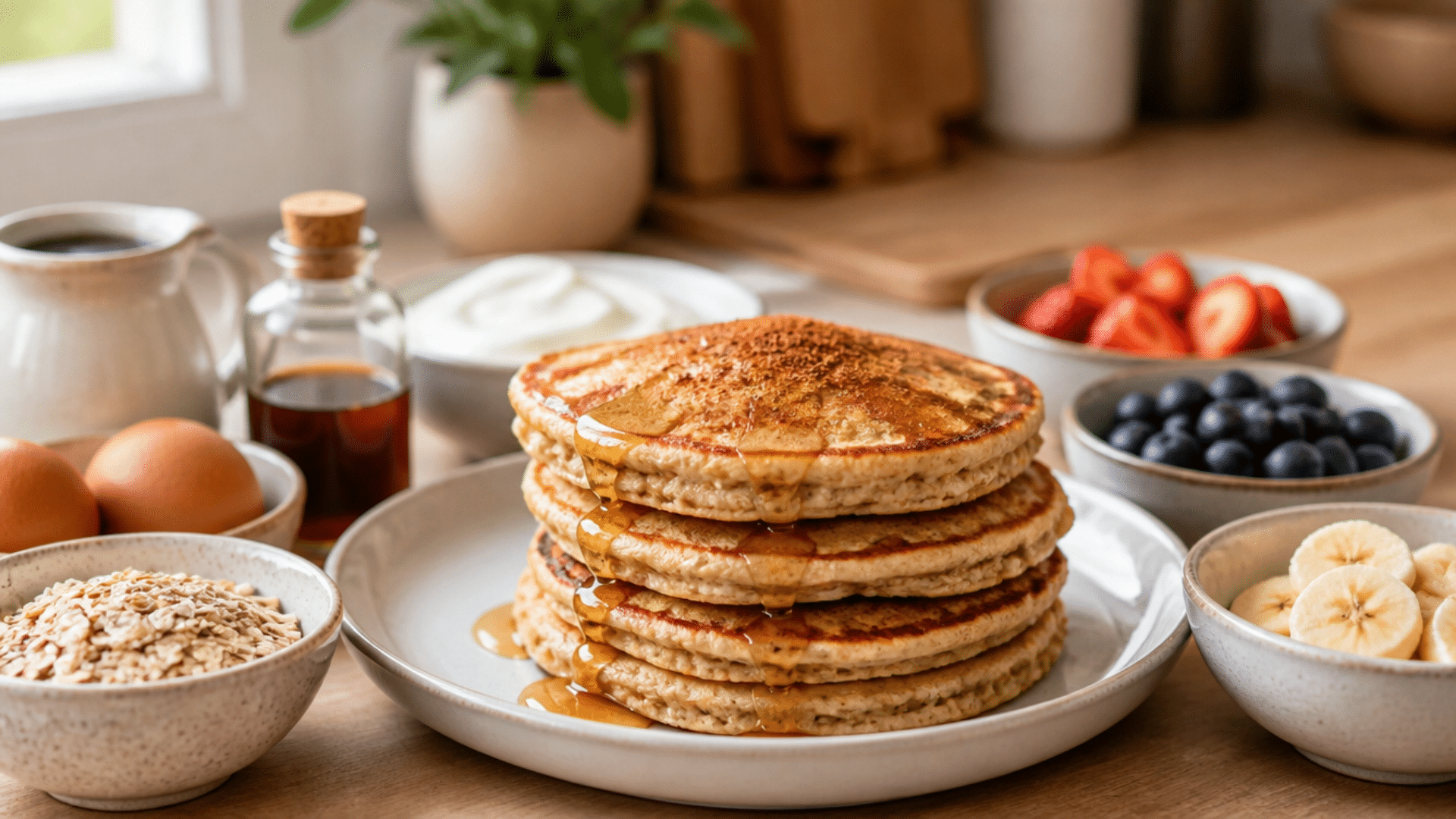
Oatmeal pancakes offer a more balanced breakfast than many traditional pancake recipesbecause they provide whole grains, fiber, and plant-based protein.
Unlike regular white flour, oatmeal is made from whole oats that retain the bran, germ, and endosperm.
These parts contain fiber, vitamins, minerals, and beneficial plant compounds.
White flour is refined, so the bran and germ are removed during processing, creating a softer texture but reducing its fiber and whole-grain content.
When oatmeal pancakes are made with eggs, milk, fruit, or yogurt, they can provide more protein, nutrients, and fullness than pancakes made mainly with refined flour and sugar.
Ingredients You Need for Oatmeal Pancakes
The right ingredients help oatmeal pancakes turn out soft, fluffy, and flavorful. You can also add extra ingredients or make simple swaps based on your taste and dietary needs.
- Rolled oats: 2 cups
- Eggs: 2 large eggs
- Milk: 1 cup
- Baking powder: 2 teaspoons
- Vanilla extract: 1 teaspoon
- Sweetener (honey, maple syrup, or sugar): 1 to 2 tablespoons
- Salt: 1 pinch
How to Make Oatmeal Pancakes Step by Step?
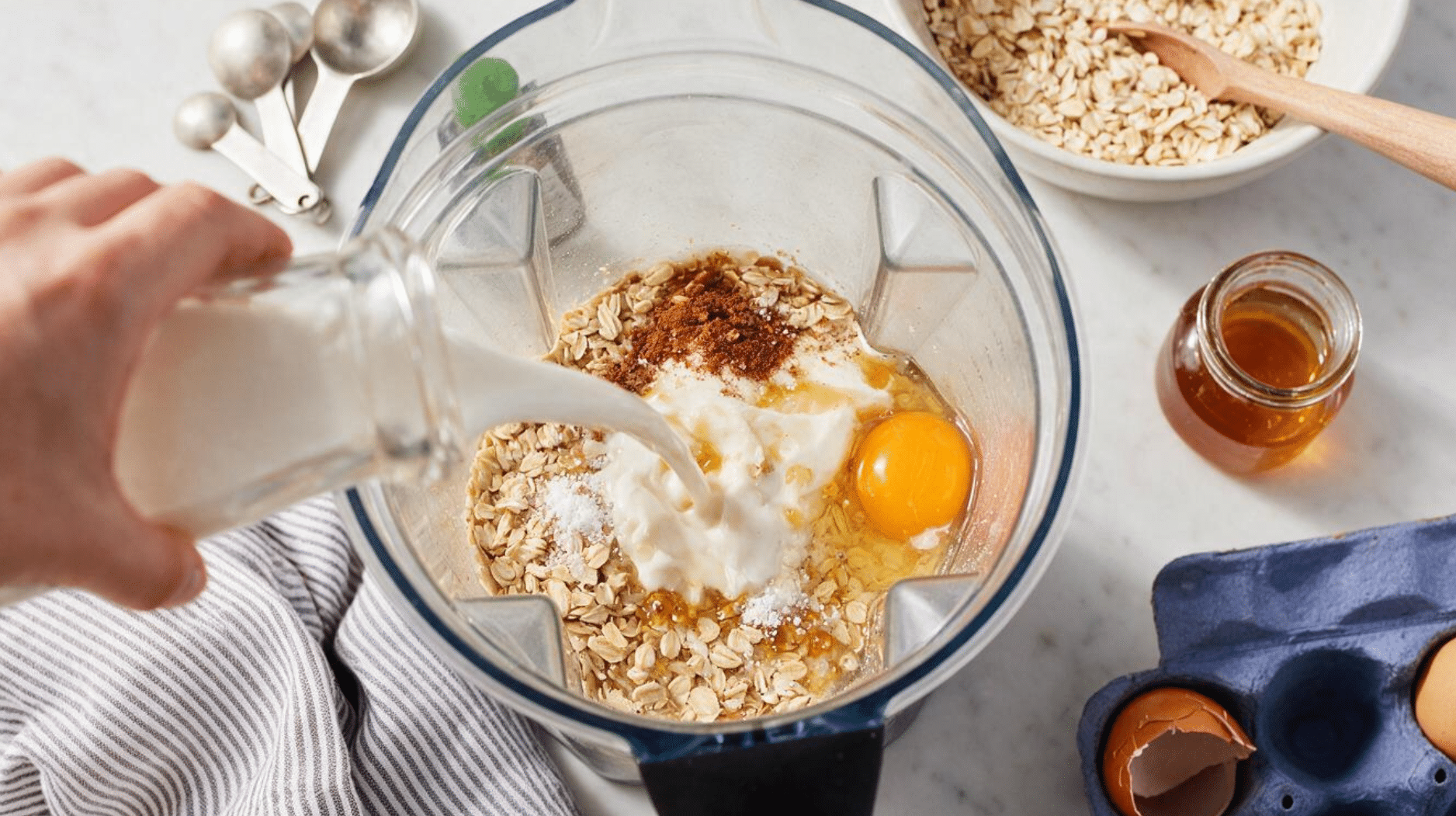
Follow these steps to make about 8 to 10 oatmeal pancakes that are soft inside, lightly crisp around the edges, and evenly golden.
Step 1: Prepare the Batter
Add 2 cups of rolled oats, 2 eggs, 1 cup of milk, 2 teaspoons of baking powder, 1 teaspoon of vanilla extract, a pinch of salt, and 1 to 2 tablespoons of sweetener to a blender.
Blend until the oats are finely ground and the batter looks smooth. Avoid blending for too long because this may make the pancakes gummy.
For a no-blender method, use oat flour or quick oats and mix only until the ingredients are combined.
Step 2: Let the Batter Rest
Allow the prepared batter to rest for 5 to 10 minutes before cooking. This gives the oats time to absorb the liquid and soften, which helps create a thicker and more even batter.
The consistency should be thick but still easy to pour. If the batter becomes too thick, add milk one tablespoon at a time.
If it looks too thin, stir in a small amount of oat flour and wait another minute before checking it again.
Step 3: Heat the Pan Correctly
Place a nonstick skillet or griddle over medium-low to medium heat and allow it to warm for about two minutes. Lightly grease the surface with butter, coconut oil, or cooking spray.
The pan should be hot enough to cook the pancakes gently but should not smoke.
Test it with a small drop of batter. If the batter darkens immediately, lower the heat because excessive heat can burn the outside while leaving the center undercooked.
Step 4: Cook Until Golden Brown
Pour about ¼ cup of batter onto the pan for each pancake and leave enough space between them for easy flipping.
Cook the first side for 2 to 3 minutes until bubbles appear and the edges look dry and set. Slide a spatula fully underneath and flip gently.
Cook the second side for another 1 to 2 minutes. If the pancakes tear during flipping, allow the first side to cook slightly longer before turning the next batch.
Step 5: Serve the Pancakes Warm
Transfer the cooked pancakes to a plate and cover them loosely with a clean kitchen towel while you finish the remaining batter. This helps keep them warm without trapping too much moisture.
Serve the oatmeal pancakes with fresh berries, sliced bananas, Greek yogurt, nut butter, chopped nuts, or a small drizzle of maple syrup.
For a more balanced breakfast, pair them with eggs, cottage cheese, yogurt, or fruit and avoid adding too many sweet toppings.
Tips for Perfecting Your Pancakes
A few simple techniques can help oatmeal pancakes cook evenly, hold together, and develop a soft, fluffy texture.
- Get the Batter Right: It should be thick but pourable. Add milk if it is too thick or oat flour if it is too thin.
- Mix Gently and Let It Rest: Avoid overmixing; then rest the batter for 5 to 10 minutes so the oats can absorb moisture.
- Use Proper Ingredients: Fresh baking powder improves the rise, while eggs or suitable substitutes help the pancakes stay together.
- Control the Heat: Cook on a lightly greased nonstick or cast-iron pan over medium-low to medium heat.
- Flip at the Right Time: Wait until bubbles appear and the edges look set, then flip gently without pressing the pancakes.
How to Choose the Best Type of Oats?
Different types of oats create slightly different textures in oatmeal pancakes.
Rolled oats are the best all-purpose option because they blend easily and produce soft, fluffy pancakes with a mild oat flavor.
Quick oats create a smoother batter and softer texture since they are more finely processed.
Oat flour makes the lightest and smoothest pancakes while still providing whole-grain nutrition.
Steel-cut oats are usually not recommended unless they are cooked first because their firm texture can make the batter coarse and the pancakes less tender.
Healthy Oatmeal Pancake Variations
These oatmeal pancake variations make it easy to adjust the recipe for different tastes, dietary needs, and nutrition goals.
| Variation | Description |
|---|---|
| Banana Oatmeal Pancakes | A naturally sweeter and softer version made with banana for extra moisture and flavor. |
| Blueberry Oatmeal Pancakes | A fruity variation that adds natural sweetness, color, and extra nutrients with blueberries. |
| High-Protein Oatmeal Pancakes | A more filling option with added protein sources for a satisfying breakfast. |
| Vegan Oatmeal Pancakes | A plant-based version made without dairy or eggs while keeping a soft texture. |
| Gluten-Free Oatmeal Pancakes | A gluten-free option using certified ingredients suitable for those avoiding gluten. |
How to Store and Freeze Oatmeal Pancakes?
Allow oatmeal pancakes to cool completely on a wire rack before storing them, as packing warm pancakes can trap steam and make them soggy.
For refrigerator storage, place parchment paper between each pancake and keep them in an airtight container or resealable bag for up to 4 days.
To freeze them, arrange the cooled pancakes in a single layer on a baking tray and freeze for about 1 hour.
Once firm, transfer them to a freezer-safe bag or container, remove excess air, and store them for up to 3 months.
Health Benefits of Rolled Oat Pancakes
Oatmeal pancakes can provide several nutritional benefits when prepared with wholesome ingredients.
- Higher in Fiber: Oatmeal pancakes provide more fiber than standard pancakes, which may support digestion and regular bowel movements.
- Provides Protein: Eggs, milk, Greek yogurt, cottage cheese, or protein powder can increase the protein content.
- Supports Muscle Recovery: Protein helps repair muscles and can reduce hunger between meals.
- Offers Steady Energy: The complex carbohydrates in oats digest more slowly than refined breakfast foods.
- May Prevent Energy Crashes: Slower digestion can help reduce the sudden rise and fall in energy linked to sugary breakfasts.
- Easy to Make More Nutritious: Berries, nut butter, yogurt, or sliced bananas can add extra vitamins, minerals, and healthy fats.
Research by the National Library of Medicine has found that oatmeal-containing breakfasts are associated with better diet quality and higher intake of key food groups and nutrients compared with other breakfasts, especially for children.
Conclusion
Oatmeal pancakes are an easy and nutritious breakfast you can make with simple ingredients already found in many kitchens.
Using the right oats, fresh baking powder, balanced batter, and steady cooking temperature helps create pancakes that are soft, fluffy, and evenly golden every time.
You can keep the recipe simple or adjust it with bananas, berries, yogurt, nut butter, protein powder, or plant-based ingredients.
These variations make it easy to prepare a breakfast that suits your taste, dietary needs, and morning routine.
Try different toppings and ingredient combinations until you find your favorite version. Share your best oatmeal pancake recipe or cooking tips in the comments below.
Frequently Asked Questions
Why Are My Oatmeal Pancakes Gummy Instead of Fluffy?
Gummy pancakes are due to too much liquid, undercooking, and blending for too long. Let the batter rest, cook over medium-low heat, and wait until bubbles form before flipping.
Can I Use Water Instead of Milk?
Yes. Water will work, but the pancakes may taste less rich. Plant milk or dairy milk usually creates a softer, fuller flavor.
Are Oatmeal Pancakes Good Before a Workout?
They can be a practical pre-workout meal because they provide carbohydrates. Pair them with fruit or yogurt based on your digestion and routine.
Are Oatmeal Pancakes Suitable for Toddlers and Young Children?
Oatmeal pancakes can be suitable for toddlers when made with age-appropriate ingredients. Keep added sugar and salt low.