
Creating meals around a calorie goal can feel challenging when you need to balance taste, nutrition, and portion sizes every day.
I know how difficult it can be to plan breakfast, lunch, snacks, and dinner without making food choices complicated.
A 2000-calorie meal plan gives you a clear structure to organize your meals while keeping variety in your routine.
In this blog, I share a practical seven-day menu, simple meal ideas, preparation tips, grocery planning suggestions, and flexible options.
You can use these ideas to build a balanced eating routine that matches your goals and makes daily meal planning easier.
Understanding a 2000 Calorie Daily Food Plan
A 2000 calorie daily food plan is a structured way to organize meals and snacks while reaching around 2,000 calories throughout the day.
It typically includes breakfast, lunch, dinner, and snacks that combine protein, carbohydrates, healthy fats, fruits, and vegetables.
This calorie level is often used as a general reference for nutrition labels, but individual needs can vary based on age, activity, body size, and personal goals.
A balanced approach focuses on food quality, portions, and consistent eating habits rather than calories alone.
By distributing calories across meals, you can create satisfying options that support energy levels and make daily meal decisions easier.
A flexible plan also allows ingredient swaps based on preferences, budget, and availability.
7-Day 2000 Calorie Meal Plan
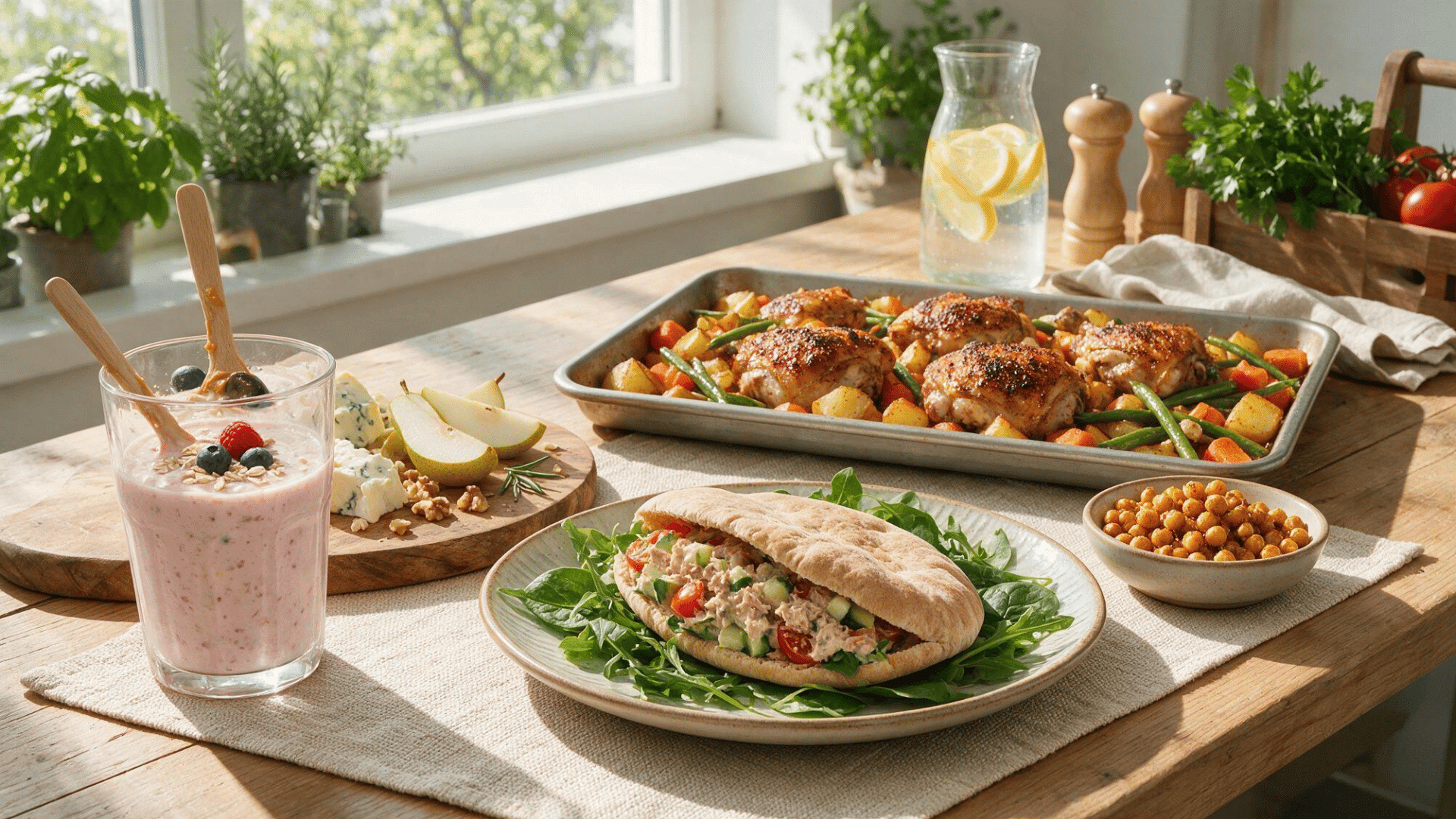
This seven-day meal plan provides balanced breakfasts, lunches, dinners, and snacks designed to keep your daily intake close to 2,000 calories.
Each day includes simple, practical meals that are easy to prepare and flexible enough to fit different lifestyles.
Day 1: Oatmeal Breakfast and Salmon Dinner
The first day introduces a balanced routine that spreads calories across meals and snacks, making it easier to stay satisfied throughout the day.
| Meal | Foods | Key Nutrients | Approx. Calories |
|---|---|---|---|
| Breakfast | Oatmeal with milk, banana, peanut butter, and cinnamon | Fiber, carbohydrates, healthy fats | ~420 |
| Morning Snack | Greek yogurt with berries | Protein, probiotics, antioxidants | ~200 |
| Lunch | Grilled chicken wrap with vegetables and apple | Protein, fiber, vitamins | ~450 |
| Afternoon Snack | Carrots with hummus | Fiber, healthy fats | ~180 |
| Dinner | Baked salmon, brown rice, roasted broccoli, olive oil | Omega-3s, protein, complex carbs | ~750 |
Day 2: Eggs, Turkey Sandwich, and Chicken Pasta
This day focuses on familiar meals that are easy to prepare and suitable for busy schedules. Balanced protein sources and whole grains help keep meals filling throughout the day.
| Meal | Foods | Key Nutrients | Approx. Calories |
|---|---|---|---|
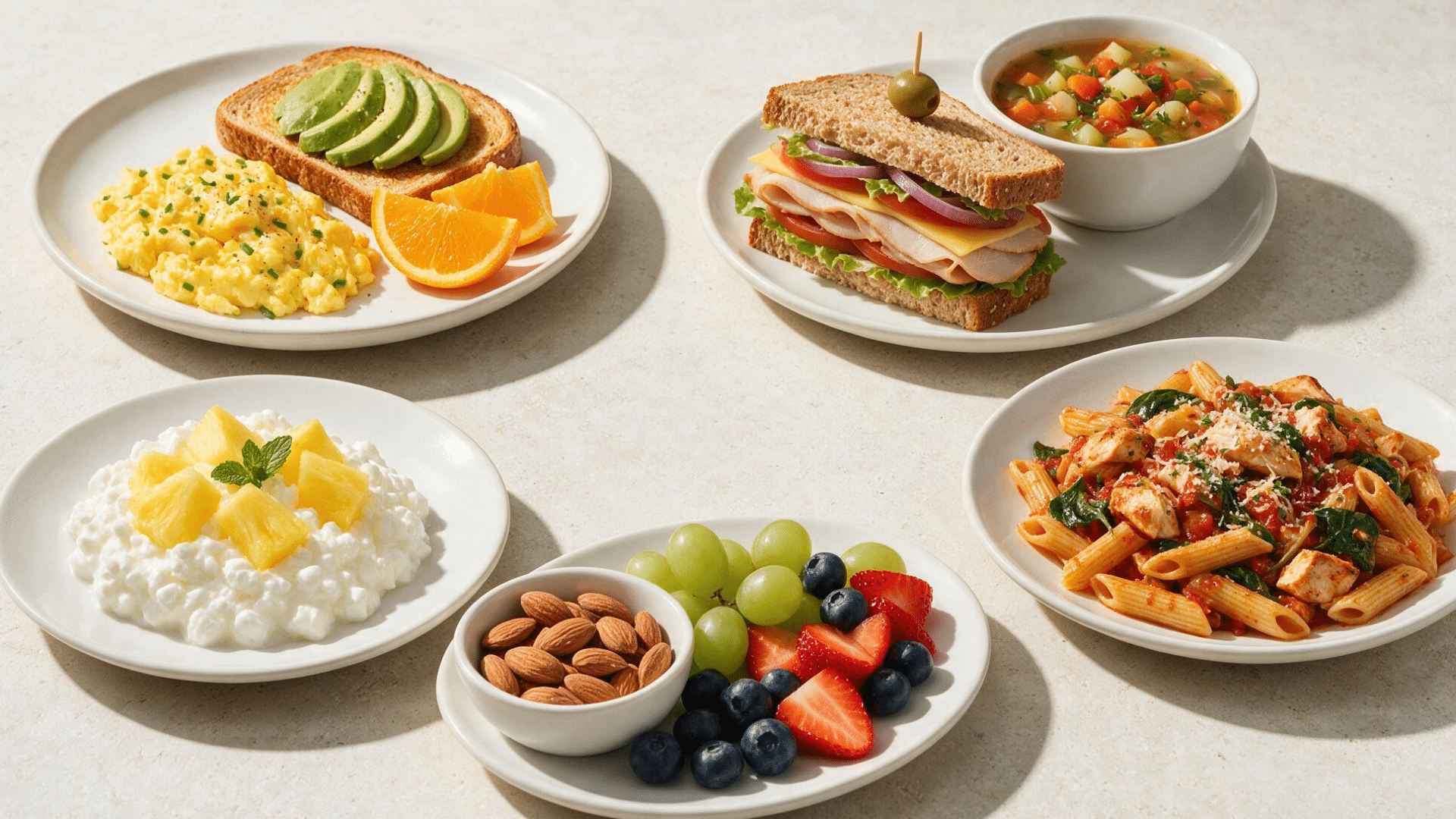
| Breakfast | Scrambled eggs, whole-grain toast, avocado, and orange | Protein, healthy fats, vitamin C | ~400 |
| Morning Snack | Almonds with fruit | Healthy fats, fiber, minerals | ~200 |
| Lunch | Turkey and cheese sandwich with vegetable soup | Protein, calcium, vitamins | ~450 |
| Afternoon Snack | Cottage cheese with pineapple | Protein, calcium, carbohydrates | ~180 |
| Dinner | Chicken pasta with tomato sauce, spinach, Parmesan, and salad | Protein, iron, fiber | ~770 |
Day 3: Yogurt Parfait and Beef Stir-Fry
Day three includes convenient ingredients that can be prepared ahead of time. Meals combine lean proteins, whole grains, and vegetables to support a balanced calorie intake.
| Meal | Foods | Key Nutrients | Approx. Calories |
|---|---|---|---|
| Breakfast | Greek yogurt with oats, berries, walnuts, and honey | Protein, fiber, healthy fats | ~430 |
| Morning Snack | Hard-boiled egg with whole-grain crackers | Protein, carbohydrates | ~200 |
| Lunch | Chicken or bean burrito bowl with rice, vegetables, salsa, lettuce, and avocado | Protein, fiber, vitamins | ~500 |
| Afternoon Snack | Banana with peanut butter | Potassium, healthy fats | ~220 |
| Dinner | Lean beef stir-fry with vegetables and rice | Protein, iron, complex carbs | ~650 |
Day 4: Smoothie Breakfast and Sheet Pan Chicken
This day includes simple meals that require less preparation while maintaining balanced nutrition. Flexible ingredients make it easier to adjust portions based on hunger and activity levels.
| Meal | Foods | Key Nutrients | Approx. Calories |
|---|---|---|---|
| Breakfast | Smoothie with milk, banana, berries, oats, yogurt, and peanut butter | Protein, fiber, calcium | ~450 |
| Morning Snack | Cheese with pear slices | Protein, calcium, fiber | ~200 |
| Lunch | Tuna salad pita with vegetables and leafy greens | Protein, omega-3s, vitamins | ~450 |
| Afternoon Snack | Roasted chickpeas | Fiber, plant protein | ~200 |
| Dinner | Sheet pan chicken thighs with potatoes, carrots, and green beans | Protein, potassium, vitamins | ~700 |
Day 5: Breakfast Burrito and Fish Tacos
This budget-friendly day uses affordable ingredients while keeping meals satisfying and nutrient-rich. Higher-fiber foods and lean proteins help create balanced meals throughout the day.
| Meal | Foods | Key Nutrients | Approx. Calories |
|---|---|---|---|
| Breakfast | Egg and black bean burrito with salsa and cheese | Protein, fiber, calcium | ~450 |
| Morning Snack | Apple with peanut butter | Fiber, healthy fats | ~220 |
| Lunch | Lentil soup with whole-grain bread and side salad | Plant protein, iron, fiber | ~500 |
| Afternoon Snack | Yogurt with pumpkin seeds | Protein, calcium, magnesium | ~200 |
| Dinner | Fish tacos with cabbage slaw, avocado, beans, and corn tortillas | Protein, healthy fats, fiber | ~630 |
Day 6: Pancakes, Grain Bowl, and Turkey Chili
The sixth day focuses on flexible meals that work well for meal preparation. Leftover ingredients can be reused to save time while keeping meals close to the 2,000 calorie goal.
| Meal | Foods | Key Nutrients | Approx. Calories |
|---|---|---|---|
| Breakfast | Whole-grain pancakes with berries, yogurt, and maple syrup | Carbohydrates, protein, fiber | ~450 |
| Morning Snack | Banana with walnuts | Potassium, healthy fats | ~250 |
| Lunch | Grain bowl with chicken, vegetables, rice, and dressing | Protein, fiber, complex carbs | ~550 |
| Afternoon Snack | Hummus with vegetables and crackers | Fiber, healthy fats | ~250 |
| Dinner | Turkey and bean chili with cornbread and shredded cheese | Protein, fiber, minerals | ~500 |
Day 7: Avocado Toast and Roast Chicken
The final day combines simple ingredients that help use remaining groceries while maintaining balanced nutrition. These meals can also be repeated in future weekly plans based on personal preferences.
| Meal | Foods | Key Nutrients | Approx. Calories |
|---|---|---|---|
| Breakfast | Avocado toast with eggs and berries | Protein, healthy fats, antioxidants | ~450 |
| Morning Snack | Yogurt with granola | Protein, calcium, carbohydrates | ~250 |
| Lunch | Whole-grain pasta salad with chickpeas, vegetables, feta, and vinaigrette | Fiber, plant protein, vitamins | ~500 |
| Afternoon Snack | Fruit with mixed nuts | Fiber, healthy fats | ~200 |
| Dinner | Roast chicken, mashed potatoes, peas, and green salad | Protein, carbohydrates, vitamins | ~600 |
To make your weekly planning easier, download this printable 2000 calorie meal plan worksheet to organize meals, track calories, prepare groceries, and customize your schedule.
How to Keep the Meal Plan Affordable?
Following a balanced 2000-calorie meal plan can be budget-friendly with smart shopping choices, simple ingredient swaps, and practical preparation methods.
- Plan meals before shopping: Create a weekly menu and grocery list to avoid unnecessary purchases and reduce food waste.
- Choose versatile ingredients: Buy oats, rice, eggs, beans, chicken, and vegetables that can be used in multiple meals.
- Compare prices carefully: Check unit prices to find better deals instead of choosing products based only on package size.
- Use affordable swaps: Replace salmon with canned tuna, fresh berries with frozen options, and some meat portions with beans or lentils.
- Buy store brands: Select store-brand grains, pasta, canned foods, and pantry staples to reduce costs without affecting meal quality.
- Cook larger portions: Prepare extra servings and use leftovers for lunches, wraps, bowls, soups, or quick dinners.
- Shop seasonal produce: Choose seasonal fruits and vegetables because they are often fresher, affordable, and easier to include regularly.
How to Divide 2000 Calories Between Meals?
Dividing calories across meals helps maintain steady energy levels and prevents long gaps between eating. A balanced meal schedule can also support better hunger control and nutrient intake.
| Eating Occasion | Suggested Calories | Flexible Range |
|---|---|---|
| Breakfast | 400 calories | 350 to 450 calories |
| Morning Snack | 150 calories | 100 to 200 calories |
| Lunch | 500 calories | 450 to 550 calories |
| Afternoon Snack | 150 calories | 100 to 200 calories |
| Dinner | 700 calories | 600 to 750 calories |
| Daily Total | 2,000 calories | Around 1,950 to 2,050 calories |
Mix-and-Match 2000 Calorie Meal Template
You do not have to follow the seven-day meal plan exactly. Think of it as a collection of meal ideas that you can rearrange based on your schedule, preferences, or the ingredients you have available.
As long as your meals stay close to the suggested calorie ranges, you can create different combinations throughout the week.
If you swap meals, try replacing foods with similar calorie and nutrient profiles. For example, exchange chicken for fish, brown rice for quinoa, or Greek yogurt for cottage cheese.
You can also rotate fruits and vegetables based on season or price while keeping portions similar.
Small adjustments make the plan easier to follow without changing your overall calorie intake. This flexibility can also help reduce food waste and make meal preparation less repetitive.
For additional guidance, you can refer to the NIH 1,800–2,000 calorie sample plan.
Note: Nutrition labels are based on standard serving sizes, which may differ from the amount you actually eat. Always compare the serving size with your portion and adjust the calories and nutrients accordingly to stay closer to your daily 2,000-calorie goal.
Conclusion
Sticking to a 2,000-calorie meal plan does not mean eating the same foods every day or giving up the meals you enjoy.
I have found that having a simple plan makes everyday food choices less stressful, while small adjustments help keep the routine realistic over time.
Consistency matters more than perfection, so focus on building eating habits that you can maintain over the long term. Small, sustainable changes often lead to better results than making drastic changes all at once.
We all have different schedules, preferences, and goals, so the best meal plan is one you can comfortably follow and adapt when needed.
Share your favorite meals, planning tips, or personal experience in the comments below
Frequently Asked Questions
Can a 2000 Calorie Meal Plan Help with Weight Loss?
Yes, it can support weight loss if 2,000 calories creates a calorie deficit based on your individual energy needs.
How Much Protein Should Be Included in a 2000 Calorie Diet?
Protein needs vary, but many adults benefit from including a protein source at each meal for better fullness and nutrition.
Is a 2000 Calorie Meal Plan Suitable for Athletes?
Athletes may need more calories depending on training intensity, activity level, recovery needs, and performance goals.
Can I Meal Prep a 2000 Calorie Plan for the Entire Week?
Yes, preparing grains, proteins, vegetables, and snacks ahead can make weekly meal planning easier and more consistent.