
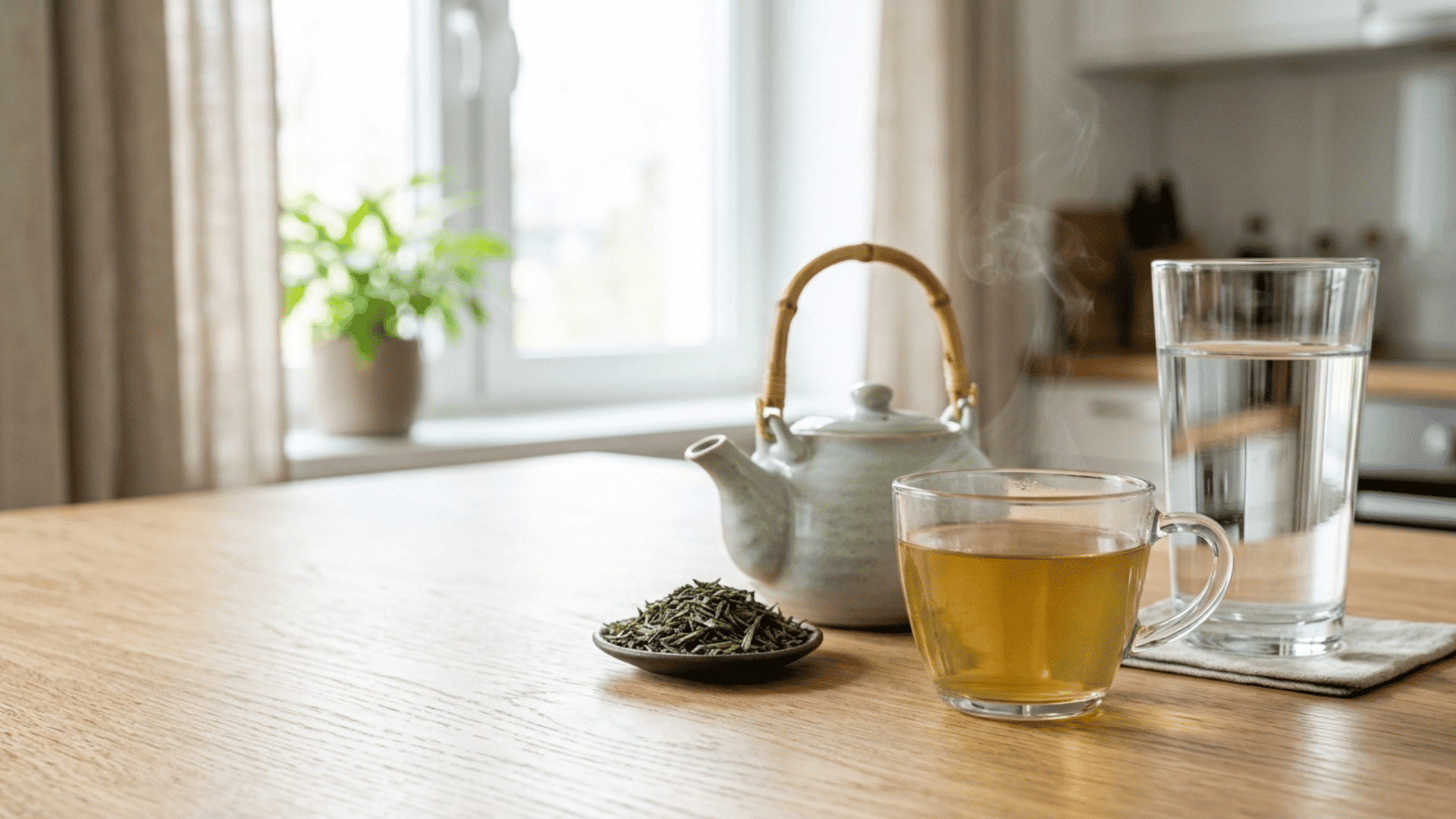
Green tea is mostly water, which is what makes it strange that a little caffeine gives people pause before their second or third cup of the day.
Does green tea dehydrate you, or does it still count toward what you drink?
The worry isn’t unreasonable on the surface. Caffeine gets linked to more bathroom trips, and more bathroom trips sound like fluid loss waiting to happen.
Looked at as a whole drink instead of just its caffeine content, it works out differently.
Green Tea Still Counts as Hydration
Green tea does not dehydrate you in normal amounts. Caffeine is one small piece of what’s in the cup, and the water in that cup outweighs it.
A few cups spread through the day count toward your fluid intake about the same as water would for most healthy adults.
Where it gets less clear is with very strong brews or several cups back to back, since people respond a little differently to caffeine. Water still belongs at the center of your day, especially outdoors in the heat or during a hard workout.
What the 2023 Green Tea Hydration Study Found
Most of the caffeine-and-dehydration worry traces back to older research on coffee, and coffee carries two to four times more caffeine per cup than green tea does. A study published in the European Journal of Nutrition in 2023 looked at green tea on its own instead of leaning on coffee data.
Researchers dehydrated healthy adults with light exercise in a heated room, then gave each person water, green tea, or caffeinated water in an amount matching what they’d sweated out, and tracked their fluid balance and kidney response for two hours afterward.
Green tea came out about the same as plain water. It didn’t pull enough extra fluid out through urine to undercut the hydration it provided in the first place.
That’s a different question than the general “caffeine is a diuretic” research most articles lean on. This one tested the actual drink, under conditions where real dehydration was already in play, rather than assuming caffeine behaves the same no matter the context.
How Much Caffeine Are We Talking About

An 8-ounce cup of green tea usually lands somewhere between 20 and 50 milligrams of caffeine, depending on the leaf, the water temperature, and how long it steeps.
Matcha runs higher, since you’re drinking the ground leaf itself instead of steeping it and pulling it back out, so a cup of matcha can carry noticeably more caffeine than a cup of brewed sencha.
None of that comes close to a cup of coffee’s 80 to 100 milligrams, or an energy drink’s 70 to 150-plus.
| Drink | Caffeine (8 oz) | Hydration effect |
|---|---|---|
| Water | 0 mg | Full hydration |
| Green tea | 20-50 mg | Hydrating at normal amounts |
| Black tea | 40-70 mg | Similar to green tea |
| Brewed coffee | 80-100 mg | Hydrating in moderation |
| Energy drinks | 70-150+ mg | Adds up fast, worth checking labels |
When It Actually Starts to Matter
Caffeine’s diuretic effect shows up at doses well above a normal cup or two. Most research puts the threshold around 250 to 300 milligrams in one sitting, somewhere between five and eight cups of green tea depending on strength. Below that line, the water in each cup keeps outpacing anything caffeine pulls out.
Two to four cups spread through the day is a reasonable range for most people, and spacing them out keeps the caffeine load gentler than drinking them all in one sitting.
During exercise or in hot weather, plain water should still come first, since sweat takes far more out of you than caffeine ever will.
If you’ve been sweating heavily for a while, water alone might not fully replace what you lost, and that’s when reaching for something with electrolytes in it earns its keep.
Who Should Pay Closer Attention
A few situations call for more care than the average cup of tea needs.
Pregnant or breastfeeding: most guidelines put a daily caffeine ceiling around 200 milligrams, tea, coffee, and chocolate all counted together, so green tea has to be weighed against whatever else you’re having that day.
Kidney conditions or diuretic medication: caffeine interacts with how your kidneys manage fluid, so it’s worth a quick conversation with a doctor before tea becomes a big part of your routine.
Caffeine sensitivity: some people feel jittery or anxious from an amount that wouldn’t bother anyone else, long before it affects their hydration.
Kids: guidance for children is stricter, so decaf or herbal options make more sense as the default.
This is general information, not medical advice, especially if you’re pregnant, nursing, or managing a health condition.
Common Questions
Does hot or iced green tea hydrate differently?
No. Temperature doesn’t change how much fluid your body takes in. Pick whichever you’d actually drink, hot tea for comfort, iced tea when you want something cooling after time outside.
Does matcha dehydrate you more than brewed green tea?
Matcha carries more caffeine per serving since you’re consuming the whole leaf, but it’s still well under coffee levels. One or two cups a day stays in safe territory for almost everyone.
Can drinking too much green tea dehydrate you?
Only at the extremes. Past roughly six cups in a day, you’re approaching the range where caffeine’s diuretic effect starts to show. Below that, the water in each cup keeps winning out.
Bottom Line
Green tea fits into a normal hydration routine without much fuss.
Pay attention to your total cups rather than the tea itself, keep water in the mix, and let plain water take the lead during exercise, illness, or hot weather.
How thirsty you actually feel tells you more than any caffeine number ever will.