
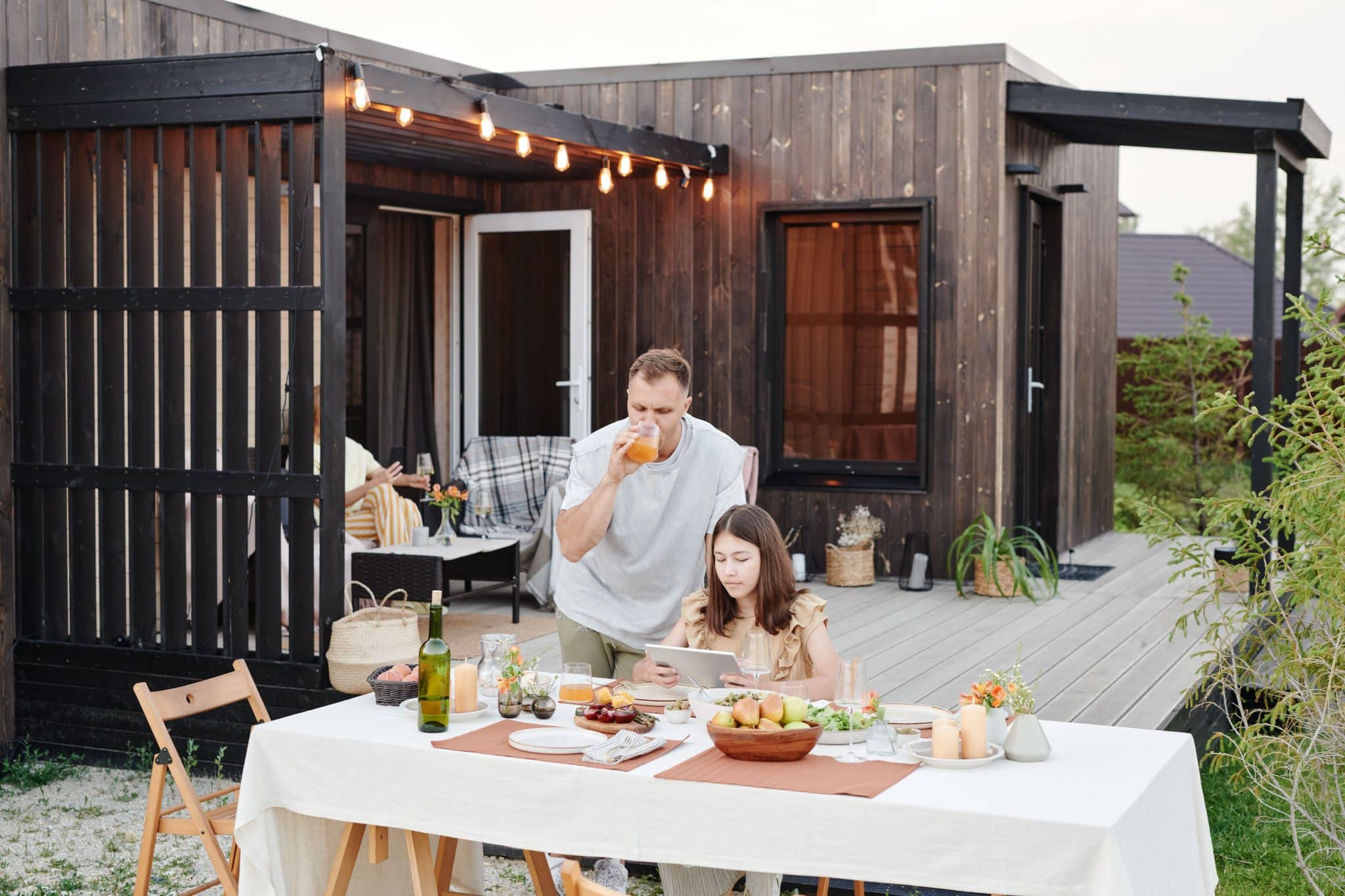
Outdoor dining areas often look inviting in photographs but receive surprisingly little use in daily life. The space may be too hot, too dark, too far from the kitchen, or too difficult to clean after each meal.
A functional outdoor dining area needs more than attractive furniture. It should make carrying food, serving guests, managing weather, and cleaning up feel reasonably easy. When comfort and practicality are considered together, a patio or backyard can become a genuine extension of the home rather than a space reserved for occasional gatherings.
Adding Reliable Internet to the Backyard
An outdoor WiFi router or compatible outdoor mesh unit can extend an existing network into areas where the indoor signal becomes weak. This may support music, recipe videos, outdoor televisions, smart lighting, security devices, and connected cooking equipment. Outdoor networking products should be specifically rated for exposure to temperature, dust, and moisture rather than placing an indoor router on a porch and hoping it remains protected. The equipment also needs a strong connection to the existing network, appropriate power, and a secure mounting location.
Connectivity should serve the space rather than dominate it. A family may simply want reliable music and the ability to answer an occasional message, while someone else may use the patio for work or large gatherings. Understanding the intended use helps determine whether an outdoor network upgrade is necessary.
Making Comfort the First Priority
People are unlikely to eat outside when the space feels unpleasant. Shade is essential in hot climates, while wind protection may matter more in cooler or exposed locations. Covered patios, umbrellas, pergolas, curtains, and strategically placed landscaping can make the temperature easier to manage. Fans may improve airflow, and outdoor heaters can extend the usable season when operated safely. The right choices depend on local weather rather than a generic design trend.
Seating should also support the way the household actually eats. Deep lounge furniture may be comfortable for conversation but awkward for a full meal. Dining chairs need enough support, and the table should allow people to sit without bumping into walls or walkways. Families should measure the space with chairs pulled out before purchasing furniture. Comfortable movement is just as important as fitting the maximum number of seats.
Improving the Path From Kitchen to Table
An outdoor dining area becomes frustrating when every meal requires repeated trips through a distant doorway. The route from the kitchen should be clear and safe, especially when someone is carrying hot food or breakable dishes. A nearby serving cart, counter, or storage cabinet can reduce unnecessary movement. Frequently used items such as napkins, outdoor dishes, and serving tools may be stored close to the dining area when the storage is weather resistant. Convenience encourages regular use.
Outdoor kitchens can be helpful, but they are not necessary for every home. A grill, portable cooking appliance, or simple preparation surface may meet the family’s needs without a major renovation. The cooking setup should reflect what people genuinely prepare outside. Expensive equipment loses its value when it is difficult to maintain or used only once a year. A modest and well-organized area can be more functional than an elaborate installation.
Planning for Food Safety and Cleanup
Outdoor meals introduce practical food-safety concerns, especially in warm weather. Cold foods should not remain unrefrigerated longer than recommended, and raw meat should be kept separate from ready-to-eat items. Covered containers can protect food from insects and debris. A cooler or nearby refrigerator may be useful for larger gatherings. Handwashing or easy access to the indoor sink also helps cooks handle food more safely.
Cleanup should be planned before the meal begins. Trash and recycling containers need to be convenient without sitting directly beside the table. Outdoor dishes and linens should have a clear path back to the kitchen. Wipeable furniture surfaces reduce the effort required after an ordinary weeknight dinner. When cleanup feels manageable, families are more likely to use the space without waiting for a special occasion.
Creating Flexibility for Different Uses
A good outdoor dining area can support a quiet breakfast, a family dinner, or a larger gathering without needing to be redesigned each time. Lightweight chairs and expandable tables make it easier to adjust the setup. A serving cart can become a beverage station, buffet surface, or place for games. Nearby outlets may support lighting or occasional appliances when they are properly installed for outdoor use. Flexible elements help the space remain useful as household needs change.
The area may also serve as a homework space, remote office, or place for children to work on projects. Shade, comfortable seating, and dependable connectivity make these uses more practical. Families should still protect time when the table is used for shared meals rather than allowing every device to remain present. Technology can expand the space’s purpose without taking over the experience. The goal is to create options while preserving a welcoming atmosphere.