

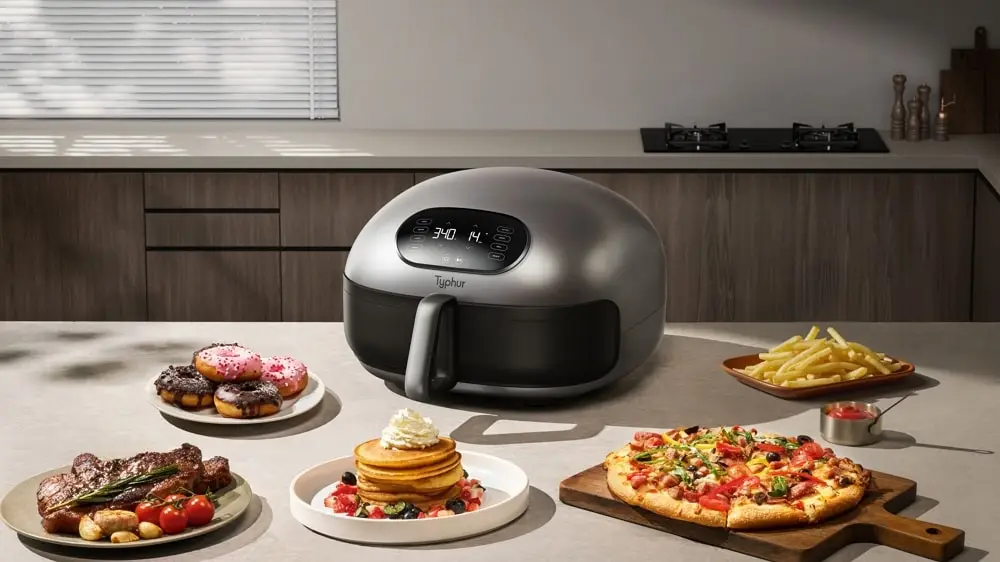
Cooking at home should feel rewarding, not stressful. Many of us want tasty meals without spending hours guessing temperatures, watching the oven, or scrubbing greasy pans. That is where the right kitchen gadgets make a real difference.
Typhur focuses on smart tools that bring precision and ease into daily cooking. Their products help you get consistent results with less effort. From air fryers with built-in temperature probes to wireless meat thermometers and handy milk frothers, these gadgets support home cooks who want better food without complicated steps.
The following gadgets can support everything from quick breakfasts to weekend baking and family dinners.
1. An Accurate Food Thermometer
A food thermometer removes much of the uncertainty from cooking meat, seafood, bread, and other temperature-sensitive foods. Appearance alone can be misleading: meat may brown before its center reaches the desired temperature, while a few extra minutes can leave lean foods dry.
An instant-read thermometer is useful for quick checks. A wireless leave-in thermometer continuously follows temperature during roasting, grilling, or smoking.
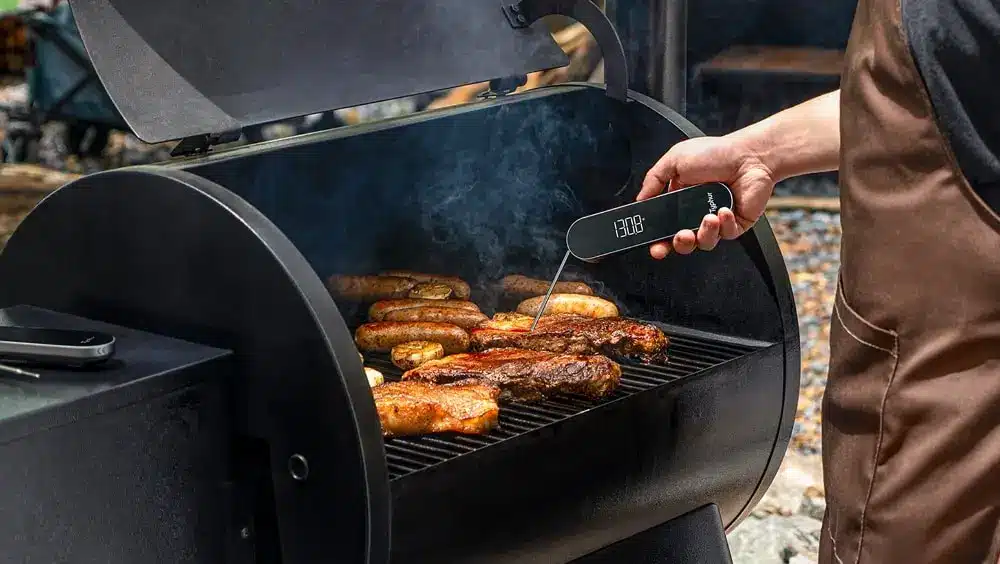
Brands such as Typhur Robotics offer both types of temperature tools. The Typhur InstaProbe Core, for example, provides a full reading in 0.5 seconds with NIST-certified accuracy of ±0.5°F. Typhur’s Sync wireless thermometers are designed for longer cooks when opening the oven or grill repeatedly would release heat.
Choose an instant-read model for everyday spot checks and a wireless probe if you frequently cook roasts, whole poultry, or smoked meat.
2. A Versatile Air Fryer
An air fryer circulates hot air around food, making it useful for roasted vegetables, chicken, fish, frozen foods, and leftovers. It usually heats more quickly than a full-size oven and can restore crispness better than a microwave.
When comparing air fryers, pay attention to basket shape as well as capacity. A wide cooking surface allows food to spread out in one layer, while a deep basket may require stacking or multiple batches.
Look for straightforward controls, reliable heating, removable food-contact parts, and a countertop footprint that fits your kitchen. Presets can be convenient, but even cooking and easy cleanup matter more than a long list of programs.
3. A Digital Kitchen Scale
A digital scale makes recipes more accurate by measuring ingredients by weight. This is particularly useful in baking, where a loosely filled cup of flour can contain much less than a tightly packed one.
Scales also help with portioning dough, dividing food evenly, preparing coffee, and adjusting recipe quantities. The tare function allows you to place a bowl on the platform, reset the display to zero, and measure multiple ingredients in the same container.
Choose a scale with a clear display, several measurement units, and a platform large enough to remain visible under a mixing bowl. A compact model can usually be stored in a drawer when it is not needed.
4. An Immersion Blender
An immersion blender purées ingredients directly in a pot, bowl, or measuring container. It is ideal for soups, sauces, dressings, smoothies, and small batches of mayonnaise.
Blending soup in the cooking pot eliminates the need to transfer hot liquid into a countertop blender. This reduces dishes and makes spills less likely.
A removable blending shaft simplifies cleaning, while variable speed control provides better control over texture. If you plan to blend hot ingredients, choose a model with a shaft designed for higher temperatures.
Some immersion blenders include whisk or chopper attachments. These can be useful if they replace tools you would otherwise purchase separately.
5. A Compact Food Processor
Chopping onions, herbs, nuts, and vegetables can consume more time than cooking the meal itself. A compact food processor handles small preparation jobs without taking up as much space as a full-size machine.
It can prepare salsa, hummus, breadcrumbs, pesto, chopped vegetables, and small quantities of dough. Use short pulses to control the texture rather than running the motor continuously.
Choose a bowl size that matches the quantities you normally prepare. A very small model may require several batches, while an oversized appliance may be inconvenient to clean.
A stable base, simple controls, and dishwasher-safe removable parts make a food processor much more likely to be used regularly.
6. A Rechargeable Milk Frother
A handheld milk frother is useful for more than making foam for coffee. It can mix matcha, hot chocolate, protein powder, powdered supplements, and small amounts of dressing.
Rechargeable models eliminate disposable batteries and are generally compact enough to fit in a drawer. Variable speed is helpful because beginning slowly can reduce splashing before the liquid starts to thicken.
A detachable whisk makes cleanup easier. Rinse it promptly after use so milk and other ingredients do not dry around the coil.
A handheld frother does not normally heat milk. If you want automatic heating and frothing, a countertop milk frother may be the more appropriate choice.
7. A Mandoline with a Safety Guard
A mandoline produces consistent slices more quickly than most people can achieve with a knife. Uniform thickness helps potatoes, onions, cucumbers, and other vegetables cook or marinate at a similar rate.
Adjustable models offer several thickness settings, while additional blades may create julienne or waffle cuts. A stable base prevents the tool from moving across the counter.
Always use the supplied hand guard. A cut-resistant glove provides additional protection, particularly when slicing small ingredients. Stop before the food becomes too short to hold securely.
Wash the blade carefully and store it where it cannot be touched accidentally.
8. A Mini Rice Cooker
A compact rice cooker can prepare rice without requiring constant attention. Many models can also handle quinoa, oatmeal, and other grains.
The main advantage is predictability. After the water and grain are added, the cooker manages the heat and switches to a warming setting when cooking is complete. This frees the stovetop for other parts of the meal.
A small model is suitable for one or two people, while families may need a larger capacity. Look for clear measurement markings, an easy-to-clean inner pot, and controls that do not require a complicated setup.
Prepare extra grains for bowls, stir-fries, salads, or lunches later in the week.
How to Choose Kitchen Gadgets You Will Use
Before buying another gadget, ask a few practical questions:
- Does it solve a task I perform regularly?
- Will it save time after setup and cleaning are included?
- Can it perform more than one useful function?
- Is it easy to store?
- Are the food-contact parts easy to wash?
- Can its main features work without an app?
- Are replacement parts or accessories available?
Spend more where accuracy and durability directly affect performance, such as thermometers and frequently used appliances. Simpler tools do not always require premium pricing.
Avoid large sets simply because the cost per item looks attractive. Several carefully selected gadgets are more useful than a cabinet filled with equipment that rarely leaves its packaging.
Build a More Practical Kitchen
Good kitchen gadgets should support the cook rather than complicate the process. An accurate thermometer improves confidence, an air fryer simplifies quick meals, and preparation tools reduce repetitive work.
Begin with the problem that slows you down most often. Add one tool that addresses it, learn how to use it well, and only then decide what the kitchen needs next. A practical kitchen is not defined by the number of gadgets it contains, but by how effectively each one earns its place.





One Response