
The best dinner parties are remembered for how a room felt, not just what was served.
Flexible seating, a bold focal piece, warm lighting, a styled serving station, and a few well-placed conversation starters are the five decor moves that turn an ordinary living or dining space into one guests genuinely don’t want to leave. Each idea works independently, so you can implement one before your next gathering without touching the rest of the room.
1. Choose Seating That Moves With the Moment
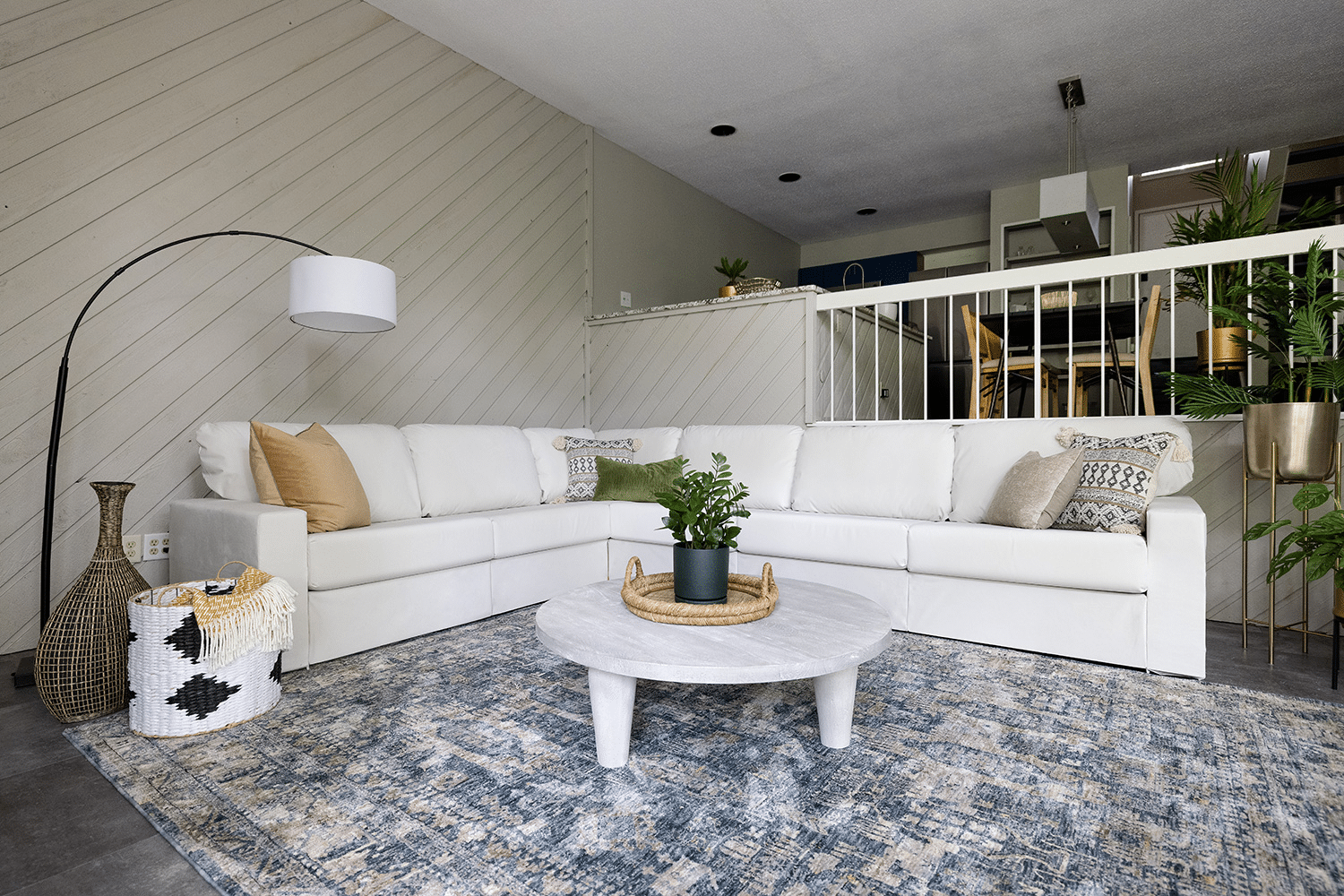
Rigid, fixed seating operates as a quiet saboteur during a good evening. A sofa that cannot be rearranged locks every gathering into one configuration. This works perfectly for a formal dinner but feels awkward the moment a group wants to sprawl for a movie.
The most practical solution involves furniture that reconfigures without requiring tools. Ottomans easily pull up to a coffee table to expand a conversation circle, while dining benches slide against a wall to clear walking space during post-dinner drinks. For a primary living room anchor, prioritizing adaptable design makes entertaining significantly easier.
This is why pieces like Home Reserve’s modular couch with hidden storage earn their permanent place in a busy home. The built-in compartments hide daily clutter before people arrive, and the washable covers eliminate anxiety over spilled wine.
When visitors can easily shift a lightweight chair or grab a cushion to join a new conversation, they naturally settle in faster. Seating mobility prevents people from feeling trapped in one spot for the duration of the party.
|
Quote: Great hosting is about intention, not perfection. When the room feels considered, guests stop watching the clock, and that’s exactly the point. |
|---|
2. Anchor the Room With a Statement Piece
Every memorable hosting space features a distinct visual anchor that catches attention immediately upon entry. A large sculptural vessel, dramatic open shelving, or an oversized canvas draws the eye and gives guests something to talk about while taking off their coats.
One strong central object consistently outperforms a scattered collection of smaller trinkets because it commands the entire physical space.
For homeowners drawn to historical interiors or dramatic castlecore styling, metalwork serves this exact purpose. Displaying an item like Medieval Collectibles’ medieval armor for display introduces rich texture and visual weight to a room without requiring a fully themed house to support it.
A polished breastplate mounted on a side wall or a replica knight’s helmet on a console table functions as a carefully crafted decor choice rather than a costume prop.
This kind of history-inspired interior design works surprisingly well in contemporary living rooms. The sharp contrast between modern furniture and historical metalwork highlights the craftsmanship of the focal piece. You only need a single bare wall or an empty corner to let a bold item breathe.
|
Key Insight: One strong anchor piece gives a room a clear identity that guests notice immediately and ask about all night. Without it, even the most carefully furnished space can feel forgettable and impersonal. |
|---|
3. Let Warm Lighting Do the Heavy Lifting
Lighting alters a room’s atmosphere faster than any physical piece of furniture you could purchase. Many homes rely entirely on bright overhead fixtures that cast harsh shadows directly across the dining table. Guests naturally relax when surrounded by layered lower-level illumination, and building that cozy entertaining space requires stepping away from single-source ceiling lights.
The most effective upgrade involves swapping cool-toned bulbs for warmer alternatives rated between 2700K and 3000K. This specific temperature range mimics the soft amber glow of a late afternoon sun. You can then add a floor lamp in an empty corner or place a small table lamp on a credenza to introduce light at entirely different physical heights.
Placing unscented taper candles along the dining runner provides immediate eye-level warmth without interfering with the aroma of the meal. Finally, installing a basic dimmer switch on your primary fixture takes minimal effort and allows you to drop the brightness as dinner transitions into late-night drinks.
4. Build a Station That Earns Its Spot
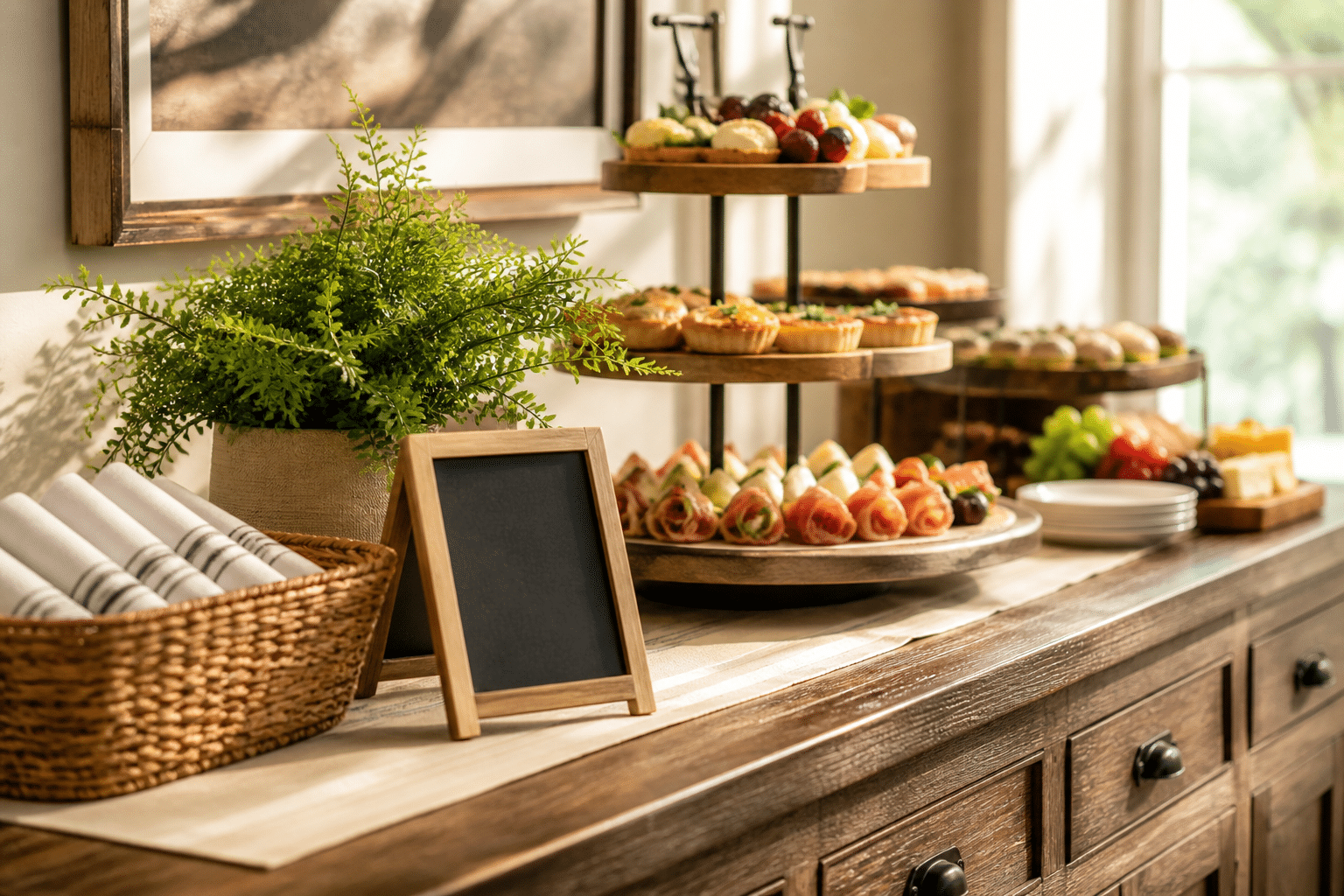
A dedicated serving station pulls traffic away from the main dining table and keeps your kitchen clear of wandering visitors.
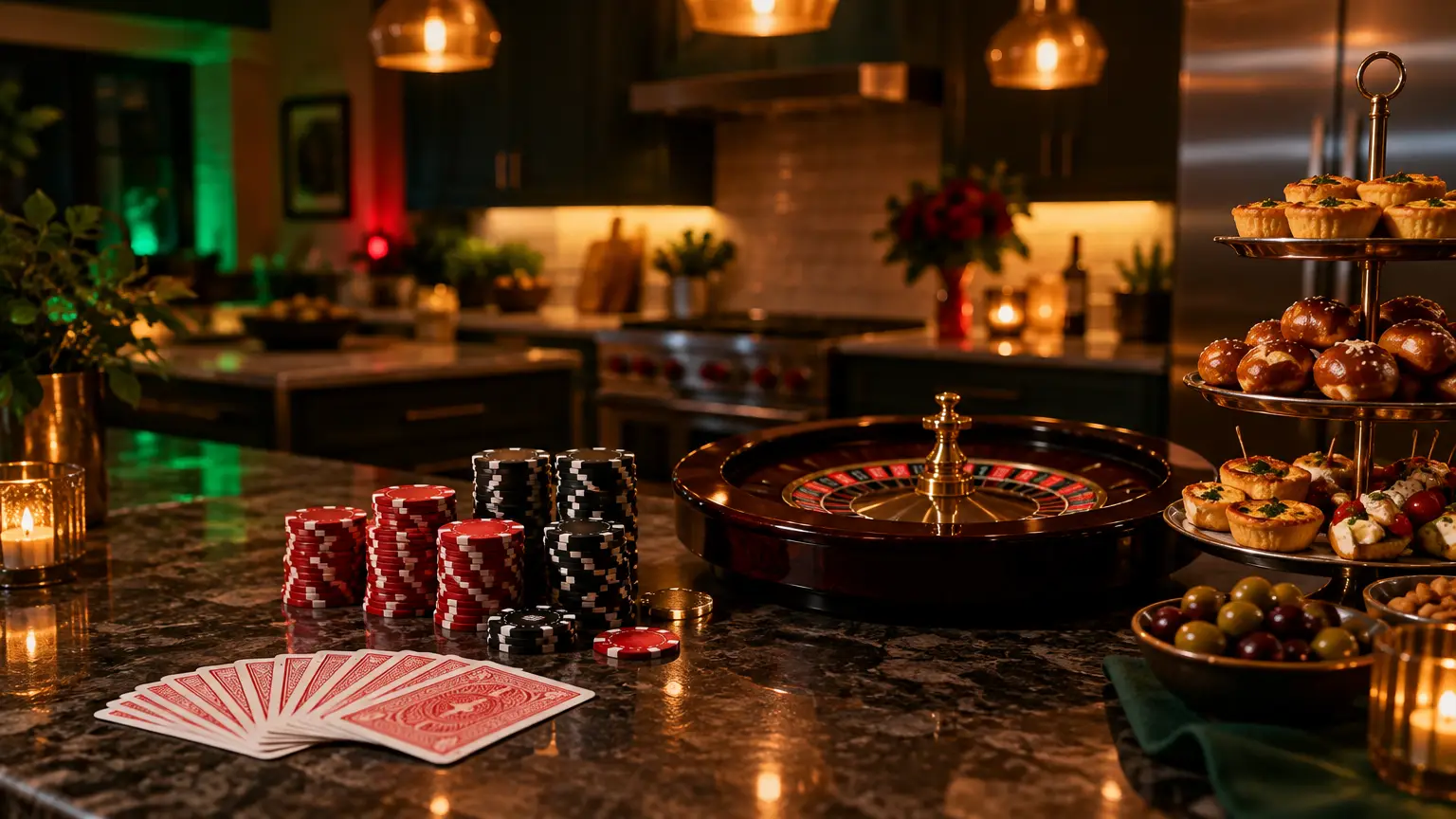
When appetizers and drinks sit on a separate console or kitchen island, guests move naturally toward the perimeter of the room to serve themselves. This physical setup prevents the dinner table from feeling cluttered with bottles and allows the host to participate in conversations instead of acting as a full-time bartender.
Building an effective station starts with establishing distinct physical zones for glassware, beverages, and plates. Grouping items onto textured wooden or metal trays prevents the surface from looking like a disorganized pile. You can then incorporate fresh dining room inspiration into the functional setup by adding a small potted fern or a few branches of seasonal greenery for vertical height.
Small practical details signal that the evening was planned with care. Stack fresh linen napkins next to the ice bucket and use tiny slate signs to label the specific wine varieties or appetizer ingredients.
|
Pro Tip: Build a serving station in layers: use trays to group items, add a plant for height, and include a candle or a few books for personality. This keeps the dining table clear, and the host relaxed. |
|---|
5. Place Accents That Start Conversations
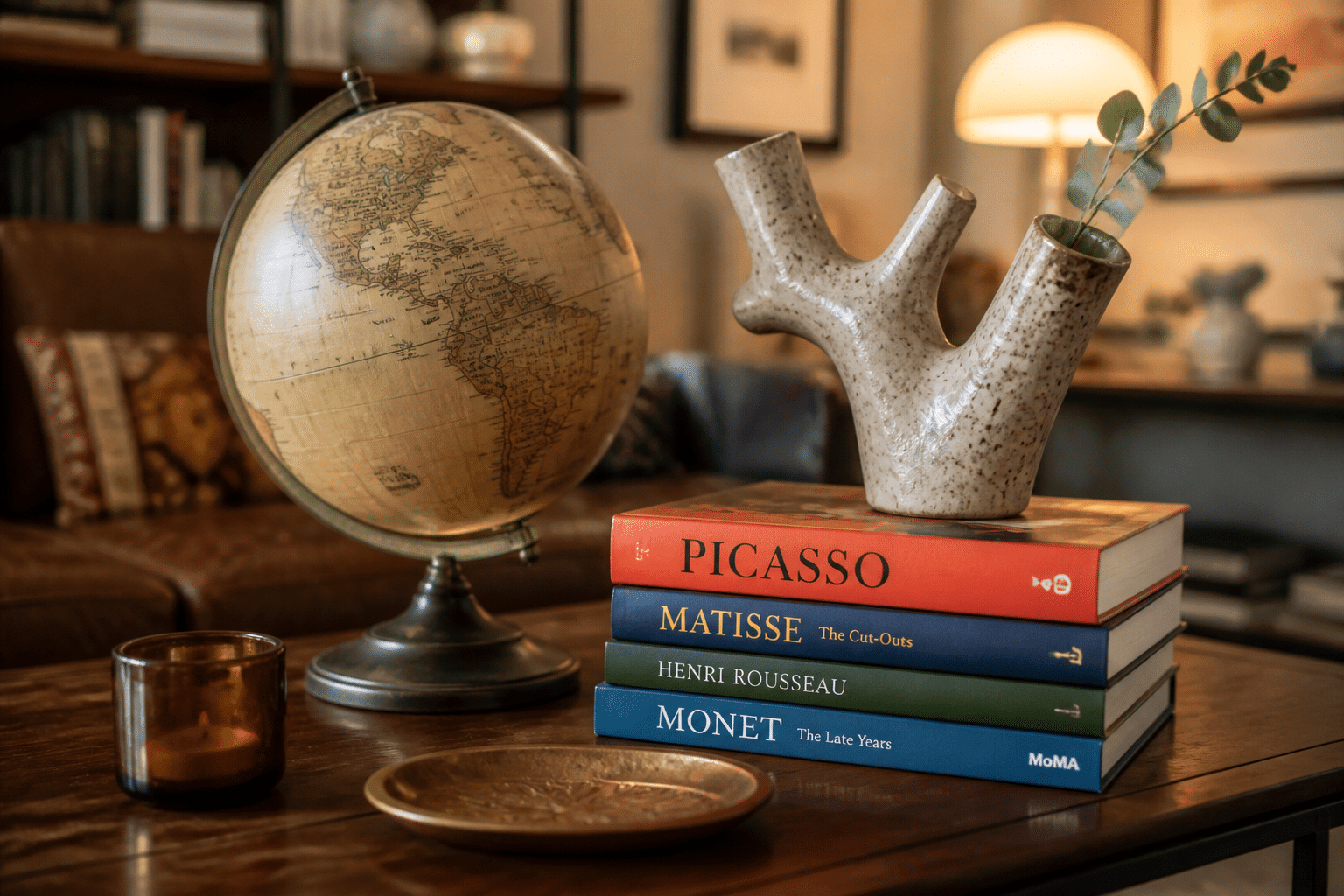
A room full of perfectly matched catalog furniture often feels highly polished but entirely passive. Small and unexpected objects scattered throughout the space give visitors something to physically examine, pick up, and ask about. These statement home accents bridge the awkward gap between arriving and feeling comfortable enough to start a genuine discussion.
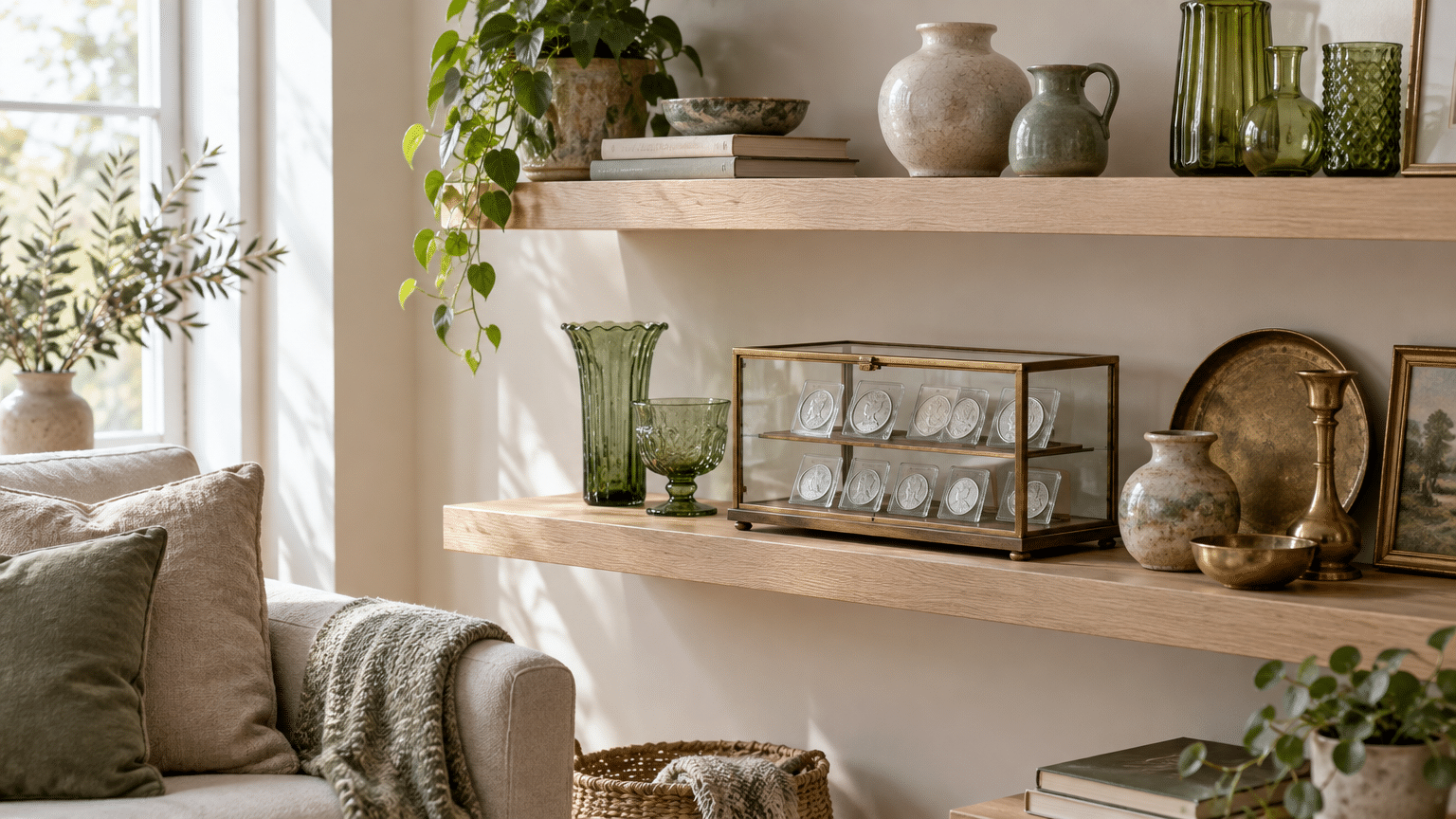
You do not need rare artifacts to spark interest among your friends. A vintage brass compass on a side table, a thick photography book left open on an ottoman, or an oddly shaped ceramic vase all draw immediate curiosity. Framed reproduction maps of a city you recently visited also provide an easy entry point for natural storytelling.
The physical placement of these items dictates how well they work during a party. Instead of grouping all your interesting objects on a single bookcase, leave one near the drink station and another on the coffee table. Distributing them forces the conversation to travel naturally around the room alongside your moving guests.
Putting It All Together
Providing adaptable modular seating ensures everyone always has a place to sit, while incorporating history-inspired metalwork or unique focal points gives them something fascinating to discuss.
Layering warm lighting and setting up an organized drink station further removes any physical friction from the evening. Try installing a dimmer switch or upgrading your coffee table accents before your next dinner party.