
Smart lights can make a yard feel safer at night when they light the right places at the right time: the porch, driveway, side gate, steps, and the path from the car to the door.
The goal is not to flood the whole property with brightness. It is to reduce dark gaps, make normal movement easier, and give cameras or doorbells enough light to show useful detail.
That is usually why homeowners start looking. You step outside to bring in a package and cannot see the edge of the walkway. A side yard stays completely dark.
The back patio looks fine during dinner, then feels exposed after everyone goes inside. Smart outdoor lights solve those everyday moments better than a single always-on bulb because they can be scheduled, dimmed, grouped, and triggered by motion or other devices.
Table of contents
- Why smart lights are different from brighter bulbs
- Where to place smart outdoor lights first
- How lighting modes change the way your yard feels
- How to balance brightness color and neighbor comfort
- How eufy smart security lights fit a safer yard
- Installation and maintenance details to check
- Conclusion
Why Smart Lights Are Different From Brighter Bulbs
Most search results for smart lights focus on product rankings, app support, and voice assistants. Those points matter, but they do not answer the yard safety question very well.
A safer-feeling yard starts with a layout: where people walk, where visitors pause, where cameras need help, and where darkness makes you hesitate.
The difference is control. A standard outdoor light is on or off. A smart light can run at low brightness after sunset, brighten when someone approaches, follow a schedule while you are away, or work with a camera so the light and recording happen together.
That creates a clearer signal: normal evening lighting stays calm, and motion in a key zone gets noticed.
The U.S. Department of Energy notes that outdoor lighting can support aesthetics, security, and utility, and that security or utility lighting does not always need to be bright in every instance to be effective.
It also recommends timers, motion sensors, connected controls, and fixtures with reflectors or covers to reduce wasted light and light pollution.
For a homeowner, that means the purchase pain point is not only “my yard is dark.” It is “I do not want to wonder what is happening in the dark part of my yard.”
Smart lights for home use are useful when they replace guessing with a repeatable routine: a soft porch scene at night, a driveway scene when the car pulls in, and a brighter side-yard response only when movement matters.
Where To Place Smart Outdoor Lights First
Start with the routes people actually use after dark. A beautiful tree accent does not help much if the step between the driveway and walkway stays invisible.
Prioritize these zones before decorating the rest of the yard:
- Front porch and entry. Light the door, lock, house number, package area, and the spot where a visitor’s face would appear on a doorbell camera.
- Driveway and garage approach. Add visibility where you park, unload groceries, check a car door, or walk around a vehicle.
- Side yard and gate. Narrow side yards often become the darkest blind spots because they sit between fences, shrubs, and wall shadows.
- Back door and patio edge. Cover the transition from indoor light to outdoor darkness, especially where pets, guests, or kids step out.
- Steps, grade changes, and pathways. Low, even light often helps more here than a bright fixture aimed from far away.
This order also helps you avoid overbuying. If your main concern is the side gate, one well-placed motion-triggered zone may do more than a long decorative run across the front of the house.
If the concern is walking from the driveway to the door, path-level light and a porch scene matter more than maximum lumens.
How Lighting Modes Change The Way Your Yard Feels
Smart lighting becomes more useful when each mode has a job. Leaving everything on high can make the yard look flat, create glare, and annoy neighbors.
Leaving everything off until motion can feel abrupt and may leave cameras working with a dark frame before the light comes on.
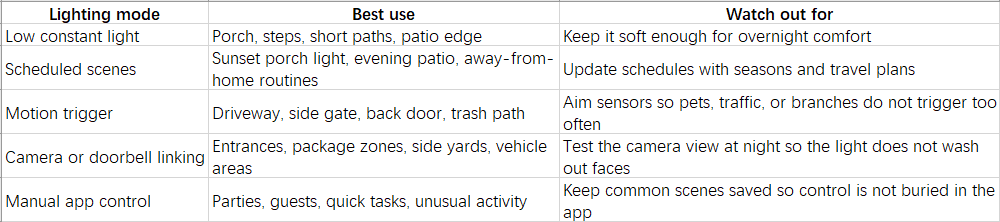
The most natural setup is layered. Keep a low scene where people need orientation, then use motion or camera triggers for alert zones.
A side yard, for example, does not need to glow all evening. It may only need to brighten when someone walks through the gate or when a camera detects motion.
This is the gap many “best smart lights” pages miss. They compare ecosystems and prices, but they rarely show how the same fixture should behave differently at the porch, driveway, and back fence.
How To Balance Brightness Color And Neighbor Comfort
Brighter light can help, but too much direct glare can make the yard less comfortable and sometimes harder to read. The Department of Energy’s guidance on LED outdoor glare explains that glare depends on factors such as intensity, fixture size, height, angle, and the contrast between a dark environment and a bright source.
In plain terms, a harsh light pointed outward can hit your eyes, your neighbor’s window, or your camera lens before it improves the ground view.
Use brightness as a tool, not a default setting. Paths and steps usually need even low-level guidance. Driveways and side yards can use stronger motion lighting, but it should be aimed down and toward the target area.
If a light makes you squint when you stand in the yard, it is probably aimed too high or set too bright.
Color temperature also changes the experience. Warm white feels better on a porch or patio because it looks closer to normal evening light. Cooler white can help with task visibility, but it can also feel harsh when used all night.
DarkSky International’s responsible outdoor lighting principles recommend using light only where needed, aiming it carefully, keeping levels low, adding controls such as timers or motion detectors, and choosing warmer-color light where possible.
For most homes, a good pattern is warm and dim for everyday scenes, brighter and more neutral for short security events, and colorful effects reserved for holidays, gatherings, or short app scenes. That keeps the yard useful without making the house look like it is in alert mode every night.
How Eufy Smart Security Lights Fit A Safer Yard
Once the layout is clear, product choice becomes easier. You are not buying smart lights in the abstract. You are buying a way to make the entrance, driveway, side yard, and patio behave predictably after dark.
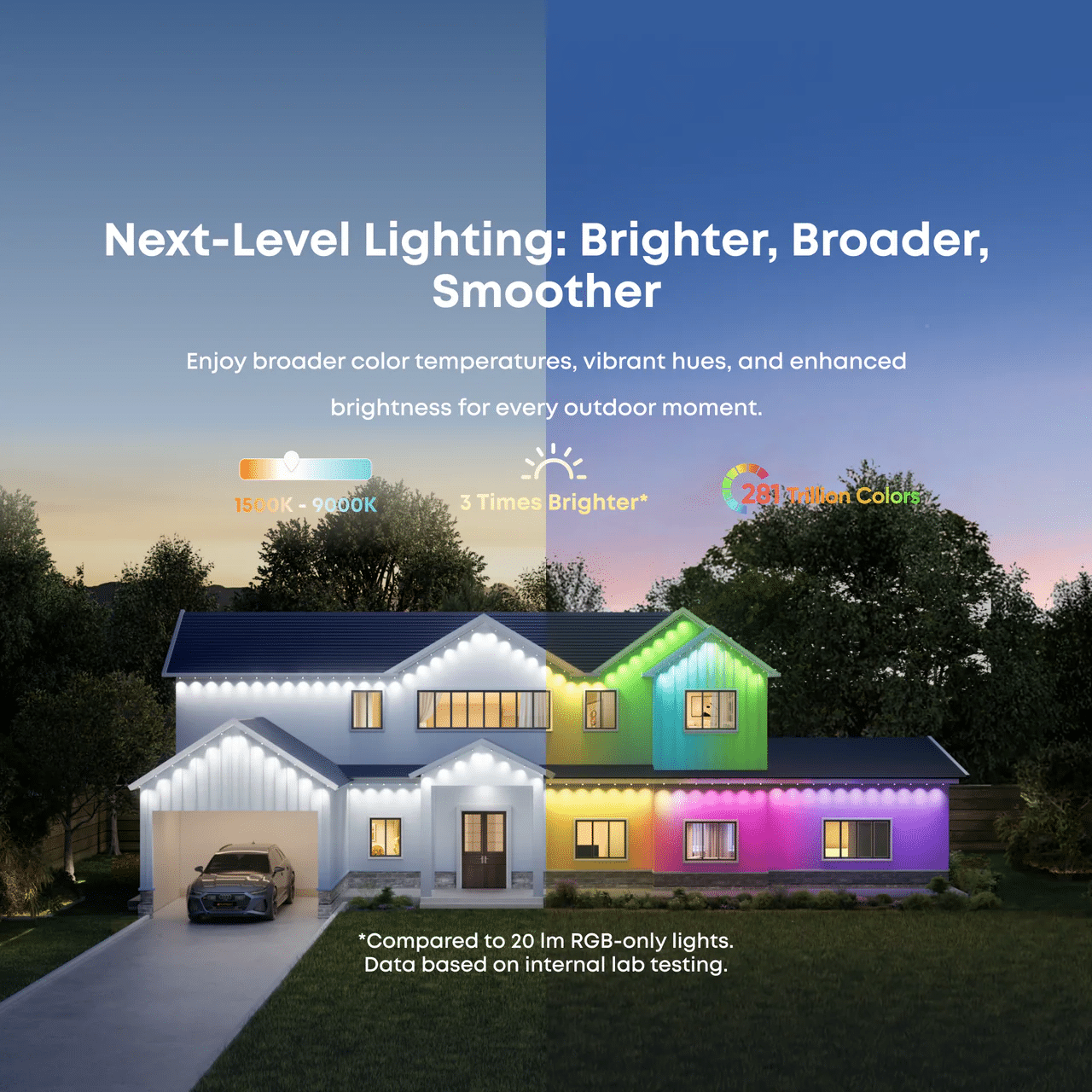
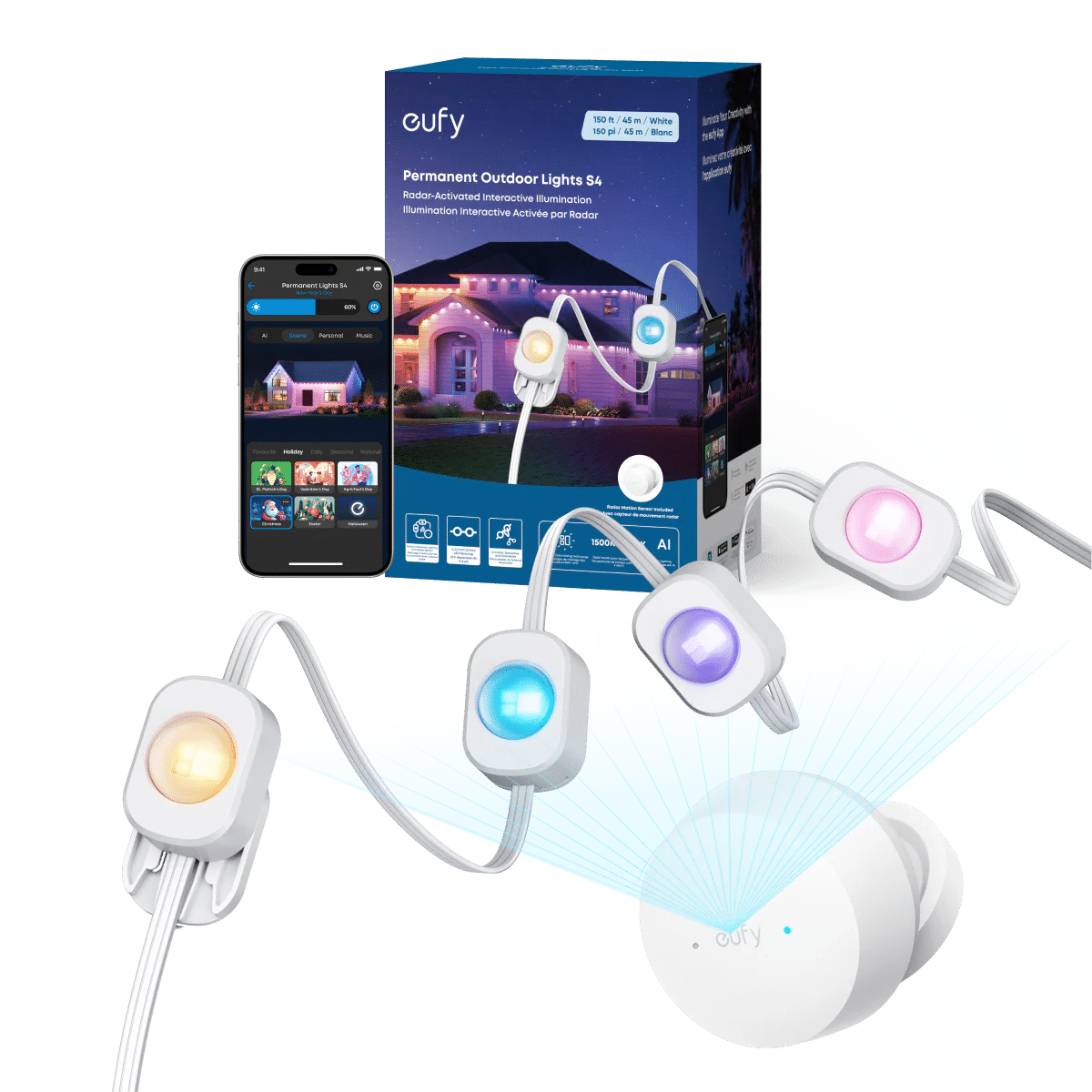
For homes where security linking is the main reason to upgrade, eufy Permanent Outdoor Lights S4 is the stronger fit. Its radar-activated design covers 120 degrees and 12 m, so lighting effects can respond as someone moves through the covered zone.
It also links with eufy cameras, video doorbells, and video smart locks, and can use HomeBase 3 human detection for smarter automation.
The practical benefit is simple: the light does not just decorate the roofline. It can become part of the same nighttime response as your camera or doorbell.
S4 also makes sense when one installation needs to serve daily, holiday, and security roles. The RGBWW design supports a 1500K to 9000K color temperature range, 120 app presets, Matter support, IP67 waterproof protection, and a cuttable layout for different roof shapes.
In this article’s yard-safety frame, those specs matter because you can run a warm daily scene, switch to a clearer motion-triggered response, and still use the same system for seasonal color without hanging temporary lights every year.
If you are still deciding between permanent roofline lighting and other outdoor options, browse eufy’s outdoor lighting collection or the broader lights collection. Start with the area that bothers you most at night, then choose the length, linking features, and installation style around that problem.
Installation And Maintenance Details To Check
Outdoor smart lighting works best when the installation matches the environment. Before you buy, look at power, weather exposure, mounting height, Wi-Fi reach, camera angles, and whether the light will shine into a neighbor’s bedroom.
Check these details during planning:
- Weather rating. Look for outdoor-rated lights, controllers, and power adapters. Do not assume every part of a system has the same rating.
- Power access. Permanent outdoor lights usually need a reliable outlet or power run near the installation path.
- Mounting and aiming. Aim light toward paths, doors, steps, and driveway zones instead of outward into the street.
- Camera testing. After dark, walk through the scene and check whether faces, packages, plates, or steps are clearer or washed out.
- App routines. Save a daily scene, a motion response, a guest or party scene, and a holiday scene so the system stays easy to use.
- Seasonal upkeep. Inspect adhesive, clips, screws, exposed cables, lenses, and connectors after storms, heavy pollen, or freezing weather.
For eufy S4, note that the system is not compatible with E22 extension cables or lights, and the light strip should not exceed the supported maximum length.
Those details matter because outdoor failures often come from connectors, power placement, and weather exposure rather than the LEDs themselves.
Conclusion
Smart lights make a yard feel safer when they remove uncertainty from the places you use after dark. The strongest setup is not the brightest one.
It is the one that gives the porch, driveway, side yard, back door, and paths the right level of light at the right moment.
Plan the layout before comparing products. Use soft scheduled light for orientation, motion or camera triggers for alert zones, and warmer everyday tones to keep the house comfortable.
Then choose smart outdoor lights that can support those routines without turning every evening into a full-bright security scene.