


Some workdays start fine, then quietly fall apart. Emails pull attention in one direction, a meeting pushes it somewhere else, and by noon, the original plan is buried. That kind of mental scatter is exhausting, and most people don’t notice it until the day is already done.
That is where learning how to practice mindfulness at work becomes useful. It is not about sitting silently for an hour or pretending deadlines are peaceful. It is about pausing long enough to notice what is happening before reacting.
This blog covers what mindfulness means at work, simple ways to use it, when to practice it, what benefits to expect, and what mistakes can make it feel harder than it needs to be.
Does Practicing Mindfulness At Work Actually Help?
Yes. In a workplace mindfulness course for university employees, 81% of participants reported a drop in perceived stress and 78% reported an increase in mindfulness after just a few weeks of practice.
That’s not a small effect, and it’s not about sitting silently for an hour or pretending deadlines are peaceful. It’s about pausing long enough to notice what’s happening before you react to it.
I’ve spent years testing daily habits that hold up under real pressure, not just in a quiet room. This guide covers what mindfulness at work actually means, twelve ways to use it during a real workday, when to reach for each one, what the research says, and the mistakes that make it feel harder than it needs to be.
| ℹ️ Health Note: This article is for general information and isn’t medical advice. If stress at work is affecting your sleep, mood, or ability to function day to day, that’s worth bringing to a doctor or therapist, not just managing with breathing exercises. |
What Does Mindfulness At Work Actually Mean?

Mindfulness at work means paying attention to the task, conversation, or body signal in front of you instead of running on autopilot. It’s not about forcing your mind to go blank. It’s about noticing where your attention wandered and gently bringing it back, over and over, for as long as your workday lasts.
At my desk, that looks like reading one email without checking three apps, listening in a meeting without drafting my reply early, or catching tight shoulders before stress turns into a short, sharp response I’ll regret sending.
Mayo Clinic explains that mindfulness can be practiced through simple actions, including breathing, walking, sitting, and focusing attention on the present moment.
A simple way to think about it:
- Notice what is happening now
- Pause before reacting
- Return attention to one clear thing
- Respond with more care
Mindfulness matters at work because the office rewards speed by default. A little awareness gives your brain a small gap between pressure and response. I first noticed this pattern outside of work too, in how differently my whole day went depending on whether
I started with intention or with my phone, which is part of what shaped a mindful morning reset for the hours before work even begins. That gap is where better choices happen, one email or one meeting at a time.
Why Does Mindfulness Help During A Workday?
Mindfulness helps because it interrupts the fast chain between pressure and reaction. A tense email or overloaded task list can pull your attention away from the present moment before you even notice.
Once that happens, your body reacts first: shoulders tighten, breathing gets shallow, thoughts speed up, and a reply comes out shorter than you meant it.
The point isn’t to erase stress or pretend the workload is light. It’s to notice the tension earlier, while there’s still room to choose a better response instead of a reflexive one.
What Does The Research Actually Show?
I don’t take wellness claims at face value, so here’s what the data says instead of what sounds nice. A workplace-adapted mindfulness program studied at a logistics company measured real reductions in perceived stress that held up at a six-month follow-up, not just right after the sessions ended. In a separate brief mindfulness course built for university staff, over 8 in 10 participants saw their stress scores drop within weeks, without quitting their jobs or overhauling their schedules.
NCCIH notes that mindfulness programs generally teach people how to apply present-moment awareness to stressful situations, rather than promising to remove the stressor itself. That distinction matters: mindfulness changes how you meet the pressure, not whether the pressure exists.
Mindfulness Versus Quick Fixes: What Actually Helps When You’re Overwhelmed
When a workday gets heavy, the instinct is usually to reach for something fast: a coffee refill, a scroll through your phone, or venting to a coworker. None of those are wrong, but they work differently than a mindful pause does. Caffeine can sharpen focus for a while, and if you’re choosing a cup, opting for a gentler caffeine alternative than straight coffee tends to produce calmer, steadier alertness rather than a jittery spike. Scrolling gives your brain novelty, not rest, so it often leaves you more scattered than before. Venting can help you feel heard, but it doesn’t interrupt the stress response the way a 30-second breathing pause does.
Mindfulness isn’t a replacement for all of these. It’s the one option that costs nothing, takes no set-up, and works in the exact moment stress is building rather than after the fact.
Ways To Practice Mindfulness At Work
These twelve practices cover different parts of the workday, from the first hour to the final wrap-up. I’d rather you pick two or three and use them daily than try all twelve once and drop the habit by Friday.
1. Daily Intention Setting

Setting an intention before you open your inbox stops the day from starting in full reaction mode. I keep mine to one line: behavior, focus, or a single priority task. On slower mornings or days off, I stretch this into a fuller morning ritual that carries the same idea further before I bring the shorter version back to my workday.
How to do it:
- Sit down before opening email
- Take one slow breath
- Choose one short intention for the day
- Keep it realistic and specific
- Place it where you’ll see it
| 💡 Tip: Use a specific line like “I will respond calmly today” rather than something vague like “have a good day.” |
2. Single-Task Focus Blocks
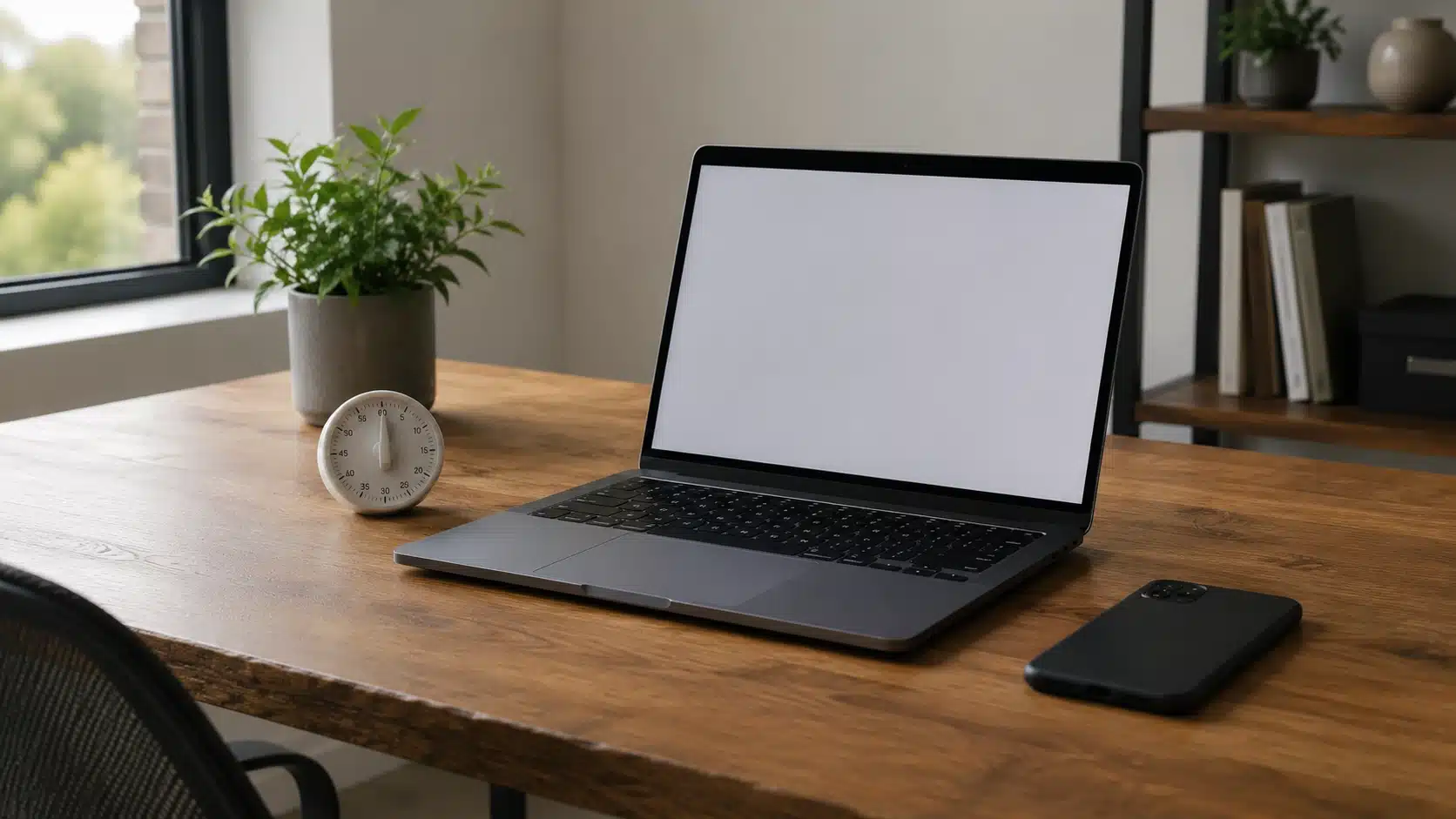
Giving one task a fixed block of time reduces mental switching. A 25 to 50 minute window is long enough to make real progress and short enough to stay honest about staying on task. If a block leaves you reaching for coffee halfway through, swapping in a steadier energy source can help you avoid the crash that derails the next one.
How to do it:
- Pick one task before starting
- Set a timer for 25 to 50 minutes
- Close unrelated tabs
- Silence non-urgent alerts
- Take a short break when the block ends
| 💡 Tip: Write the task name down before starting so you don’t waste the first five minutes deciding what to do. |
3. Mindful Breathing Breaks
This is the fastest reset because you can do it at your desk, in a hallway, or right before a call. Five slow breaths is usually enough to bring your nervous system down a notch.
How to do it:
- Stop what you’re doing
- Sit or stand still
- Inhale slowly through the nose
- Exhale fully and gently
- Repeat for five slow breaths
| 💡 Tip: Use this before stress peaks, not after. It works better as a reset than as damage control. |
4. Active Listening During Conversations
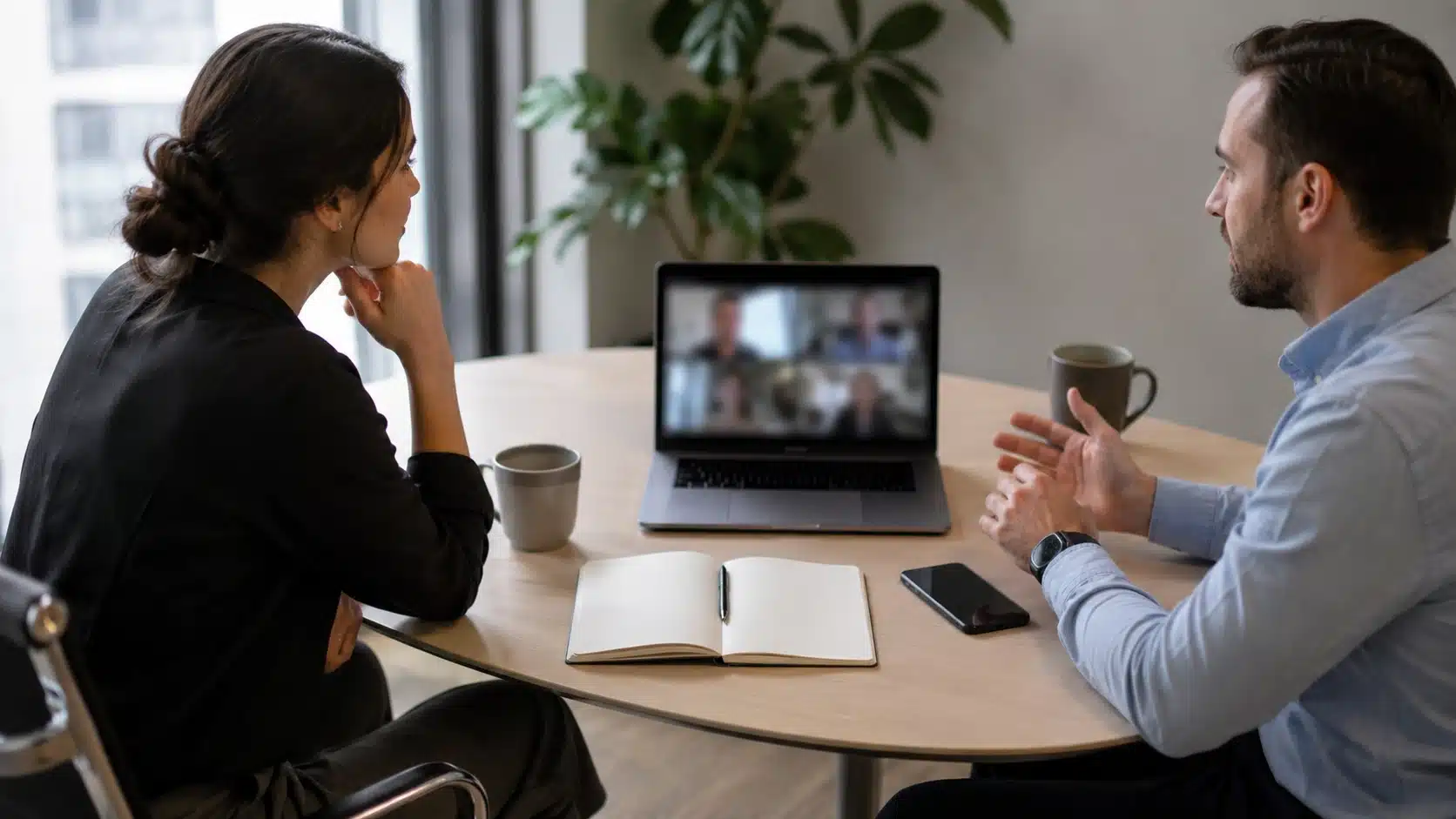
Active listening turns an ordinary work conversation into a mindfulness practice. Keeping your attention with the speaker instead of your next reply cuts down on missed details and the follow-up messages that come from mishearing someone the first time.
How to do it:
- Put your phone face down
- Look at the speaker or meeting screen
- Listen without planning your reply early
- Notice the main point
- Pause before answering
| 💡 Tip: Repeat one key point back before responding. It shows you were listening and keeps the conversation on track. |
5. Screen-Free Micro Breaks

Ten minutes away from a screen gives your eyes and your attention an actual rest, not just a change of app.
How to do it:
- Step away from the screen
- Look at something across the room
- Stretch your neck, hands, or shoulders
- Stand or walk for a few minutes
- Return to one clear task
| 💡 Tip: Don’t swap your laptop for your phone. That keeps your brain in the same scrolling loop. |
6. Mindful Email Checking
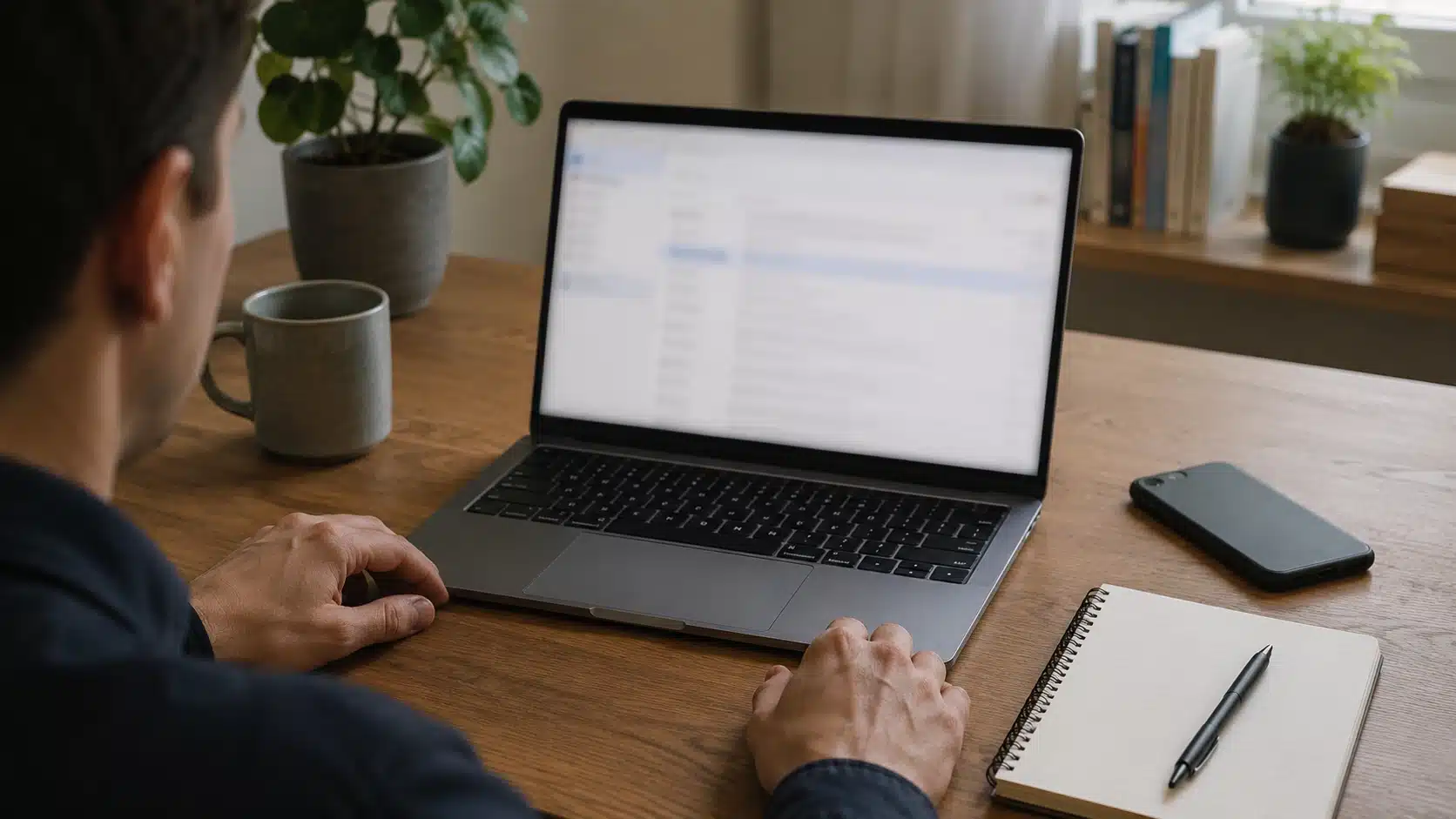
Giving your inbox two or three set windows a day stops it from interrupting every task. Reading each message once before replying also cuts down on the rushed, half-answered emails that generate more emails.
How to do it:
- Choose two or three email windows
- Open the inbox only during those times
- Read each message once before replying
- Sort messages by action needed
- Close the inbox after the session
| 💡 Tip: If a reply feels emotional, draft it, close the tab, and send it after a short pause. |
7. Body Scan Awareness

Stress often shows up in the jaw, shoulders, or hands minutes before your mind names it as stress. A 60-second scan lets you catch that tension while there’s still time to release it instead of carrying it through the next three meetings.
How to do it:
- Sit with both feet on the floor
- Notice your jaw and face
- Check your shoulders and hands
- Notice your back and legs
- Relax one tense area as you exhale
| 💡 Tip: Use this right after long focus work, when your body tends to feel tight without you noticing. |
8. Slow First Task Start

Choosing a low-pressure task for the first ten minutes of your day lets your brain settle before the harder work starts. It’s not about working slower all day, just easing in instead of opening email first and reacting from minute one.
How to do it:
- Avoid opening email first
- Choose one low-pressure task
- Work on it for 10 minutes
- Keep the pace steady
- Move to harder work after that
| 💡 Tip: Pair this with your daily intention so the first few minutes feel guided instead of random. |
9. Walking Reset Breaks
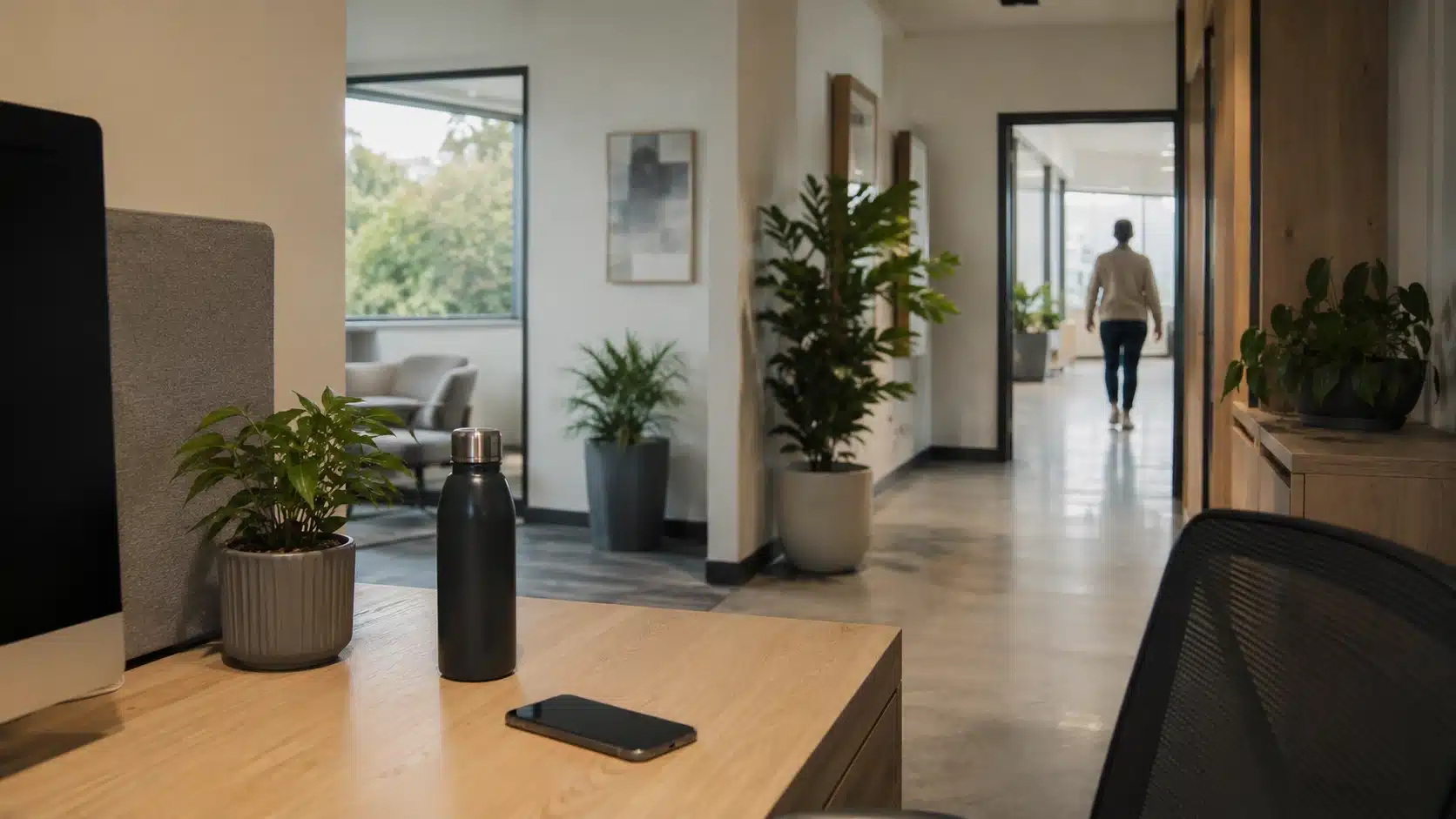
A five to ten minute walk clears mental heaviness in a way sitting still can’t. It works best when you leave your phone behind rather than using the walk to scroll or replay a stressful meeting.
How to do it:
- Stand up between tasks
- Walk for five to ten minutes
- Leave your phone behind if possible
- Notice your steps and breathing
- Return before starting the next task
| 💡 Tip: Use this after lunch, when a lot of people hit their first real energy dip of the day. |
10. Mindful Transition Moments
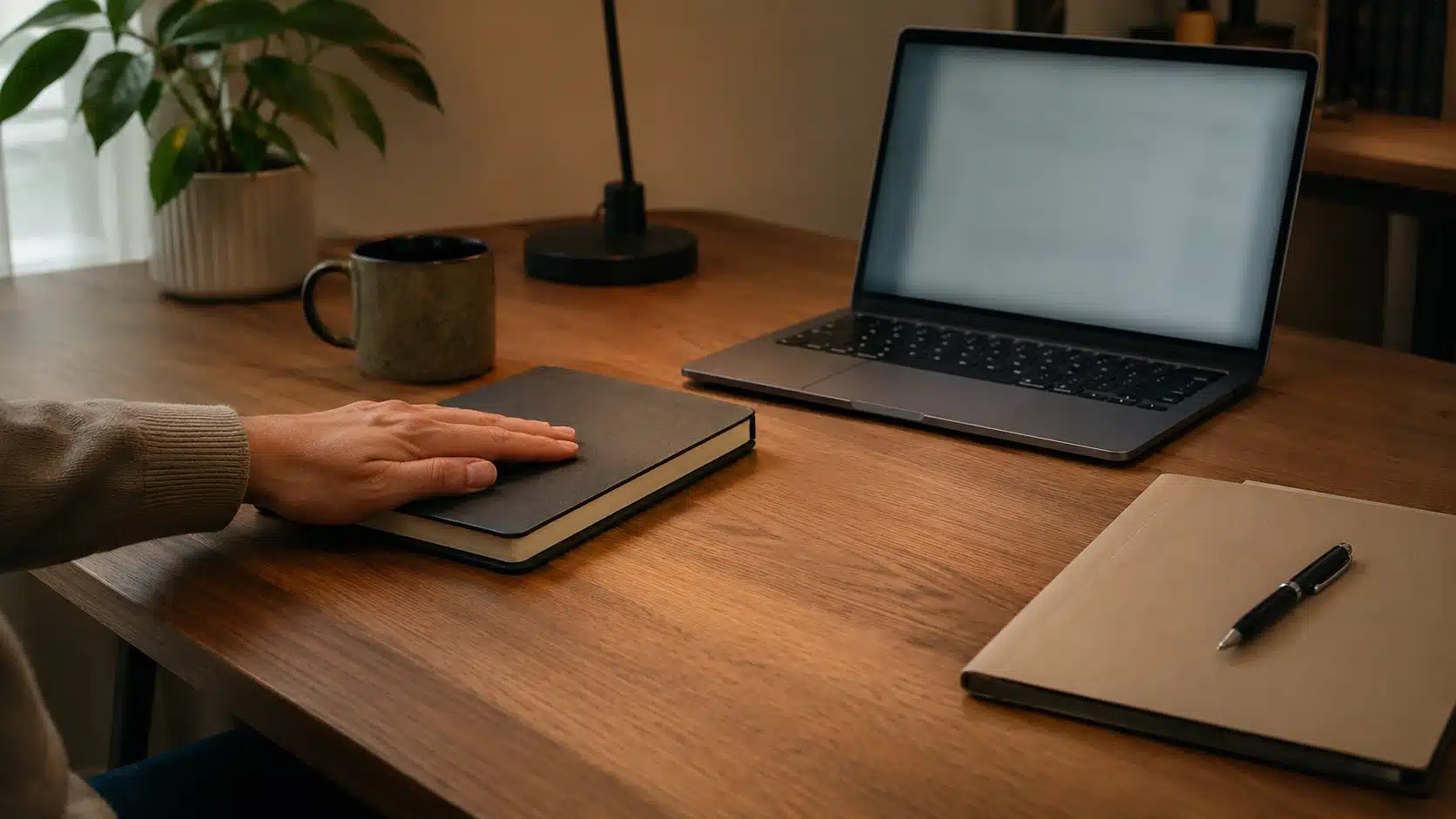
A short pause between tasks keeps mental residue from one meeting or message from following you into the next. One slow breath and naming the next task out loud is usually enough to mark the switch.
How to do it:
- Finish or pause the current task
- Close the tab, notebook, or file
- Take one slow breath
- Name the next task
- Start only the next task
| 💡 Tip: Use a small physical action, like closing a notebook, to make the switch feel real. |
11. Gratitude Check-In

This isn’t about pretending a hard day was fine. It’s training your attention to notice one thing that actually worked, even on a frustrating day, so your afternoon isn’t shaped entirely by the worst hour.
How to do it:
- Pause once in the afternoon
- Think of one work moment that went okay
- Keep it small and honest
- Name why it mattered
- Return to the next task
| 💡 Tip: Choose something specific, like a finished task or a clear conversation, not a vague “today was fine.” |
12. End-Of-Day Mental Shutdown Routine

A clear closing routine gives unfinished tasks a place to land instead of following you home. I write down tomorrow’s first task, close every tab, and say one short phrase to myself before I leave my desk.
How to do it:
- Review what was completed
- Write tomorrow’s first task
- Close work tabs and documents
- Clear small desk clutter
- Say a short closing phrase to yourself
| 💡 Tip: Try “today’s work is done” as a simple, consistent signal that the day has ended. |
The easiest way to keep these useful is matching each one to a real moment in your day, rather than treating all twelve as a checklist.
What Are The Real Benefits Of Mindfulness Practices?
These show up in small work moments, not one big transformation: how you reply, how long you stay focused, and how fast stress follows you into the next task.
| Benefit | What It Looks Like At Work | Why It Matters |
| Sharper focus | You stay with one task longer without checking every tab | Fewer attention jumps make deep work feel less scattered |
| Lower stress response | You notice tension earlier instead of letting it build all afternoon | Small pauses keep pressure from carrying into every task |
| Better communication | You listen fully before answering in meetings or messages | Clearer replies reduce confusion and avoidable follow-ups |
| Steadier energy | You use screen breaks or short walks before fatigue takes over | Brief resets make the afternoon feel more manageable |
| Cleaner separation from work | You use a closing routine before logging off | A clear stopping point makes personal time feel less crowded |
What Mistakes Make Workplace Mindfulness Less Helpful?
Mindfulness stops being useful the moment it becomes another item on your to-do list. The goal isn’t to feel calm while overloaded. It’s to pause long enough to notice what’s happening and choose your next move with more care.
- Trying too much on day one: A 20-minute session may feel unrealistic right away. Start with one minute.
- Waiting until stress is already high: Use short pauses before pressure peaks, not after.
- Expecting a blank mind: Thoughts will keep appearing. The practice is returning attention, not deleting thought.
- Using it to ignore workload problems: Mindfulness can’t fix unfair demands, unsafe conditions, or unclear roles.
- Forcing it on a team: Shared pauses should be optional and respectful.
- Replacing real care with breathing alone: If stress is causing panic, sleep loss, or daily impairment, that calls for professional support, not another exercise.
When And How Often Should You Practice
Mindfulness works better when it’s attached to normal work moments instead of saved for rare quiet time. Use it before email, before meetings, after screen-heavy work, at lunch, after tense messages, and before you log off for the day.
| Workday moment | Exercise | Time needed | Best for | Simple cue |
| Before opening email | Daily intention | 2 minutes | Calmer start | Before inbox |
| Before a meeting | Breathing reset | 1 minute | Nerves and focus | Before joining |
| After 45 to 60 minutes of screen work | Micro-break | 3 to 5 minutes | Fatigue | Stand up |
| Before a hard task | Single-task setup | 2 minutes | Deep focus | Close extra tabs |
| Lunch break | Mindful eating | 5 minutes | Autopilot eating | First five bites |
| After a tense message | Reply pause | 30 seconds | Emotional reaction | Hands off keyboard |
| End of workday | Closing reset | 3 minutes | Decompression | Name tomorrow’s first task |
I don’t use all twelve of these every day, and you shouldn’t feel like you need to. Anchor three or four to fixed points in your schedule, morning, midday, end of day, and mindfulness starts to feel like part of the day instead of one more task on it.
Frequently Asked Questions
Can mindfulness help with everyday work stress?
Yes. Mindfulness gives you a short pause before pressure turns into a reaction, which can help you notice tight shoulders, rushed thinking, or shallow breathing sooner. It’s useful support, but serious or ongoing distress still deserves professional help.
Is it possible to practice mindfulness during back-to-back meetings?
Yes, in small ways. A 10-second transition pause before each call, active listening during the conversation, and one slow breath before speaking all count. These micro-practices don’t need a time block and work well in a packed schedule.
How long before mindfulness at work starts to show real results?
Most people notice improved focus and lower stress within two to three weeks of consistent daily use. Consistency matters more than volume: one or two daily practices done regularly outperform trying all twelve occasionally.
Do mindfulness practices work for remote workers too?
Yes, and some are easier remotely. Scheduled email windows, breathing breaks, and the end-of-day shutdown routine all fit remote schedules well. A short walk before or after logging on can also stand in for a commute-based mental boundary.
Does mindfulness actually increase productivity, or just make stress feel better?
Both, to a point. Mindfulness doesn’t add hours to your day, but by reducing the mental switching costs of multitasking and rushed replies, it tends to make the hours you do have go further. It won’t fix an unrealistic workload on its own.
What if noticing my stress just makes me more aware of how bad it already is?
That’s a fair concern, and it’s worth naming rather than pushing past. Mindfulness is meant to surface what’s already there, not manufacture new stress. If what surfaces feels like more than a work habit can manage, that’s a sign to loop in a manager, HR, or a mental health professional rather than trying to breathe through it alone.
Closing Thoughts
A calmer workday rarely comes from one perfect routine. It usually starts with one small pause done often enough to become normal. Pick two or three ideas from this list and place them where stress usually shows up first.
The point of learning how to practice mindfulness at work is not to become unbothered by everything. It is to notice pressure earlier, respond with more care, and pay a little more attention during the day.
Share the work moment where you most need a pause: before email, before meetings, during lunch, or after a tense message.