
Breakfast rarely gets anyone’s full attention. Coffee is brewing, someone’s looking for their keys, lunches still need packing, and the clock seems to move faster than usual. In that rush, small kitchen shortcuts are easy to overlook.
Most of them feel harmless. Yogurt sits out a little longer than planned. The same fork gets used twice. Eggs come off the heat because they “look done.” But breakfast foods often include dairy, eggs, meat, and cut fruit, all of which still need the same care they would later in the day.
1. Leaving Perishable Breakfast Foods Out Too Long
A carton of milk left beside the cereal bowl probably won’t seem urgent. Neither will cream cheese sitting next to the toaster or a breakfast sandwich waiting on the counter while everyone gets ready.
The problem is that busy mornings stretch time without us noticing. Ten minutes turns into thirty surprisingly quickly.
A healthier breakfast routine can help with more than nutrition. Putting cold ingredients back as soon as you’re done with them, rather than waiting until the whole kitchen is cleaned up, is one of those small habits that becomes automatic after a while.
2. Using the Same Utensils for Raw and Ready-to-Eat Foods
This one usually happens because the kitchen gets crowded.
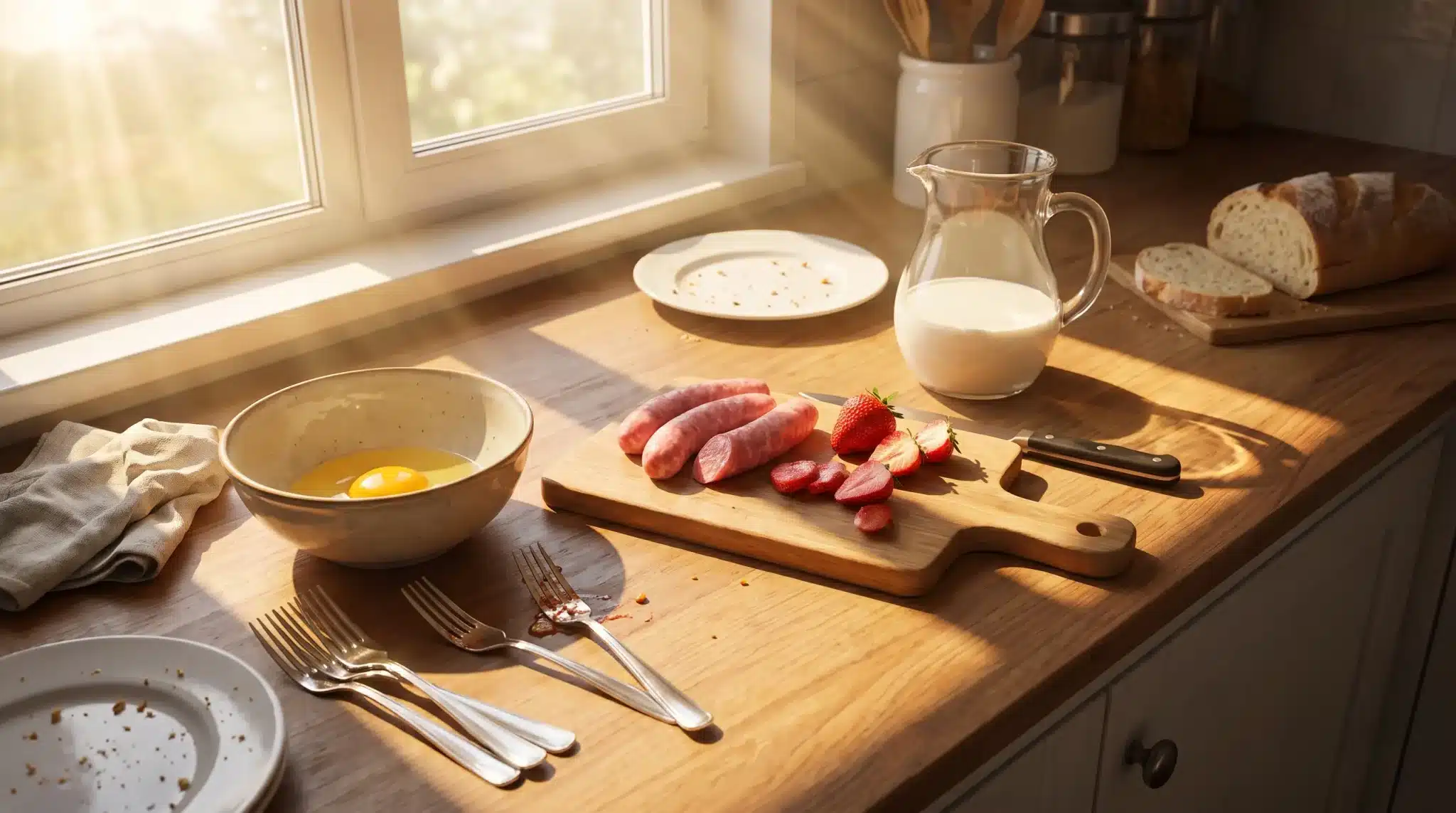
You crack eggs into a bowl, stir them with a fork, then reach for that same fork a few minutes later. Or raw sausage is sliced on a board that’s soon needed for strawberries. When several parts of breakfast are happening at once, clean and used utensils can start to blur together.
Keeping raw foods away from foods that are ready to eat is part of the basic four steps to food safety. The easiest fix is often the least complicated one: put out a clean plate, board, or utensil before you start cooking so you’re not searching for one halfway through.
3. Guessing Whether Eggs and Breakfast Meats Are Done
Breakfast foods can be deceptive.
Sausage may look deeply browned outside while the center still needs more time. Thick egg dishes can set around the edges before they’re fully cooked through the middle. Color helps, but it doesn’t always tell the whole story.
A food thermometer is useful when appearance leaves room for doubt, especially with breakfast meats, casseroles, and larger make-ahead dishes. It’s a quick check, and it’s more reliable than cutting into something repeatedly and hoping for the best.
4. Cooling Make-Ahead Breakfasts Too Slowly
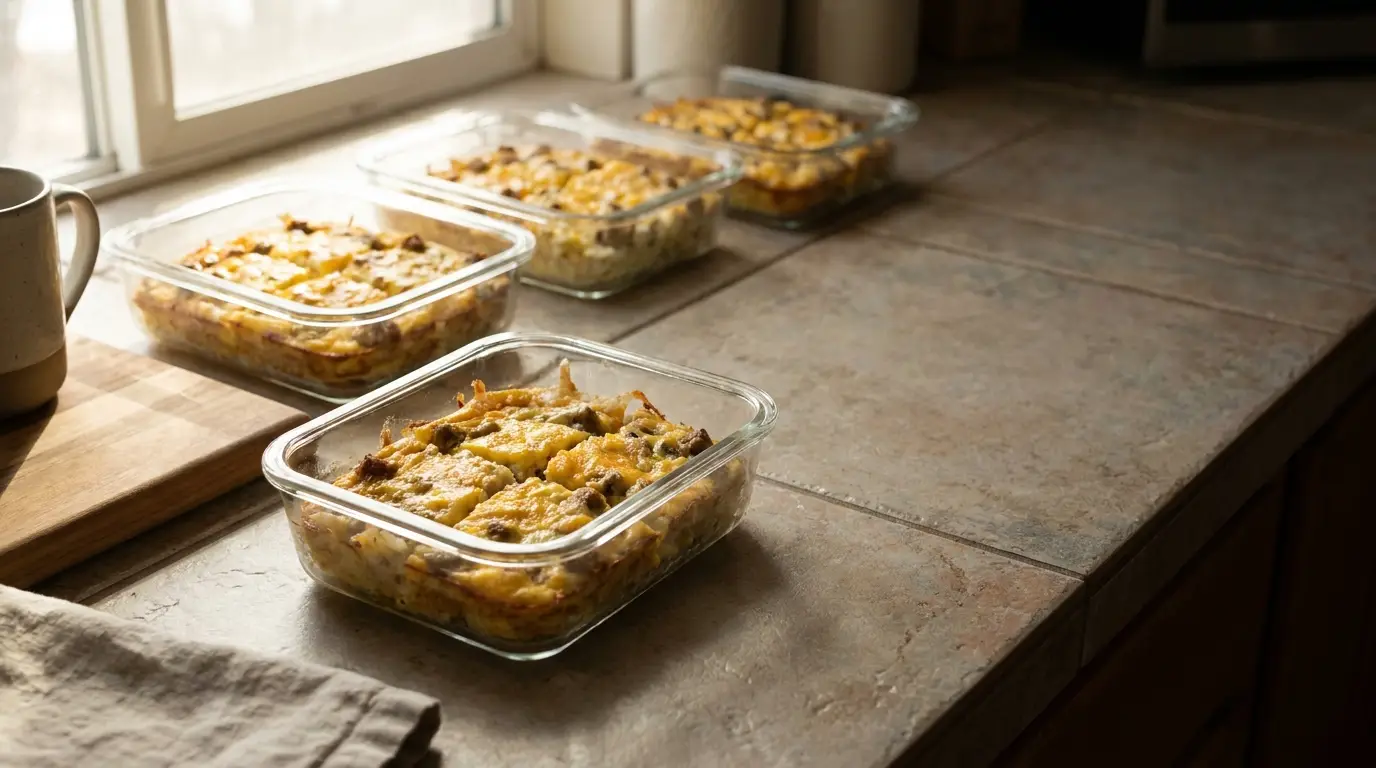
Meal prep makes mornings easier, but big batches come with one practical challenge: they don’t all cool at the same speed.
A deep container of breakfast casserole or a large batch of burrito filling can hold heat in the center long after the edges have cooled. That makes the cooling process slower and less even.
Smaller portions solve much of that problem. Shallow containers help cooked food cool more quickly once it goes into the refrigerator. There’s a bonus, too: breakfast is already divided into individual servings when the next morning arrives.
5. Treating Home-Kitchen Habits Like Professional Food-Service Rules
Cooking at home and preparing food in a commercial kitchen come with very different expectations. Once food is being prepared for customers, workers may have to follow state-specific rules around training, hygiene, and safe handling.
Texas, for example, has its own requirements for people working with food professionally. For those entering the industry, training associated with food handler certification in Texas may be part of meeting the requirements for their role.
That extra structure matters in a busy kitchen. Food passes through more hands, equipment is shared throughout the day, and the same small mistake can be repeated across dozens of meals. Habits that seem harmless at home can carry much more weight in a professional setting.
6. Assuming Healthy Foods Are Automatically Low-Risk
“Healthy” can sound reassuring, but it doesn’t say much about how a food should be stored.
A smoothie made with yogurt still needs refrigeration. So do overnight oats made with milk, cut melon packed for later, and a bowl of sliced fruit mixed with dairy. Fresh ingredients can be nutritious and still be perishable.
This is easy to forget because these foods don’t always look especially delicate. Keeping them cold until you’re ready to eat them protects both their quality and their safety.
7. Rushing Through Cleanup Before Leaving the Kitchen
Sometimes breakfast cleanup is less of a cleanup and more of a quick rinse before running out the door.
Knives get left beside the sink. A cutting board is wiped instead of washed. The same damp towel hangs around for another day. None of that feels dramatic, but residue and moisture can build up fast in a kitchen that’s used every morning.
A few minutes of proper washing usually prevents a bigger mess later. Clean the surfaces that touched food, rinse and wash reusable bottles, and swap out damp cloths before they become part of tomorrow’s breakfast.
A Safer Breakfast Starts With Small Habits
Most breakfast food-safety mistakes aren’t caused by complicated recipes. They happen because people are distracted, rushed, or working from habit.
That’s good news in a way, because the fixes are usually simple. Put cold food away sooner. Keep raw ingredients separate. Check foods when doneness is uncertain. Store make-ahead meals in smaller portions. Clean up before residue has time to sit.
None of those steps adds much to the morning. Together, though, they make a rushed breakfast a lot less careless.