

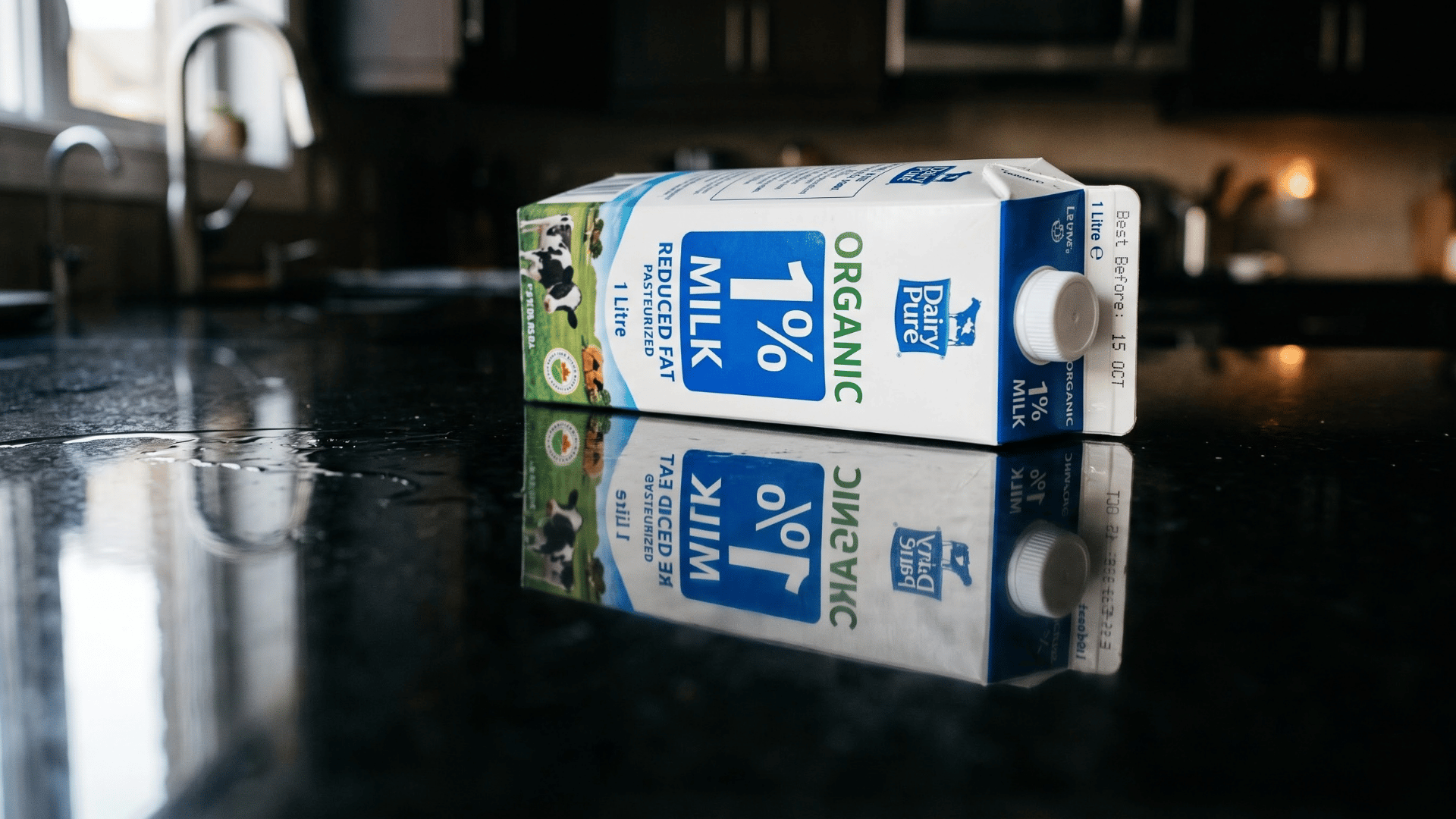
Milk is one of those everyday foods that look simple until you start comparing labels. I like to focus on the details that actually matter in real meals, from protein and fat to sugar, calories, and added vitamins.
Understanding 1% milk nutrition facts makes it easier to see how this low-fat option fits into breakfast, cooking, snacks, and meal planning.
Since nutrition can vary slightly between brands, it also helps to know what to compare. Let’s break down the label and make choosing a carton much easier.
1% Milk Nutrition Facts
As per USDA FoodData Central, a cup of 1% low-fat milk delivers protein, carbohydrates, minerals, and added vitamins while keeping fat relatively low. Exact values can vary slightly by brand, so the package label is always worth checking.
|
Nutrient |
Amount per 1 cup (244 g) |
What It Means |
|---|---|---|
|
Calories |
102 kcal |
Provides moderate energy for a standard 8-ounce serving |
|
Protein |
8.2 g |
Supports muscle maintenance and everyday protein intake |
|
Total fat |
2.4 g |
Lower than 2% and whole milk |
|
Saturated fat |
about 1.5 g |
Makes up much of the remaining milk fat |
|
Carbohydrates |
12.2 g |
Mainly come from naturally occurring milk sugar |
|
Total sugars |
about 12 g |
Primarily lactose rather than added sugar |
|
Dietary fiber |
0 g |
Milk does not naturally contain fiber |
|
Calcium |
305 mg |
One of the key minerals naturally found in dairy milk |
|
Phosphorus |
about 232 mg |
Works with calcium in normal bone and cell functions |
|
Potassium |
about 366 mg |
An important electrolyte found naturally in milk |
|
Sodium |
about 107 mg |
Naturally occurring amount can vary by product |
|
Cholesterol |
about 12 mg |
Present naturally because 1% milk retains some dairy fat |
|
Water |
about 219 g |
Milk is primarily water, which contributes to its fluid volume |
Why Does 1% Milk Have That Name?
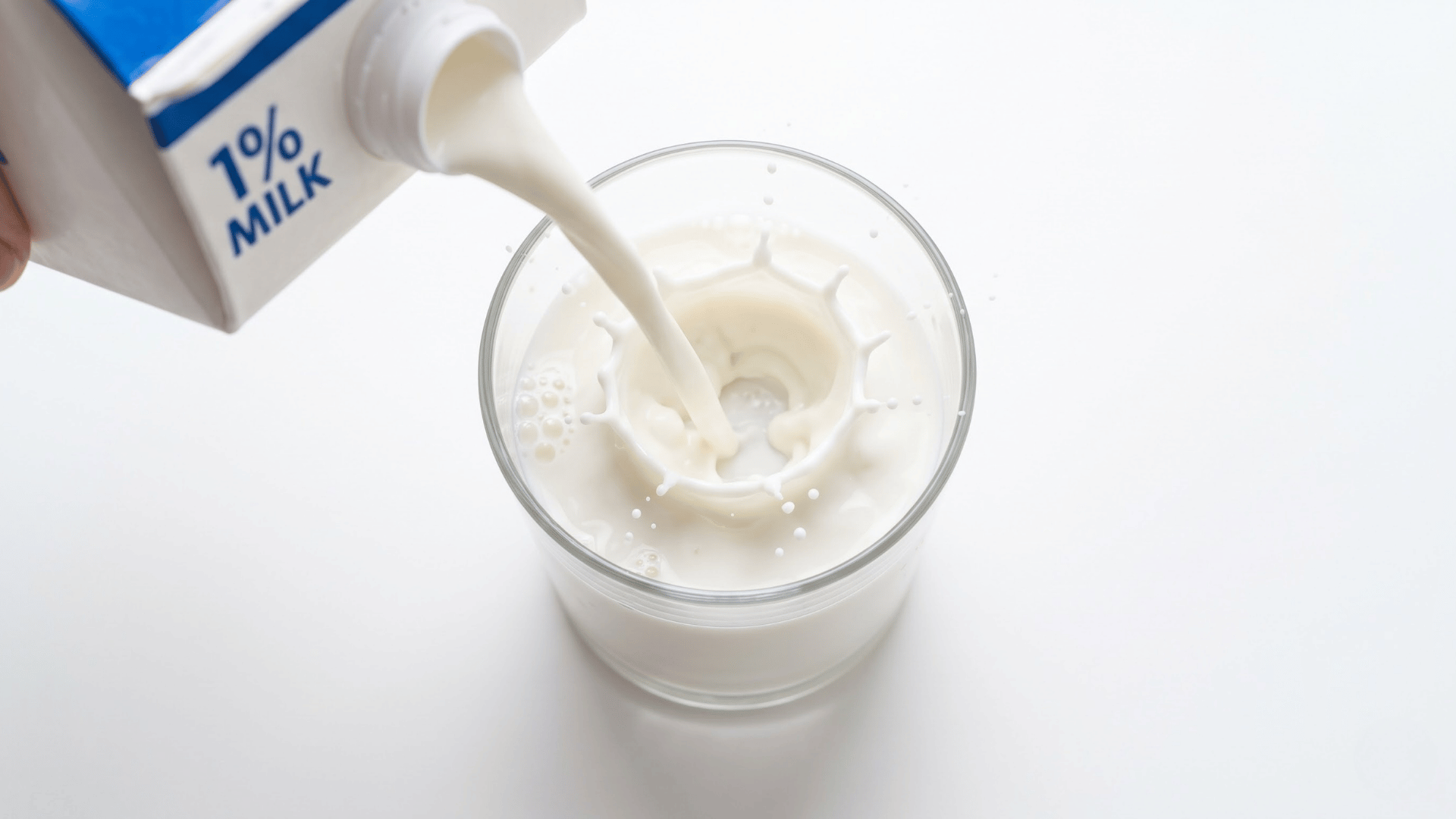
The 1% refers to the amount of milk fat by weight, not the percentage of calories that come from fat. During processing, much of the natural milk fat is removed, leaving about 1% behind.
This gives 1% milk a lighter texture than whole or 2% milk while keeping some of the creaminess that skim milk lacks.
In grocery stores, you will often see it labeled as 1% low-fat milk on cartons and jugs. 1% milk also works well in an oatmeal recipe, adding creaminess while contributing extra protein and calcium to breakfast.
What Vitamins and Minerals Does 1% Milk Provide?
1% milk provides several important micronutrients naturally, while vitamins A and D are commonly added during processing.
CDC Raw Milk and Pasteurization Guidance explains why pasteurization is important and recommends choosing pasteurized milk and dairy products
|
Vitamin or Mineral |
Typical Amount per 1 Cup |
Prominent Benefits |
|---|---|---|
|
Calcium |
about 290–312 mg |
Helps support normal bones and teeth |
|
Vitamin D |
about 2.5–3 mcg |
Commonly added and helps the body absorb calcium |
|
Vitamin A |
about 150–170 mcg |
Usually added back to low-fat milk |
|
Potassium |
about 350–450 mg |
Supports normal fluid balance and muscle function |
|
Phosphorus |
about 240 mg |
Works with calcium to support bones and cells |
|
Riboflavin |
about 0.4 mg |
Helps the body release energy from food |
|
Vitamin B12 |
about 0.8–1.2 mcg |
Supports normal red blood cell and nerve function |
How to Keep 1% Milk Fresh Longer
-
Keep It Refrigerated: Store regular 1% milk in the refrigerator as soon as possible after shopping and return it promptly after pouring.
-
Use the Coldest Part of the Fridge: Keep milk on an interior shelf rather than the refrigerator door, where temperatures can fluctuate more often.
-
Close the Container Tightly: Replace the cap securely after each use to limit exposure to air, odors, and contamination.
-
Check the Package Date: Use the printed date as a freshness reference and also check the milk’s smell, appearance, and package instructions.
-
Do Not Leave It Sitting Out: Pour what you need and return the carton to refrigeration rather than leaving it on the counter during meals.
What Is Actually in 1% Milk?
|
Ingredient |
Why It Is There |
|---|---|
|
Low-fat milk |
Provides the milk base with about 1% milk fat |
|
Skim milk and milk |
Some brands blend these to achieve the desired fat level |
|
Vitamin A palmitate |
Replaces vitamin A lost when some milk fat is removed |
|
Vitamin D3 |
Added to increase vitamin D content |
|
Lactase enzyme |
Added only to lactose-free versions to break down lactose |
Does 1% Milk Contain Added Sugar?
Plain 1% milk generally does not contain added sugar. The roughly 12–13 grams of sugar in a cup usually come naturally from lactose, the sugar found in milk.
For example, plain Horizon Organic, Lactaid, Hood, Darigold, and Kroger 1% milks all list 0 grams of added sugar.
Flavored varieties are different.
Chocolate, vanilla, or strawberry 1% milk may contain added cane sugar or other sweeteners, so check the “Includes Added Sugars” line on the Nutrition Facts panel.
How 1 Percent Milk Compares to Other Dairy Milks
1 percent milk sits between skim and 2 percent milk in both calories and fat while providing a similar amount of protein.
|
Milk Type |
Calories per Cup |
Total Fat |
Protein |
Carbs |
Calcium |
|---|---|---|---|---|---|
|
Skim Milk |
~83 |
~0.2 g |
~8 g |
~12 g |
~300 mg |
|
1% Milk |
~102 |
~2.4 g |
~8 g |
~12 g |
~300 mg |
|
2% Milk |
~122 |
~4.8 g |
~8 g |
~12 g |
~290 mg |
|
Whole Milk |
~149 |
~8 g |
~8 g |
~12 g |
~275 mg |
Values are approximate for 1 cup and can vary slightly by brand and fortification.
How 1% Milk Nutrition Compares by Brand
Most plain 1% milks look very similar nutritionally, but calories, protein, carbohydrates, calcium, sodium, and potassium can vary slightly.
Comparing the label is especially useful when choosing between conventional, organic, lactose-free, regional, and store-brand products.
|
Brand or Product |
Calories |
Protein |
Carbs |
Fat |
Calcium |
|---|---|---|---|---|---|
|
110 |
8 g |
13 g |
2.5 g |
300 mg |
|
|
110 |
8 g |
13 g |
2.5 g |
300 mg |
|
|
110* |
8–10 g* |
12–15 g* |
2.5 g |
290–360 mg* |
|
|
110 |
9 g |
13 g |
2.5 g |
312 mg |
|
|
110 |
8 g |
13 g |
2.5 g |
310 mg |
|
|
100 |
8 g |
12 g |
2.5 g |
about 290–300 mg |
|
|
110 |
9 g |
13 g |
2.5 g |
25% DV |
|
|
about 110 |
about 8 g |
about 13 g |
2.5 g |
about 325 mg |
Always check the carton you are buying because regional formulations, package sizes, and retailer listings can change.
Final Thoughts
Choosing 1% milk often comes down to finding a balance that works for your everyday routine, whether you pour it over cereal, blend it into smoothies, or use it in cooking.
I think the most useful habit is comparing labels based on how you actually plan to use the milk, rather than focusing on one number alone.
Brand, package type, fortification, and lactose-free options can all shape the final choice.
Use these 1% milk nutrition facts as a starting point, then check the carton before buying and choose the option that fits your meals best.
Frequently Asked Questions
Is 1% Milk Good or Bad for You?
1% milk can be a nutritious choice, providing protein, calcium, and vitamin D with less fat than whole milk. Its suitability depends on your overall diet.
Is There a Lot of Sugar in 1% Milk?
Plain 1% milk usually contains about 12 grams of naturally occurring lactose per cup and typically has no added sugar unless it is flavored.
Which Milk Is Healthier, 1% or 2%?
Both provide similar protein, calcium, and vitamins. 1% milk has less fat and fewer calories, while 2% milk has a richer taste and more fat.