

I used to think white tea was almost caffeine-free because it tastes light and gentle.
You might have heard the same thing, then felt unsure after seeing totally different numbers online. That confusion usually comes from how white tea is grown and brewed, not from the tea itself.
Understanding white tea caffeine content helps you decide when to drink it, how to brew it, and how it fits into your daily routine. Small details like leaf type, water heat, and steep time make a real difference.
I’ll walk you through clear ranges, simple comparisons, and practical brewing choices, so things feel less unclear by the end and easier to manage as you keep reading
Does White Tea Contain Caffeine?
Yes, white tea contains caffeine. This happens because white tea comes from the Camellia sinensis plant. All teas made from this plant naturally include caffeine, even lighter styles like white tea.
On average, an 8-ounce cup of white tea contains about 6 to 75 milligrams of caffeine. This wide range often causes confusion. The amount is not fixed because several factors change how much caffeine ends up in your cup.
The type of white tea matters. Teas made mostly from young buds usually contain more caffeine than those made from mature leaves. This pattern holds true across tea types; if you’re comparing oolong tea caffeine levels or exploring how leaf age affects caffeine in green, black, or jasmine tea.
Brewing also plays a role. Hotter water, longer steeping time, and using more tea leaves all increase caffeine levels. Because of this, one cup of white tea can feel very different from another.
How Much Caffeine Is in White Tea?
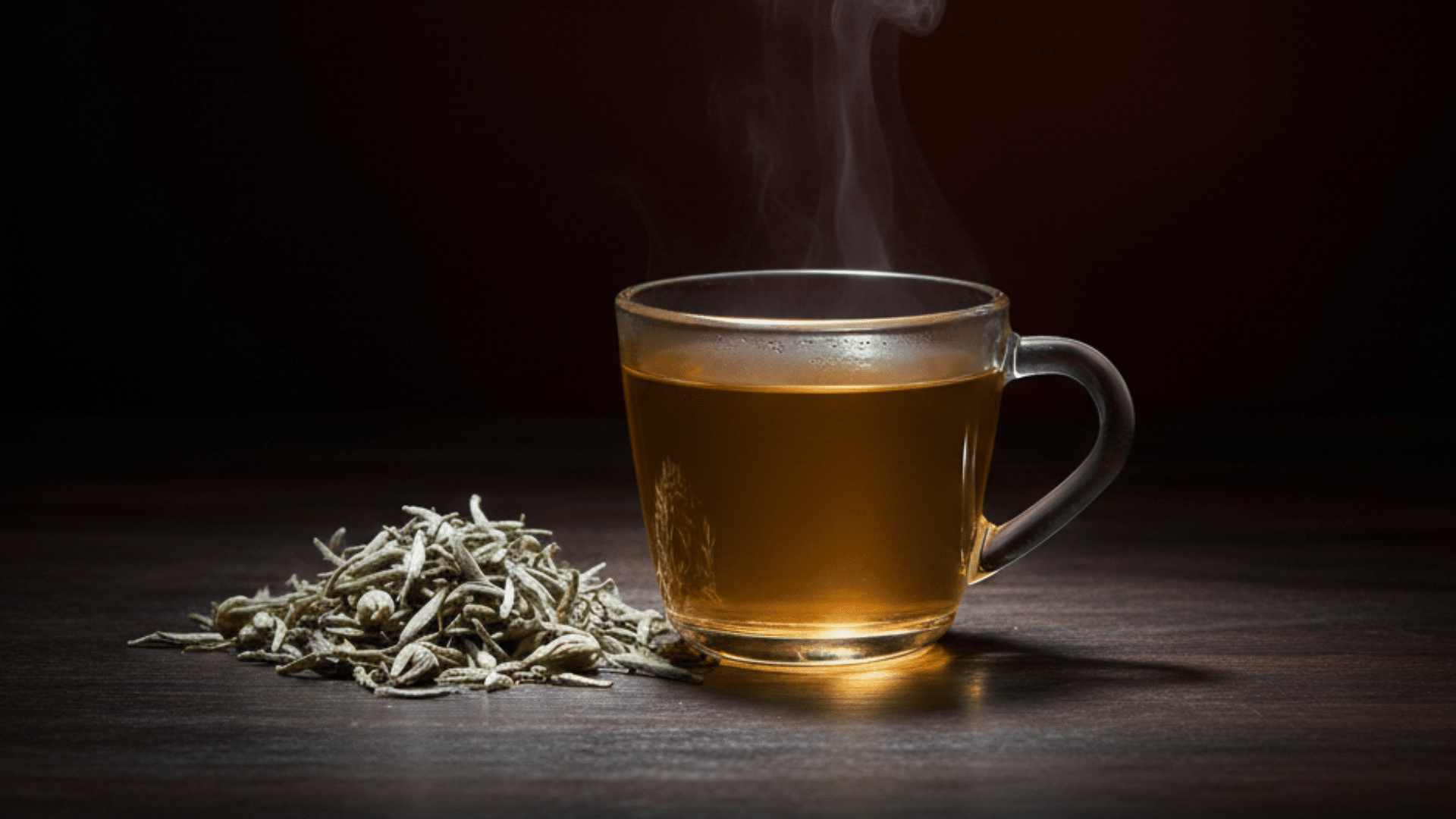
Light brew (cool water, short steep): Usually contains around 10–20 mg of caffeine, suitable if caffeine sensitivity is a concern.
Standard brew (hot water, moderate steep): Often provides about 15–35 mg of caffeine, which matches how most people prepare white tea daily.
Strong brew (hot water, long steep, bud-heavy): Can reach 40–75 mg of caffeine, closer to green tea levels in strength.
Why these ranges matter: They help estimate caffeine intake more clearly instead of relying on vague averages per cup.
What Actually Controls Caffeine in White Tea
Several factors determine how much caffeine ends up in white tea, including leaf type, temperature, steeping time, and quantity used.
1. Buds vs. Leaves (Most Important Factor)
White tea made with more buds often contains more caffeine than leaf-heavy white tea. Tea buds are the plant’s newest growth, and they tend to hold more caffeine than older leaves.
That is why bud-only teas can feel stronger, even when the taste is light. Leaf-heavy styles usually feel gentler because mature leaves often start with less caffeine. In simple terms, more buds usually mean more caffeine potential.
Common examples: Silver Needle is often higher, White Peony sits in the middle, and Shou Mei is often lower because it uses more mature leaves.
2. Brewing Temperature
Water temperature strongly changes how much caffeine moves from the leaf into your cup. Hotter water pulls caffeine out faster and in higher amounts. That is why the same white tea can feel mild at one temperature and stronger at another.
Cooler water still extracts flavor, but it usually pulls less caffeine during the same steep time. If you want a lighter caffeine result, lower the temperature and keep the steep short.
If you want a stronger cup, use hotter water while keeping the taste balanced by not over-steeping the leaves.
3. Steeping Time
Steeping time is one of the simplest ways to change caffeine levels. The longer you steep, the more caffeine you extract.
The first few minutes usually release a big share of what you will get from that steep. After that, extraction continues, but the increase is slower.
A short steep can still give a flavorful cup with less caffeine, especially if you use cooler water. A long steep can push caffeine much higher, even with the same leaves. If caffeine is a concern, start with a short steep and adjust in small steps.
4. Leaf Quantity (Grams or Teaspoons)
How much tea you use per cup changes caffeine concentration directly. More tea leaves in the same amount of water usually means more caffeine in the finished drink.
This is why “one cup” comparisons can be misleading. A light scoop and a heavy scoop can produce very different results. Tea bags can also extract more caffeine quickly because the tea is often cut smaller, which increases the surface area in water.
Loose-leaf tea often has larger pieces, so extraction can be slower and easier to control. Measuring by grams gives the most consistent results.
White Tea vs. Other Teas: Clear Comparison

Caffeine in tea is never exact, but comparing average ranges helps you judge what fits your routine. The numbers below assume an 8-oz cup, brewed in a typical way.
| Drink (8 oz / 240 ml) | Typical caffeine range (mg) |
|---|---|
| White tea | 6–75 |
| Green tea | 20–45 |
| Oolong tea | 30–60 |
| Black tea | 40–70 |
| Coffee (brewed) | 95–200 |
| Herbal tea (not true tea) | 0 |
Use this table to spot quick patterns. White tea is often lower than black tea, but a strong, bud-heavy white tea can match some green or oolong cups. Coffee still sits much higher than tea in most cases.
Caffeine Per Teaspoon and Per Gram
Most caffeine numbers are listed “per cup,” but that can be misleading because people use different amounts of tea. A more useful way is to think in teaspoons or grams.
As a simple estimate, 1 teaspoon of loose white tea is often around 2 grams, while 2 teaspoons is often around 4 grams.
If you brew both cups the same way, the 2-teaspoon cup will usually feel stronger because it starts with more caffeine available to extract.
Tea bags can also hit harder than you expect because the tea inside is often cut into smaller pieces, which release caffeine faster in hot water.
Using teaspoons or grams helps you control your intake with more consistency than relying on “per cup” numbers alone.
Re-Steeping White Tea: Total Caffeine Across Multiple Infusions
Re-steeping white tea changes how caffeine is released, spreading stimulation across cups instead of delivering a strong effect at once, slowly.
- First steep extracts most caffeine, especially during the first few minutes when caffeine releases fastest into the water.
- Second and third steeps still contribute, but each infusion usually contains less caffeine than the one before.
- Total caffeine spreads out, which reduces sudden stimulation and helps avoid sharp energy changes.
- White tea feels smoother over time because caffeine intake is divided across several lighter cups rather than one strong brew.
Cold Brew White Tea: Lower Caffeine or Just Smoother?
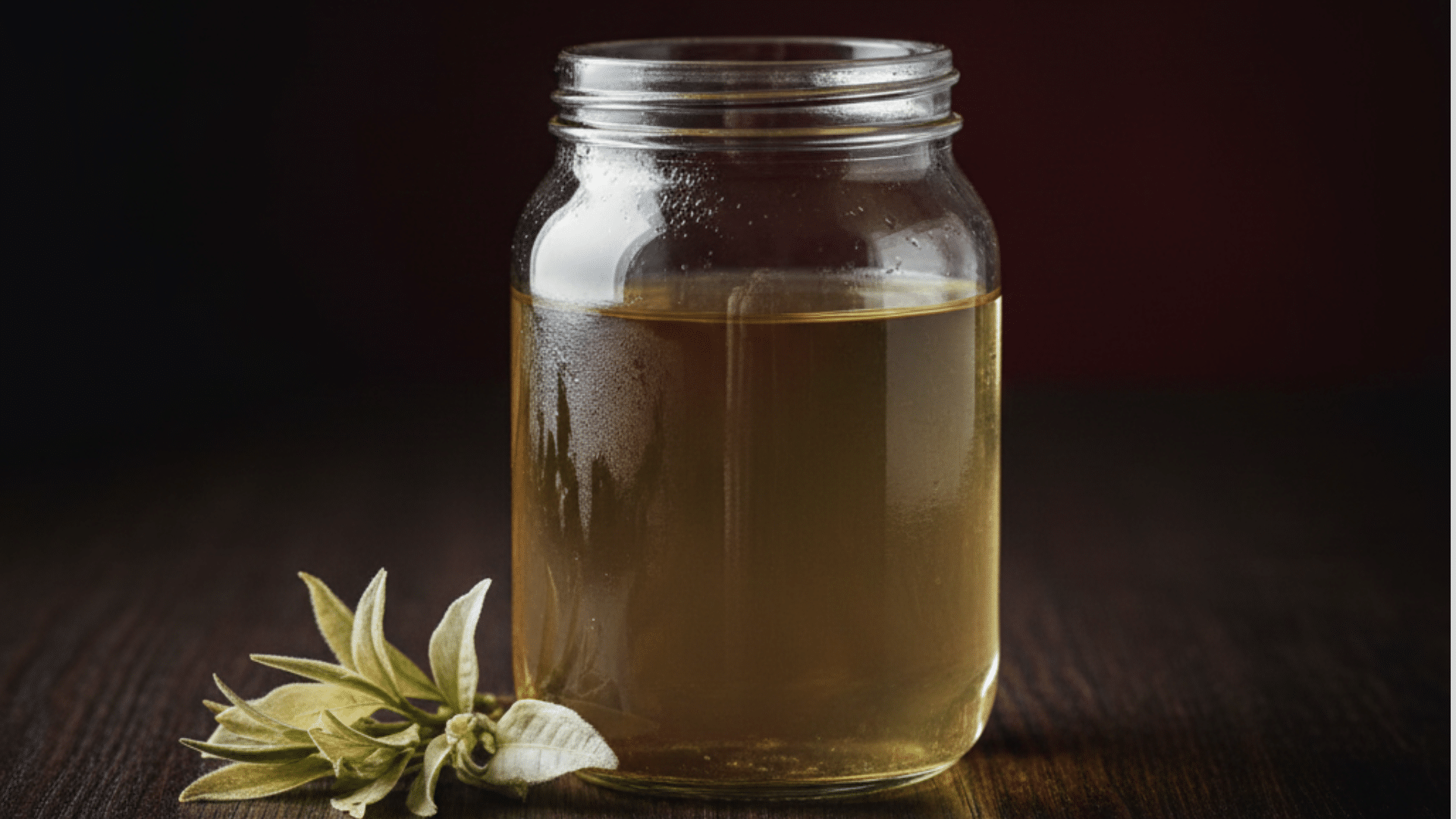
Cold brewing white tea often results in lower caffeine, but the method still matters. Cold water pulls caffeine from tea leaves much more slowly than hot water.
Because of this, a short cold brew usually contains less caffeine than a hot cup. However, long steep times can change that. Leaving white tea in cold water for many hours allows caffeine to keep releasing, which can add up by the time you drink it.
To keep caffeine low, use fewer leaves, shorten the steeping to four to six hours, and strain the tea once it tastes ready.
Compared to hot brewing, cold brew often feels gentler because caffeine enters your system more gradually, even when total intake is similar.
Does Aged White Tea Have Less Caffeine?
Aged white tea often feels lower in caffeine because time slowly changes what happens inside the tea leaves. As white tea ages, natural chemical reactions continue at a slow pace.
During this process, some caffeine bonds with other compounds found in the leaf. When caffeine binds this way, less of it transfers into the water during brewing. This does not remove caffeine completely, but it can reduce how strongly it affects you.
Many people notice that aged white tea feels easier on the body, even when brewed in similar amounts.
Because of this softer effect, aged white tea is often a better choice if caffeine sensitivity is a concern or if you prefer a calmer drinking experience later in the day.
How to Reduce Caffeine in White Tea (Step-by-Step)
Small changes in tea choice and brewing method can significantly lower caffeine while still keeping flavor balanced and enjoyable.
- Choose leaf-heavy white teas instead of bud-focused styles
- Use cooler water rather than near-boiling temperatures
- Shorten steeping time to one or two minutes
- Use fewer tea leaves per cup
- Try aged white tea for a softer effect
Is White Tea Good for Caffeine-Sensitive People?
White tea can work for caffeine-sensitive people when it is brewed with care. Using cooler water, shorter steep times, and smaller amounts of tea helps keep caffeine lower.
Leaf-heavy white teas are often a better option than bud-focused types, which may feel stronger. However, white tea still contains caffeine, so it may not suit everyone.
If sleep problems, anxiety, or heart sensitivity are concerns, intake should stay limited, especially later in the day. Extra caution is often advised during pregnancy, since caffeine tolerance can change.
It also helps to understand the difference between low caffeine and caffeine-free. White tea is considered low caffeine, but it is not caffeine-free. Herbal teas are the only option that naturally contain no caffeine at all.
Final Summary
White tea does contain caffeine, but the amount changes based on leaf type, brewing time, water temperature, and how much tea you use.
Bud-heavy teas often feel stronger, while leaf-heavy or aged options tend to feel gentler. Brewing choices matter more than most people expect, and small adjustments can help you stay comfortable.
I find that once you understand these basics, white tea becomes much easier to enjoy without guesswork.
Knowing how white tea caffeine content works gives you more control over energy and timing.
How do you usually brew white tea, and have you noticed how it affects you? If this helped, take a moment to explore other blogs for more tea and brewing insights.