
Replacing a bathroom vanity can make a big difference in how a bathroom looks and functions. A new cabinet, countertop, sink, and faucet can quickly modernize the space without requiring a full remodel. But before removing the old vanity or ordering a new one, it is important to check the existing plumbing layout.
Many DIY renovation delays happen because the new vanity does not line up with the current supply lines, drain pipe, shut-off valves, or P-trap. A few simple checks before installation can help you avoid cutting into the cabinet, making last-minute hardware store trips, or calling a plumber unexpectedly.
1. Check the Hot and Cold Supply Line Location
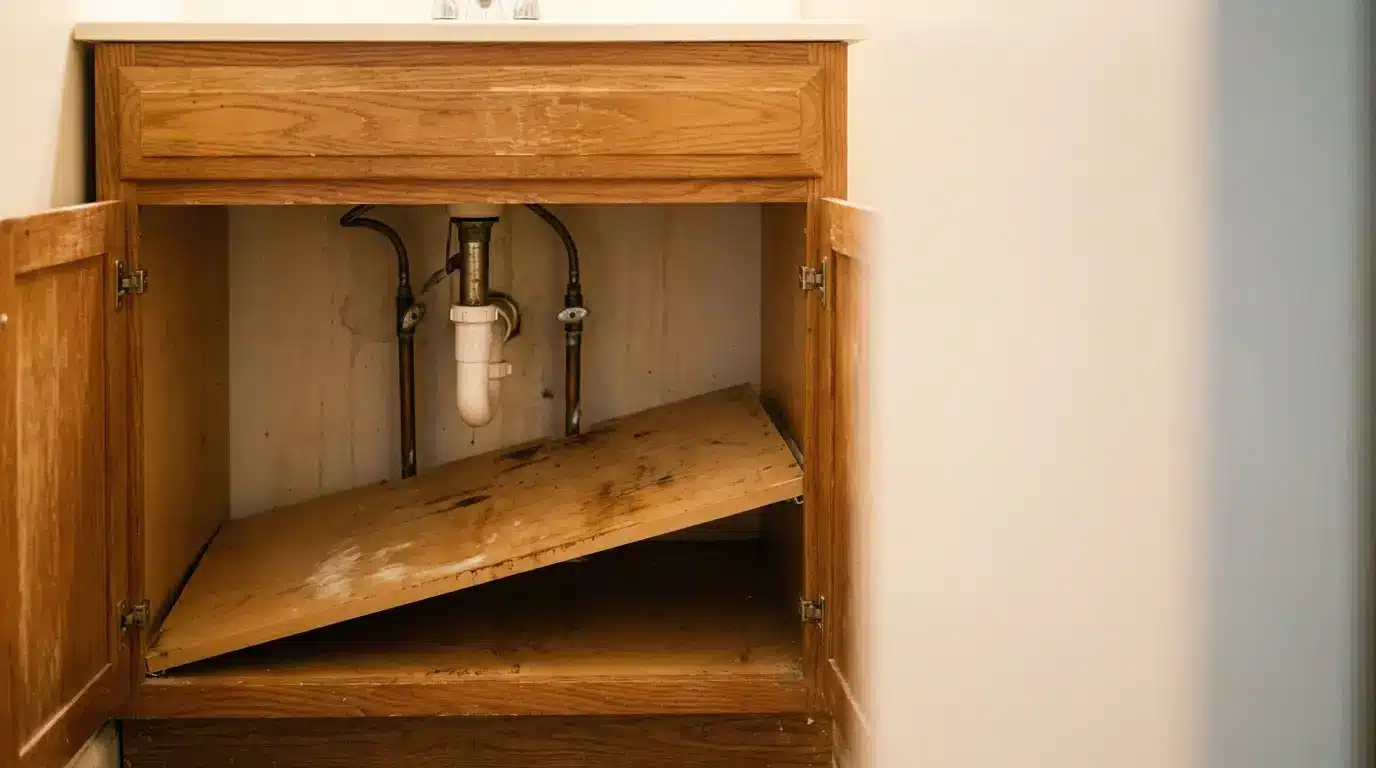
The first thing to look at is where the hot and cold water supply lines come out of the wall or floor. Most bathroom vanities have supply lines located through the back wall, but in some older homes, they may come up through the floor.
Before buying a new vanity, measure the distance from the floor to the supply lines and the distance between the hot and cold lines. Then compare those measurements with the open space inside the new vanity cabinet.
This matters because some modern vanity cabinets have drawers, shelves, or center dividers that may block the existing pipes. If the supply lines do not fit within the open plumbing space, you may need to modify the cabinet or adjust the plumbing layout.
2. Measure the Drain Height
The bathroom sink drain line is another key measurement. The drain pipe usually comes out of the wall and connects to the sink using a P-trap. If the drain opening is too high, too low, or too far to one side, the new sink may not connect easily.
Before removing the old vanity, measure the drain height from the floor. Also note whether the pipe is centered under the sink or slightly offset. This is especially important if you are switching from a traditional vanity with doors to a vanity with drawers.
Some vanities have a U-shaped drawer cutout for the drain, but not all of them offer enough space. Checking this early can help you choose a vanity that works with your current plumbing.
3. Inspect the Shut-Off Valves
Shut-off valves are small but very important. They allow you to turn off water to the faucet without shutting off water to the entire house. Before replacing a vanity, test both the hot and cold shut-off valves.
Turn each valve gently and check whether it closes fully. If the valve feels stuck, leaks, or does not stop the water completely, it may need to be replaced before the new vanity goes in. This is much easier to do when the old cabinet is removed and the area is open.
If you need replacement valves, supply hoses, fittings, or other bathroom plumbing parts, you can check a plumbing supply store like PlumbingSell before starting the project. Having the right parts ready can prevent delays once the old vanity is already out.
4. Confirm Faucet Connection Type
Not every faucet connects the same way. Some faucets include built-in flexible supply hoses, while others require separate water supply lines. Before installation, check the faucet connection size and the type of shut-off valve connection you have.
Common bathroom faucet supply connections often involve 3/8-inch compression connections, but you should always confirm the specific faucet and valve requirements. If the supply hoses are too short, old, or mismatched, it is better to replace them during the vanity installation.
This is also a good time to inspect for corrosion, worn rubber washers, or old braided hoses. Reusing old supply lines may seem convenient, but new lines can provide a cleaner and more reliable setup.
5. Check Cabinet Clearance
A new vanity may look perfect online, but the inside layout matters just as much as the outside style. Before purchasing, check whether the cabinet has drawers, shelves, a back panel, or a center divider that may interfere with the plumbing.
Pay attention to:
- Whether the drain line will fit behind the drawers
- Whether the shut-off valves are easy to reach
- Whether supply hoses can bend naturally without being pinched
- Whether the P-trap has enough room below the sink
If the cabinet has a solid back panel, you may need to cut openings for pipes. That can be done, but it is much easier when planned carefully instead of rushed during installation.
6. Plan the P-Trap Alignment
The P-trap is the curved drain piece under the sink. It holds a small amount of water to help block sewer gases from coming back into the bathroom. For the vanity installation to work properly, the sink drain tailpiece needs to line up with the wall drain enough for the P-trap to connect correctly.
If the new sink drain is farther forward, farther back, or off-center compared with the old one, you may need extension pieces or a different drain configuration. Avoid forcing the pipes into awkward angles, as this can lead to leaks or poor drainage.
Before installation day, compare the new sink basin position with your current drain location. If the alignment looks tight, it is smart to prepare the necessary drain fittings ahead of time.
7. Do a Dry Fit Before Final Installation
Once the old vanity is removed, place the new vanity in position before permanently fastening it to the wall. This dry fit helps you confirm that the supply lines, drain pipe, shut-off valves, and P-trap all have enough clearance.
This step can reveal problems early, such as a drawer hitting a valve or the drain pipe being too high for the cabinet opening. It is much easier to solve these issues before the countertop, sink, and faucet are fully installed.
Final Thoughts
Replacing a bathroom vanity is a manageable DIY project, but plumbing details should be checked before the work begins. Supply line location, drain height, shut-off valve condition, faucet connections, cabinet clearance, and P-trap alignment can all affect how smoothly the installation goes.
The best approach is to measure first, inspect the existing plumbing, and prepare any needed replacement parts before removing the old vanity. For homeowners planning a bathroom update, browsing essential plumbing fittings, valves, supply lines, and drain parts from PlumbingSell can help make the project more organized from the start.
A little planning can prevent a simple vanity replacement from turning into a frustrating renovation delay.