

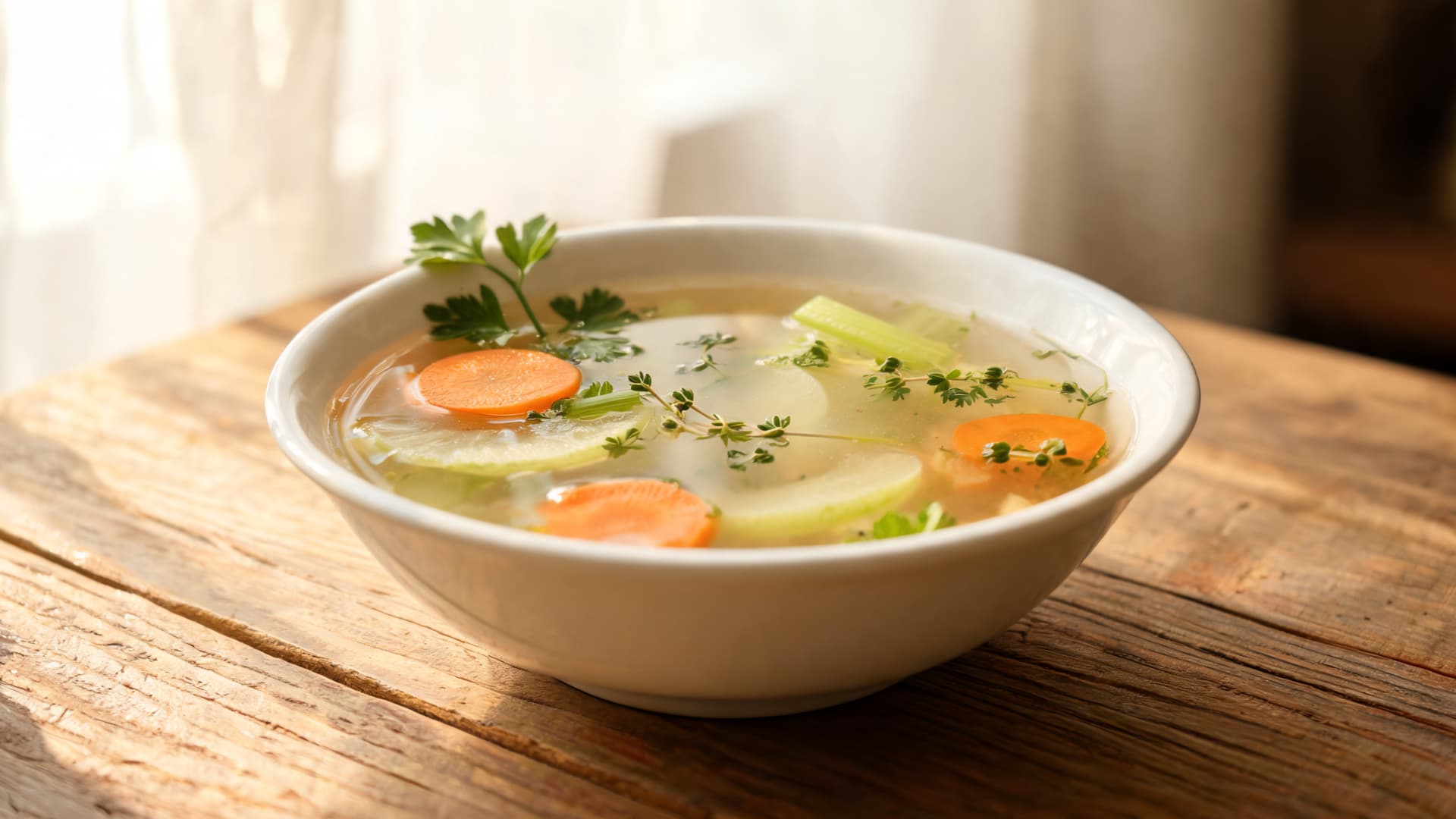
Ever wondered why a simple bowl of broth feels so comforting yet so light? You try soups that feel heavy or overly creamy, and still end up wanting something clean and easy on the stomach.
What is clear soup? It is a light, transparent broth made by simmering vegetables, herbs, or protein in clean water to produce a flavorful liquid. You’ll see how it’s made, what ingredients work best, and how it fits into everyday meals.
This breakdown helps you understand clear broth soup in a practical way so you can confidently prepare it at home without confusion.
What Is a Clear Soup?
Clear soup is a transparent liquid soup made by simmering vegetables, meat, or bones in water until their natural flavors are fully extracted. Unlike thick soups, it does not use cream, flour, or starch, which keeps the texture light and clean.
Clear broth soup is often enjoyed on its own as a light meal or used as a base for other dishes.
The reason clear soup stays transparent comes down to simple food science. Slow simmering allows flavors to gently release into the liquid. Avoiding starches and creams also prevents cloudiness, keeping the soup light, clear, and easy to digest.
Health Benefits of Clear Broth Soup
Clear broth soup is often chosen for its light texture and simple nutritional profile. It provides hydration and nutrients without heaviness, making it suitable for everyday wellness and recovery-focused diets.
- Supports Digestion: The light, clear liquid is easy for the stomach to process and reduces digestive strain, making it ideal after illness or for sensitive digestion.
- Hydrates Efficiently: Composed mostly of water, it replenishes fluids and electrolytes lost through sweating, illness, or low food intake.
- Low in Calories: Without cream, butter, or starch, it provides a filling option while keeping calorie intake minimal.
- Nutrient-Rich: Simmering vegetables, herbs, or bone extracts, vitamins, minerals, and collagen into the broth for easy absorption.
- Gentle Recovery Food: Its low-fat and low-residue content makes it suitable for post-surgery, illness, or detox diets.
- Supports Immune Health: Broths made from chicken or bone provide trace minerals and amino acids that support immune function.
Overall, clear broth soup offers a simple balance of hydration, light nutrition, and digestive ease, making it a reliable choice for both wellness and recovery.
Common Ingredients Used in Clear Soup
Clear soup is made using simple, fresh ingredients that keep the broth light, clean, and easy to digest. Each ingredient adds subtle flavor without making the soup heavy or cloudy.
- Vegetables: carrots, celery, cabbage, onion
- Aromatics: ginger, garlic, fresh herbs (parsley, coriander, thyme)
- Protein options: chicken, tofu, fish, bones (for broth base)
- Seasoning basics: salt, black pepper, soy sauce (optional in some variations)
- Optional add-ins: mushrooms, spring onions, green beans, cauliflower
| Best Ingredients | Why They Work |
|---|---|
| Carrots & Celery | Add natural sweetness and build broth depth |
| Ginger & Garlic | Enhance aroma and support digestion |
| Chicken Bones | Create a nutrient-rich, clear, flavorful stock |
Understanding the core ingredients makes clear soup much easier to prepare and customize at home.
How to Make Clear Soup at Home (Step-by-Step Method)
Clear soup is made through a simple process of simmering ingredients, extracting flavor, and finishing with light seasoning. Each step helps build a clean, transparent broth with natural taste.
Step 1: Wash and Chop Ingredients
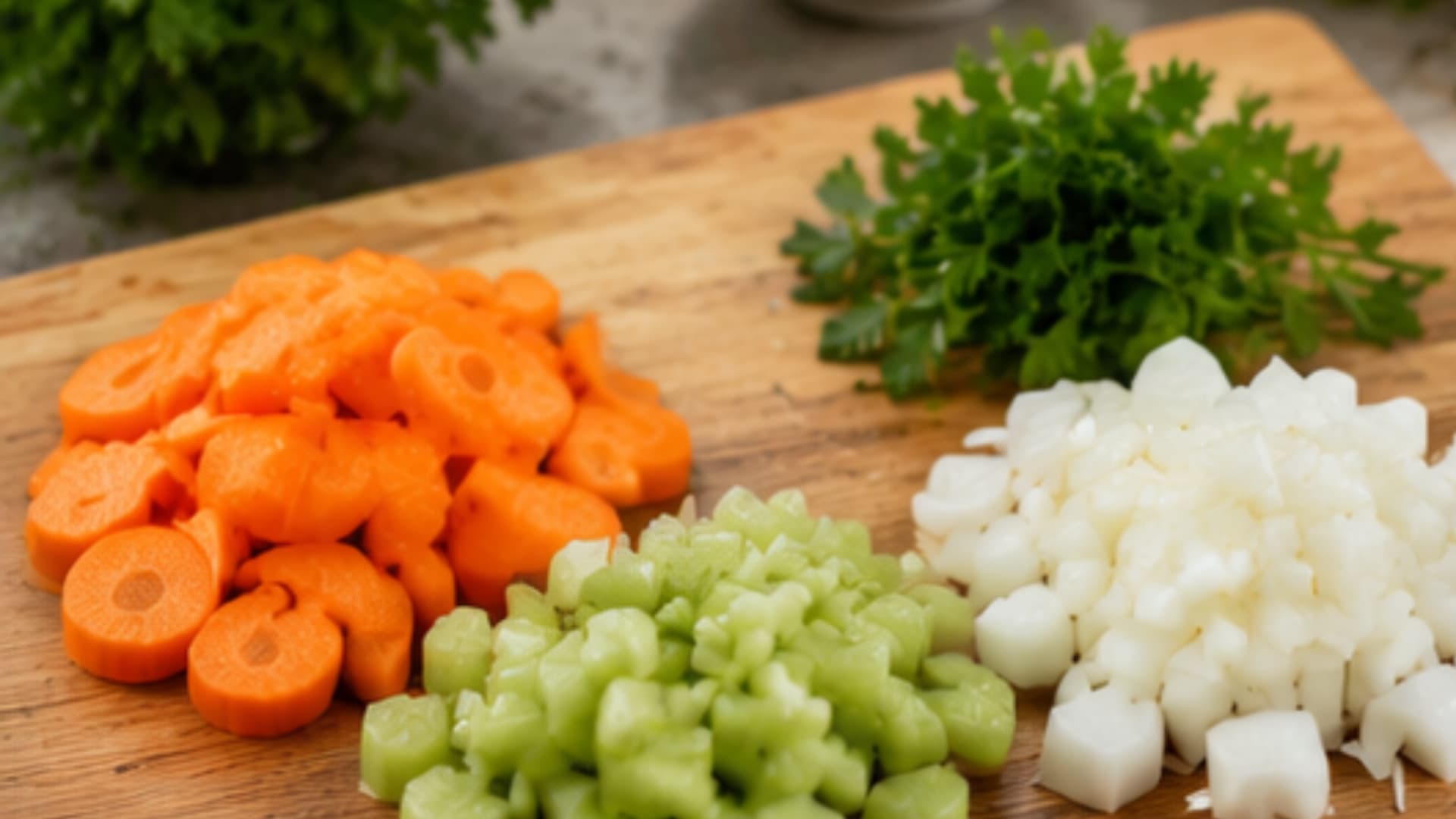
Clean all ingredients thoroughly to remove dirt, surface impurities, and any residue that could cloud the broth or affect taste.
After washing, chop the vegetables or protein into medium-sized pieces. This size is ideal because it allows slow, even extraction of flavors during simmering without breaking down too quickly.
Smaller cuts may overcook, while larger pieces may not release enough flavor.
Step 2: Simmer Vegetables or Meat in Water
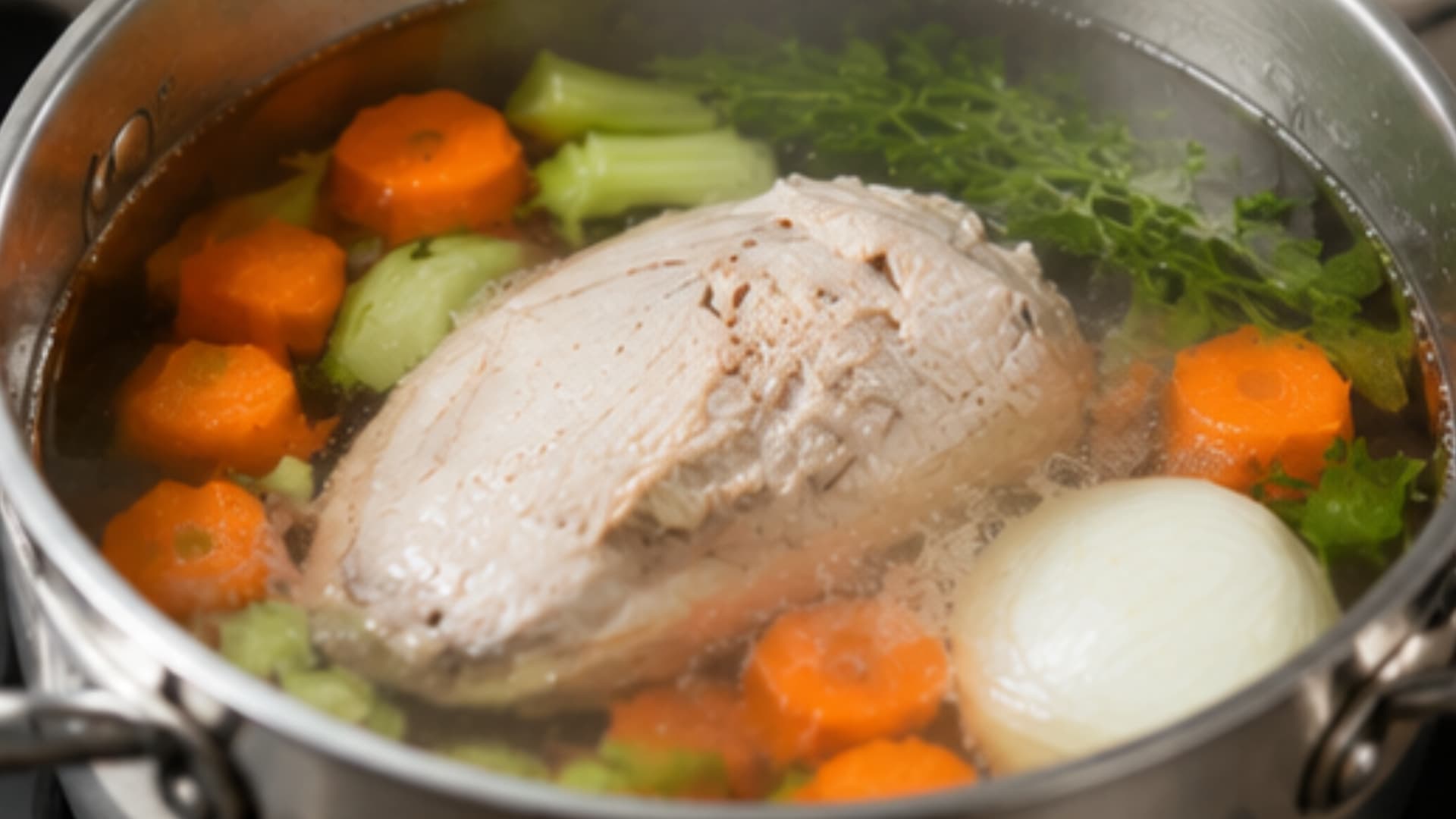
Start by adding fresh vegetables or protein options like chicken, fish, or bones into a pot of cold or room-temperature water. Starting with cold water helps extract flavors more gradually and improves clarity.
Bring the pot to a gentle boil, then immediately reduce the heat to a low simmer.
Slow simmering allows amino acids, minerals, and natural sugars to diffuse into the liquid, building a balanced, clean-tasting base without bitterness or heaviness.
Step 3: Skim Impurities While Cooking
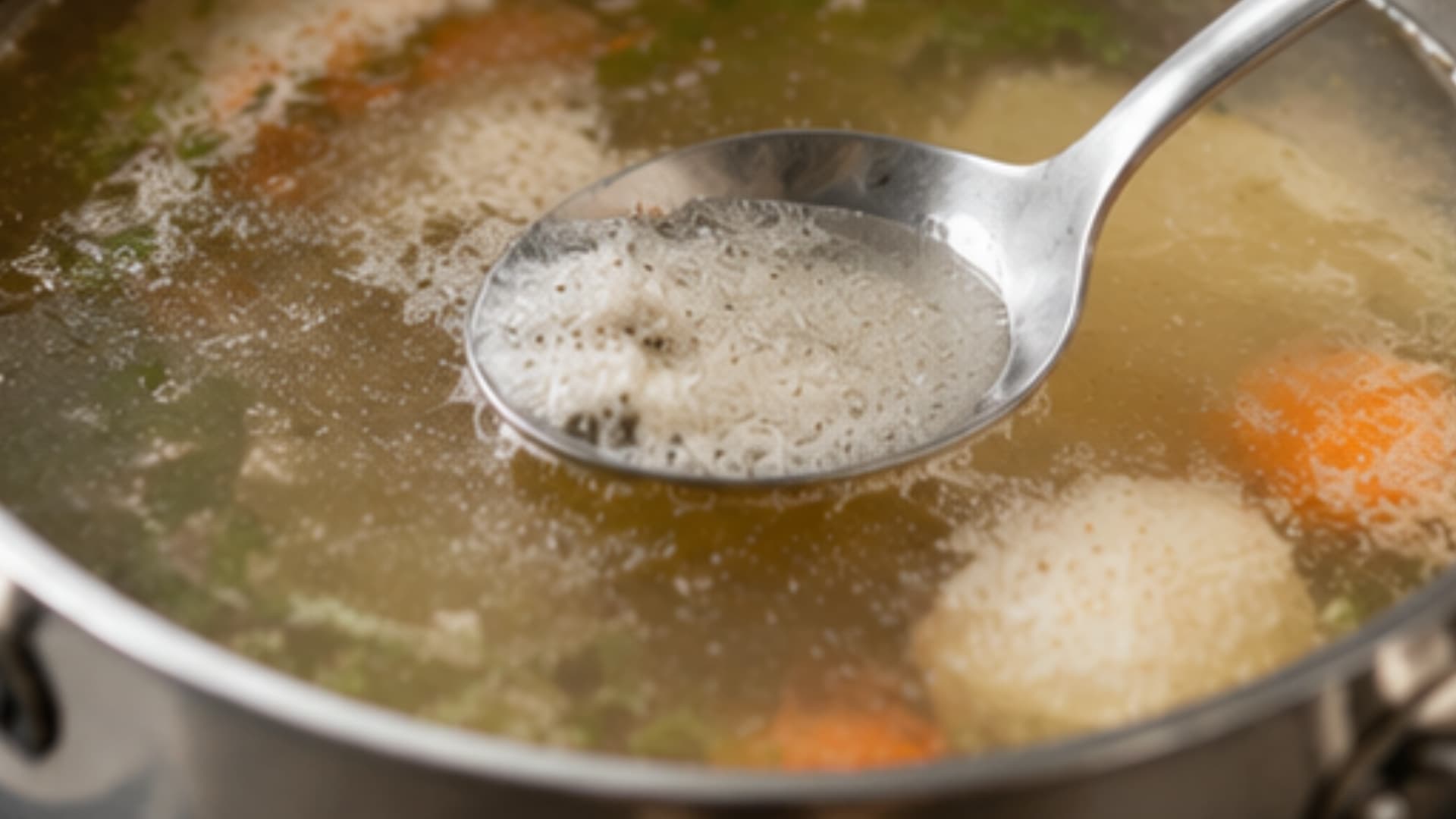
As the soup simmers, foam and impurities rise to the surface due to proteins and fine particles released from vegetables or meat.
Removing them regularly with a spoon helps maintain a cleaner, clearer broth and prevents off-flavors from developing during long simmering.
Tip: I usually skim in the first 10–15 minutes when most impurities appear quickly, as this is when the broth is most active.
Step 4: Strain to Remove Solids
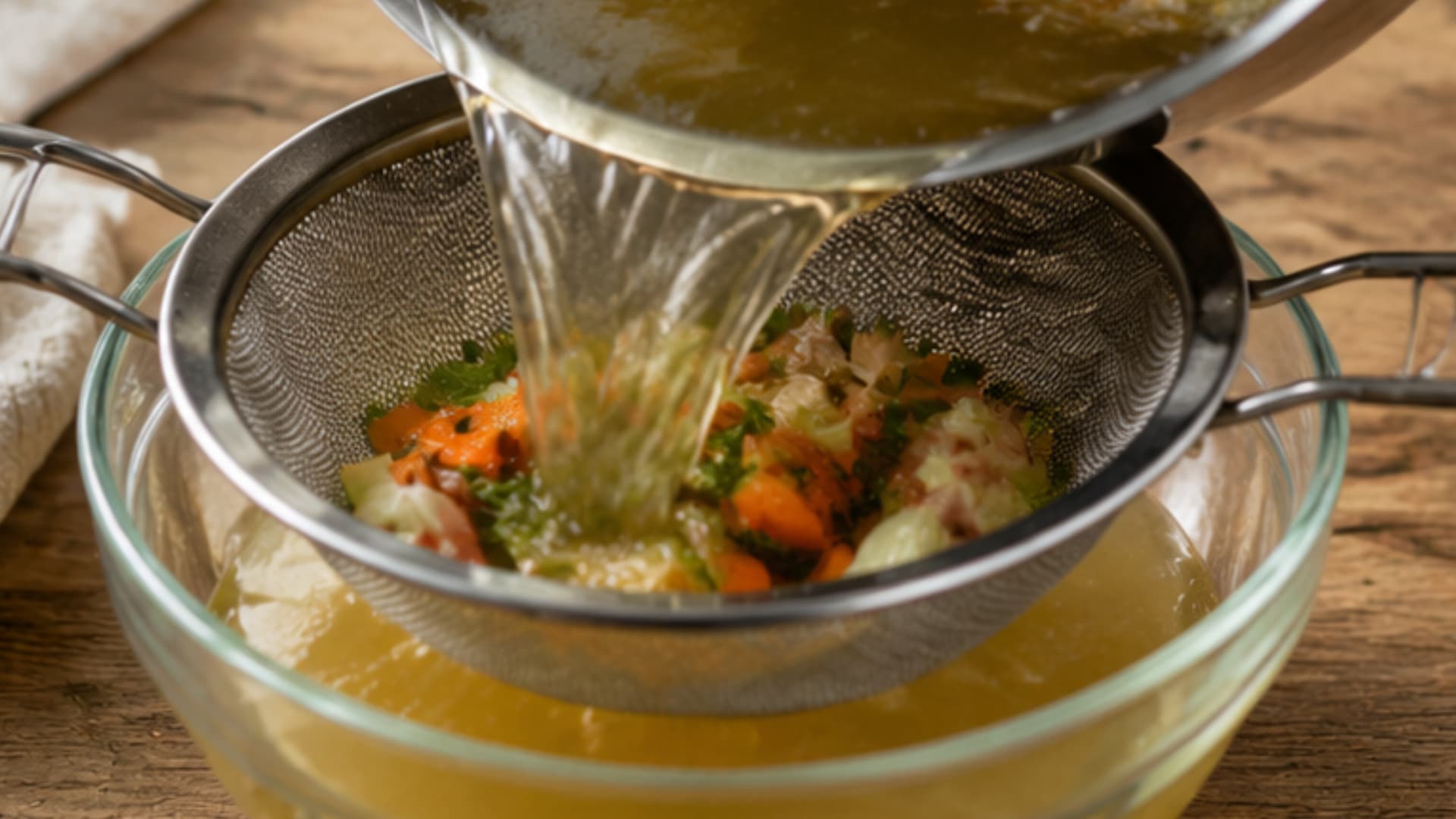
Once the ingredients have simmered and the broth has developed a balanced flavor, strain it using a fine sieve or muslin cloth to achieve maximum clarity. This step removes softened vegetables and protein fibers, ensuring a smooth, transparent liquid.
For better results, avoid pressing the solids too hard while straining, as this can push tiny particles back into the broth and reduce clarity.
If you want an even cleaner finish, strain the liquid twice using a finer mesh on the second pass.
Step 5: Season with Salt, Herbs, or Spices
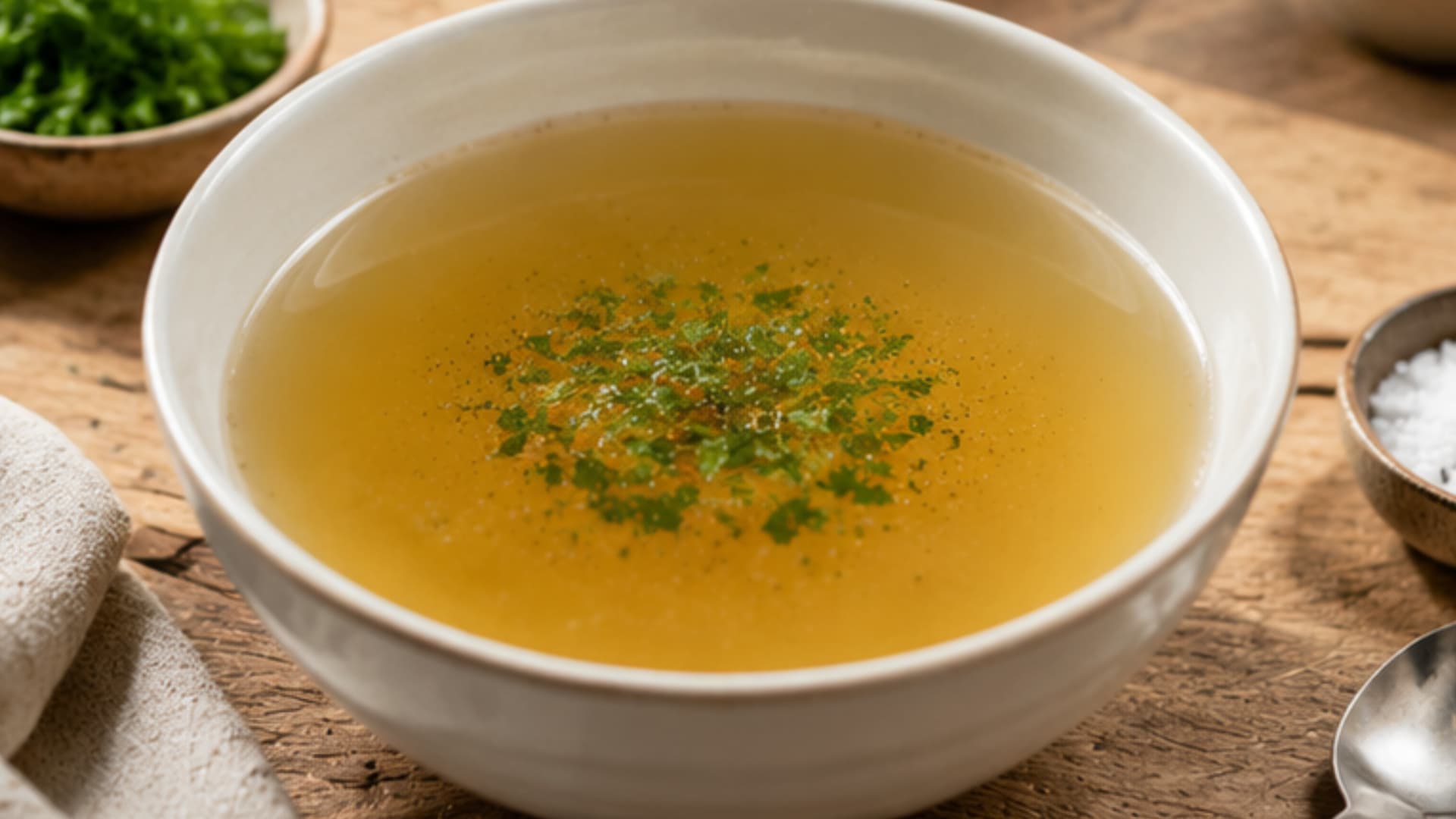
Finally, lightly season the strained broth with salt, pepper, or herbs like parsley or coriander, adding them gradually and tasting as you go.
Over-seasoning can mask the delicate vegetable or protein notes that develop during simmering. A small pinch at a time helps maintain balance, allowing the natural sweetness, aroma, and lightness of the broth to remain the focus.
Popular Variations of Clear Soup
Clear soup comes in many simple variations across cuisines. Each version uses basic ingredients but changes slightly in flavor, protein choice, and seasoning style while keeping the broth light and transparent.
1. Vegetable Clear Soup
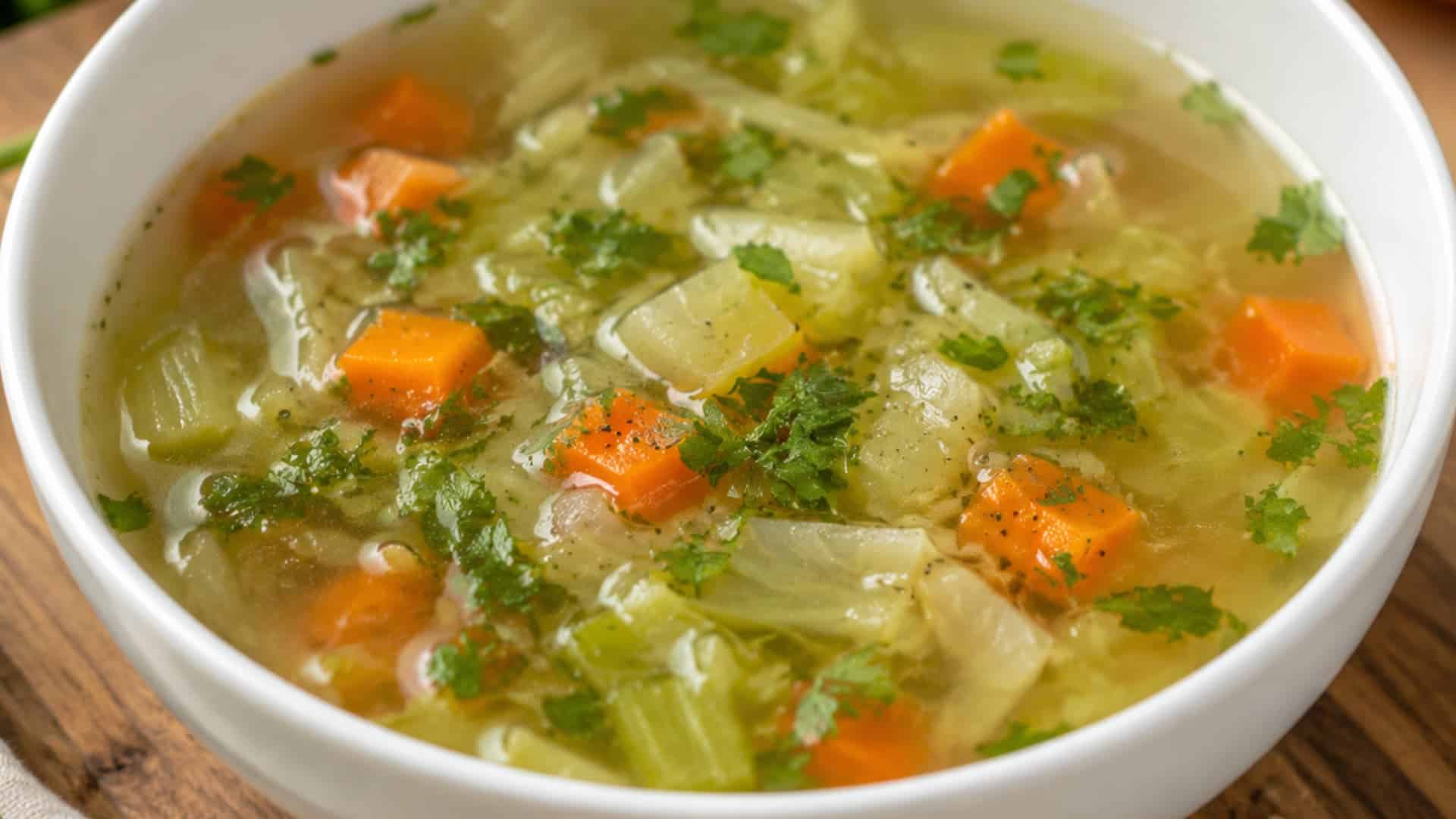
Vegetable clear soup is a light, transparent broth made by simmering fresh vegetables in water until their natural flavors are fully released. It is simple, easy to digest, and commonly used for light meals or recovery diets.
Ingredients:
- 1 medium carrot, chopped
- 2 stalks celery, chopped
- ½ cup cabbage, shredded
- 1 medium onion, sliced
- 2–3 cloves garlic, crushed
- 4 cups water
- ½ tsp salt (adjust to taste)
- ¼ tsp black pepper (freshly ground)
- 1–2 tbsp fresh herbs (optional: parsley or coriander)
How to prepare:
- Wash and chop all vegetables into medium-sized pieces to ensure even flavor extraction during cooking.
- Add the chopped vegetables to a pot of water and bring it to a gentle boil.
- Reduce the heat and let it simmer for 30–40 minutes so the vegetables slowly release their natural flavors into the broth.
- Skim off any foam or impurities from the surface while simmering to keep the broth clean and clear.
- Once the vegetables are tender and the broth is well-flavored, strain the mixture through a fine sieve to remove all solids.
- Season lightly with salt and black pepper, keeping the flavor simple and balanced.
- Serve hot, optionally garnished with fresh herbs for added freshness and aroma.
2. Chicken Clear Soup
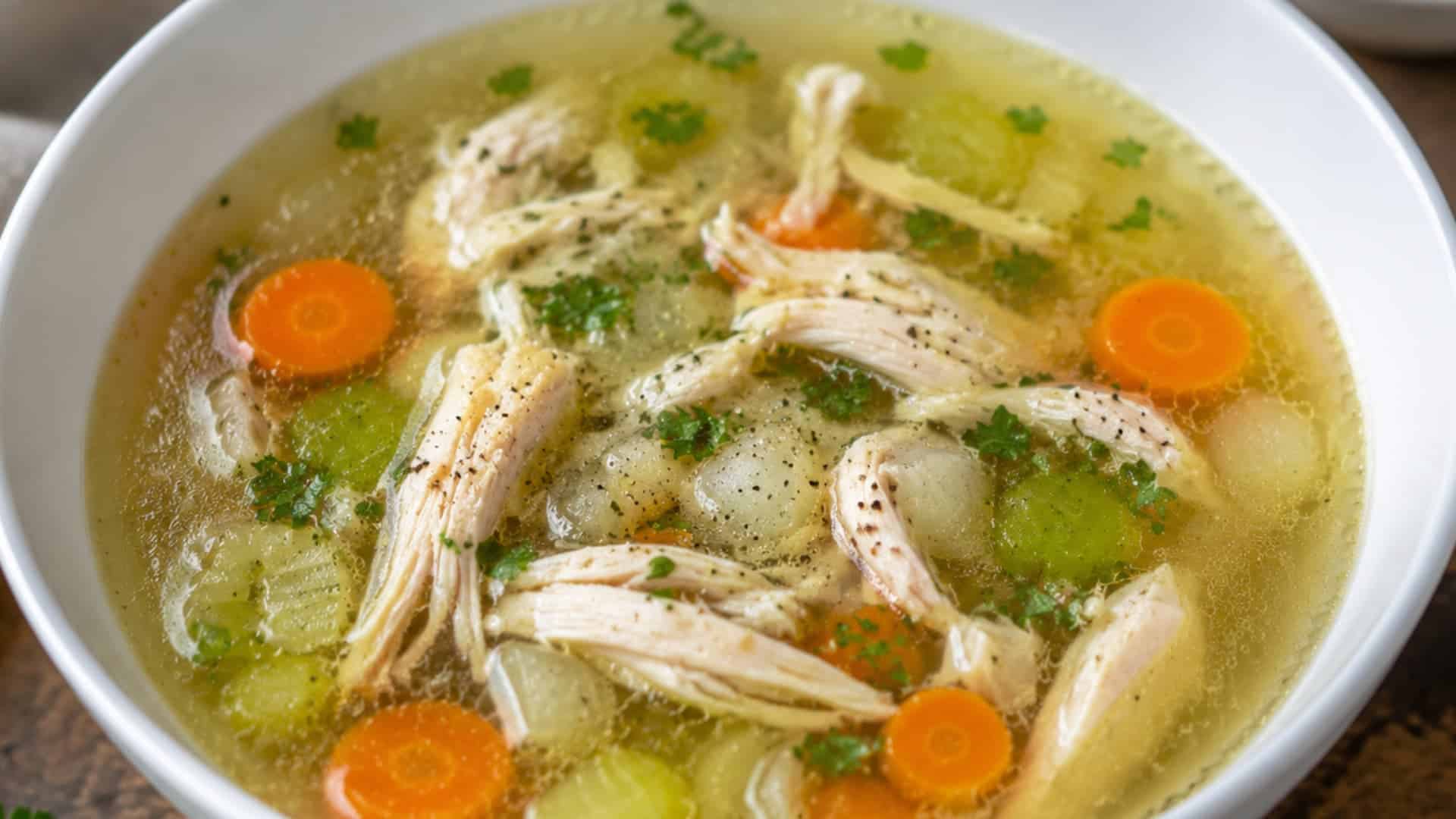
Chicken clear soup is a light, nourishing broth made by simmering chicken with vegetables and aromatics. It’s high in protein, gentle on the stomach, and perfect for a warm, comforting meal.
Ingredients:
- 250–300 g chicken with bones
- 1 medium onion, sliced
- 1 medium carrot, chopped
- 2 stalks celery, chopped
- 2–3 cloves garlic, crushed
- 4–5 cups water
- ½ tsp salt (adjust to taste)
- 1–2 tsp fresh herbs (optional: parsley, thyme)
How to prepare:
- Add chicken, vegetables, and water to a pot.
- Bring to a gentle boil, then reduce heat and simmer for 45–60 minutes until the chicken is tender.
- Skim off foam or impurities that rise to the surface while simmering to keep the broth clear.
- Strain the broth to remove solids, leaving a light, transparent liquid.
- Shred the cooked chicken and add it back to the strained broth if desired.
- Season lightly with salt and herbs, keeping the flavor clean and balanced.
- Serve warm, optionally garnished with fresh herbs for extra aroma.
3. Indian-Inspired Light Soups
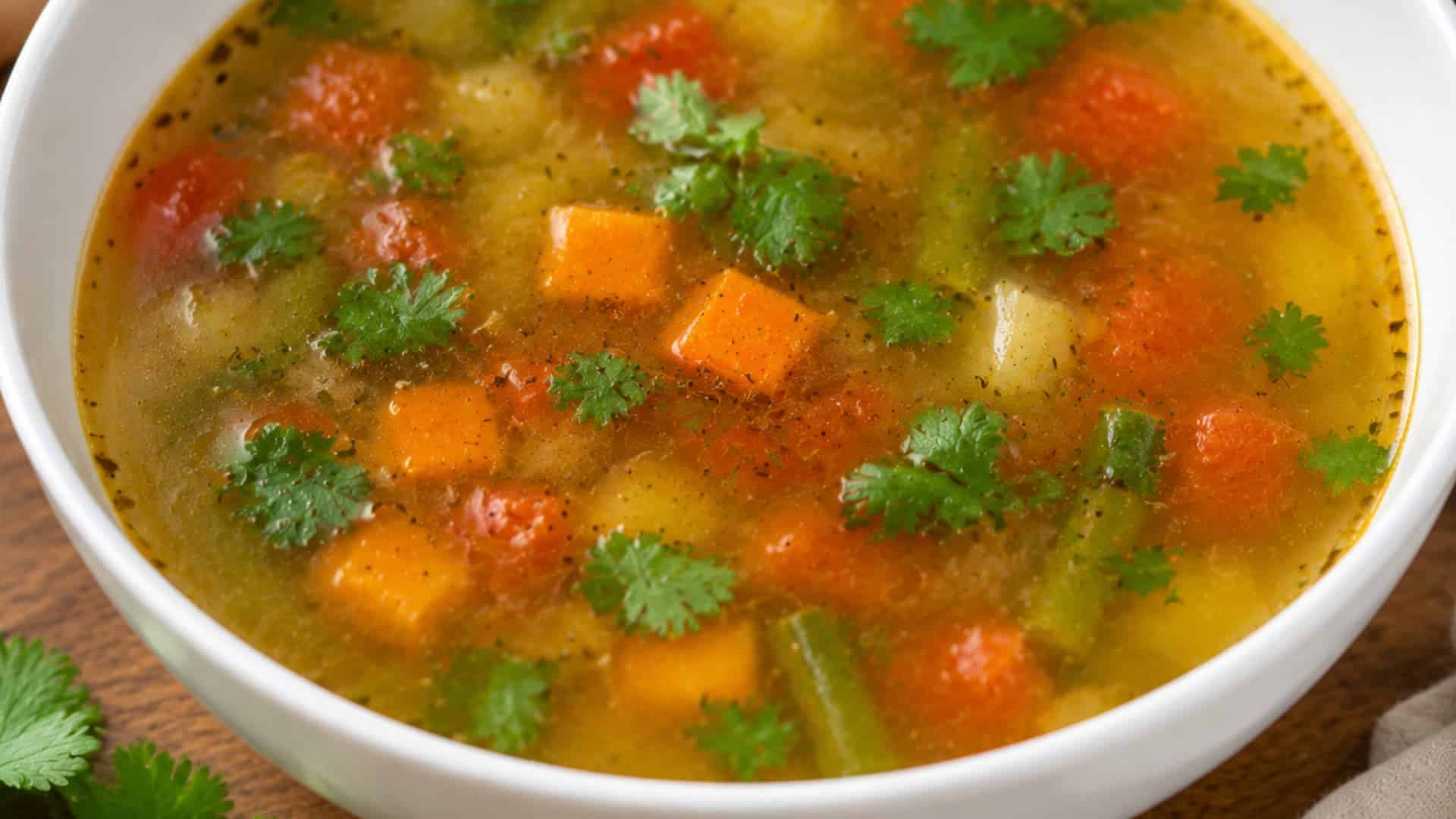
Indian-inspired clear soups are lightly spiced broths made using everyday Indian aromatics and vegetables. They are warm and soothing, focusing on simple spices that enhance flavor without making the soup heavy or thick.
Ingredients:
- Tomato – 1 medium, chopped
- Black pepper – ½ tsp, freshly ground
- Garlic – 2–3 cloves, crushed
- Cumin – ½ tsp
- Coriander leaves – 1–2 tbsp, chopped
- Mixed vegetables – 1 cup (carrot, beans, peas, etc.)
- Water – 4 cups
- Salt – ½ tsp (adjust to taste)
How to prepare:
- Add chopped tomatoes, vegetables, garlic, cumin, and water to a pot.
- Bring to a boil, then reduce the heat and simmer until the vegetables are tender and the flavors are well infused.
- Lightly mash or leave as is, depending on desired clarity.
- Strain the soup if a clearer consistency is preferred.
- Return the liquid to the heat and season with salt and black pepper.
- Simmer briefly to balance flavors without overcooking spices.
- Garnish with fresh coriander leaves and serve hot for a light, comforting finish.
4. Asian-Style Clear Soups
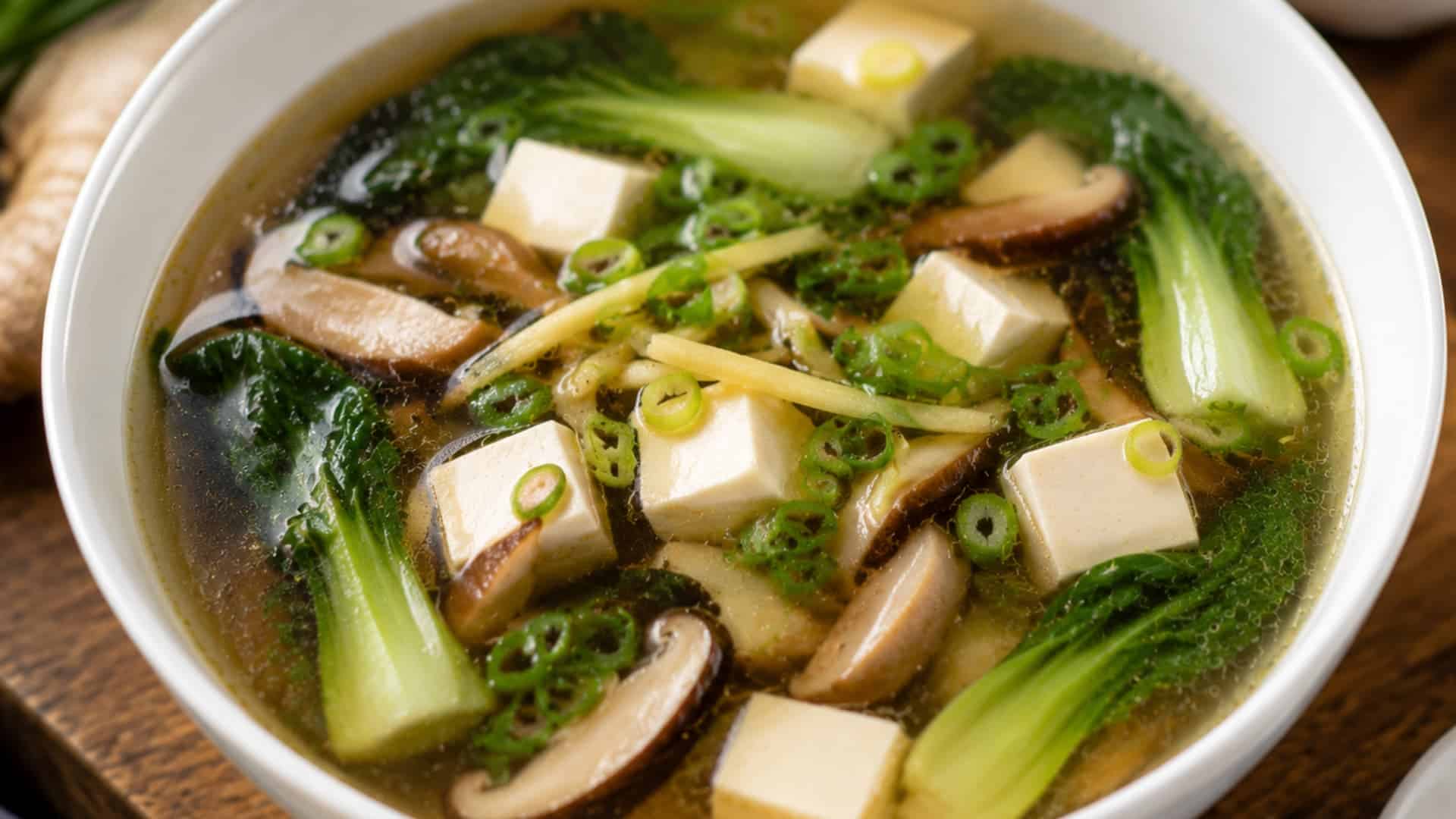
Asian-style clear soups are light, aromatic broths built on ingredients like ginger, garlic, and soy sauce. They are commonly found in East and Southeast Asian cuisine and are known for their clean flavor, warmth, and quick preparation.
Ingredients:
- Ginger – 1 inch piece, sliced
- Garlic – 2–3 cloves, crushed
- Soy sauce – 1–2 tbsp (adjust to taste)
- Mushrooms – 1 cup, sliced
- Bok choy – 1 cup, chopped
- Tofu – ½ cup, cubed
- Vegetable stock – 4 cups
- Spring onions – 2 tbsp, chopped (for garnish)
How to prepare:
- Add vegetable stock to a pot and bring it to a gentle simmer.
- Add sliced ginger and crushed garlic to infuse the broth with aroma.
- Add mushrooms and bok choy, cooking until just tender to retain texture.
- Add tofu cubes and simmer gently without breaking them.
- Season with soy sauce and a small amount of salt, adjusting to taste.
- Simmer briefly so flavors combine without overcooking the vegetables.
- Serve hot, garnished with chopped spring onions for freshness and aroma.
Clear soup vs Broth vs Consommé
Clear soup, broth, and consommé are all made from simmered ingredients, but they differ in preparation, clarity, and use in cooking.
| Aspect | Clear Soup | Broth | Consommé |
|---|---|---|---|
| Definition | A light, seasoned soup served as a dish | Basic liquid made by simmering vegetables, meat, or bones | Highly clarified and refined broth |
| Texture | Light, transparent, slightly seasoned | Thin liquid, may be slightly cloudy | Crystal-clear and polished |
| Preparation method | Simmer ingredients, strain, then season | Simmer ingredients and strain | Double-clarified using egg whites or refining techniques |
| Usage | Served directly as a light meal or starter | Used as a base for soups, sauces, and cooking | Served as a fine-dining appetizer |
| Flavor profile | Light, mild, gently seasoned | Rich base flavor depending on ingredients | Concentrated and refined flavor |
| Clarity level | Clear but rustic | Often slightly cloudy | Completely clear and refined |
Clear soup sits between broth and consommé in terms of refinement. It is more finished and ready to eat than broth, but less intensely clarified than consommé. Broth is mainly a cooking base, while consommé is a highly refined, restaurant-level preparation.
Frequently Asked Questions
How long can homemade clear soup be stored in the refrigerator?
Homemade clear soup can be stored in an airtight container for 3–4 days. Make sure it is cooled completely before refrigerating. Reheat gently to avoid overcooking vegetables or clouding the broth.
Is it possible to freeze clear soup with noodles or rice?
You can freeze the broth separately, but add the noodles or rice fresh when reheating. Freezing them often causes texture changes and makes them mushy, whereas the broth retains clarity and flavor well.
Can clear soup be used as a meal replacement?
Yes, clear soup can temporarily replace a meal when kept balanced with vegetables or protein. It is low in calories but still provides hydration and nutrients. However, it should not replace complete meals in the long term without dietary balance.
Can spices make clear soup unhealthy or heavy?
Spices do not make clear soup unhealthy, but overuse can overpower its light nature. Mild spices like pepper, ginger, and cumin enhance digestion and flavor without adding heaviness. The key is balance and avoiding thickening agents or excess oil.
The Bottom Line
Clear soup is more than just a light broth; it’s a simple cooking method that fits easily into everyday meals. You’ve seen how it works, what goes into it, and why it feels so easy on the body compared to heavier soups.
The idea behind what is clear soup is its clean preparation, basic ingredients, and balanced nutrition that supports light eating without effort. It can be used for recovery days, quick meals, or when you just want something gentle and warm.
Now you can confidently prepare it, adjust ingredients to your needs, and understand its value beyond taste.
Try making your own version and see how it fits into your routine, and share your experience or explore other light soup recipes next.