

I used to think Slow Food was just about eating more mindfully until I realized the same logic applies to everything you put on your body.
The movement that started in Italy decades ago as a defense against fast food homogenization was never really about speed at all. It was about origins, about knowing where ingredients come from and why that matters.
When heirloom tomato varieties started disappearing from Italian tables because nobody cared enough to preserve them, the Slow Food Presidia network formed to protect those vanishing crops. The ingredients had stories. The farms had names. The recipes had lineages worth fighting for.
Most of us absorb that philosophy without realizing how narrow our application of it really is. We’ll research the provenance of olive oil or spend extra for heritage grains, but the shampoo bottle in the shower gets no such scrutiny.
The products we smooth into our scalps every morning remain anonymous, sourced from supply chains we never question, formulated in labs we never see.
What Slow Food Actually Means When It’s Not About Food
At its core, Slow Food is a movement that believes food should be good, clean, and fair, rooted in quality, tradition, seasonality, sustainability, and environmental respect.
The movement originated in 1986 in Bra, a small town in Piedmont, when Carlo Petrini opposed the inauguration of a fast-food corner near Spanish Steps in Rome. What began as protest became philosophy. The issue was never just hamburgers. It was the idea that ingredients could be stripped of context, that food could exist without geography, that efficiency mattered more than memory.
Presidia are not just about food but also about culture, preserving agricultural landscapes and the wisdom and skills of local producers while providing jobs and supporting rural communities.
When a Sicilian farmer tends heirloom capers on a volcanic island, he’s not just growing a crop. He’s maintaining a variety that evolved in that specific microclimate over centuries, preserving biodiversity that modern agriculture has systematically eroded.
The preservation of heirloom ingredients is crucial for maintaining biodiversity in food systems, as these ingredients often represent wide genetic diversity within a species, which is essential for resilience against climate change and diseases.
The Slow Food framework asks a deceptively simple question: what happens when nobody pays attention to where things come from? Endangered varieties disappear. Regional knowledge gets lost. The farms that produce truly distinctive ingredients go under because mass production is cheaper and consumers don’t know the difference.
Biodiversity is the origin of all crops and domesticated livestock, and biodiversity in agricultural landscapes provides and maintains ecosystem services essential to agriculture.
That logic doesn’t stop at the dinner table. It extends to every supply chain we participate in, including the ones we rarely examine.
When Haircare Becomes a Literal Translation of Food Philosophy
You’ve just built the Slow Food framework in your mind. Now apply it to haircare specifically, and the reveal is that one Italian brand has been doing this literally, not metaphorically, for years. The ingredients aren’t inspired by food culture. They are food culture.
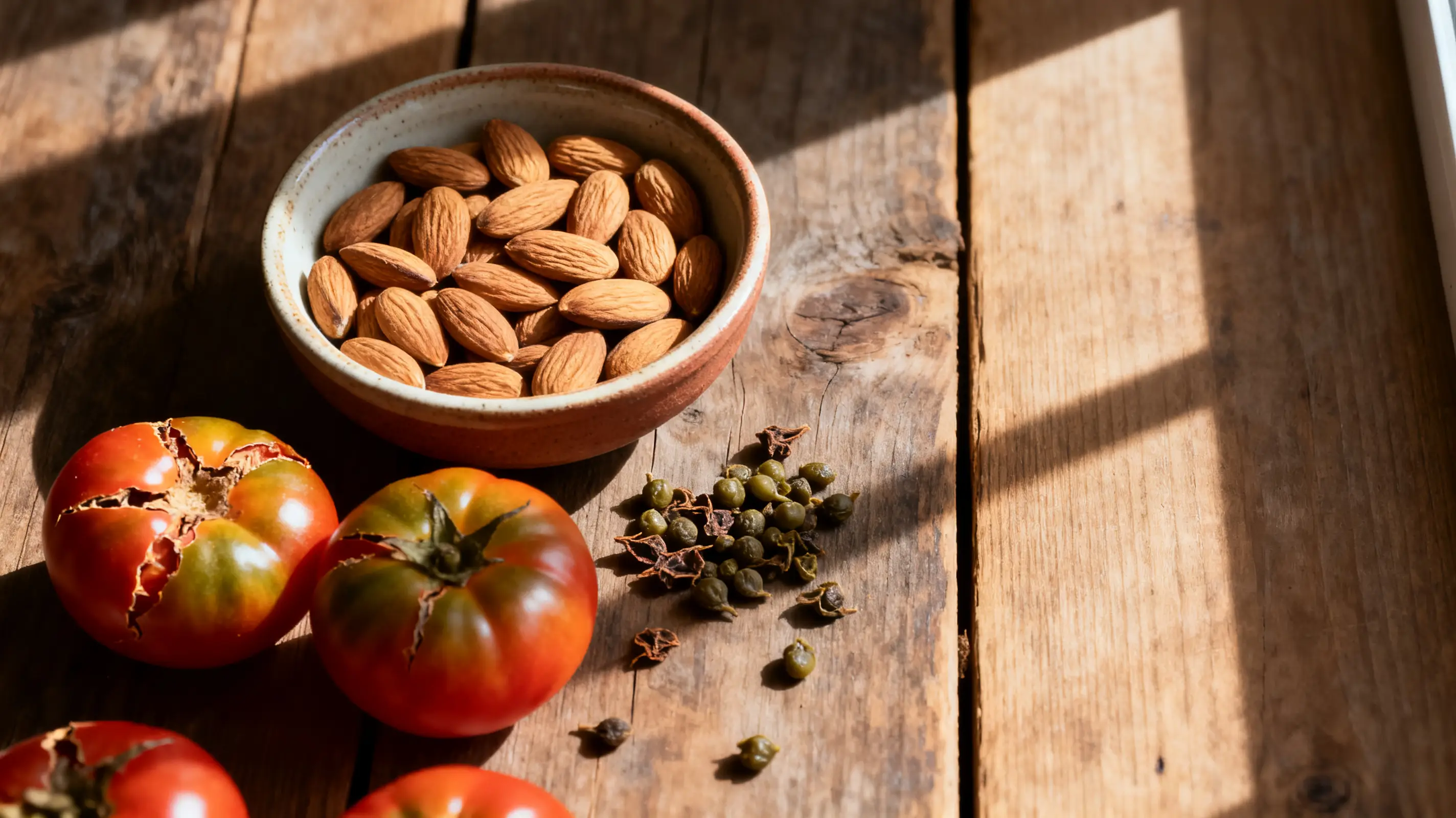
The Essential Haircare line is formulated using active ingredients from nine Italian Slow Food Presidia, including the Salina caper, Paceco Cartucciaru melon, Torre Guaceto Fiaschetto tomato and Noto almond, with Davines working with Fondazione Slow Food per la Biodiversità since 2014.
The NOUNOU mask contains tomato extract from a heirloom variety Sicilian farmers are fighting to preserve. The LOVE CURL mask uses almond extract from a grove in Siracusa. The MINU mask pulls caper blossom from a volcanic island off Sicily where capers have grown for centuries.
The most literal translation of Slow Food philosophy into a haircare product is probably happening in a line of Italian hair masks most people discover through their hairdresser rather than through any food connection.
Davines, a B Corp certified brand from Parma, builds each of its Essential Haircare masks around a single active ingredient sourced from a Slow Food Presidia farm, the same network that exists to protect endangered food varieties from disappearing.
A mask for damaged hair uses heirloom tomato extract. One for curly hair uses Sicilian almond.
One for color-treated hair uses caper blossom from Salina. The ingredient list reads less like a cosmetics label and more like a provenance card at a good Italian restaurant. For anyone curious what that actually translates to across the full range of hair types and concerns, genuinely good options are worth looking through with that sourcing story in mind rather than just the before-and-after claims.
These aren’t botanical extracts sourced from a cosmetics supplier. They’re Slow Food ingredients that happen to do something remarkable for hair. The same farms supplying restaurants committed to preserving Italy’s edible heritage are supplying a haircare line most consumers have never connected to that mission.
Sustainable agriculture seeks to provide more profitable farm income while promoting environmental stewardship, satisfying human needs, enhancing environmental quality and the natural resource base, and making efficient use of nonrenewable resources while integrating natural biological cycles.
Why Ingredient Origins Matter Beyond Marketing Copy
Nobody feels sold to when they understand what they’re actually looking at. The reason this matters extends beyond any single product category. When we treat sourcing as irrelevant, we participate in a system that prioritizes interchangeable components over meaningful distinctions. Farms disappear. Varieties vanish. Regional knowledge erodes.
The broader lesson here is about attention. Once you start asking where ingredients come from in one area of consumption, the question spreads. Why does this tomato variety matter? Why does this almond grove matter? Why does preserving agricultural biodiversity matter when we have industrial farming that feeds billions?
Maintaining and increasing biodiversity in commercial agriculture is essential for long-term productivity, sustainability, and food security.
The answers aren’t sentimental.
Heirloom seeds have been nurtured and passed down by farmers for centuries, and planting them promotes flavor, nutrition, and variety in our food supply, with heirloom varieties reflecting the breadth of biodiversity threatened by industrial agriculture while offering natural and cultural legacy for future generations.
When those varieties vanish, we lose genetic resilience. We lose adaptation strategies. We lose options we might desperately need when climates shift or diseases emerge.
That same framework applies to everything we consume. Haircare included. The ingredients that go into a mask or a serum come from somewhere. They’re extracted by someone. They’re cultivated using methods that either support ecosystems or deplete them.
Treating those choices as invisible doesn’t make them neutral. It just means someone else is making decisions on your behalf, and their priorities might not align with yours.