
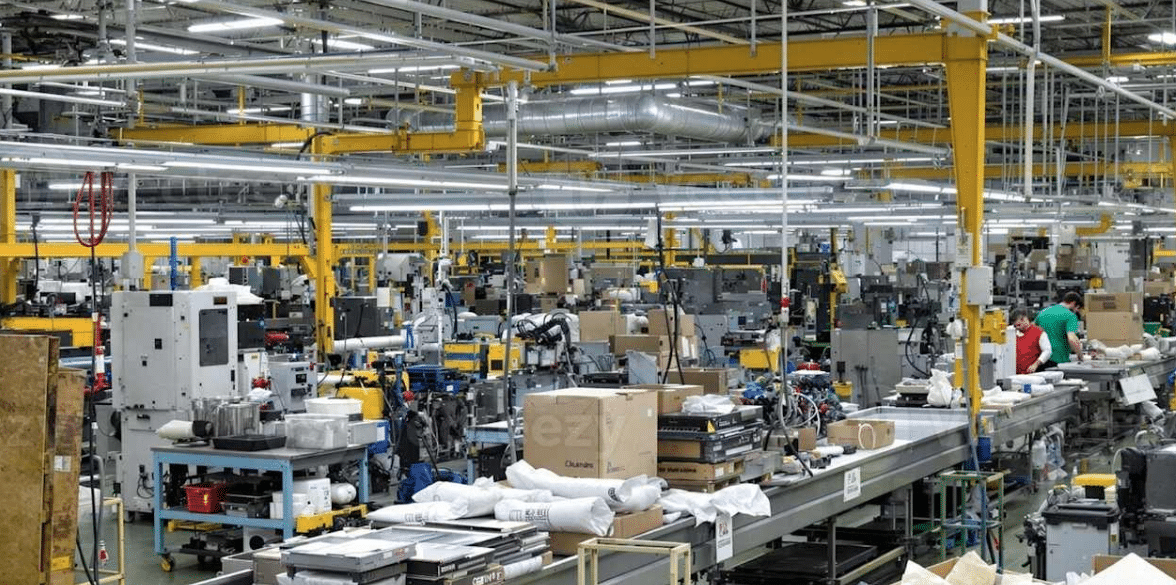
Factory floors and lab environments both grapple with the same headache: heat piles up fast. When temperatures spin out of control, equipment fails and product quality tanks. Air-cooled industrial water chillers fix this problem without the convoluted piping that water-cooled systems saddle you with.
Here’s what you need to know: how these units operate, what distinguishes a solid performer from a mediocre one, and which features actually matter before you commit to a purchase.
How Air-Cooled Industrial Chillers Work
An industrial cooling water chiller extracts heat from your process fluid and dumps it through an air-cooled condenser, then sends chilled fluid back to your equipment, all without needing an external cooling tower. That self-contained approach is why factories and labs prefer them; they work in tight spaces and locations without dedicated water infrastructure.
The Refrigeration Cycle, Simplified
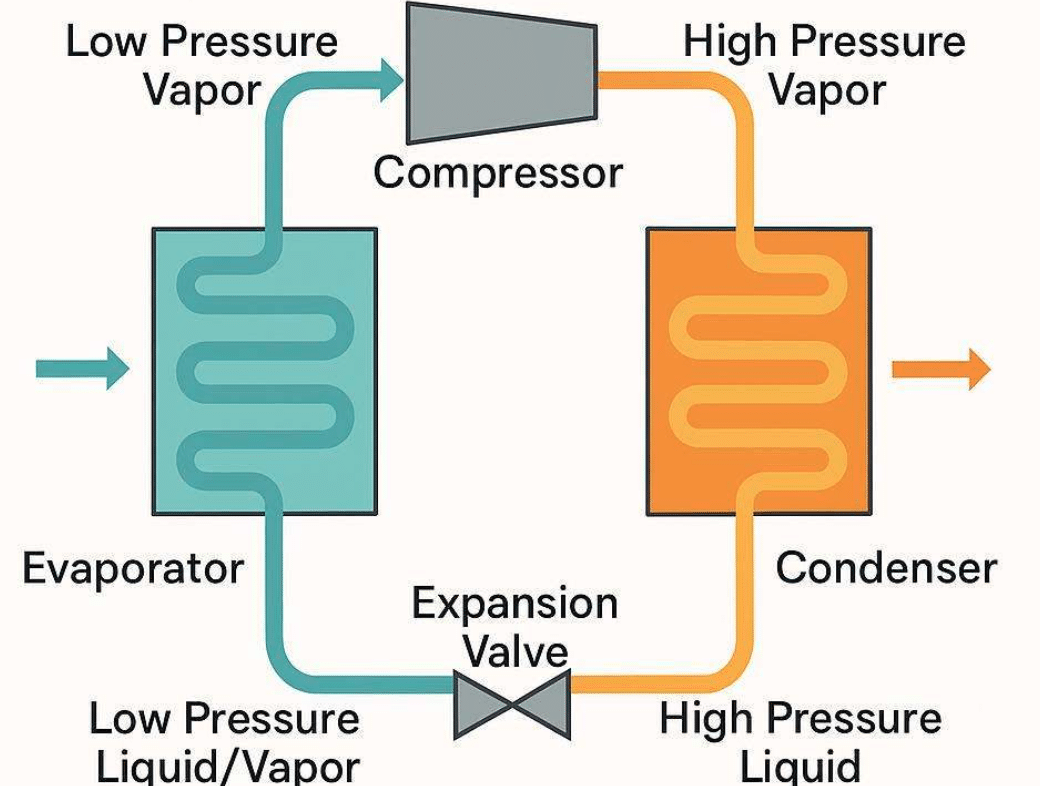
Here’s the loop that makes it tick: a compressor pressurizes refrigerant gas; the condenser coils shed that heat into the surrounding air; an expansion valve drops the pressure back down; and the evaporator pulls heat from your process fluid. This cycle repeats continuously. Most industrial chillers rely on scroll or screw compressors; they’re built to handle the grinding duty that factory and lab work demands, far tougher than piston designs.
Air-Cooled vs. Water-Cooled: Which Makes Sense
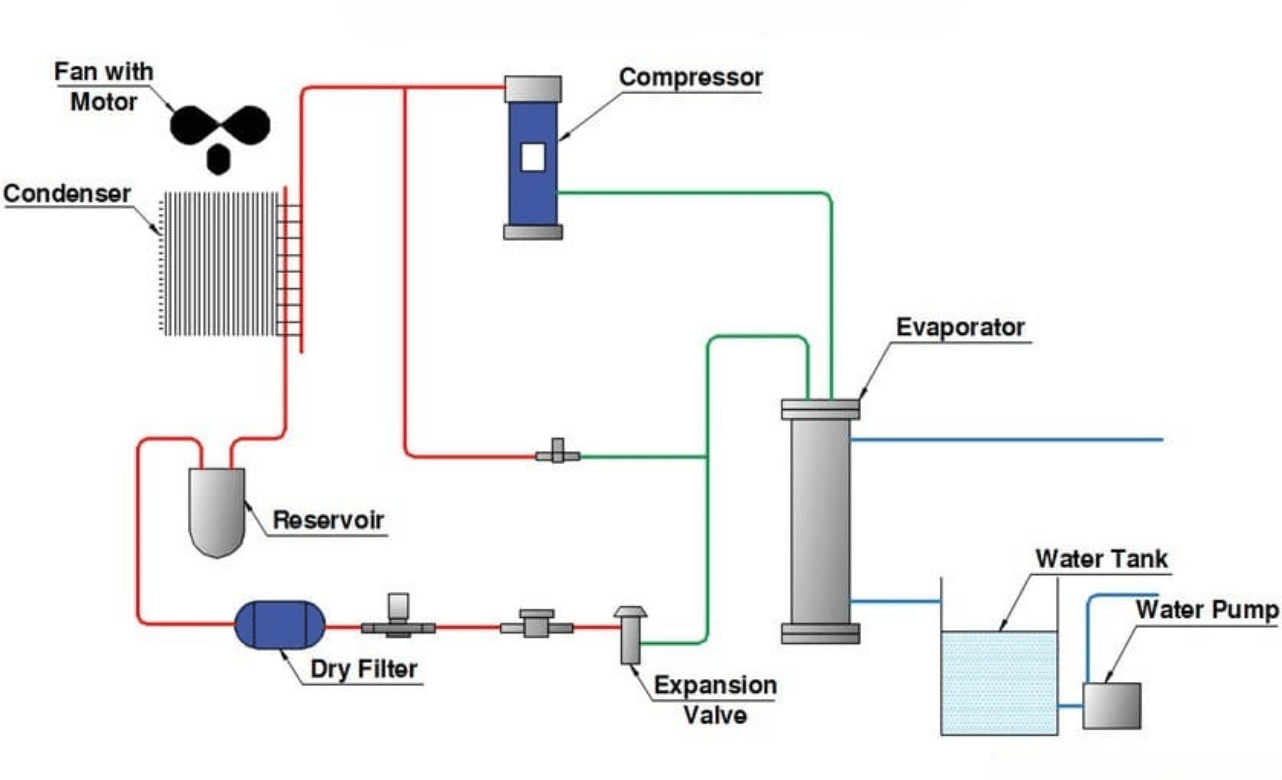
Air-cooled models cost considerably less to set up since you skip the cooling tower, condenser water pump, and water treatment chemicals. The catch is slightly reduced output when ambient temps climb above 95°F. For most US factories and labs, that’s not a real constraint. Water-cooled equipment makes sense only when you need massive tonnage (above 200 tons) or you’re in a climate that stays brutally hot year-round.
Temperature Ranges and Setpoint Control
Most air-cooled industrial water chillers keep process fluid between 20°F and 65°F; lab-grade machines push below 0°F. Precision controllers, usually touchscreen PID models, hold temperature within ±0.5°F. That precision matters. Laser cutting systems, injection molding, MRI cooling, and pharmaceutical reactors all depend on it; a 2°F drift can ruin output or trigger safety lockouts.
Choosing the Right Chiller for Your Application
Buy the wrong size, and you’ll pay twice: once upfront, then again through wasted energy or botched processes. But matching a chiller to your actual load isn’t complicated if you work through it methodically.
Calculate Your Heat Load First
Begin with your equipment’s heat rejection rate in BTUs per hour or refrigeration tons (1 ton = 12,000 BTU/hr). Machine tool manuals specify this. Lab equipment usually lists it in watts; multiply by 3.41 to get BTU/hr. Add 20% for ambient heat gain and future growth. Undersizing by even 15% forces the compressor to run nonstop without hitting the setpoint, which shortens its lifespan considerably.
Specs That Separate Good Units from Poor Ones
The COP (coefficient of performance) matters most. Anything above 3.0 justifies the extra cash if your facility runs round-the-clock; you’ll recoup it in energy savings. Match the evaporator flow rate to your pump capacity. Evaporators built from stainless steel or titanium resist corrosion when process fluids contain cutting oils or chemical additives. And don’t overlook the ambient operating range: budget units lose capacity fast above 85°F, which becomes a headache in non-air-conditioned factory spaces.
Features That Matter in Factory and Lab Settings
Both environments need remote monitoring capabilities. Hunt for models with Modbus or BACnet ports so building automation systems can track temperatures, faults, and run time. Anti-freeze protection isn’t optional if you’re cooling below 40°F. A hot gas bypass valve prevents the compressor from cycling excessively when loads dip (common in labs running intermittent experiments). Vevor’s air-cooled chiller lineup incorporates many of these benefits at price points that make sense for smaller shops and research operations.
Installation, Maintenance, and Lifespan
And here’s good news: a properly installed and maintained air-cooled chiller typically lasts 15 to 20 years. Most plant managers underestimate how straightforward both setup and upkeep actually are.
Placement and Airflow Requirements
Condenser coils demand breathing room. Most makers specify at least 3 feet of clearance on all sides and above the unit. Recirculated hot air is the leading cause of capacity loss in real-world installations; trap exhaust air against a wall or corner, and performance nosedives fast. Roof mounting works fine for floor-space-starved factories if the structure can handle the weight, typically 400 lbs for compact 2-ton units, climbing past 3,000 lbs on 20-ton models.
Routine Maintenance Schedule
Scrub condenser coils every 3 to 6 months using coil cleaner and a light water spray. Grimy coils spike head pressure and trim performance by 10 to 15% (per the Air-Conditioning, Heating, and Refrigeration Institute). Check refrigerant levels annually; a 10% shortfall noticeably cuts capacity. Flush the evaporator yearly to strip away scale and biofilm. Swap fluid filters every 500 operating hours or on the manufacturer’s schedule.
Signs Your Chiller Needs Attention
Supply fluid creeping 3°F above setpoint during normal operation? The unit is calling for service. Short-cycling, compressor cutting on and off 6 to 8 times per hour or more, points to a refrigerant or control glitch. High head pressure alarms usually trace to dirty condenser coils or blocked air intake. Catching these early keeps repairs affordable and prevents surprise downtime on the production floor or in the lab.
Conclusion
So what’s the takeaway? Top-rated air-cooled industrial water chillers rank among the smartest, lowest-hassle ways to lock down process temperatures without complex plumbing. Size your unit to match actual heat load; prioritize COP and corrosion-resistant materials; stay on top of coil cleaning and refrigerant checks.
A chiller that’s properly sized and maintained will shield your equipment, keep processes stable, and earn back its cost over years of solid, uninterrupted service.