
Stainless steel pans are some of the best cookware you can own, but keeping them clean can feel like a puzzle. I know the frustration of staring at a burnt, stained pan and wondering if it’s ruined for good.
The good news? It’s almost never ruined. Here, I’ll walk you through everything you need to know about cleaning stainless steel pans from your simple daily routine to removing stubborn burnt stains and rainbow discoloration.
I’ll also share the best products that really work, common mistakes to avoid, and tips to keep your pans looking great for years. Let’s get your pans sparkling again.
Why Stainless Steel Pans Get Burnt, Brown, or Rainbow Stains?
From my experience, stainless steel pans usually stain from minor cooking mistakes, not because the pan is bad. If I heat the pan too much, the metal can turn brown or show rainbow colors from heat marks.
When oil sits too long or burns, it leaves a sticky layer that turns dark over time. Hard water can also leave cloudy spots or dull marks after washing if I don’t dry the pan right away.
Another common reason is cooking at the wrong temperature, which makes food stick and burn on the surface. The good news is that these stains are normal and easy to remove. Once I understand what causes them, keeping my stainless steel pans clean becomes much simpler.
Different Method for Cleaning Stainless Steel Pans
Cleaning stainless steel pans doesn’t have to be complicated. Depending on the type of residue or stain, you can use simple methods and common kitchen items to keep your pans looking shiny and performing their best.
| Method / Technique | Best For | Tips / Notes |
|---|---|---|
| Daily Soapy Wash | Every day cleaning after normal cooking | Avoid steel wool or harsh scrubbers to prevent scratches. Dry immediately to prevent water spots. |
| Baking Soda Paste | Light to moderate burnt or stuck-on food | Safe for the pan, the gentle abrasive effect removes residue without scratching. |
| Vinegar Boil Method | Tough, burnt food or heavy residue | The fizz helps loosen tough stains; works well for rainbow discoloration too. |
| Dish Soap Simmer | Stuck-on grease or food | Helps lift sticky layers without harsh scrubbing. |
| Bar Keepers Friend / Stainless Steel Cleaner | Stubborn stains, rainbow marks, or dullness | Use non-abrasive sponge; follow product instructions for safety. |
| White Vinegar Wipe | Rainbow discoloration or cloudy marks | Quick fix for heat marks; always rinse and dry after. |
By choosing the right method for the type of stain or residue, you can clean your stainless steel pans quickly and efficiently.
Daily Cleaning of Stainless Steel Pans: Step-by-Step
I’ve found that cleaning stainless steel pans right after cooking keeps them looking new and performing their best. Paying attention to both the inside and outside prevents stains, grease buildup, and discoloration.
Step 1: Let the Pan Cool Down
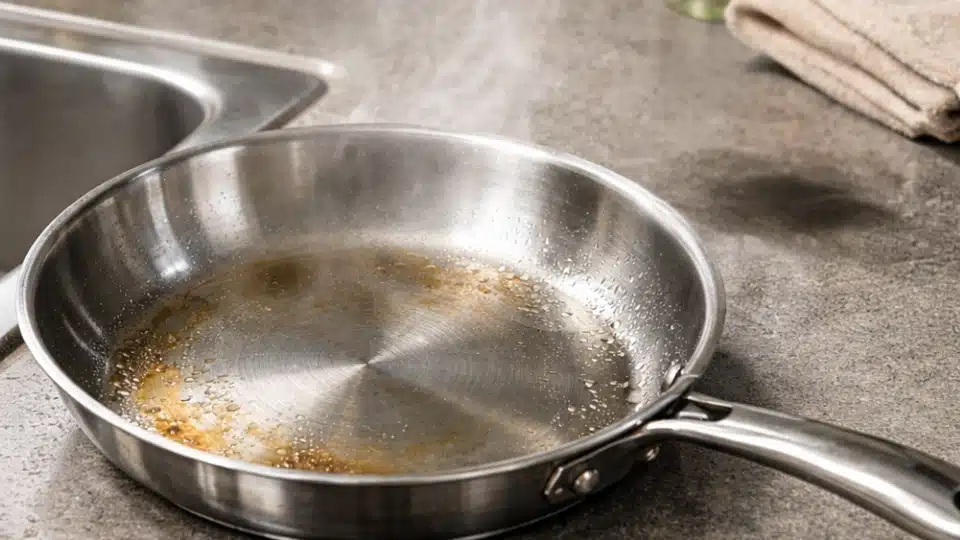
After cooking, I always let the pan cool before washing to prevent warping or damage from sudden temperature changes. While it cools, I lightly wipe the outside with a damp cloth to remove surface oil, fingerprints, or heat marks.
This early attention to the exterior keeps both sides cleaner, reduces future scrubbing, and makes the entire cleaning process much smoother and safer.
Step 2: Soak in Warm Soapy Water
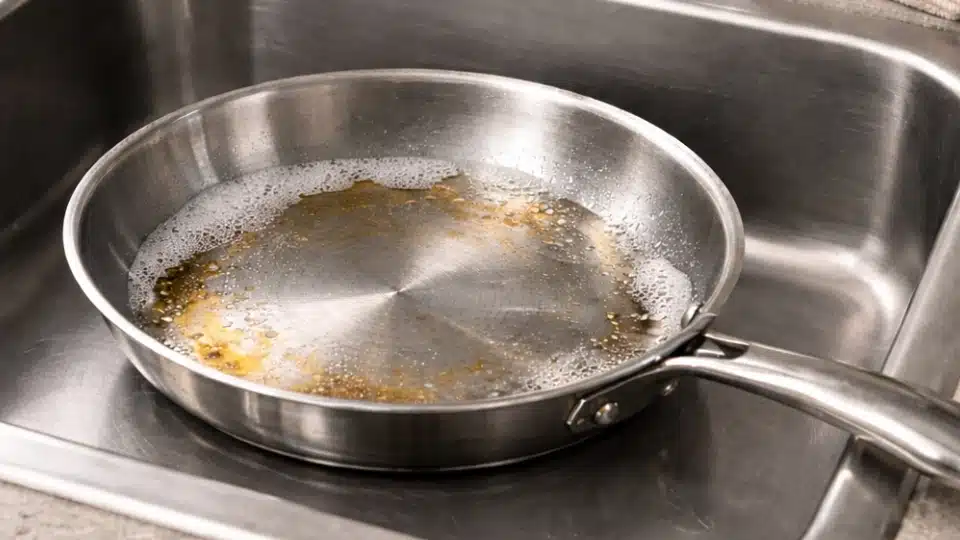
Once the pan has cooled, I fill it with warm water and a few drops of dish soap, letting it soak for 5–10 minutes. This softens stuck-on food and grease inside.
While it soaks, I gently wipe the outside with a soapy sponge to remove light grease, fingerprints, or minor stains. Soaking both surfaces first reduces the need for harsh scrubbing and helps preserve the pan’s polished finish over time.
Step 3: Scrub Gently With a Soft Sponge
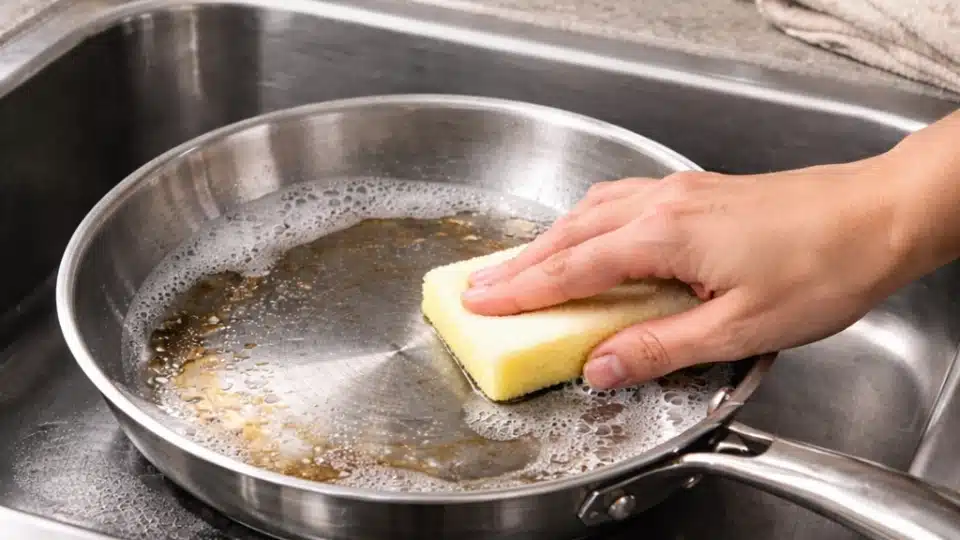
I scrub the inside of the pan using a soft sponge or nylon brush in small circular motions to remove any remaining food or grease. For the outside, I use the same sponge and sprinkle a bit of baking soda on stubborn spots.
Baking soda lifts grime without scratching the metal. I avoid steel wool or rough scrubbers, as they can damage the polished finish, ensuring the pan stays smooth and shiny on both sides.
Step 4: Rinse and Dry Right Away
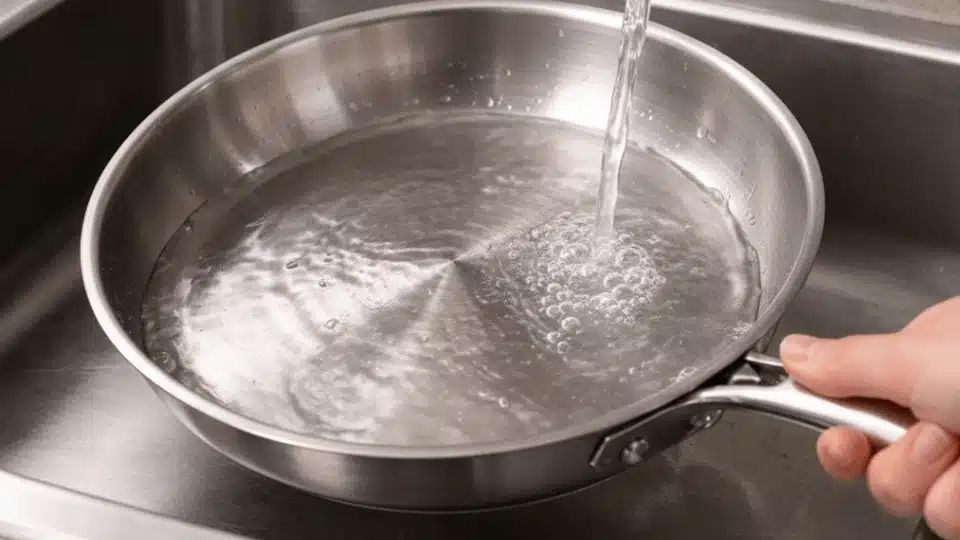
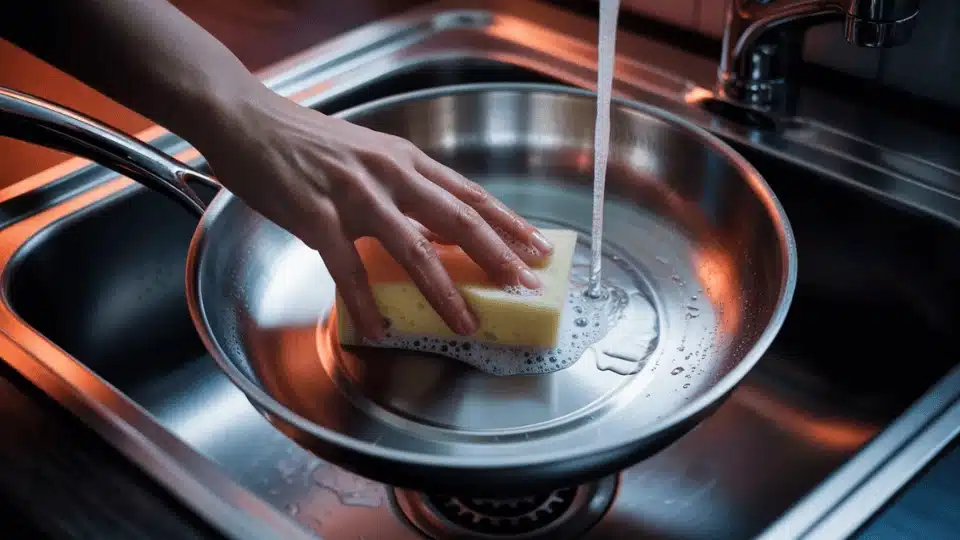
When the pan looks clean, I rinse both inside and outside under running water to remove all soap and residue. I never leave it to air dry, as water spots can dull the shine.
Instead, I dry the pan immediately with a clean kitchen towel. Quick drying keeps both surfaces polished, prevents streaks or mineral deposits, and ensures the pan is ready for the next meal.
How to Remove Tough Stains from Stainless Steel Pans
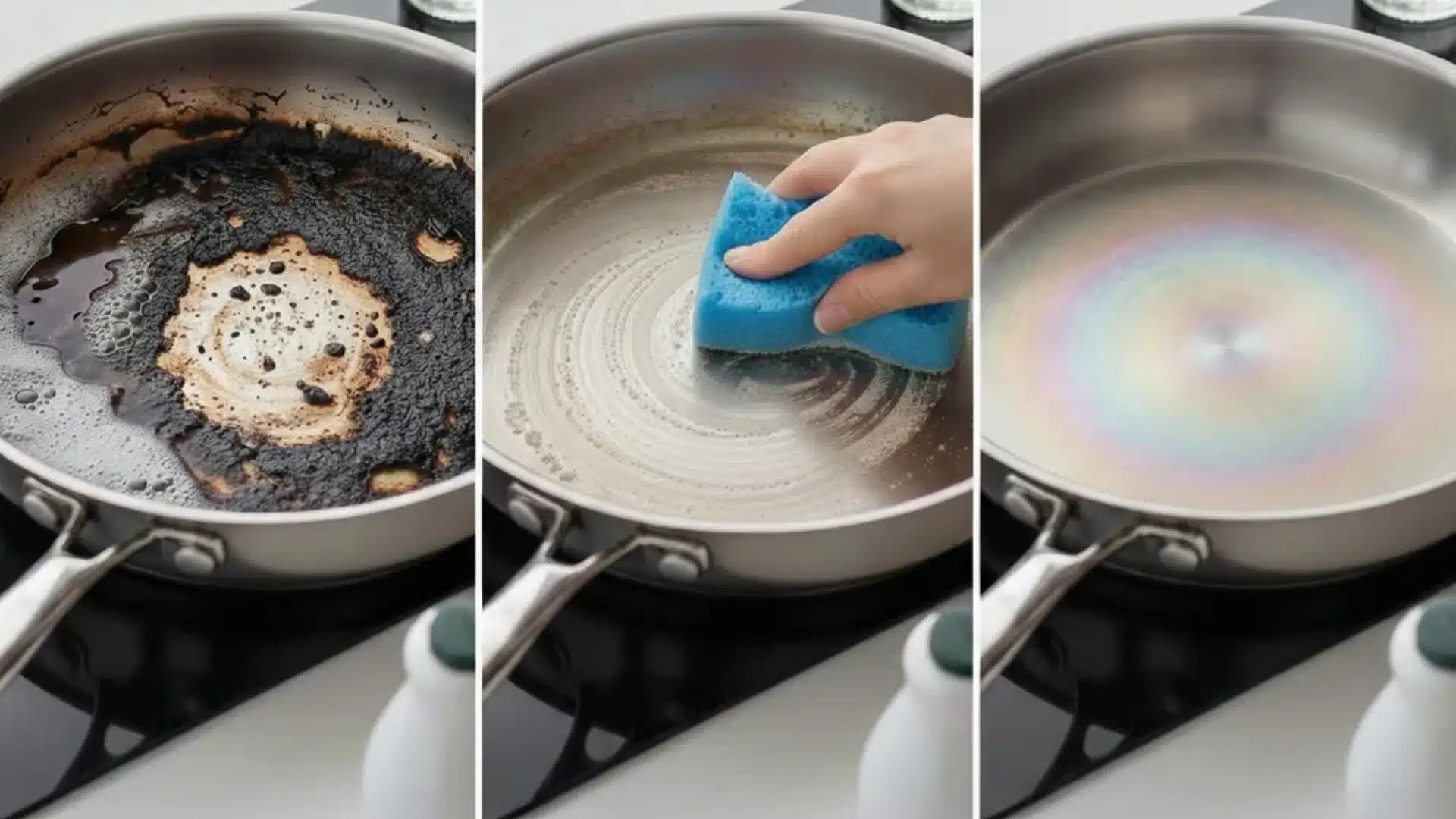
When regular washing isn’t enough, a few simple methods can remove burnt food, brown stains, or rainbow discoloration.
Each type of stain needs a slightly different approach, but most fixes use basic kitchen items you probably already have. Here’s how I deal with the toughest spots on my stainless steel pans.
1. Cleaning Burnt Food
When food burns and sticks to the bottom, I stay calm because most stainless steel pans can be saved. I choose a method based on how tough the burn is, like simmering water with dish soap or using baking soda paste.
Usually, one of these techniques lifts the burnt layer easily. I always finish by washing the pan with soap and drying it to keep it shiny.
2. Removing Brown Stains
Brown stains often appear when oil burns or the pan overheats. I wet the surface, sprinkle a little baking soda, and scrub gently with a soft sponge in circular motions.
If needed, I wipe with a bit of white vinegar to break down stubborn residue. For tough spots, a stainless-steel-safe cleaner restores the pan’s smooth, polished surface while keeping it scratch-free.
3. Fixing Rainbow Discoloration
Rainbow discoloration is caused by high heat and doesn’t mean the pan is damaged. I apply a small amount of white vinegar to a soft cloth or sponge and gently wipe the colored area.
The heat marks usually fade quickly. Afterward, I rinse the pan thoroughly and dry it with a towel to prevent water spots and bring back the pan’s natural shine.
Common Mistakes to Avoid While Cleaning Stainless Steel Pans
Before I start cleaning, it’s helpful to know a few things I always avoid. These mistakes can damage the pan or make cleaning harder.
- Never wash hot pan with cold water: Sudden temperature changes can warp the pan or leave stubborn stains.
- Avoid harsh metal scouring pads: Steel wool or rough scrubbers can scratch and dull the stainless steel surface.
- Don’t soak overnight: Extended soaking can lead to mineral deposits and discoloration on the pan.
- Avoid chlorine cleaners: Bleach or strong chemical cleaners can damage the finish and shorten the pan’s lifespan.
By keeping these simple rules in mind, I make sure my stainless steel pans stay shiny, safe, and long-lasting.
Maintenance Tips to Keep Your Pans Clean for Longer
To keep my stainless steel pans looking great for years, I follow a few easy habits. Preheat the pan properly before cooking to prevent food from sticking and creating burn marks.
I always use enough oil when cooking, which helps food slide easily and protects the surface. After cooking, I clean the pan soon rather than letting food or grease sit, which makes washing easier.
Finally, I dry the pan immediately after rinsing to prevent water spots and keep the shine. These simple steps save time, protect the pan, and keep it ready for the next meal.
Expert-Recommended Cleaning Rules for Stainless Steel Pans
Over time, I’ve learned that cleaning stainless steel pans is not just about what to use, but also about what to avoid. Many stains and dull spots happen because of small mistakes during cleaning. Following a few expert-recommended rules keeps your pans shiny, smooth, and long-lasting.
1. Always Clean With the Grain
Stainless steel has a subtle grain pattern, similar to wood. If you look closely, you’ll notice faint lines running in one direction. I always scrub and wipe in the same direction as the grain.
Cleaning against the grain can cause tiny scratches and make the surface look dull over time. Wiping with the grain keeps the finish smooth and preserves that polished look.
2. Avoid Abrasive Pads and Steel Wool
It may feel tempting to grab a heavy-duty scrubber when food is badly burnt, but harsh tools can permanently damage the surface. Steel wool and rough scouring pads create scratches that collect grease and stains later.
Instead, I stick to soft sponges, nylon brushes, or non-abrasive scrubbers. If I need extra power, baking soda or a stainless-steel-safe cleaner does the job without harming the pan.
3. Never Use Bleach or Chlorine-Based Cleaners
Bleach and chlorine products can react with stainless steel and weaken its protective layer. This can cause pitting, discoloration, and long-term damage.
I always check cleaner labels before using them. If it contains chlorine, I avoid it. Gentle dish soap, vinegar, or specialty stainless steel cleaners are much safer choices.
4. Do Not Shock a Hot Pan With Cold Water
Pouring cold water into a hot pan can cause warping and may set stains more deeply into the metal. I let my pan cool naturally before washing it.
This simple habit protects the shape of the pan and makes cleaning easier in the long run.
5. Dry Immediately to Prevent Water Spots
Air drying might seem harmless, but hard water can leave cloudy marks and mineral deposits. I always dry my pans right away with a clean kitchen towel.
Quick drying keeps the surface bright and prevents dull spots from forming.
Final Wash
Now I see that cleaning stainless steel pans is not about scrubbing harder, but about using the right method for each type of stain.
When I let the pan cool, clean it soon after cooking, and use simple helpers like baking soda or vinegar, the process becomes quick and stress-free.
Stainless steel cookware is made to last for many years, and with regular care, it can stay bright and work perfectly every day in the kitchen.
I always remind myself that a small cleaning habit today saves a lot of effort later. If you found these tips helpful, save this for later or share it with someone who struggles with stubborn pan stains.
Frequently Asked Questions
Can I Put Stainless Steel Pans in the Dishwasher?
Most stainless steel pans are technically dishwasher safe, but I prefer hand washing them. Dishwashers can cause water spots, dull the shine, and sometimes leave detergent residue. Hand washing with warm soapy water keeps the pan looking polished and helps it last longer.
Why Does My Stainless Steel Pan Turn Rainbow Colored?
Rainbow discoloration happens because of high heat. It is a harmless reaction between heat and the metal’s surface. I remove it easily by wiping the pan with white vinegar and then rinsing and drying it. The color fades quickly and the pan is not damaged.
How Do I Remove Burnt-on Food from Stainless Steel Pans?
For burnt-on food, I usually fill the pan with water and a little dish soap, then simmer it for a few minutes. This loosens the stuck food so it wipes away easily. For tougher burns, baking soda paste works well without scratching the surface.