
Picking a walkable downtown in New Jersey is about more than finding a pretty main street. It is about building a daily routine that feels simpler, more connected, and less dependent on driving. For many people, that means living close to cafés, transit, parks, grocery stores, schools, and offices. Small errands become easier when so much of daily life happens within a few blocks.
That is one reason people searching for New Jersey movers are paying closer attention to walkable neighborhoods. With the right location and experienced movers, settling in can feel much more manageable.
Why Walkable Downtowns Attract Movers
Walkability is now a key factor for many people planning a move. Neighborhoods with sidewalks, local shops, public transit, and places to gather often make life feel more flexible and smooth.
Instead of driving from place to place, residents can more easily combine errands and activities. Coffee, groceries, the train, dinner, or a walk in the park are all close by. Sometimes people do not realize how valuable this is until they experience it themselves in NJ downtowns.
Different people are drawn to walkable downtowns for different reasons. Young professionals may want quick rail access and a lively downtown after work. Families often look for parks, libraries, schools, and nearby services. Empty nesters may want to simplify life and drive less.
New Jersey stands out because its walkable downtowns are all unique. Some feel urban and fast-paced, while others have a classic small-town vibe. In both cases, the main draw is convenience without losing local character.
What Makes Downtown Moves More Complex
There is a catch, though. While walkable neighborhoods feel simple once you live there, moving into them often takes more planning than people expect.
The same features that make downtowns appealing can also make moving day harder. Narrow streets, building rules, busy sidewalks, and limited curb space all add to the challenge, especially in busy New Jersey town centers.
Parking, Loading, and Access Challenges
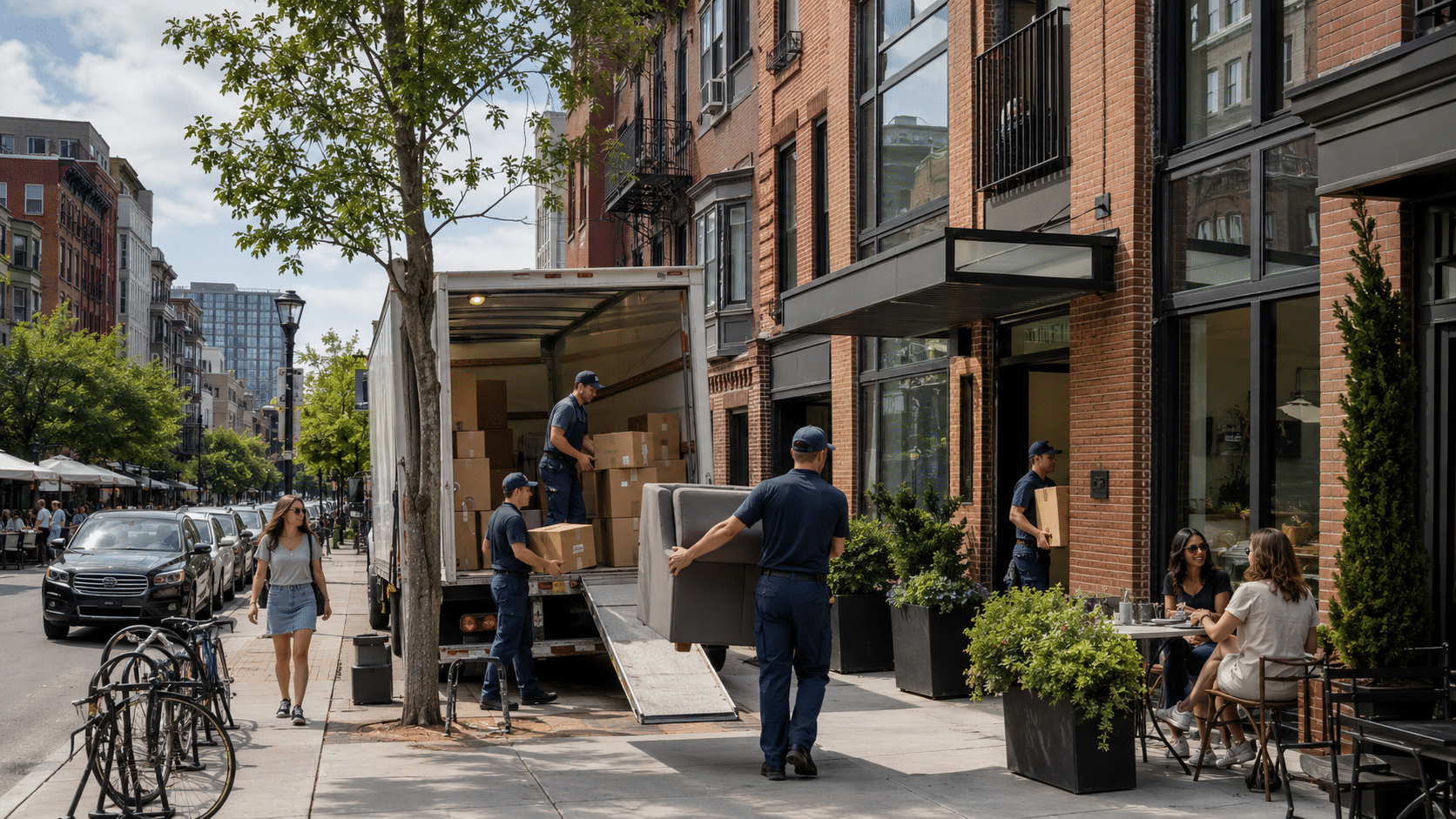
Downtown streets are usually narrower, busier, and more regulated than suburban streets. Metered parking, one-way roads, delivery trucks, and limited loading zones all affect how a moving truck can park and unload. Sometimes, building access is only allowed during certain times, leaving little room for mistakes.
That matters more than people sometimes realize. A move can slow down quickly when the moving crew has to park farther away, wait for approved access, or work around curb restrictions. Even a small delay can snowball, especially if the building has a reserved elevator slot or limited loading access.
Apartment and Building Move-In Rules
Many walkable downtowns in New Jersey have apartments, lofts, and mixed-use buildings with shops below and homes above. These buildings often have specific move-in rules, and they matter.
Common examples include:
- certificate of insurance submission
- elevator reservations
- service entrance instructions
- specific move-in hours
- floor protection requirements
- advance scheduling with management
These details might seem small at first, but they can affect the whole move. Missing just one can make moving day much more difficult, particularly in dense NJ buildings.
Density and Timing Challenges
Downtowns are naturally busy, which is part of their appeal, but it also means moving happens alongside commuters, deliveries, construction, pedestrians, and other residents. Timing becomes very important where curb space changes quickly or building activity is high at certain times.
A well-planned schedule helps avoid problems. In busy areas, moves go more smoothly when street conditions, building access, and delivery times are planned ahead by experienced NJ movers.
NJ Downtowns That Attract Smart-Growth Movers
Each walkable downtown attracts different types of movers. Some areas are popular with people who want easy access to Manhattan, while others appeal to those who prefer a slower-paced downtown. A few New Jersey towns stand out because they combine walkability, amenities, and a strong sense of community.
Jersey City
Jersey City remains one of the best-known choices for movers looking for an urban setting with strong transit connections, dense amenities, and a modern residential mix. Downtown and nearby neighborhoods offer restaurants, coworking spaces, waterfront access, and PATH service, all in an environment where daily life can happen on foot.
However, this convenience also means moving day can be more complicated. High-rise buildings, freight elevator reservations, parking rules, and busy curbs make careful planning important in this part of New Jersey.
Hoboken
Hoboken has one of the most recognizable walkable lifestyles in the state. Its street grid, transit options, restaurant scene, and waterfront location make it appealing to professionals, couples, and families who want a compact neighborhood with real energy.
Still, moving in Hoboken often means dealing with narrow streets, strict parking rules, building schedules, and lots of foot traffic. It is a great place to live, but moves need professional coordination to go smoothly.
Montclair
Montclair appeals to people who want walkability with a slightly more neighborhood-oriented feel. Its downtown combines restaurants, shops, culture, and rail access, but the overall rhythm is different from the denser city environment of Hudson County.
Moves in Montclair may involve older homes, multi-unit buildings, or streets near downtown where access and setup still need careful planning from experienced movers.
Morristown
Morristown blends a historic downtown atmosphere with dining, services, and strong commuter convenience. It tends to appeal to movers who want a lively center without choosing a waterfront city environment.
Moving to Morristown still requires practical planning, especially in areas with limited curb space or shared entrances.
Red Bank and Similar Downtowns
Towns like Red Bank continue to attract people looking for a walkable core with local character. These areas often offer a more boutique downtown experience, where restaurants, entertainment, and daily essentials sit close together.
Moving conditions in these towns may differ from Jersey City or Hoboken, but access, timing, and parking still need to be coordinated carefully by professional movers.
Planning a Smooth Move to a Walkable NJ Downtown
The best downtown moves start with careful planning by experienced NJ movers. While most people focus on their new home, professional crews also consider the route in, building rules, and how the move will work once the truck arrives.
That difference matters. A downtown move is rarely just about the destination. It is also about how the relocation is managed from curb to room, with as little disruption as possible.
Confirm Building Access Early
A key part of a well-managed downtown move is checking access rules early. This includes elevator bookings, loading steps, move-in times, insurance needs, and any weekend or holiday restrictions. The earlier these details are confirmed, the easier it is for movers to coordinate the relocation properly.
This is even more important when multiple people are involved. Property managers, condo associations, leasing offices, and concierges may all have a say. Missing one detail can delay the whole move.
Look Beyond the Street Address
A street address does not tell the full story. In walkable downtowns, access can change a lot depending on the side street, entrance, nearby construction, or time of day. What seems simple at first can get complicated when you consider where the truck will park and how far items need to travel.
That is why experienced movers focus on access, not just the destination. This helps avoid surprises, which can be costly in time and effort in downtown areas.
Plan Arrival and Unloading Order
In busy areas, the order of moving things matters. Professional movers plan where furniture and boxes go, how to use the elevator, and how to set up rooms ahead of time. When the crew knows what goes in first and where, there is less crowding and less waiting outside.
That becomes even more valuable in apartments and condos where hallway space is limited, and elevator access has to be used carefully.
White Glove Moving & Storage is an example of a company that manages full-service moves, including packing, transport, unpacking, storage, and detailed coordination. This is especially useful for larger moves into New Jersey downtowns with strict access and scheduling needs.
How to Settle Into a Walkable Downtown Faster
One of the best things about moving to a walkable downtown is what happens after the move. Once the boxes are unpacked and the main details are handled, residents can start exploring the new neighborhood on foot right away instead of spending weeks sorting out moving problems.
This is the real value of a smart-growth move. It is not just about making the relocation efficient, but about creating a daily life that feels easier after settling in.
A Smarter Approach to Downtown Relocation
Moving to one of New Jersey’s walkable downtowns can be exciting, but the move goes best when access, timing, building rules, and street conditions are handled with care from the start. Life there may feel simple once you arrive, but the relocation itself usually takes precision.
That balance is really what smart-growth moving comes down to. Choose a neighborhood that fits the way you want to live, then make sure the relocation is coordinated to match the realities of the area. When that happens, the move into a walkable New Jersey downtown feels smoother from the very beginning.
FAQs About Moving to Walkable Downtowns in New Jersey
How do professional movers choose the best time for a downtown move?
In many cases, early morning move windows work best because streets are less crowded, loading access is easier to manage, and building schedules are often simpler before the busiest part of the day begins.
When do professional movers typically confirm downtown building requirements?
Usually, as soon as the move date is set. Some buildings need paperwork, elevator reservations, or insurance documents several days in advance, and waiting too long can narrow the available options.
Are weekday downtown moves easier than weekend moves?
That depends on the neighborhood. Weekdays may bring more delivery traffic and commuter movement, while weekends can mean heavier pedestrian activity and busier residential schedules. A lot comes down to the specific building and street conditions around it.
Do downtown businesses affect residential moving schedules?
Yes, they often do. In mixed-use areas, restaurant deliveries, customer traffic, and limited curb space can influence when a truck can park and unload efficiently.
What items usually need extra planning in downtown moves?
Large furniture, fragile pieces, oversized sectionals, artwork, and anything moving through elevators or narrow stairwells usually requires more coordination. Entry dimensions and building layout can make a big difference in how those items are handled.
Can weather have a bigger impact on a downtown move?
It can. Rain, wind, or snow may complicate curbside unloading, walking routes, and building entry conditions more in dense downtown settings where crews have less space and less flexibility around the truck.