
What if the shape sitting on top of your home could affect your energy bill, your home’s value, and how well it survives a storm? Most homeowners never think about roof styles until a renovation forces the conversation.
Suddenly, terms like hip roof, mansard, and skillion are flying around, making a simple upgrade feel overwhelming.
Different roof shapes do far more than define a home’s appearance; they control drainage, heat escape, wind resistance, and long-term costs.
If you are building new or renovating, understanding roof styles and roof shapes helps you make smarter, more confident choices. This here is to break everything down clearly, so you never feel lost in the conversation again.
What are Roof Styles and Roof Shapes?
Roof Shapes
Roof shapes refer to the physical outline and structural form of a roof, such as gable, hip, or flat. The shape determines how the roof is built and how it performs.
It directly influences drainage efficiency, wind resistance, and load distribution.
A well-chosen shape ensures the structure handles rain, snow, and storms effectively while complementing the overall building layout and supporting long-term structural integrity.
Roof Styles
Roof styles go beyond structure; they define the design language, construction technique, and visual character of a roof.
While roof styles are often named after their shapes, they also reflect unique architectural details, construction materials, and decorative features. Choosing the right roofing material enhances both the appearance and long-term durability of your roof, making it a valuable investment for any home.
A mansard or gambrel style, for instance, carries distinct historical and aesthetic identity, shaping how a home looks and feels from the outside.
Popular Roof Shapes You Should Know About
1. Gable Roof Shape
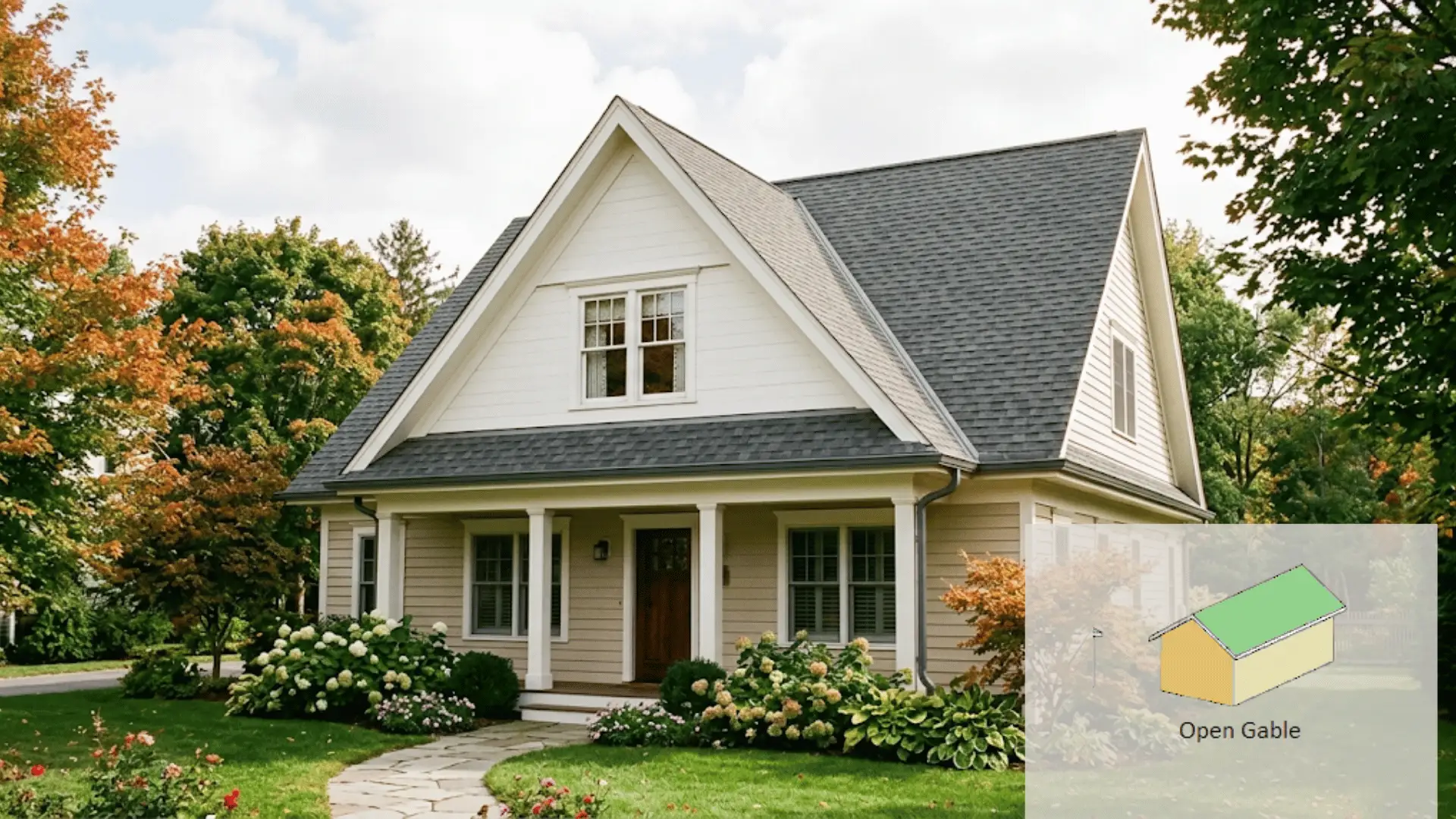
The gable roof is one of the most common and simple roof shapes. It has two sloping sides that meet at the top to form a pointed peak.
This design quickly drains rain and snow, provides excellent attic airflow, and is easy and affordable to build. It suits many home styles and works well in most climates.
- Ideal for: Traditional and colonial-style homes where a classic, clean look is the goal.
- Best in: Regions with heavy rain or snowfall that need fast, reliable water runoff.
- Great for: Homeowners who want an easy-to-build, budget-friendly roof with low maintenance.
2. Hip Roof Shape
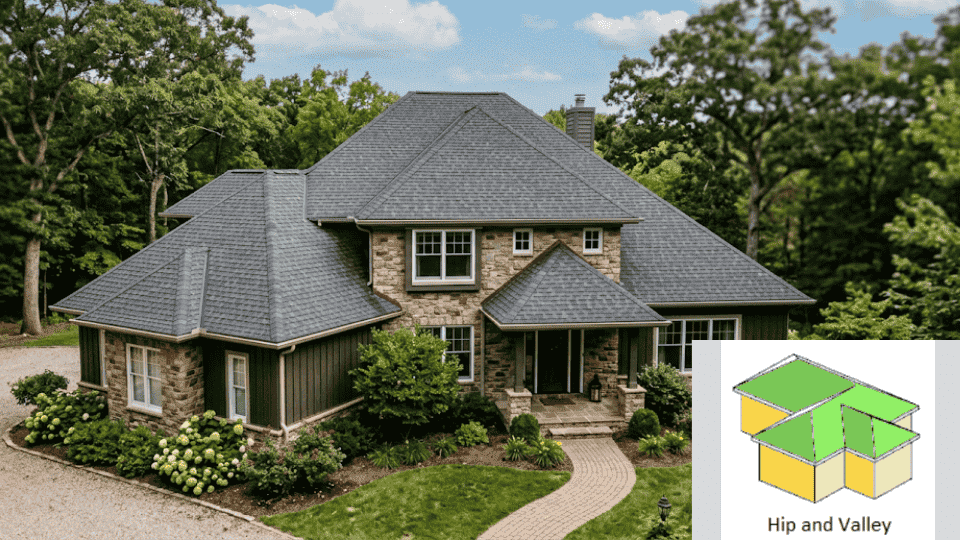
A hip roof has four sloping sides that all meet at the top. Since there are no flat edges, wind flows smoothly over it, making it much stronger in storms.
It looks neat and balanced from every angle. Hip roofs cost more to build, but they last longer and offer better protection in rough weather.
- Ideal for: Ranch-style, coastal, and contemporary homes that need strong storm protection.
- Best in: Areas with frequent high winds, heavy rain, or hurricane-prone weather conditions.
- Great for: Homeowners who want a tough, wind-resistant roof with a clean, polished look.
3. Gambrel Roof Shape
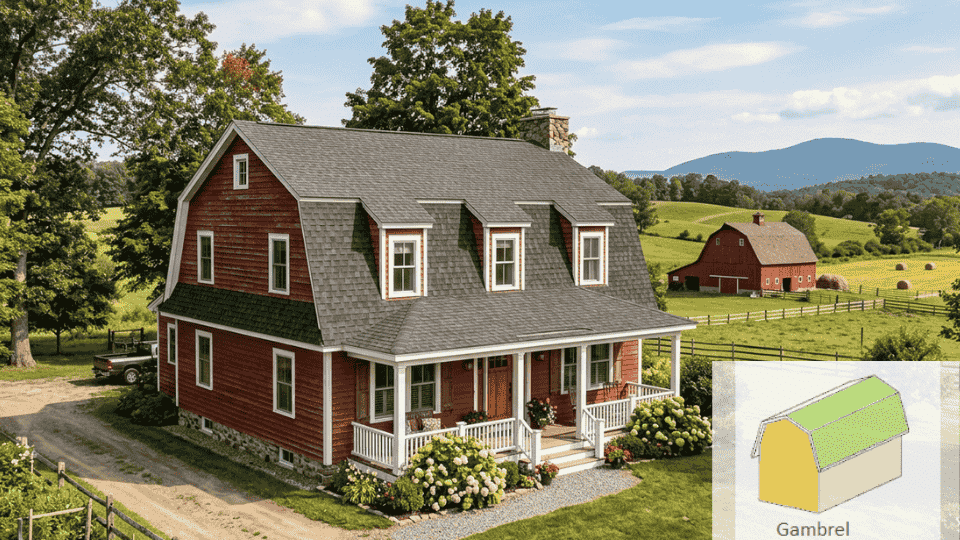
The gambrel roof resembles a classic barn roof, with two slopes on each side. The lower slope is steep, while the upper slope is gentler.
This shape creates a large amount of space inside the roof, perfect for extra storage or an upper-floor room. It is a top pick for barns, farmhouses, and country-style homes.
- Ideal for: Barns, farmhouses, rural properties, and Dutch Colonial or country-inspired home styles.
- Best in: Rural or suburban areas where extra upper-floor living space or storage is a key need.
- Great for: Homeowners who love rustic appeal and want to get the most out of their roof space.
4. Butterfly Roof Shape
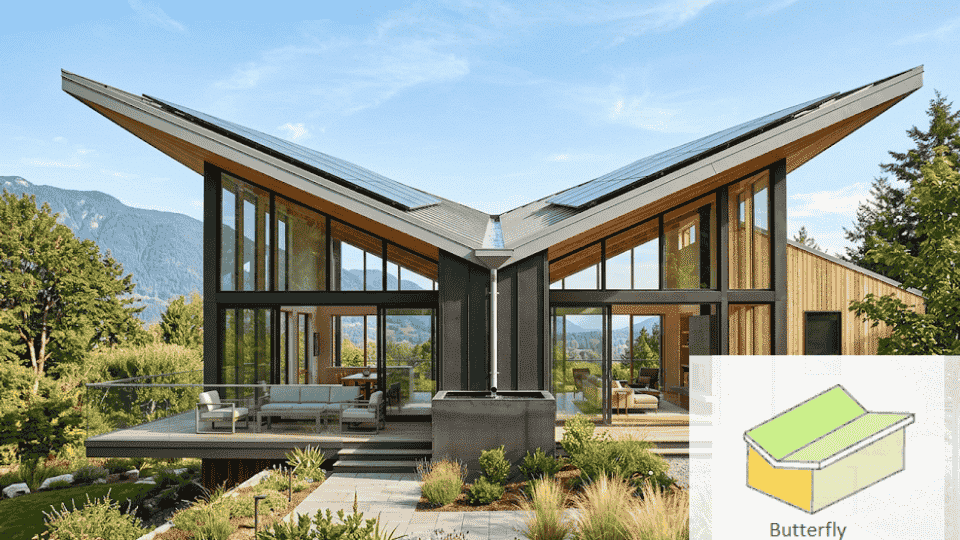
The butterfly roof is shaped like a V, with two sides that slope downward toward the middle rather than upward. This design collects rainwater at the center, making it great for water harvesting.
It also allows for tall walls and large windows, giving homes a bold, modern look with strong eco-friendly benefits.
- Ideal for: Modern, eco-friendly homes where rainwater collection and bold design are top priorities.
- Best in: Dry or water-scarce regions where collecting and storing rainwater is practical and beneficial.
- Great for: Homeowners who want a unique, futuristic look with built-in green living features.
5. Shed Roof Shape
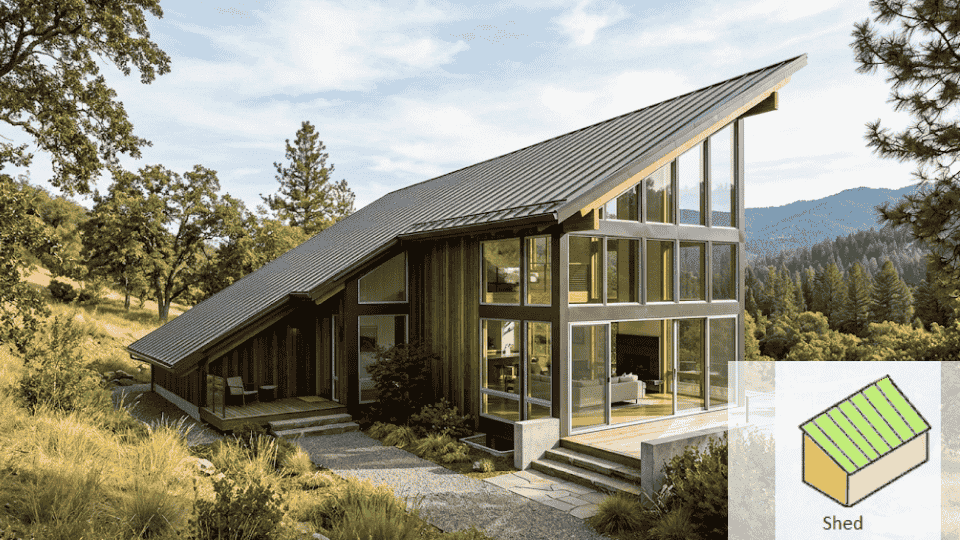
A shed roof has a single slope that runs from one high side to the other. It is one of the simplest roofs to build, which keeps costs low.
It works well for add-ons, small buildings, and modern minimalist homes. It also allows for high ceilings and large windows on the tall side.
- Ideal for: Modern minimalist homes, home additions, studios, and small outbuildings needing a clean, simple design.
- Best in: Mild climates where heavy snow loads are not a major concern for single-slope roofs.
- Great for: Homeowners who want an affordable, easy-to-build roof with a sleek, no-fuss appearance.
6. Pyramid Roof Shape
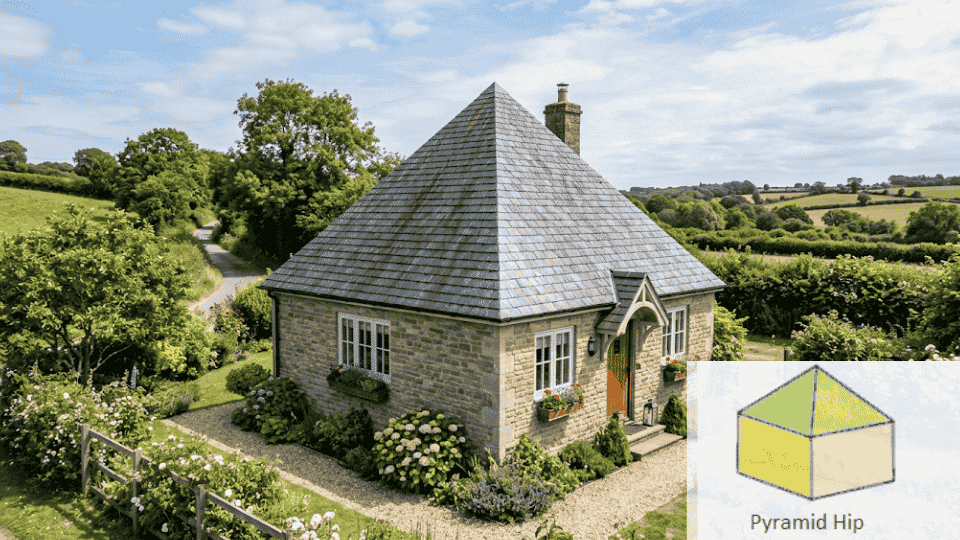
The pyramid roof has four equal triangular sides that slope upward and meet at a single point at the top, just like a pyramid. This shape is very strong and handles wind from all directions with ease.
It works best on square-shaped buildings and smaller structures, giving them a neat, balanced, and eye-catching look.
- Ideal for: Gazebos, small cabins, square-shaped cottages, and garden structures needing a balanced, attractive roof.
- Best in: Windy or storm-prone areas where a strong, all-sided sloping roof offers excellent protection.
- Great for Homeowners who want a sturdy, symmetrical roof with a clean, visually pleasing shape.
7. Tudor Roof Shape
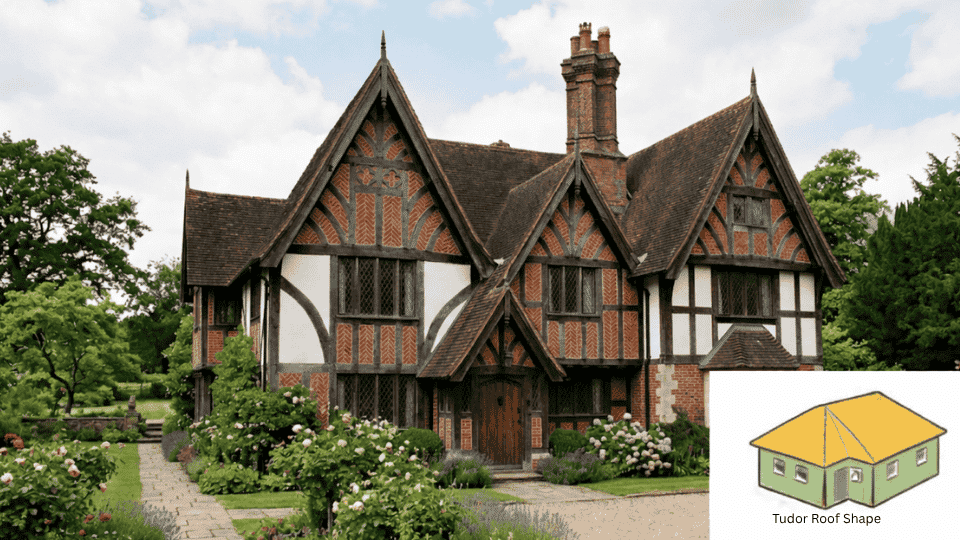
The Tudor roof is known for its very steep pitch and tall, narrow gable ends. It has a dramatic, storybook look that comes straight from old English architecture.
The sharp angles and pointed tops give homes a grand, distinguished appearance. It is often paired with decorative details such as timber framing and patterned brickwork to add extra character.
- Ideal for: Tudor, English cottage, and historic revival-style homes where dramatic, old-world character is the goal.
- Best in: Regions with heavy rain or snow where a steep pitch naturally sheds water and builds up fast.
- Great for: Homeowners who want a bold roof with strong architectural personality and heritage appeal.
8. Arched Roof Shape
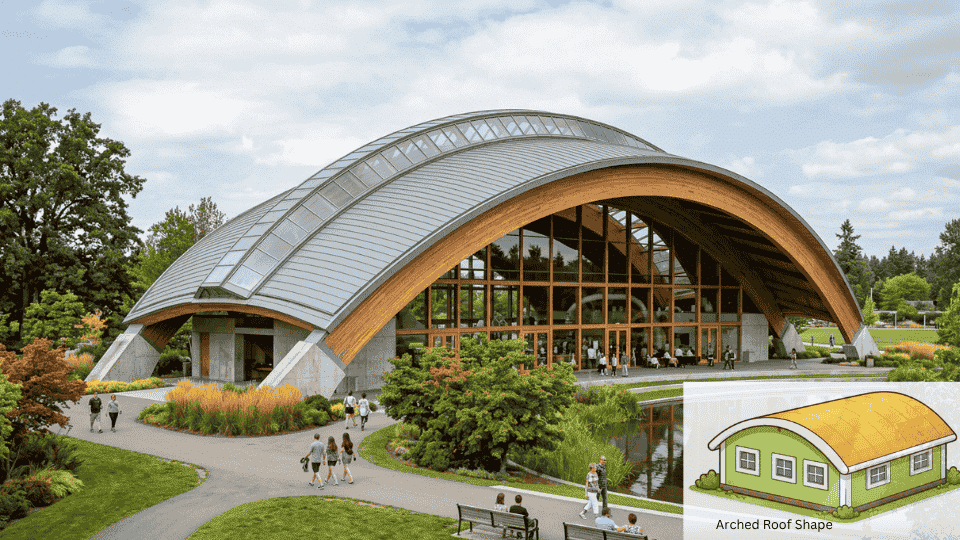
An arched roof has a smooth, curved shape that bows upward instead of meeting at a sharp peak. The curve spreads weight evenly across the structure, making it surprisingly strong.
It stands out from every other roof type with its flowing, artistic look and works well for both large public buildings and creative custom homes.
- Ideal for: Creative custom homes, event venues, churches, and unique architectural builds where curves make a statement.
- Best in: Any climate, as the curved shape naturally handles wind pressure and distributes structural load well.
- Great for: Homeowners who want a one-of-a-kind, artistic roof that turns their home into a true showpiece.
9. Wave Roof Shape
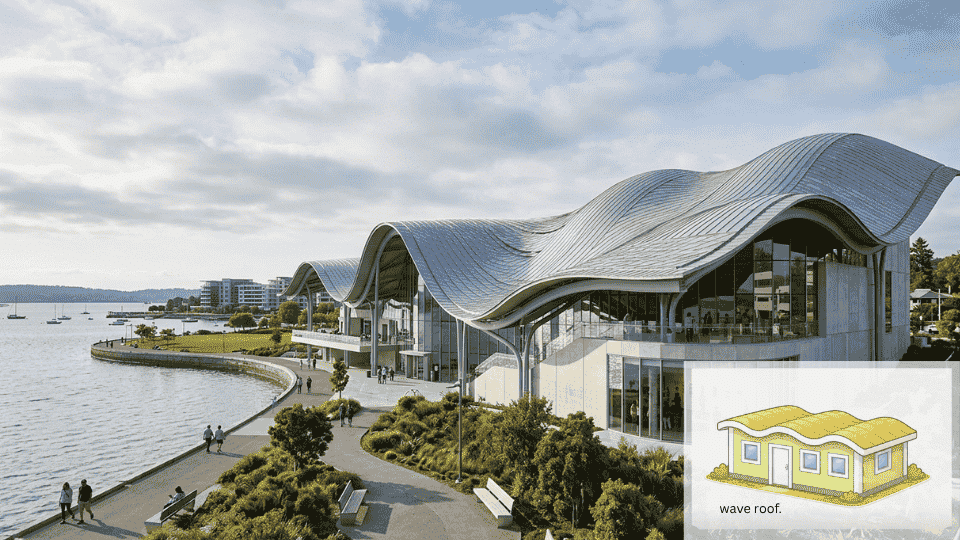
The wave roof has a flowing, up-and-down shape that mimics the look of ocean waves. It is not a common choice for regular homes; instead, it is used to make a powerful visual statement.
Buildings with wave roofs instantly stand out and are often used for museums, event spaces, and bold architectural showpieces.
- Ideal for: Art centers, museums, industrial spaces, and statement buildings where unique, eye-catching design is the focus.
- Best in: Mild climates where complex roof shapes face fewer challenges from snow, ice, or harsh weather.
- Great for: Designers and homeowners who want a daring, artistic roof that makes a truly unforgettable impression.
Roof Styles to Consider for Your Next Project
1. Mansard Roof Style
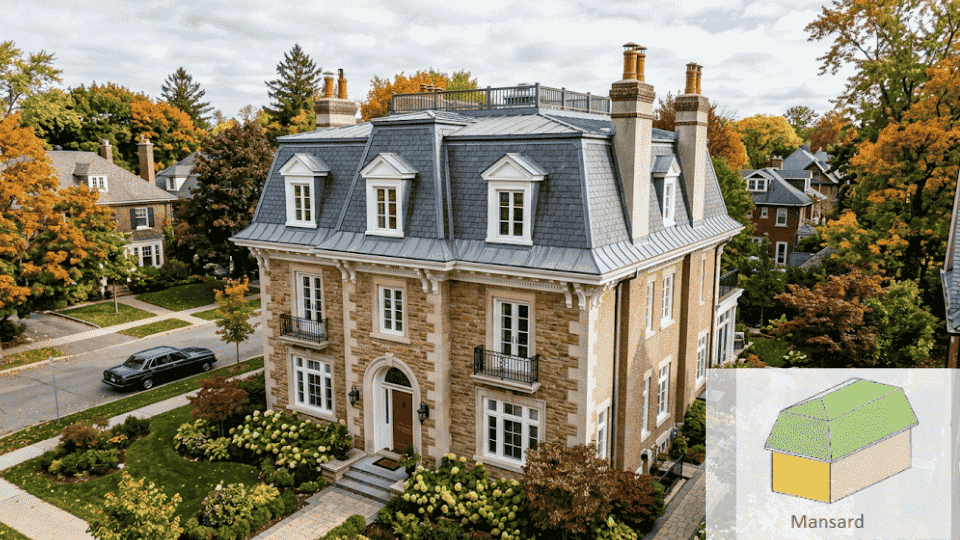
The mansard roof has two slopes on each of its four sides. The lower part is very steep, and the upper part is nearly flat.
This French-inspired design creates extra room inside that works as a living space or storage. It looks sleek but needs regular upkeep and does not perform well in heavy snow areas.
- Ideal for: French-style homes, city townhouses, and buildings that need extra usable upper-floor space.
- Best in: Mild climates where heavy snowfall is rare, and adding living space is a top priority.
- Great for: homeowners seeking a stylish, space-saving roof with a European appearance.
2. Flat Roof Style
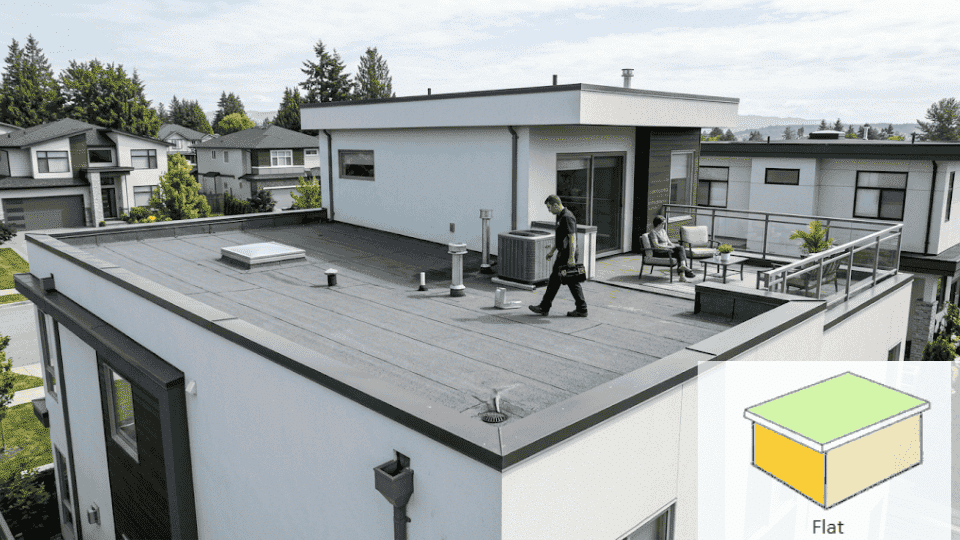
A flat roof is nearly level with just a slight tilt to help water drain off. It is one of the most affordable roofs to install and is easy to access for repairs or rooftop activities.
Flat roofs are common in warm, dry regions and modern buildings, but they need regular maintenance to prevent water from pooling and leaking.
- Ideal for: Modern homes, commercial buildings, and properties located in dry or low-rainfall climates.
- Best in: Warm, arid regions where rain is light and extra rooftop space can be put to use.
- Great for: Homeowners who want a budget-friendly, minimalist roof with simple, easy access.
3. Saltbox Roof Style
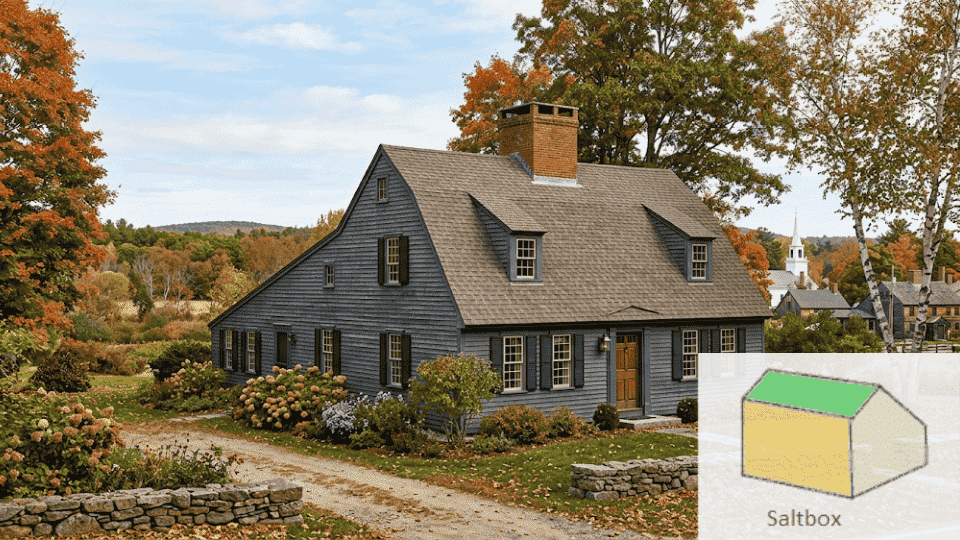
The saltbox roof is asymmetrical, meaning one side is much longer and steeper than the other. It has a lovely, old-fashioned look reminiscent of early American colonial homes.
Despite its uneven shape, it drains water well and adds extra covered space on the longer side, making it both pretty and practical.
- Ideal for: Colonial, Cape Cod, and historic-style homes where classic appeal and character are highly valued.
- Best in: Areas with heavy rain or snow where a steep, long-sloping roof helps with fast drainage.
- Great for: Homeowners who love a unique, story-rich roof shape with both beauty and solid function.
4. Skillion Roof Style
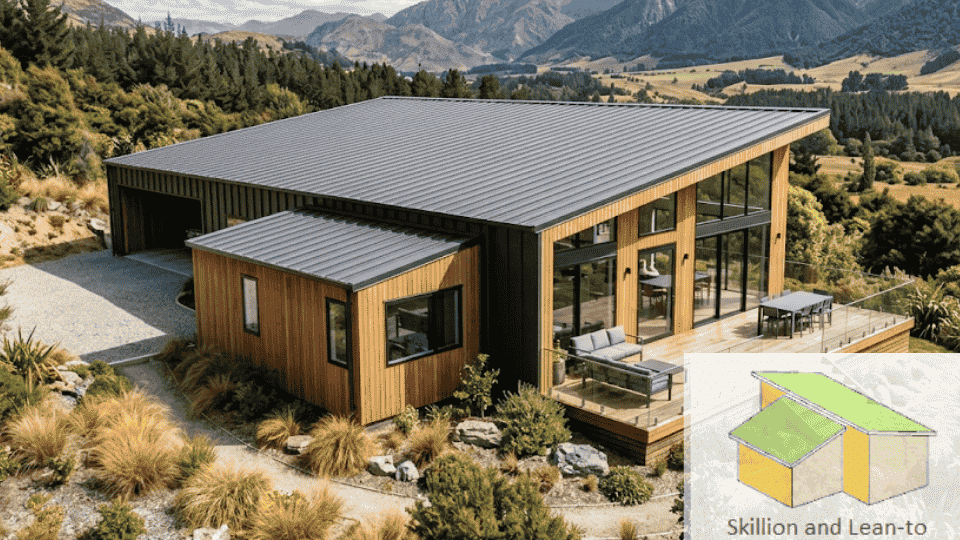
A skillion roof is a single flat panel that sits at an angle, sloping in just one direction. It is easy to design and build, making it a budget-friendly pick.
It looks sharp and modern, fits well with industrial and contemporary styles, and handles rain runoff easily thanks to its clean, one-direction slope.
- Ideal for: Contemporary, industrial, and urban homes where a sharp, modern roofline makes a bold statement.
- Best in: Rainy climates where a steep single slope helps water drain away quickly and efficiently.
- Great for: Homeowners who want a low-cost, stylish roof that looks cutting-edge and works practically.
5. Clerestory Roof Style
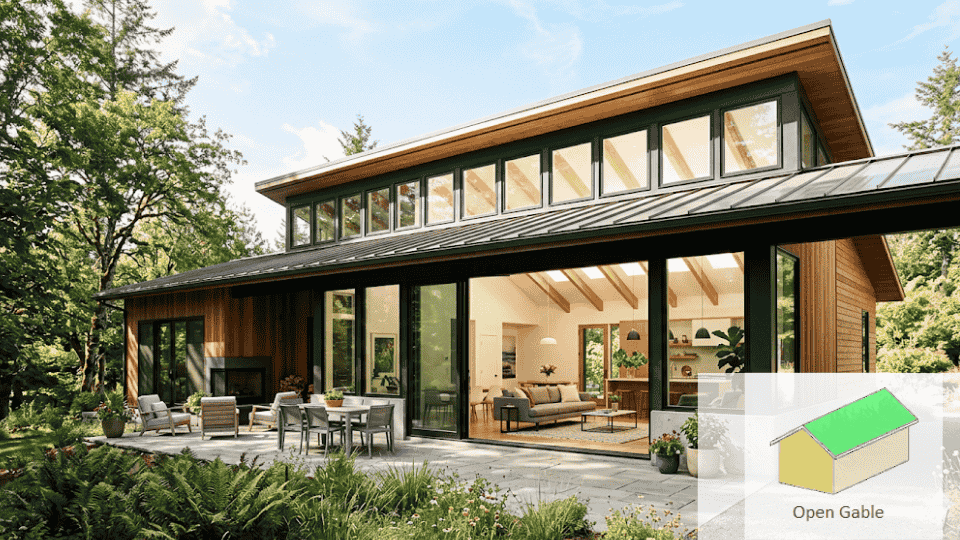
A clerestory roof has two sections at different heights, with a row of windows placed in the raised middle section. These windows let in a lot of natural light without sacrificing privacy.
It is a smart and stylish choice for open-plan homes where bright, airy rooms and good airflow are important everyday needs.
- Ideal for: Open-plan modern homes, eco-friendly builds, and spaces where natural light and ventilation are priorities.
- Best in: Any climate, especially where passive solar heating or natural cooling through airflow is a goal.
- Great for Homeowners who want a bright, well-ventilated home with a sleek, thoughtful modern design.
6. Monopitch Roof Style
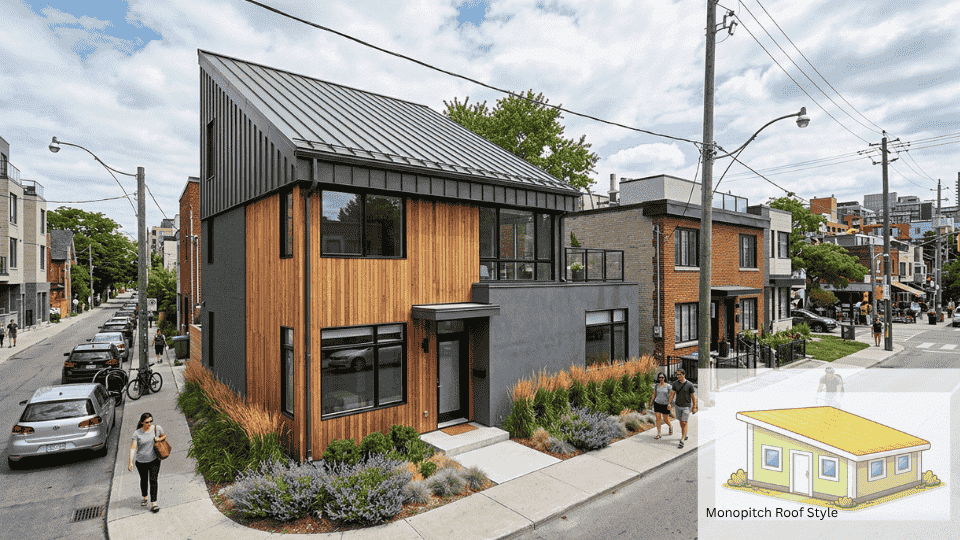
A monopitch roof is very similar to a shed roof; it has one single slope tilting in one direction for a clean, minimal look. It is a top choice in urban settings where space is tight and modern design matters most. It is quick to build, easy to maintain, and works great on small to mid-sized homes.
- Ideal for: Urban homes, modern townhouses, extensions, and small residential builds needing a sleek, minimal roofline.
- Best in: City environments and mild climates where a simple, low-maintenance single-slope design is most practical.
- Great for: Homeowners who want a clean, contemporary look that is fast to build and easy to manage.
Choosing the Right Roof Style for Your Home
Selecting the perfect roof style requires weighing several key factors that impact both performance and appearance:
- Location & Architecture: Your home’s architectural style and neighborhood should guide your roof choice for a cohesive look.
- Budget: Consider both upfront installation costs and long-term maintenance expenses when selecting a roof style.
- Climate: Choose materials and shapes suited to your local weather, steep pitches for heavy snow, flat or low slopes for dry climates.
- Functionality: Prioritize structural needs like drainage, insulation, and durability alongside visual appeal.
- Personal Aesthetic: Align your roof style with your home’s overall design to improve curb appeal and character.
With the right balance of practicality and style, your roof can elevate your home’s beauty while standing up to the elements for decades to come.
Budget Considerations for Roof Material
Knowing the real numbers behind each roof type helps you plan smarter. The right roof and material choice can save you thousands over time. Always balance upfront costs with long-term durability and efficiency.
| Material | Cost (per sq. ft.) | Lifespan | Maintenance |
|---|---|---|---|
| Asphalt Shingles | $1.50 – $5 | 20 – 30 yrs | Low |
| Metal | $5 – $14 | 40 – 70 yrs | Very Low |
| Slate | $10 – $30 | 75 – 150 yrs | Low |
| Clay Tiles | $8 – $25 | 50 – 100 yrs | Moderate |
Roof Design Trends to Watch This Year
Modern roofing is evolving fast, and these are the top trends reshaping the way homeowners think about style, sustainability, and savings:
- Green Roofs: Living roofs covered with vegetation are gaining popularity for their insulation benefits and environmental impact.
- Solar Integration: Solar panel roofing is becoming a seamless, stylish alternative to traditional panel installations.
- Minimalist Shapes: Clean, simple roof lines are trending as homeowners embrace modern, clutter-free aesthetics.
- Energy Efficiency: Cool roofs and reflective materials are helping reduce energy bills and carbon footprints in the long term.
- Sustainable Materials: Recycled, eco-conscious roofing materials are becoming a go-to choice for environmentally conscious homeowners.
Staying ahead of these trends not only future-proofs your home but also adds lasting value, beauty, and efficiency for years to come.
Summing Up
What started as a simple favor for my cousin turned into one of the most genuinely eye-opening research journeys I have taken.
A roof is one of the most important decisions a homeowner can make, touching everything from budget and climate to energy efficiency and long-term durability.
My hope is that this helped you see your roof choices the same way, not as an overwhelming technical decision, but as a clear, confident choice you can own.
Now I want to hear from you. Are you building new, replacing an old roof, or just searching for your options? Drop your thoughts, questions, or experiences in the comments below.