
Interested about what makes NY strip steak such a popular choice for health-conscious meat lovers everywhere? Understanding NY strip steak nutrition helps you decide if this cut fits your dietary goals and lifestyle.
I used to worry that eating steak meant sacrificing my health, but the facts surprised me completely. This cut packs impressive protein alongside essential vitamins and minerals your body needs daily.
The nutritional profile changes based on how you cook it and which parts you trim away. Knowing the calorie count, fat content, and protein amounts helps you plan balanced meals confidently.
New You strip offers more than just great taste when you understand its true nutritional value. Let’s see what this popular steak cut brings to your plate and overall health.
This information is for educational purposes only and all nutritional figures provided are estimated averages that may vary by source.
Getting to Know NY Strip Steak
NY strip steak comes from the short loin, which sits along the cow’s back behind the ribs. I love this cut because it offers excellent marbling with thin lines of fat running through the meat beautifully.
The marbling gives the NY strip its rich flavor and makes it tender when appropriately cooked at home. You’ll notice the meat has a firmer texture compared to super tender cuts like filet mignon.
I usually grill or pan-sear my NY strip steaks to get a nice crust on the outside. Broiling and roasting work great too, especially for thicker cuts that need even cooking throughout.
Each cooking method slightly changes the final nutrition since some add fat while others don’t. The strip steak typically has a strip of fat along one edge that you can trim off.
Health Benefits of NY Strip Steak
I found several surprising health benefits when I started paying attention to what NY strip steak actually provides. Beyond just tasting delicious, this cut offers real nutritional advantages that support your overall health and wellness. Here are the main health benefits:
- High-Quality Protein Source: NY strip provides complete protein with all essential amino acids needed for muscle growth, tissue repair, and metabolism.
- Rich in Essential Nutrients: Packed with B vitamins, iron, and zinc that support energy production, immunity, and red blood cell health throughout your body.
- Supports Muscle Recovery: The concentrated protein helps rebuild and repair muscles after workouts or physical activity more effectively than plant proteins.
- Suitable for Low-Carb Diets: Contains zero carbohydrates, making it perfect for keto, paleo, and other low-carb eating plans without modifications.
- Highly Bioavailable Nutrients: Your body absorbs the iron, zinc, and B12 from beef more easily than from plant-based sources or supplements.
These benefits make NY strip steak more than just a tasty meal option. The combination of nutrients supports your body in multiple ways while keeping you satisfied and energized.
NY Strip Steak Nutritional Breakdown
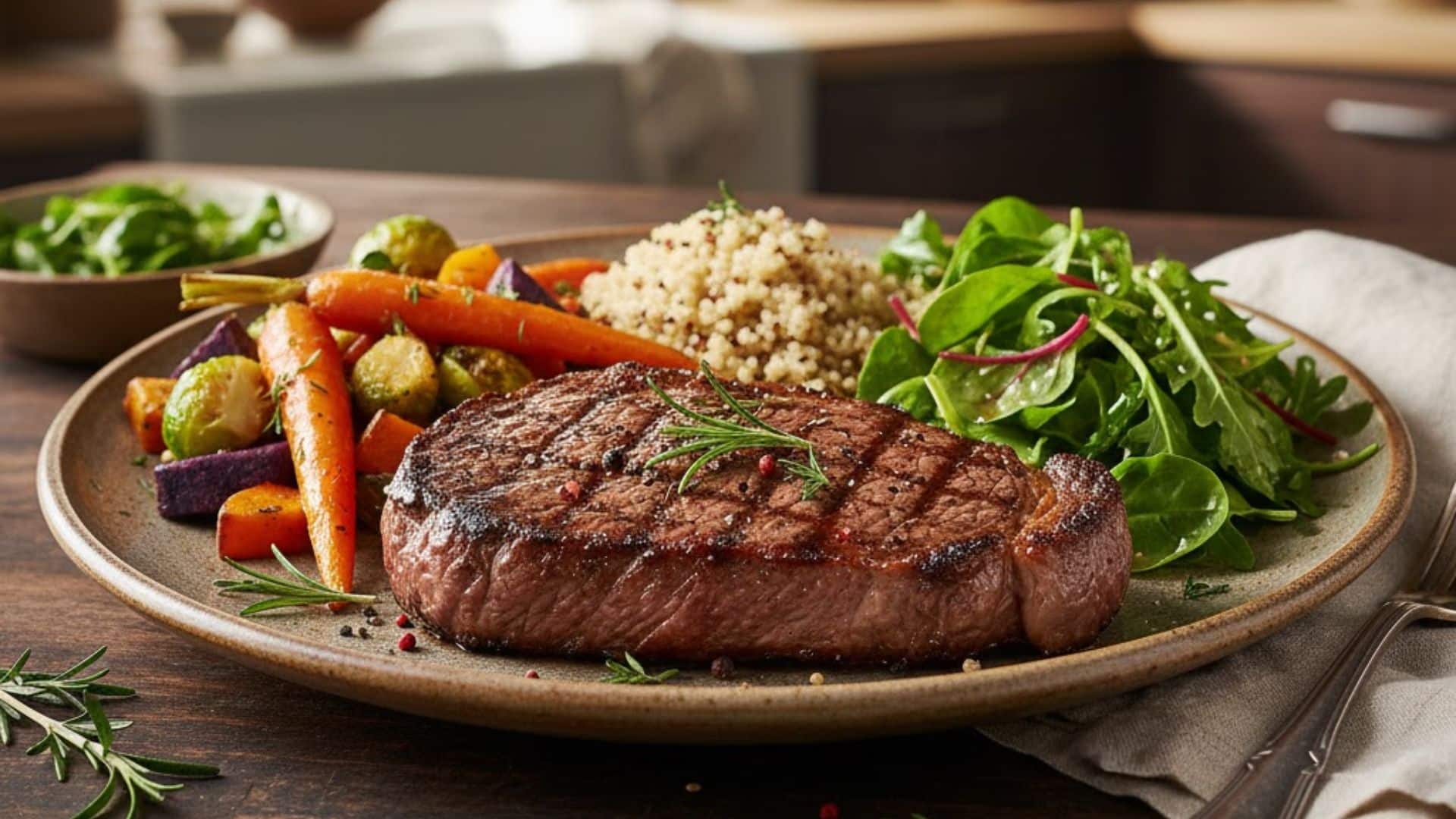
NY strip steak became my go-to cut once I realized how much nutrition it packs along with incredible flavor. Understanding what’s in your steak helps you make informed choices about portion sizes and preparation methods. Here’s what you get in a standard serving:
Calories in NY Strip Steak
A three-ounce cooked NY strip steak contains approximately 180-200 calories on average depending on preparation. Grilling or broiling keeps calories lower since you don’t add extra fat during cooking.
Pan-frying with butter or oil adds roughly 50-100 extra calories depending on fat used. The exact calorie count depends on how much visible fat remains on the steak. Thicker cuts may have slightly higher calorie counts than thinner steaks.
Protein Content in NY Strip Steak
NY strip delivers about 25-26 grams of protein per three-ounce serving, roughly 50% of daily needs. This high-quality protein contains all essential amino acids your body needs for muscle building and repair.
Protein also keeps you feeling full longer and supports your immune system function continuously. Athletes and active people especially benefit from this concentrated protein source after workouts. The protein absorbs easily compared to many plant-based sources.
Fat Content in NY Strip Steak
A three-ounce serving contains approximately 8-10 grams of total fat, with 3-4 grams being saturated fat. Cholesterol levels sit around 70-80 milligrams, which is about 25% of the recommended daily limit.
The marbling throughout the meat contributes most of this fat while providing rich, beefy flavor. Trimming visible fat before or after cooking reduces the total fat content by several grams. This makes the cut more flavorful than lean options.
Other Nutrients in NY Strip Steak
NY strip provides about 15% of your daily ironneeds and 30% of your zinc requirements. It’s packed with B vitamins, especially B12, delivering over 40% of what you need daily.
Selenium content covers roughly 25% of daily needs, supporting immunity and metabolism throughout your body.
These nutrients help produce red blood cells, maintain healthy nerve function, and support overall energy levels. The combination makes NY strip a nutritionally dense protein choice.
How NY Strip Steak Compares to Other Cuts of Beef?
Different cuts of beef offer varying nutritional profiles that affect your meal planning and dietary goals. Understanding how NY strip stacks up against other popular cuts helps you choose the best option. Here’s how they compare side by side:
| Cut | Calories (3 oz) | Protein (3 oz) | Total Fat (3 oz) | Saturated Fat (3 oz) | Key Differences |
|---|---|---|---|---|---|
| NY Strip | 180-200 | 25-26g (50% DV) | 8-10g | 3-4g | Well-balanced fat and protein, good marbling, firm texture |
| Ribeye | 210-240 | 23-24g (46% DV) | 15-18g | 6-7g | Higher fat content, more marbling, richer flavor, more tender |
| Filet Mignon | 170-180 | 22-23g (44% DV) | 7-8g | 3g | Lowest fat, most tender, mild flavor, less marbling |
| Sirloin | 150-170 | 25-26g (50% DV) | 5-7g | 2-3g | Leanest option, similar protein to NY strip, firmer texture, less flavor |
I usually choose NY strip when I want a good balance between flavor and nutrition. The ribeye tempts me when I’m craving something richer, but I save it for special occasions only.
How to Make NY Strip Steak Healthier?
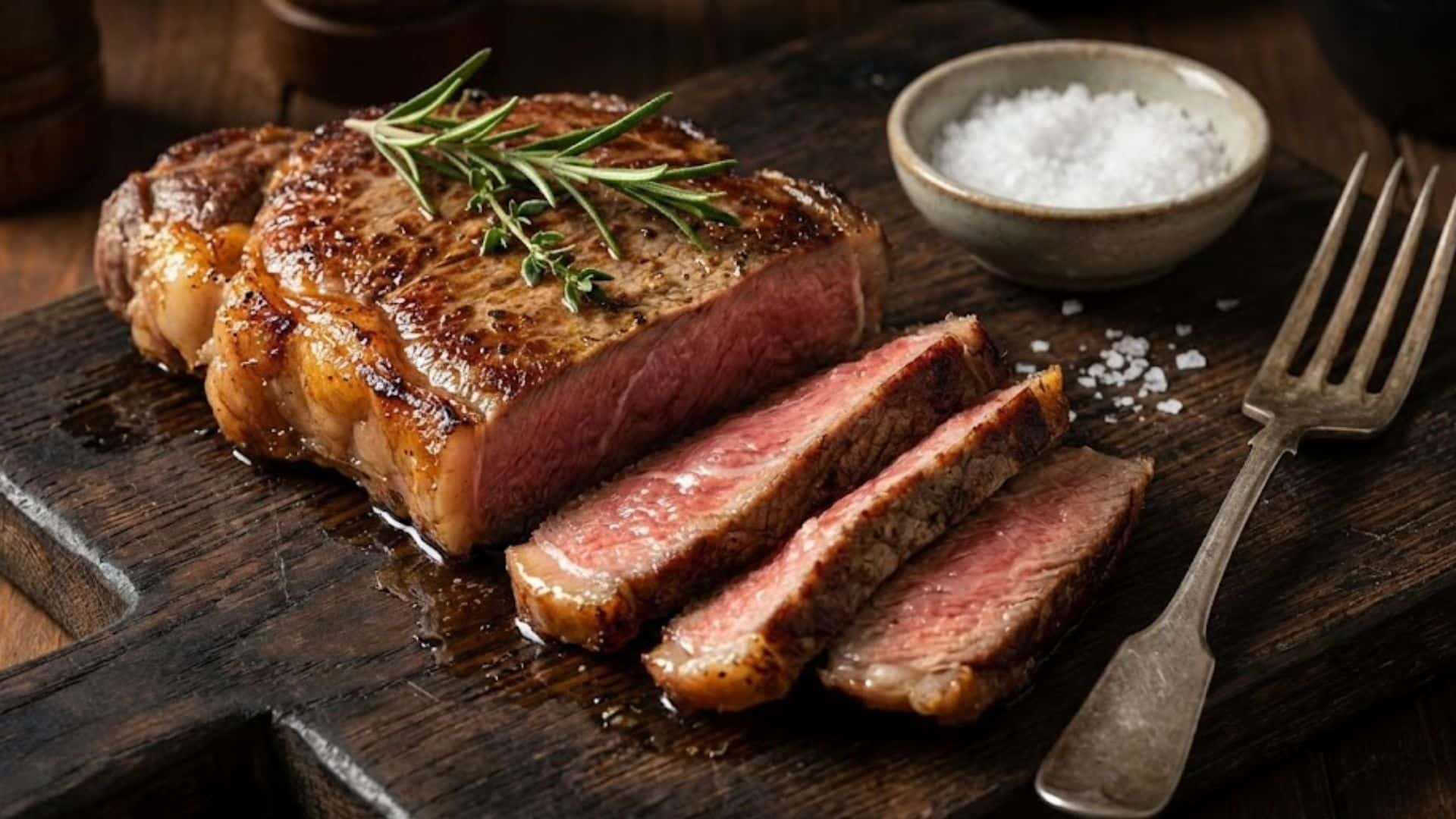
I love NY strip steak but wanted to make it fit better into my healthy eating goals. Small adjustments to cooking method and accompaniments make a significant nutritional difference without sacrificing any flavor. Here are simple ways to make your steak meal healthier:
- Choose Leaner Cuts: Select NY strip steaks with less visible marbling and trim excess fat from the edges before cooking.
- Use Healthier Cooking Methods: Grill, broil, or pan-sear your steak with minimal oil instead of deep frying or using heavy butter.
- Season with Herbs Instead of Salt: Use garlic, rosemary, thyme, and black pepper to add flavor without increasing sodium content significantly.
- Pair with Nutrient-Dense Sides: Serve your steak alongside roasted vegetables, leafy greens, or quinoa to balance the meal’s overall nutrition.
These simple changes make a noticeable difference in how your body processes the meal. The adjustments keep your steak dinner satisfying while supporting your overall health and nutrition goals better.
How Often Should You Eat NY Strip Steak?
Moderation is key when it comes to eating NY strip steak or any red meat regularly. According to the World Health Organization, people should moderate their consumption of red meat to reduce certain health risks.
Most health experts suggest limiting red meat to around 500 grams per week, which equals roughly three servings. A three to four-ounce portion of NY strip counts as one serving of red meat.
Eating steak once or twice a week fits well within healthy dietary guidelines for most people. Balance your steak meals with plenty of vegetables, whole grains, and other protein sources throughout the week.
Listen to your body and adjust portions based on your activity level and overall health goals. Variety matters just as much as moderation when building a balanced, nutritious diet long-term.
Wrapping It Up
Understanding NY strip steak nutrition completely changed how I approach red meat in my diet. You now know the protein, vitamins, minerals, and fats this cut provides in every serving.
I’ve learned that choosing quality cuts and using smart cooking methods makes all the difference. Pairing my steak with vegetables and whole grains creates meals that satisfy without any guilt.
Moderation remains important since I balance steak nights with fish, chicken, and plant proteins weekly. The nutritional benefits really shine when you vary your protein sources rather than eating steak daily.
Preparation methods dramatically change the final nutritional content, so I stick with grilling or broiling. What’s your favorite way to prepare NY strip? Share below!