
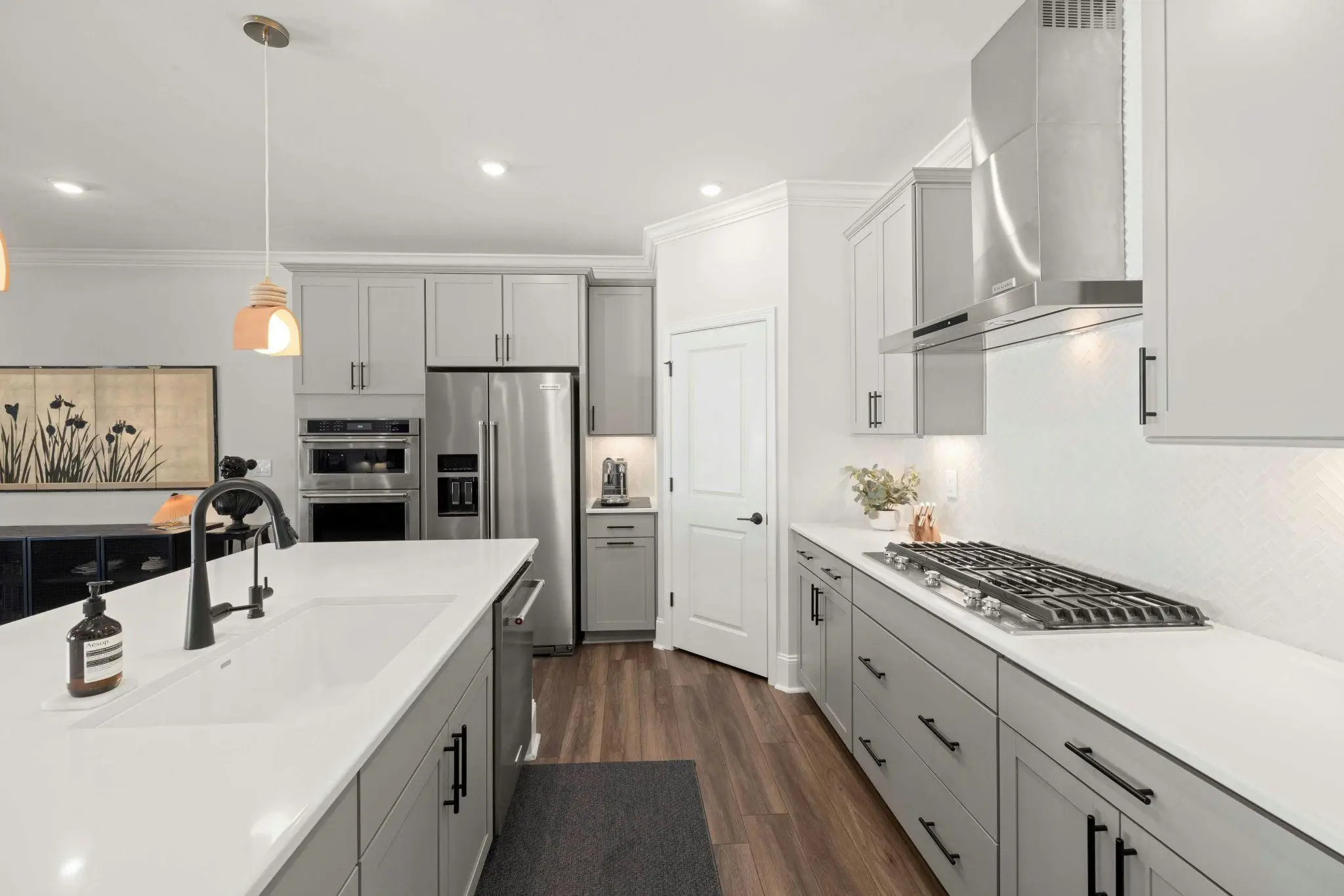
A kitchen remodel is one of the few home projects where a wrong choice can stay visible for years. Architectural 3d renderings help early because most homeowners are trying to make costly cabinet, tile, countertop, and lighting decisions before they can fully picture how those pieces will live together. A 3d rendering service gives the project a virtual trial run, which matters when bold ideas start colliding with fear. People often want deeper cabinet colors, stronger veining, warmer woods, or more dramatic tile patterns, yet retreat to safe neutrals because the risk feels too real. Remodeling’s 2024 Cost vs. Value data put a minor midrange kitchen remodel at $27,492 with a reported 96.1% cost recovery, which shows how financially important this room remains.
Why the Kitchen Remains the Financial Center of Your Home
Kitchens absorb money fast because they combine custom fabrication, expensive finishes, appliances, plumbing, electrical work, and installation labor in one concentrated zone. Unlike repainting a bedroom, mistakes here do not disappear cheaply. Replacing installed cabinets, reworking tile, or shifting a poorly planned island can turn into a multi-trade problem with both cost and delay attached. That is why planning matters more here than in almost any other room. Professional 3d rendering services support that planning by testing the visual and functional consequences before the ordering stage begins. Houzz reported in 2025 that 54% of homeowners undertook renovation projects in 2024, which is one reason design decisions feel so loaded.
The Psychology of Safe Choices and the Fear of Boldness
Most homeowners do not choose white cabinets and quiet backsplashes because they lack imagination. They choose them because regret is expensive. Without a believable preview, strong color feels like a gamble and patterned materials feel like a trap. That is how people end up designing for safety instead of for themselves. A 3d render service changes that mental equation. Once a homeowner can actually see navy cabinets beside warm brass, or a patterned tile grounded by a calm stone counter, the decision stops feeling reckless and starts feeling testable. That matters because design paralysis usually comes from uncertainty, not bad taste. Visualization gives people permission to make bolder choices with clearer eyes.
Transforming Vision Into Reality With a 3D Rendering Service
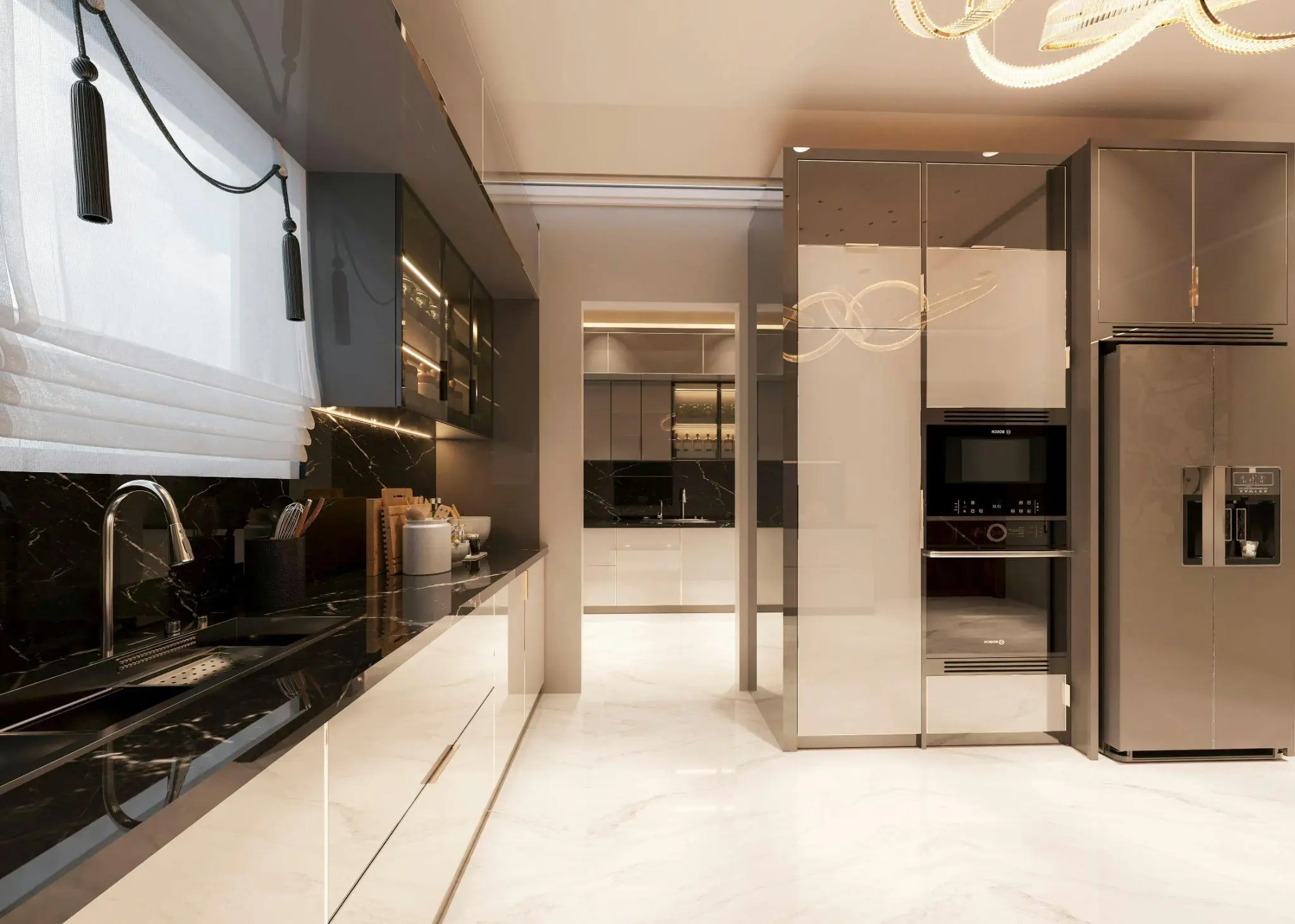
Two-dimensional drawings can explain dimensions, elevations, and construction logic, but they do not communicate the atmosphere very well. They cannot fully show how shadow collects under upper cabinets, how a slab backsplash changes a wall, or how pendant lights reshape the mood of the room after sunset. That is where the digital model becomes far more useful. A kitchen rendering can simulate daylight, evening light, material texture, reflectivity, and the spatial relationship between every major element. It helps the homeowner, designer, and contractor react to the same visual reality instead of three separate interpretations. Once the kitchen feels real on screen, the path to building it becomes much less abstract and much more controlled.
Avoiding the Costly Trap of Buyer’s Remorse
Buyer’s remorse in a kitchen remodel is rarely small. It can mean restocking fees for large orders, labor costs for removal and reinstall, delays while new materials are sourced, and the emotional drain of watching money disappear because one detail was misjudged. A 3d architectural visualization service reduces that risk by showing problems while they are still cheap to solve. Cabinet doors that crash into appliance handles, pendant lights that hang too low over a walkway, or a countertop tone that turns muddy under the actual finish palette all become easier to spot before anything arrives on site. That is why visualization works like prevention, not decoration.
Experimenting With Color: From Navy Cabinets to Patterned Tiles
This is where remodeling starts to feel creative again. A homeowner can test deep greens, charcoal blues, walnut tones, stone variations, patterned cement tile, ribbed glass, matte black hardware, or softer brass accents without committing money too early. 3d renders services make that experimentation practical because they let the same kitchen be reviewed through multiple combinations instead of forcing people to imagine each one from loose samples on a table. The benefit is not only visual confidence. It is balanced. A bold tile may work beautifully once the countertop quiets down. Dark cabinetry may feel rich instead of heavy once the wall color shifts warmer.
Core Advantages of Investing in Pre-Visualization
Good pre-visualization is useful because it answers practical questions before the construction team is asked to solve them on-site. It is not only about making the kitchen look attractive. It is about making the kitchen behave correctly, read clearly, and stay aligned with the homeowner’s real priorities from the beginning.
- Accurate validation of cabinet door clearance and drawer functionality in tight corners.
- Verification of lighting placement to ensure task areas are illuminated without harsh glare or unwanted shadows.
- Ability to preview the exact relationship between the kitchen island and the surrounding traffic flow for better ergonomics.
- Harmonization of finish colors by comparing different material samples in a virtual, controlled environment.
- Reduction in project timelines by finalizing material selections before the construction team arrives on-site.
- Documentation of the design intent to serve as a clear instruction manual for the contractor and sub-trades.
That kind of clarity is what keeps a kitchen from becoming a chain of small surprises that add up to one big problem.
Precision Planning: Beyond Color to Spatial Functionality
A kitchen can be beautiful and still work badly. That usually happens when ergonomics are treated as secondary to finishes. The digital model helps prevent that by exposing the daily mechanics of the room: how the dishwasher opens near the sink, how far someone reaches for upper storage, whether island seating blocks movement, and how comfortably two people can cook at once. This is where the work triangle becomes easier to judge because the layout is no longer theoretical. Distances, clearances, and bottlenecks become easier to evaluate before the cabinets are ordered. That matters because function problems in kitchens are among the most frustrating to fix later.
Streamlining Professional Communication With Your Build Team
Kitchen projects slow down when the homeowner, designer, cabinet supplier, and contractor are all working from slightly different mental pictures. That is the misinterpretation gap, and it causes more trouble than most people expect. A photorealistic render helps close it because everyone can point to the same agreed result instead of relying on vague language. Autodesk cited FMI data in 2026 showing that miscommunication and poor project data account for 48% of all rework on U.S. construction jobsites. That number explains why visual alignment matters. When the contractor can clearly see the intended finish contrast, cabinet rhythm, lighting placement, and edge details, execution usually gets cleaner.
Achieving Cohesion: Lighting, Texture, and Workflow
A strong kitchen depends on relationships, not isolated upgrades. Expensive stones can fall flat if the lighting is wrong. Beautiful cabinetry can feel heavy if the floor tone fights it. Polished surfaces can create glare if task lighting is poorly placed. This is where rendering becomes useful again as a full-system check. The homeowner can test pendant placement, under-cabinet strips, recessed lights, reflective finishes, matte finishes, and the way daylight moves across the room. The goal is not to make every surface stand out. The goal is to make them work together. Once the lighting and material sheen are tuned in the model, the kitchen starts to feel cohesive rather than crowded with premium parts.
Conclusion
A kitchen remodel becomes easier to manage when the biggest decisions are tested before the orders are placed. That is what visualization changes. It gives the homeowner room to be bold without being reckless, helps the layout function better in daily life, and aligns the build team around one clear result. It also protects the budget from regret that usually shows up too late, after labor and materials are already in motion. The real value is not just a prettier preview. It is better judgment at the moment judgment matters most. When cabinets, tile, lighting, and movement all make sense before installation day, the remodel has a far better chance of ending where the homeowner hoped it would. That is why smart planning now often starts with a 3d rendering service.