
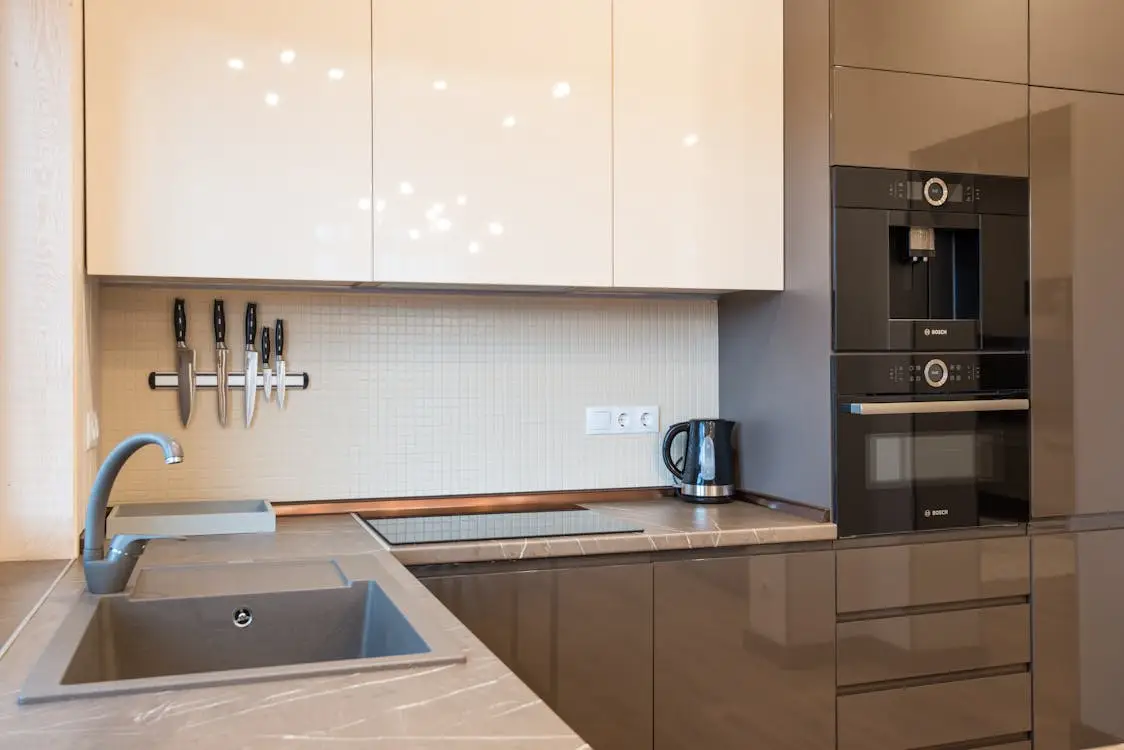
One of the key points that sticks with every homeowner when buying a new kitchen sink is the longevity. Sure, a sink can look really nice in the pictures and in the showroom lighting. But, what homeowners really want is a sink that keeps looking that way for years to come.
Scratches and stains are two major problems that can arise when a sink is constantly used. They can make the sink look old and unpresentable, and at odds with the otherwise gleaming façade of the kitchen.
In this guide, we’ll tell you about a few types and varieties of sinks that don’t easily scratch and stain, and maintain their “showroom” look for a long time.
Let’s get started.
Fireclay Sinks
Fireclay sinks are made by molding ceramic clay into a sink shape and firing it at extremely high temperatures, sometimes exceeding 1800 degrees Fahrenheit. This process produces a dense, non-porous surface with a thick glaze fused directly into the material rather than applied on top of it, which is what gives fireclay its exceptional resistance to scratching and staining.
Why It Resists Scratches and Stains
The high-temperature firing process vitrifies the clay, meaning it becomes glass-like in density and hardness. The fused glaze on the surface is smooth enough that most staining agents, including coffee, wine, and food dyes, cannot penetrate it. The same hardness that makes fireclay resistant to staining also makes it difficult to scratch under normal kitchen use.
Pros and Cons of Fireclay Sinks
| Pros | Cons |
|---|---|
| Extremely hard and scratch-resistant | Very heavy, requiring reinforced cabinet support |
| Non-porous surface repels stains effectively | Expensive compared to most other materials |
| Glaze is fused into the material, not just a coating | Limited style and color options |
| Long lifespan with minimal maintenance | Can crack under severe impact |
How Much Do Fireclay Sinks Cost?
Fireclay sinks typically start at around $500 and can exceed $2,000 for larger or designer models. They sit at the higher end of the market but are generally considered a long-term investment given their durability.
Composite Granite Sinks
Composite granite sinks are made from a mixture of granite stone dust and acrylic resin, typically around 80% granite and 20% resin, compressed and molded into shape. The result is a surface that is harder than most metals, highly resistant to impact, and dense enough to repel both scratches and stains under heavy daily use.
Why It Resists Scratches and Stains
The high granite content gives the surface a hardness that most utensils and cookware simply cannot mark. The resin component fills in any microscopic pores in the granite, creating a smooth, sealed surface that staining agents cannot penetrate. Composite granite also holds up well against heat, which is an added advantage in a kitchen environment.
Pros and Cons of Granite Sinks
| Pros | Cons |
|---|---|
| Extremely scratch-resistant due to high granite content | Heavier than stainless steel, though lighter than fireclay |
| Non-porous surface resists stains and bacteria | Can be damaged by harsh chemical cleaners |
| Heat-resistant up to around 530 degrees Fahrenheit | Limited color options compared to ceramic |
| Absorbs sound well, quieter than steel | Higher cost than stainless steel |
How Much Do Composite Granite Sinks Cost?
Composite granite sinks typically start at around $300 and can reach $1,200 or more for larger undermount models. They sit in the mid-to-premium range and offer strong value given their durability and low maintenance requirements.
Stainless Steel Kitchen Sinks
Stainless steel kitchen sinks are made from an alloy of steel, carbon, and chromium, with the chromium content being the key ingredient responsible for the material’s well-known resistance to staining. They are the most widely used sink material in both domestic and commercial kitchens, valued for their durability, ease of cleaning, and compatibility with virtually any kitchen style.
Why It Resists Scratches and Stains
The chromium in stainless steel reacts with oxygen to form a thin, invisible layer on the surface called a passive layer, which actively prevents rust and staining from taking hold. Scratch resistance, however, depends heavily on the gauge of the steel. Lower gauge numbers mean thicker steel, with 16 gauge being significantly more resistant to scratching and denting than the thinner 18 or 20 gauge steel found in budget models. It is worth noting that very fine surface scratches can appear over time, though these tend to blend into the finish and become less noticeable with use.
Pros and Cons of Stainless Steel Sinks
| Pros | Cons |
|---|---|
| Chromium layer actively resists staining | Thinner gauges scratch more easily |
| Widely available in a range of sizes and configurations | Can show water spots and fingerprints |
| Lightweight and easy to install | Louder than composite or fireclay without sound dampening |
| Compatible with any kitchen style | Budget models use thinner, less durable steel |
How Much Do Stainless Steel Kitchen Sinks Cost?
Stainless steel sinks are the most accessible option on this list, with basic models starting at around $80. Mid-range sinks in 16 or 18 gauge steel with sound dampening typically cost between $200 and $600, while premium undermount models from higher-end brands can exceed $1,000.
Cast Iron Sinks
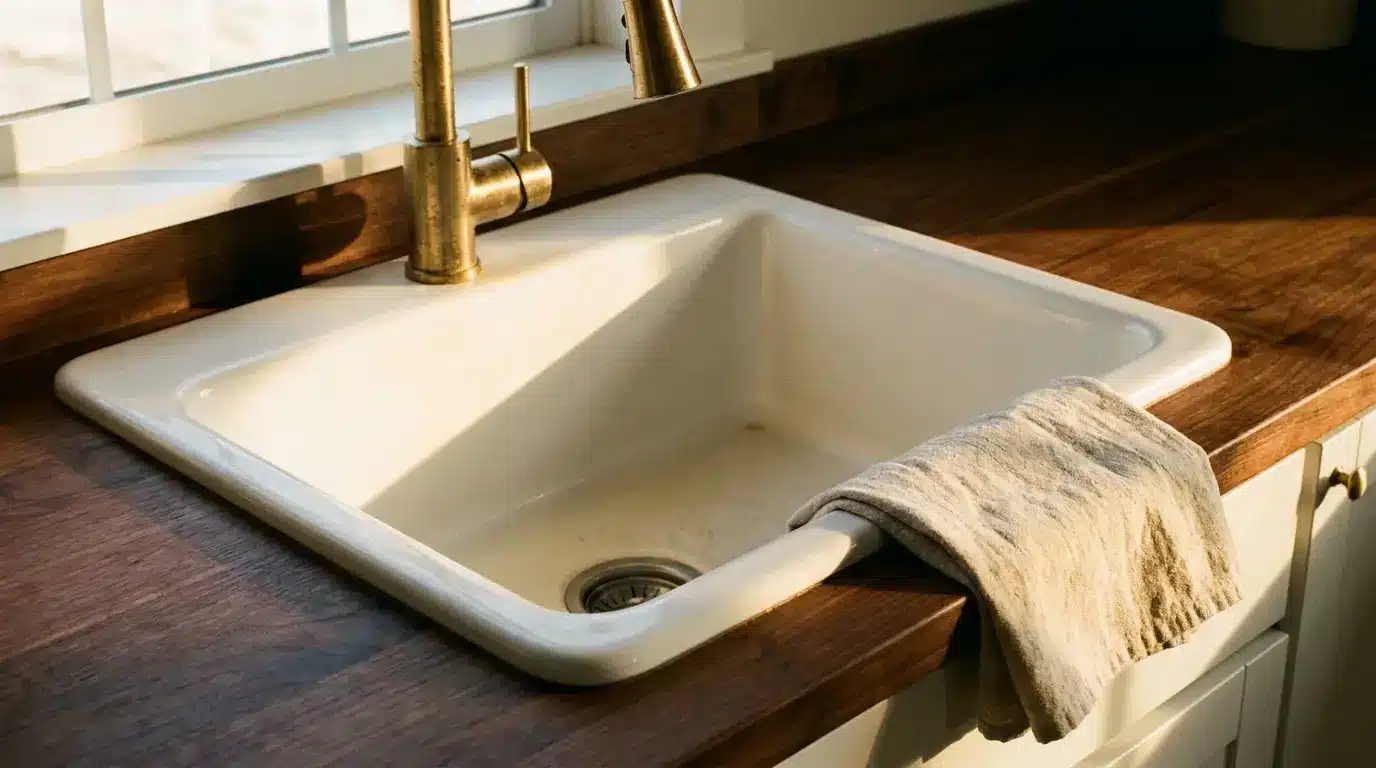
Cast iron sinks are made from molten iron poured into a mold and coated with a thick layer of porcelain enamel, which is fused to the surface at high heat. It is this enamel coating, rather than the iron itself, that gives cast iron sinks their smooth, glossy finish and their resistance to scratching and staining.
Why It Resists Scratches and Stains
The porcelain enamel coating creates an extremely hard, glass-like surface that is non-porous and highly resistant to staining from food, grease, and liquids. The coating is thick enough to withstand heavy daily use without marking under normal conditions. The main vulnerability is impact, as a sharp or heavy blow can chip the enamel, and once chipped, the exposed iron beneath becomes susceptible to rust. Treated carefully, however, a cast iron sink can maintain its finish for decades.
Pros and cons of cast iron sinks
| Pros | Cons |
|---|---|
| Porcelain enamel is highly stain resistant | Extremely heavy, requiring strong cabinet support |
| Hard glossy surface resists scratching under normal use | Enamel can chip under heavy impact |
| Available in a wide range of colors | Chipped areas expose iron and can rust |
| Very long lifespan when maintained properly | Higher cost than stainless steel |
How Much Do Cast Iron Sinks Cost?
Cast iron sinks typically start at around $400 and can exceed $1,500 for larger or colored models from premium brands. The weight and manufacturing process make them one of the more expensive options, though their longevity justifies the cost for many homeowners.
Ceramic Sinks
Ceramic sinks are made from refined clay that is shaped, glazed, and fired in a kiln, producing a smooth, hard surface with a bright, clean finish. They are similar to fireclay in their basic composition but are fired at lower temperatures, which makes them slightly less dense while still offering strong resistance to everyday staining and scratching.
Why It Resists Scratches and Stains
The glaze applied before firing creates a sealed, non-porous surface that prevents liquids and food residue from being absorbed into the material. This makes ceramic sinks easy to wipe clean and resistant to most common kitchen stains. In terms of scratch resistance, ceramic holds up well against everyday utensils and cleaning, though it is more vulnerable to cracking or chipping under sharp impact than fireclay or composite granite.
Pros and Cons
| Pros | Cons |
|---|---|
| Glazed surface is non-porous and stain resistant | More vulnerable to cracking than fireclay |
| Easy to clean with minimal effort | Can chip if struck by heavy objects |
| Available in a wide range of colors and styles | Fired at lower temperatures, slightly less dense than fireclay |
| Generally more affordable than fireclay | Heavier than stainless steel |
How Much Do Ceramic Sinks Cost?
Ceramic sinks typically start at around $200 and can reach $900 or more for larger or designer models. They offer a middle ground between the affordability of stainless steel and the premium pricing of fireclay and cast iron.
Overview of All the Different Sink Types
| Material | Scratch Resistance | Stain Resistance | Durability | Maintenance | Cost Range |
|---|---|---|---|---|---|
| Fireclay | Excellent | Excellent | Very High | Low | $500 to $2,000+ |
| Composite Granite | Excellent | Excellent | Very High | Low | $300 to $1,200+ |
| Stainless Steel | Moderate to Good (gauge dependent) | Good | High | Low | $80 to $1,000+ |
| Cast Iron | Good | Excellent | High (if enamel intact) | Moderate | $400 to $1,500+ |
| Ceramic | Moderate | Good | Moderate | Low to Moderate | $200 to $900+ |
Which Material Is Right for Your Daily Use?
The right sink material comes down to how your kitchen actually gets used day to day, not just how the sink looks in a showroom.
- If you cook heavily and the sink sees constant traffic, composite granite or fireclay are the strongest choices. Both are dense, non-porous, and built to handle the kind of sustained daily use that would show wear on thinner or more delicate materials.
- If you have a large family and prioritize easy maintenance, stainless steel in 16 gauge is a practical choice. It is forgiving, easy to clean, widely available, and any fine surface scratches that develop over time tend to blend into the brushed finish rather than stand out.
- If aesthetics matter as much as durability, cast iron and ceramic offer the widest range of colors and finishes. Both can hold their appearance for years when treated with reasonable care, though they require more mindful use than granite or steel.
- If budget is a deciding factor, stainless steel offers the best durability-to-cost ratio by a significant margin. Composite granite is the next step up if you want better scratch resistance and a more premium look without reaching fireclay or cast iron pricing.
- If longevity is the priority above all else, fireclay is the material that ages best. It is the heaviest and most expensive option on this list, but it is also the one most likely to still look presentable twenty years from now.
Final Thoughts
Scratches and stains are not inevitable. The right material, matched to the way your kitchen is actually used, can keep your sink looking clean and presentable for years without demanding much in return.
Whether you go with the practicality of stainless steel, the toughness of composite granite, or the longevity of fireclay, each of the materials in this guide is a meaningful step up from a standard budget sink. Choose based on your daily habits rather than aesthetics alone, and the sink will take care of itself.