


Are you confused about which low carb diet actually works best for your body and goals?
I spent months researching both approaches before making my own choice. Each diet promises incredible results, but it work in completely different ways for your health.
You might think that eating only meat sounds too extreme or that keto offers enough variety. Understanding the real differences helps you pick the right path for sustainable, long-term success.
Both diets change how your body burns fuel and processes food dramatically every day. Learn which eating style works better for your goals.
Keto Vs Carnivore At a Glance
Both keto and carnivore reduce carbohydrate intake and encourage the body to rely more on fat for energy. Despite this similarity, they differ in food choices, flexibility, and overall dietary approach.
| Feature | Keto Diet | Carnivore Diet |
|---|---|---|
| Foods Allowed | Meat, fish, eggs, dairy, healthy fats, low-carb vegetables, nuts, and seeds | Meat, fish, eggs, animal fats, and limited dairy |
| Carbohydrate Intake | Usually 20–50 g net carbs per day | Nearly zero carbs |
| Plant Foods | Allowed | Excluded |
| Protein and Fat | Moderate protein with high fat | High protein with moderate to high fat |
| Food Variety | Wide range of foods | Limited to animal-based foods |
| Level of Restriction | Restrictive but flexible | Highly restrictive |
| Best For | People wanting a balanced low-carb lifestyle | People seeking a strict animal-based elimination diet under professional guidance |
What is the Keto Diet?
The ketogenic (keto) diet is a low carbohydrate, high fat eating plan designed to shift the body into a metabolic state called ketosis. In ketosis, the body burns fat for fuel instead of relying mainly on carbohydrates.
To achieve ketosis, daily carbohydrate intake is typically limited to about 20–50 grams of net carbs while healthy fats become the primary energy source.
Common foods include meat, fish, eggs, full-fat dairy, avocados, nuts, seeds, oils, and low-carb vegetables.
Fat sources get more flexibility here too; even a condiment like mayonnaise can fit keto macros depending on the brand and how much you use.
Many people follow the keto diet to support weight management, improve blood sugar control, or increase fat burning. A well-planned keto diet also emphasizes nutrient-dense foods and adequate hydration.
What is the Carnivore Diet?
The carnivore diet is a very low-carbohydrate eating plan that consists almost entirely of animal-based foods. It eliminates plant foods and focuses on meat, fish, eggs, animal fats, and, in some cases, limited dairy products.
Unlike keto, the carnivore diet does not include vegetables, fruits, grains, legumes, nuts, or seeds.
Because carbohydrate intake is nearly zero, the body may also enter ketosis, although the diet’s primary focus is eating only animal-derived foods.
Some people choose the carnivore diet as an elimination approach or for personal preference, but its restrictive nature may make it harder to meet all nutrient needs without careful planning.
Which Diet Is Better for Beginners: Keto or Carnivore?
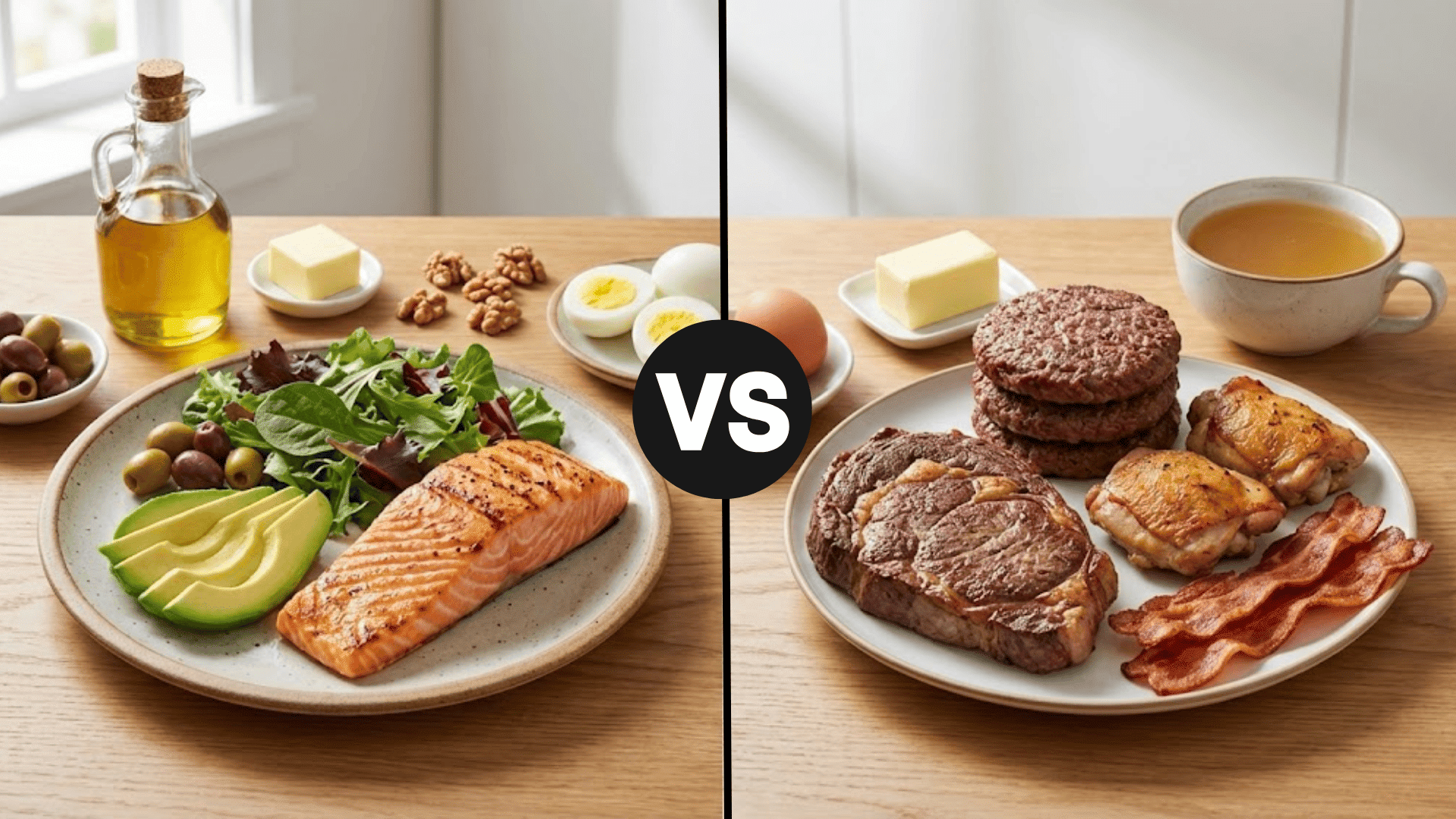
For most beginners, the keto diet is easier to follow than the carnivore diet because it allows a wider variety of foods while still keeping carbohydrate intake low.
People can include low carb vegetables, nuts, seeds, avocados, and healthy oils alongside meat, fish, eggs, and dairy, making meals more balanced and enjoyable.
That variety also means fewer hidden surprises, since a snack that looks harmless can still derail a beginner’s carb count fast, the way popcorn’s carb count quietly eats through a full day’s keto allowance in a single bowl.
This flexibility can help reduce feelings of restriction and make social dining or meal planning simpler. Keto also provides dietary fiber from plant foods, which supports digestive health.
Since it is less restrictive, many people find it easier to maintain over time while still achieving and sustaining ketosis.
Keto vs. Carnivore: Which Offers More Health Benefits?
Both diets deliver significant health improvements, but work through different mechanisms in your body. Choose the approach that best matches your specific health concerns and lifestyle preferences.
| Keto Diet | Carnivore Diet |
|---|---|
| Lowers blood sugar by limiting carbs. Reduces insulin spikes. | Eliminates blood sugar fluctuations. Keeps insulin at baseline. |
| Improves insulin sensitivity through low-carb intake. | Maximizes insulin sensitivity by removing all carbs. |
| Reduces inflammation through ketones and eliminates processed foods. | Removes plant irritants and inflammatory compounds completely. |
| Provides fiber from vegetables, supporting gut bacteria. | Eliminates fiber and plant compounds, causing digestive distress. |
| Ketones provide steady brain fuel, improving focus. | High protein and fat support brain function consistently. |
When to Switch From Keto to Carnivore?
Yes, it is possible to transition from a keto diet to a carnivore diet because both eating patterns are very low in carbohydrates. Many people make the change gradually by reducing plant foods while increasing animal-based foods over time.
A gradual transition may be easier than making an immediate switch, as it gives the body time to adjust to a more restrictive food selection.
Before starting, it is important to plan meals that provide enough protein, fat, and essential nutrients.
Because the carnivore diet eliminates fruits, vegetables, legumes, and grains, consulting a healthcare professional or registered dietitian is recommended, especially for long-term use.
Why Is Keto Easier to Maintain Long Term?
Many people find the keto diet easier to maintain because it allows a wider variety of foods while still keeping carbohydrates low.
This flexibility can make everyday eating, meal planning, and social situations more manageable than a strict carnivore diet.
Keto includes animal proteins alongside low-carb vegetables, nuts, seeds, healthy fats, and dairy, giving people more options for balanced meals and different flavors.
The inclusion of plant foods also provides dietary fiber, which supports digestive health. When eating out or attending social gatherings, finding keto-friendly meals is often easier than following a diet limited to animal foods alone.
Because it can be adapted to different cuisines and personal preferences, many people find keto more practical and easier to follow consistently over the long term.
How Do Keto and Carnivore Compare Nutritionally?
Keto generally provides a broader range of nutrients because it includes low-carbohydrate plant foods alongside animal products. The carnivore diet relies entirely on animal-based foods, making careful food selection important to meet nutrient needs.
A well-planned keto diet supplies fiber, antioxidants, vitamins, and minerals from low-carb vegetables, nuts, and seeds while maintaining ketosis.
Compared with keto, the carnivore diet provides high-quality protein, iron, zinc, and vitamin B12 from meat, fish, eggs, and organ meats but contains little or no fiber.
Depending on food choices, some people following a carnivore diet may have lower intakes of nutrients such as vitamin C, magnesium, calcium, or iodine.
Neither diet is automatically nutritionally complete, so planning meals carefully and consulting a healthcare professional is recommended for long-term use.
Keto Vs Carnivore Risks and Downsides
Both keto and carnivore can present challenges, especially during the transition period or when followed without proper planning. Understanding the potential risks can help you make a more informed decision.
| Keto Diet Risks | Carnivore Diet Risks |
|---|---|
| Temporary “keto flu” symptoms such as fatigue, headache, and nausea during the initial transition. | Very low fiber intake may contribute to constipation or other digestive changes. |
| Electrolyte imbalances can occur if sodium, potassium, and magnesium intake is inadequate. | Restricting all plant foods may increase the risk of certain vitamin and mineral deficiencies over time. |
| Some people may experience an increase in LDL cholesterol, which may require monitoring by a healthcare provider. | Long-term health effects remain uncertain because high-quality long-term research is limited. |
| Eliminating many carbohydrate-rich foods may make it harder to meet some nutrient needs without careful planning. | The highly restrictive nature of the diet can make long-term adherence difficult for many people. |
Keto Vs Carnivore for Cholesterol and Insulin
Both keto and carnivore can lower insulin levels by reducing carbohydrate intake, but their effects on cholesterol may differ between individuals.
Neither diet guarantees better heart health, making regular blood tests and medical guidance important for long-term use.
The keto diet limits carbohydrates enough to reduce insulin while still allowing low-carb vegetables, nuts, and seeds. The carnivore diet removes carbohydrates almost entirely, which may produce an even lower insulin response.
However, both diets can increase LDL cholesterol in some people, particularly when they are high in saturated fat. Current research also suggests that long-term evidence for the carnivore diet remains limited compared with keto.
Since cholesterol and metabolic responses vary widely from person to person, regular monitoring with a healthcare professional is recommended rather than assuming either diet will have the same effect for everyone.
Ways Keto and Carnivore Are Alike in Food Choices
Although keto and carnivore differ in how many foods they allow, both emphasize animal-based foods while keeping carbohydrates very low. Their shared food choices form the foundation of each eating pattern.
- Animal Protein Is the Focus: Both diets include meat, poultry, fish, and seafood as primary food sources.
- Eggs Are Commonly Included: Eggs provide protein and healthy fats, making them a staple on both diets.
- Healthy Fats Play an Important Role: Both diets rely on fats from foods such as butter, tallow, and other animal fats for energy.
- Low-Carbohydrate Approach: Both eating patterns limit carbohydrate intake, though the carnivore diet is generally more restrictive.
- Processed Foods Are Limited: Both diets encourage whole, minimally processed foods instead of refined carbohydrates and sugary products.
- High-Protein Meals Are Common: Meals on both diets are typically built around protein-rich foods that help support fullness and muscle maintenance.
Keto vs. Carnivore: Which Diet Should You Choose?
The right diet depends on your health goals, food preferences, and how much dietary restriction you are comfortable with.
Both approaches can fit different lifestyles, but one may be easier to follow based on your individual needs.
The keto diet is often a better choice for people who want to maintain ketosis while enjoying a wider range of foods, including low-carb vegetables, nuts, seeds, and healthy fats. Its flexibility can make meal planning, grocery shopping, and dining out more manageable.
A low-carb Mediterranean diet keeps olive oil, fish, and non-starchy vegetables in regular rotation while still limiting carbs, sitting between keto’s flexibility and carnivore’s restriction.
The carnivore diet may appeal to people who prefer a very simple eating pattern centered on animal-based foods. Some individuals also use it as a short-term elimination approach under the guidance of a healthcare professional.
This content is for educational and informational purposes only and does not replace professional medical advice. Consult your doctor before starting any new diet or health plan.
Final Words
Choosing between keto and carnivore is not about finding one “best” diet.
I like that keto offers more flexibility and a wider variety of foods, while the carnivore diet takes a much stricter, animal-based approach that may work well for some people under medical guidance.
Both diets can support weight loss when we follow them consistently and make thoughtful food choices.
Your body will respond differently than someone else’s, so pay attention to how you feel and adjust your approach if needed.
I always recommend starting with the diet that best matches your lifestyle rather than chasing trends. If you’ve tried keto, carnivore, or both, share your experience in the comments below.
Frequently Asked Questions
Is the Carnivore Diet Safe for Long-Term Use?
Long-term safety remains uncertain because there is limited high-quality research on following a strict carnivore diet for many years.
What Do Cardiologists Think of the Carnivore Diet?
Many cardiologists recommend caution due to its high saturated fat intake and advise monitoring cholesterol and heart health with a healthcare provider.
How Long Should Someone Stay on the Carnivore Diet?
There is no established recommended duration, so long-term use should be discussed with a healthcare professional based on individual health needs.
Which Diet Is More Nutritionally Balanced: Keto or Carnivore?
A well-planned keto diet is generally more nutritionally balanced because it includes low-carb plant foods that provide fiber, vitamins, and minerals.