
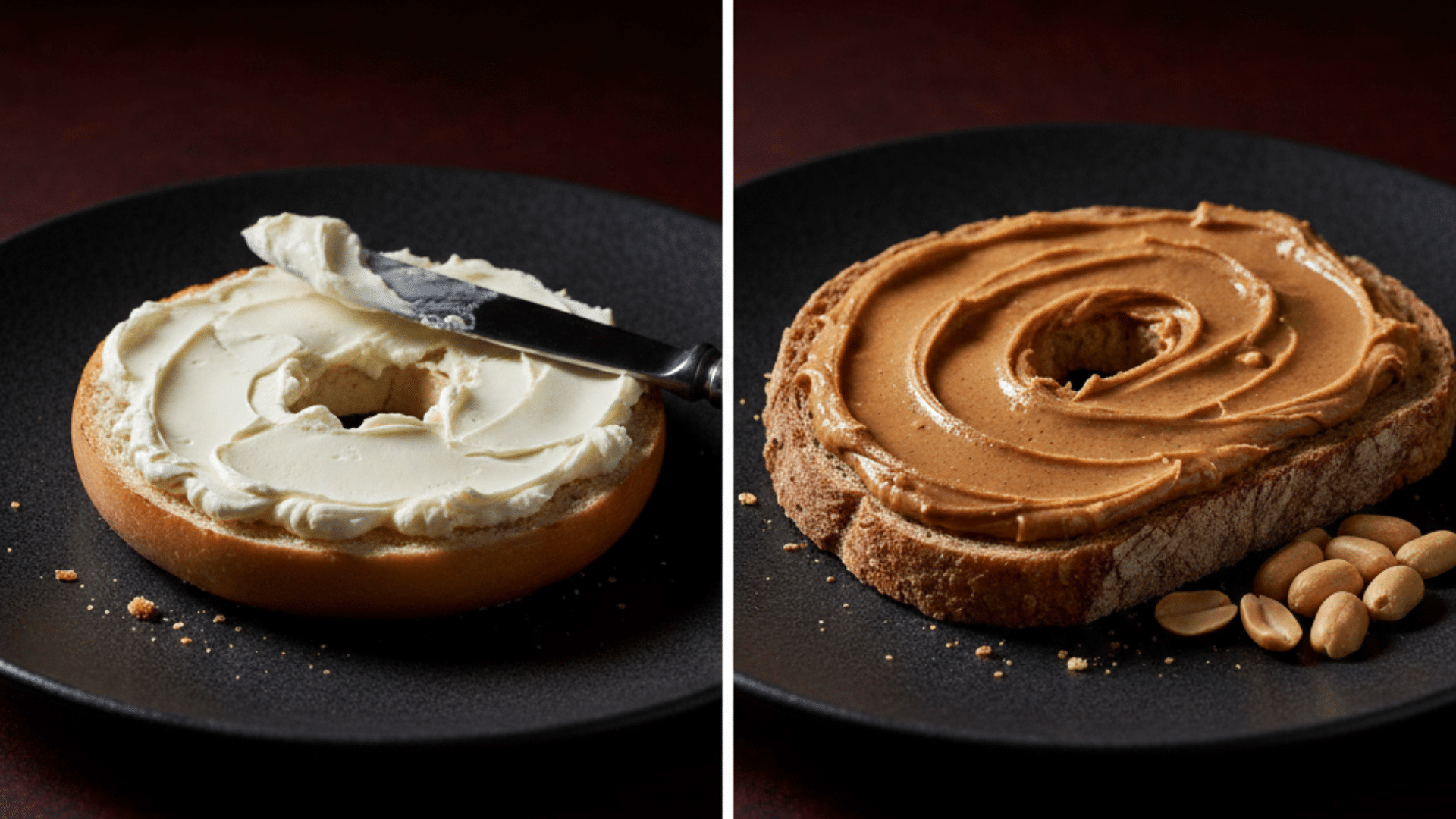
I used to grab cream cheese every morning without thinking twice. Lower calories than peanut butter, so obviously the smarter choice, right? Then I started tracking why I was starving by 10 AM, and it all clicked.
Here’s what shocked me: peanut butter has 188 calories per two tablespoons, while cream cheese sits at just 112. Yet when I switched to peanut butter, I dropped weight more easily.
Understanding the full picture matters, including carbs in cream cheese, because calorie and protein differences create totally different outcomes for hunger.
Let me break down what actually happens when you eat each one.
Calorie Numbers Quoted for Cream Cheese & Peanut Butter
Peanut Butter: 188 calories per two tablespoons
Cream Cheese: 112 calories per two tablespoons
That 76-calorie difference looks significant on paper. But I learned that my body doesn’t just count calories. It responds to what comes with those calories, and that’s where things get interesting.
Cream cheese delivers mostly fat, specifically saturated fat, with barely any protein or fiber. Your body processes it fast, sends weak fullness signals, and leaves you hungry within 60 to 90 minutes.
Peanut butter packs 7 to 8 grams of protein and 2.5 grams of fiber alongside those calories. That combination keeps me satisfied for 2 to 3 hours.
Despite the higher calorie count, I end up eating less throughout the day because I’m not constantly grazing.
What Your Body Actually Does With Each Spread
The calorie gap matters less than what happens after you eat. I’ve tracked this myself: cream cheese processes quickly and leaves you hungry, while peanut butter’s protein-and-fiber combo signals your brain that you’re done eating.
Nutrient Breakdown
| What Matters | Peanut Butter (2 Tbsp) | Cream Cheese (2 Tbsp) |
|---|---|---|
| Calories | 188 | 112 |
| Protein | 7-8g | 2g |
| Fiber | 2.5g | 0g |
| Saturated Fat | 2.4g | 6.5g |
| Fullness Duration | 2-3 hours | 60-90 minutes |
Cream cheese gets 87% of its calories from fat, mostly saturated. That type of fat suppresses fullness hormones and promotes fat storage in the liver.
Peanut butter’s fat comes mostly from monounsaturated sources, the same type found in olive oil, which supports healthy cholesterol levels and keeps you fuller for longer.
When Each Spread Makes Sense
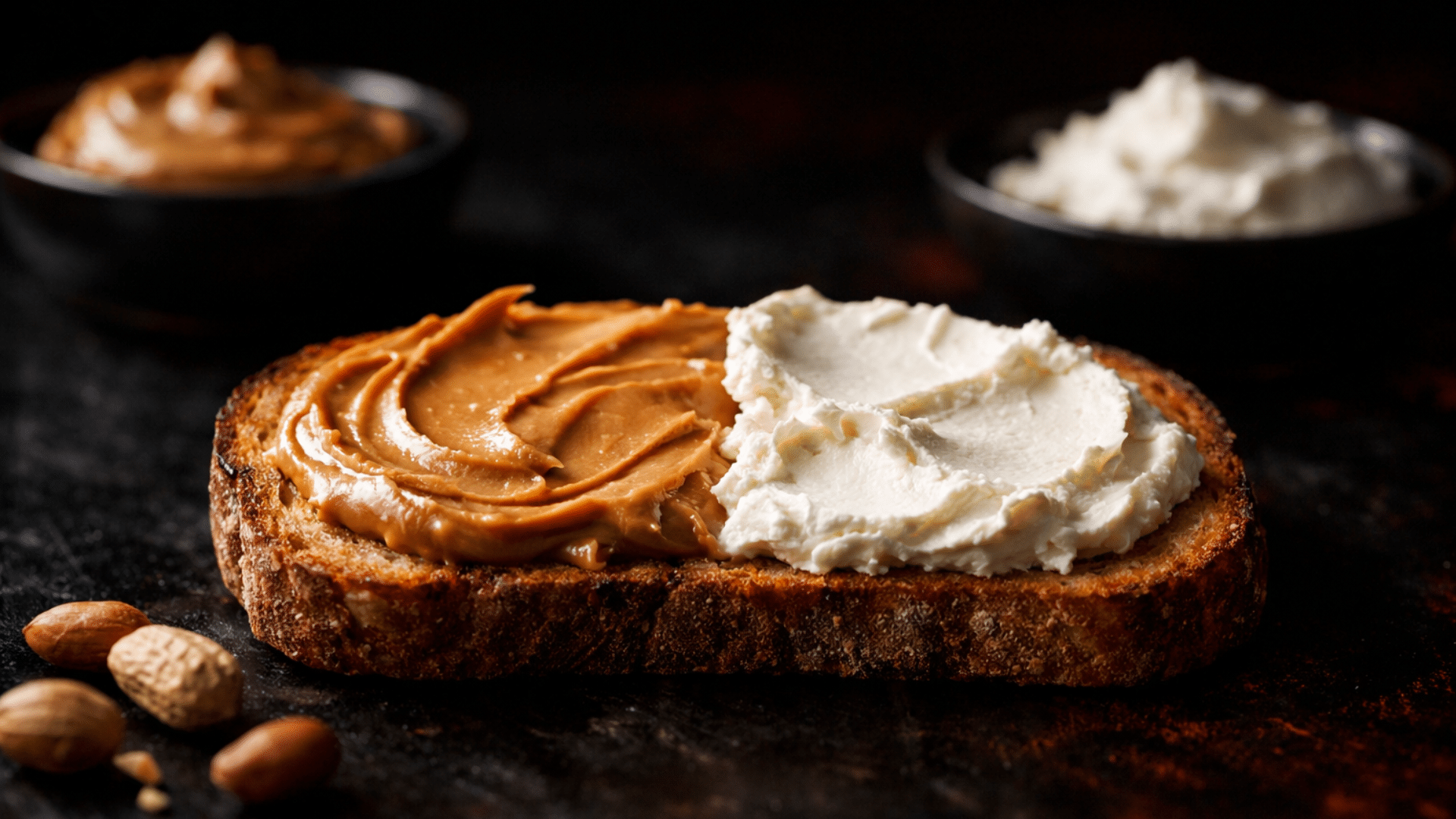
Choosing the right spread depends on your dietary needs and the meal you’re preparing.
For a creamy, tangy option, cream cheese works well in bagels, pastries, or savory dips. It’s great for richer textures, but should be limited if you’re watching your saturated fat intake.
Peanut butter, on the other hand, is an excellent choice for breakfast or snacks, offering healthy fats, protein, and fiber. It pairs well with toast, smoothies, or even fruits like apples and bananas.
For a heart-healthy option, consider avocado spread on whole-grain toast or in salads. It provides monounsaturated fats that support heart health. Each spread has its place depending on the meal and health goals you’re aiming for.
The Mistakes That Wreck Everything
Even the right choice of spread falls apart if you make these common errors. I’ve made all three myself before figuring out what actually works.
- Buying the wrong peanut butter: Natural peanut butter has about 7.6 grams of saturated fat per 100g. Brands like Skippy and Jif add palm oil, increasing that to 10-12 grams, which kills the heart benefits. Look for ingredient lists that say “peanuts” and maybe “salt.” Nothing else.
- Falling for “reduced fat” versions: Reduced-fat peanut butter swaps fat calories for added sugar, often 12 to 15 grams per serving, compared to 3 grams in natural versions. Light cream cheese saves you only 10-20% of calories while keeping the same problematic saturated fat ratio.
- Not measuring portions: Both products list two tablespoons as a serving, but most of us eat three or four without realizing it. That schmear you eyeballed just doubled the calories.
Small mistakes compound fast. Fix these three issues, and you’ll actually get the benefits you’re choosing these spreads for in the first place.
That’s a Wrap
Neither spread is terrible, but if I had to pick which one is more “fattening” despite the calorie difference, I’d say cream cheese.
It’s calorically lighter but nutritionally empty. It doesn’t keep you satisfied, doesn’t help your heart, and basically invites you to eat more later.
Peanut butter has more calories upfront, but your body recognizes the protein and fiber and tells you when to stop.
The best choice? Whichever one you can eat in reasonable amounts without triggering another trip to the kitchen.
For most people, that’s peanut butter. Just make sure it’s real peanut butter, peanuts, and salt only, and measure until your instincts calibrate. Your breakfast just got smarter.