

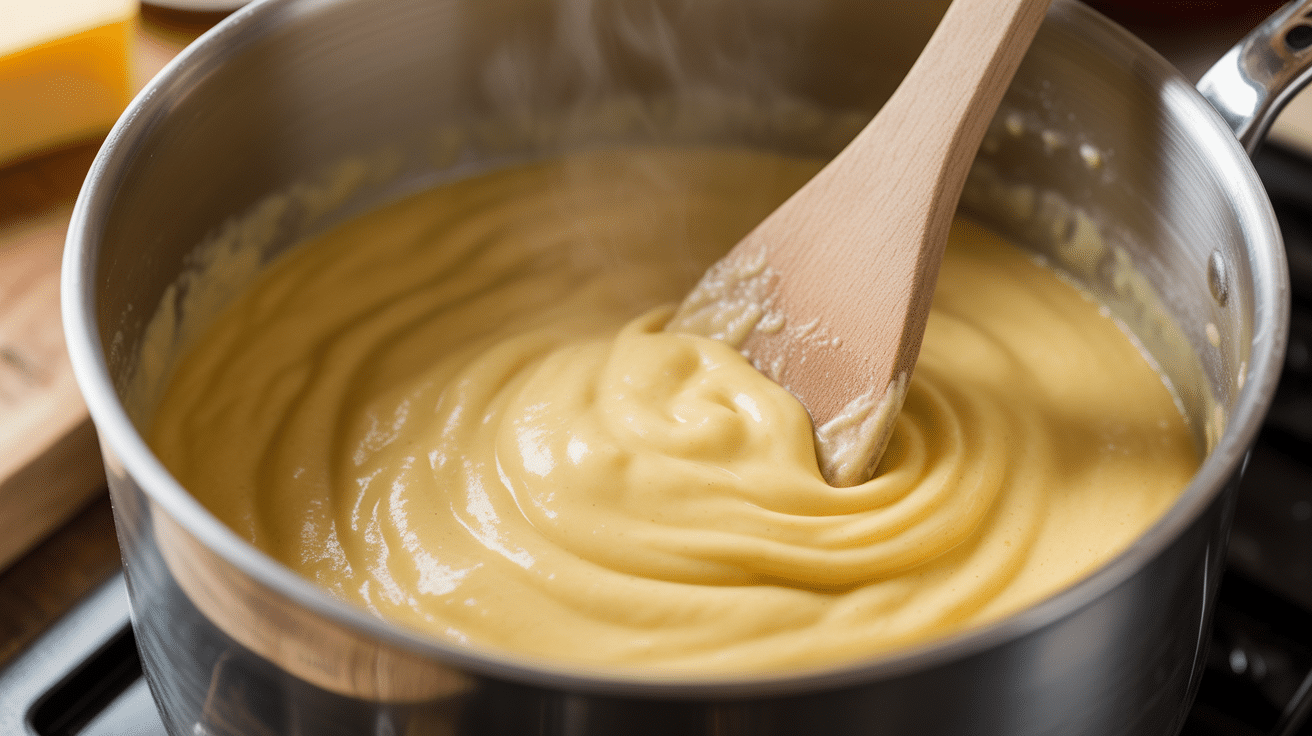
Ever made mac and cheese that looked perfect but turned out grainy, thin, or lumpy? The secret behind that creamy, restaurant-style texture is not just cheese; it’s the roux.
A simple mixture of butter and flour, roux is what turns plain milk into a thick, smooth sauce that holds everything together. Most people skip this step or rush it, which is why homemade mac and cheese often doesn’t match the creamy version you get at restaurants.
In this guide, you’ll learn how to make roux for mac and cheese in the simplest way possible. From ingredients and ratios to step-by-step cooking, common mistakes, and tips, everything is broken down so even beginners can get it right on the first try.
What is Roux?
Roux is a simple cooking base made by gently cooking butter and flour together until they form a smooth paste. It is commonly used as a thickening agent in many dishes such as sauces, soups, and especially mac and cheese.
When prepared correctly, it provides the foundation for a creamy, stable sauce.
In mac and cheese, roux plays an important role by helping turn milk and cheese into a thick, smooth, and consistent sauce. Instead of separating or becoming watery, the mixture holds together and develops a rich texture.
Without roux, the sauce often becomes thin, uneven, or grainy, and the cheese may not melt smoothly. On the other hand, when roux is used properly, it ensures a creamy consistency, even cheese melting, and a well-balanced sauce that stays smooth throughout the dish.
Ingredients for Mac and Cheese Roux
The beauty of roux lies in its simplicity: it requires only a few basic kitchen ingredients most people already have at home. Even though the ingredient list is short, each component plays an important role in building the texture and flavor of a creamy mac and cheese sauce.
- Butter: Forms the fat base of the roux and helps create a smooth cooking foundation
- All-purpose flour: Acts as the thickening agent and gives structure to the sauce
- Milk: Turns the cooked roux into a creamy sauce base that becomes the foundation of mac and cheese
- Salt & pepper (optional): Enhances the flavor and balances the richness of the sauce
The most important factor in making a perfect roux is maintaining the correct butter-to-flour ratio, usually equal parts of both. This balance ensures the mixture stays smooth and consistent, preventing it from becoming too thick or too runny.
Step 1: Melt the Butter
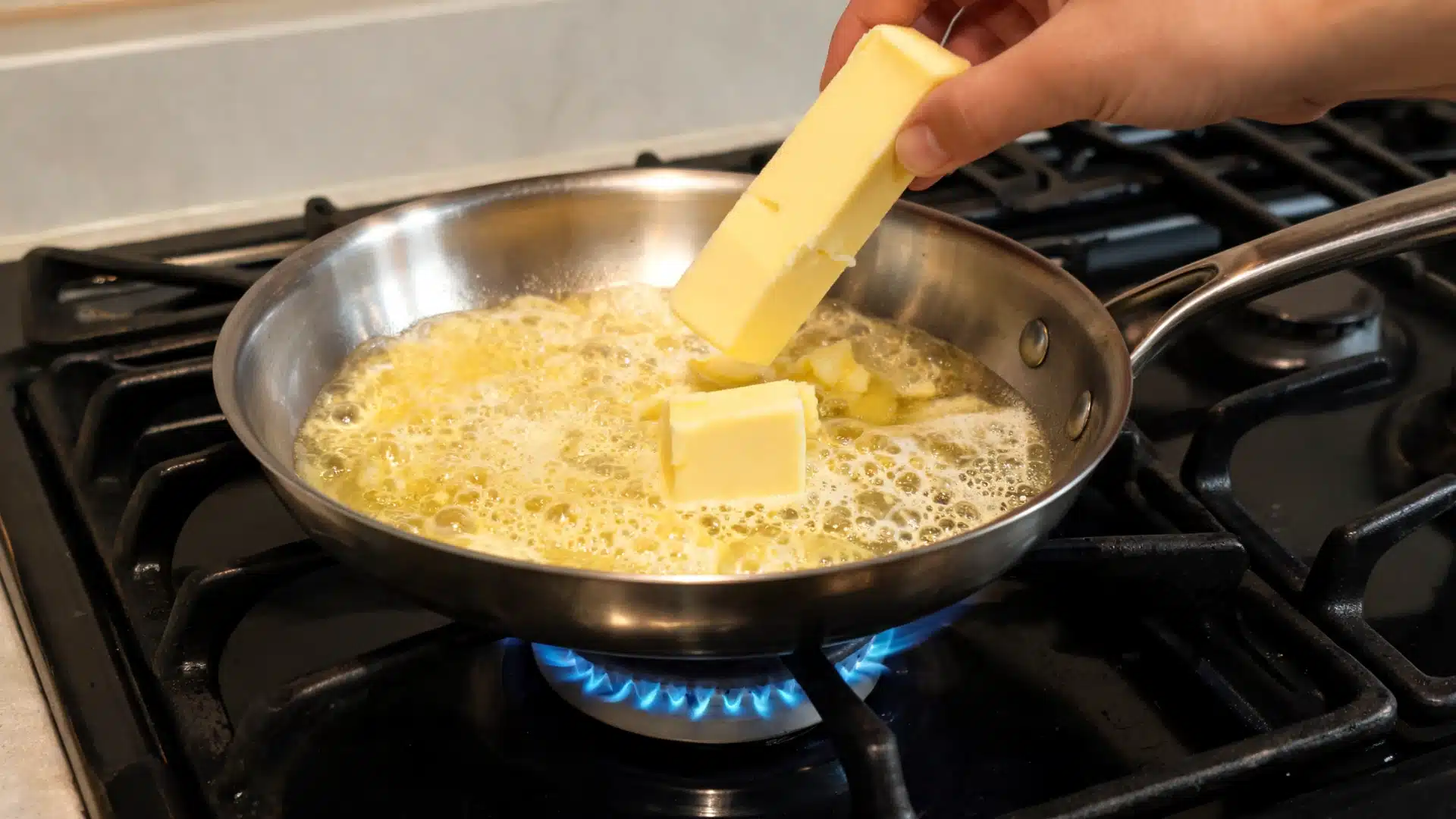
Start by melting butter in a pan over low to medium heat. Allow it to melt slowly so it does not brown or burn. The goal is to create a smooth, even liquid base. This step sets the foundation for a stable and flavorful roux.
Keeping the heat controlled is important because overheating can change the taste of the sauce. Once the butter is fully melted, it should look glossy and uniform.
At this point, it is ready for the next ingredient. A properly melted butter base ensures smooth blending with flour.
Step 2: Add Flour
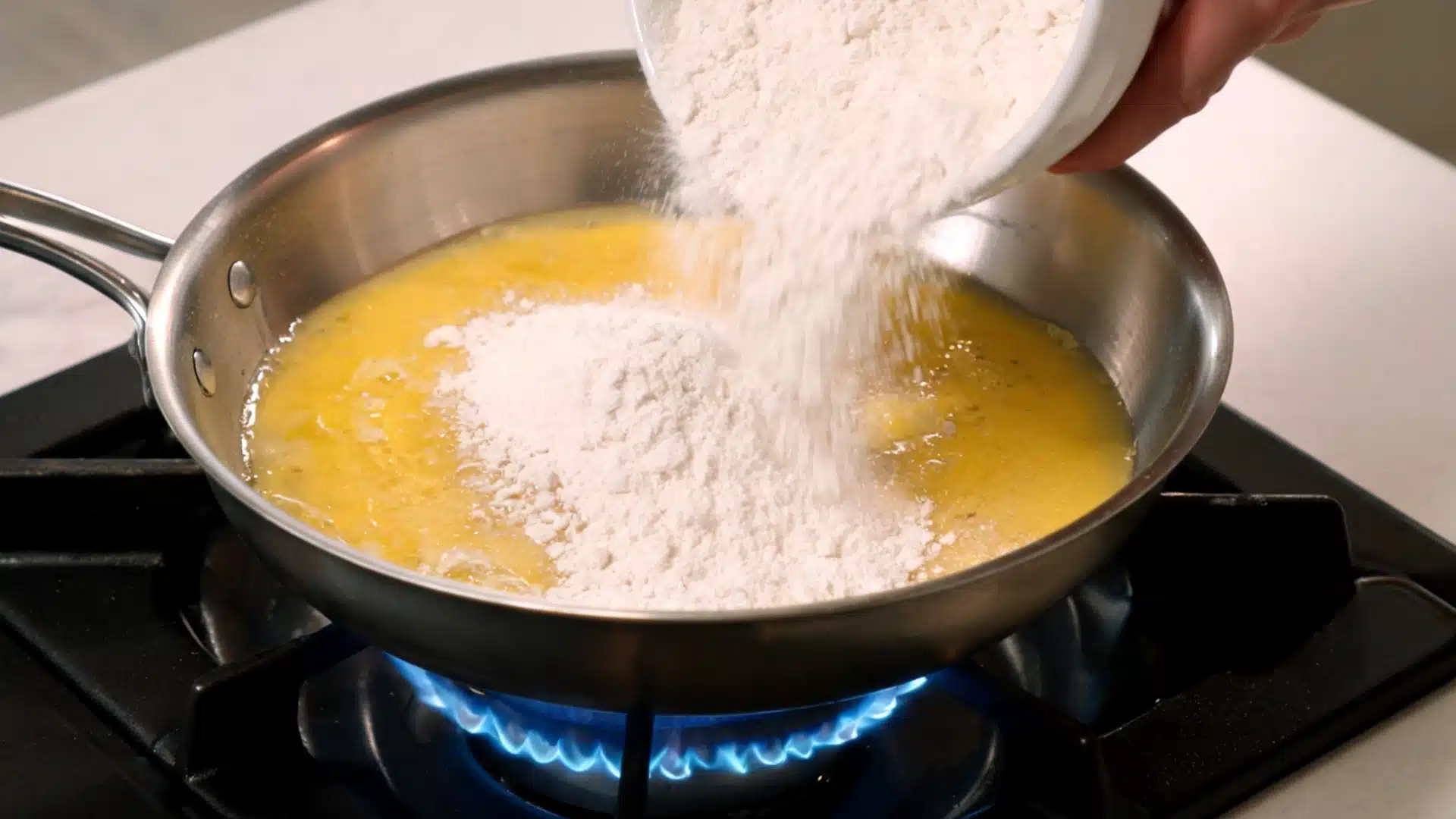
Once the butter is melted, add an equal amount of all-purpose flour to the pan. Stir immediately so the flour combines evenly with the butter. The mixture will quickly turn into a thick paste-like consistency. This is the beginning of the roux structure.
Continuous stirring is important to prevent lumps from forming. The flour should fully absorb the butter and start forming a smooth base.
At this stage, the mixture should look consistent and slightly grainy. Proper mixing ensures a stable texture for the sauce.
Step 3: Cook the Roux
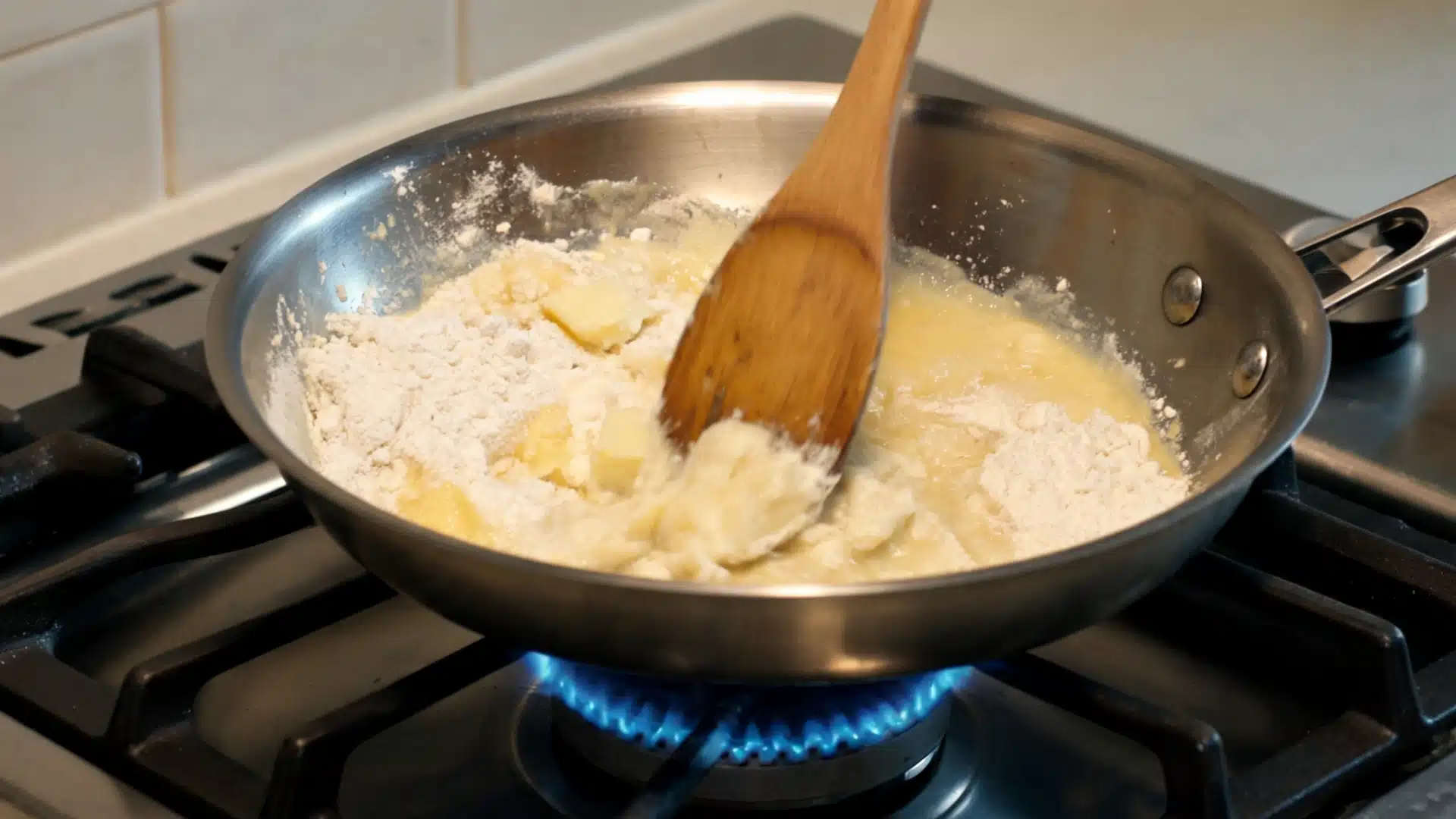
Let the butter and flour mixture cook for about 1 to 3 minutes, stirring constantly. This helps remove the raw taste of flour and develops a mild cooked aroma.
The color should remain light, especially for mac and cheese. Avoid letting it turn too brown.
Cooking at this stage improves both the flavor and texture of the final sauce. The mixture should stay smooth and slightly bubbly. Proper timing ensures the roux thickens correctly later. This step is key for a clean, balanced taste.
Step 4: Add Milk Slowly
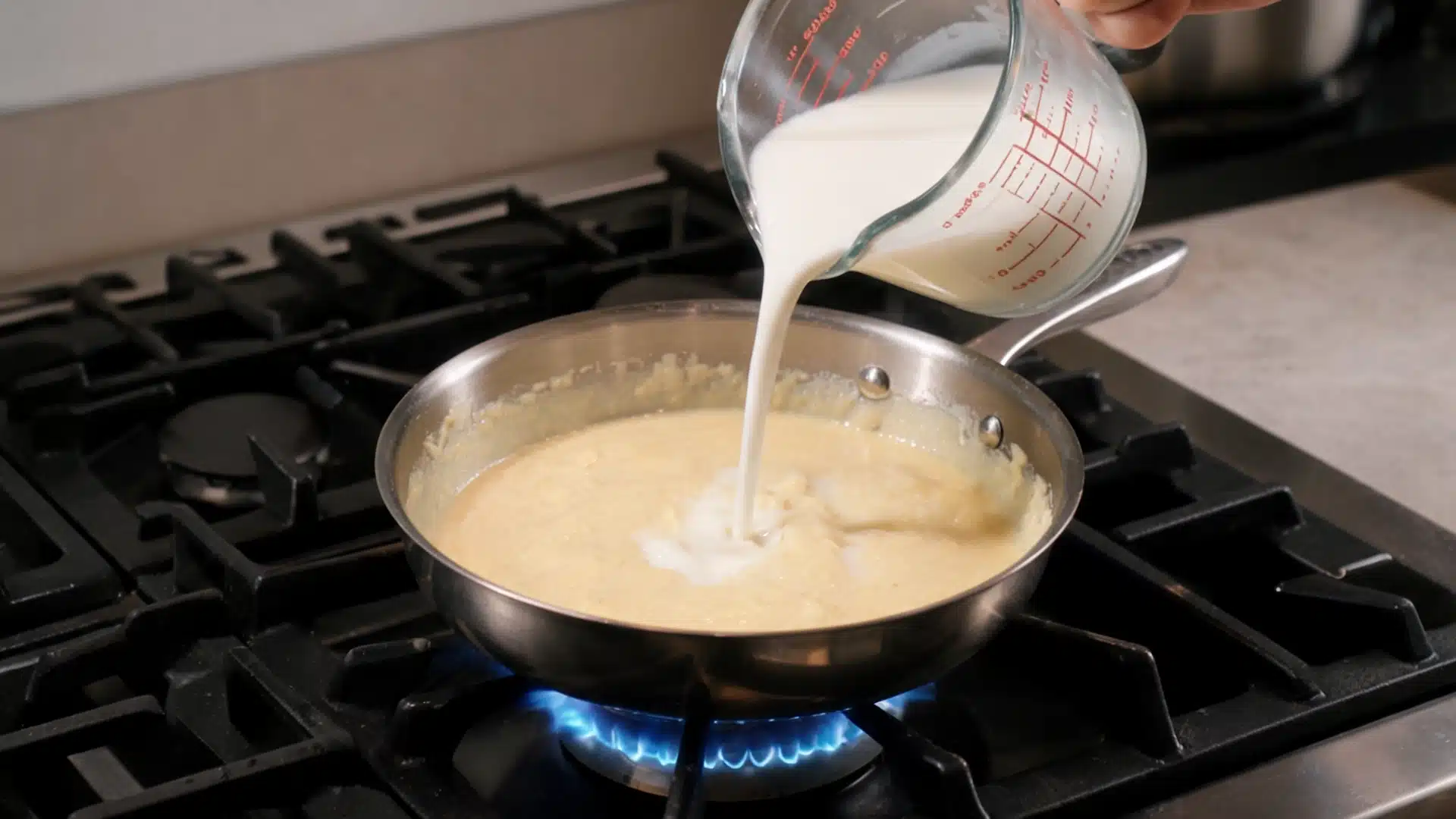
Begin adding warm milk gradually while whisking continuously. Pouring slowly helps prevent lumps and keeps the mixture smooth.
The sauce will start to loosen before gradually thickening again. This is where the roux transforms into a creamy base.
Keep whisking until the mixture becomes silky and uniform. Adding milk in small portions ensures better control of texture. The sauce will slowly become rich and velvety. At this stage, it forms the perfect base for adding cheese.
Roux Consistency Guide
Roux comes in different stages based on how long it is cooked, and each type has a different flavor, color, and purpose. While all roux types follow the same base method, not every version works well for mac and cheese.
The cooking time mainly affects color and taste intensity, which directly impacts the final sauce quality.
For creamy dishes like mac and cheese, the goal is to keep the roux light so it blends smoothly with milk and cheese without overpowering the flavor.
| Type of Roux | Color | Best Use | Result in Mac & Cheese |
|---|---|---|---|
| White Roux | Pale white | Cheese sauces, creamy pasta | Smooth, creamy, and ideal texture |
| Blonde Roux | Light golden | Light sauces, soups, and gravies | Slightly richer flavor but still workable |
| Brown Roux | Medium to dark brown | Gravies, stews | Not recommended (too strong, reduces creaminess) |
White roux is the best choice for mac and cheese because it creates a neutral, stable base that allows the cheese flavor to shine while keeping the sauce smooth and creamy.
Common Mistakes When Making Roux
Even though roux is simple, small mistakes can easily affect the final texture of your mac and cheese. Most issues stem from heat control, timing, or the order in which ingredients are added during cooking.
Adding flour too quickly can create lumps that are hard to smooth out, while using high heat can burn the butter and ruin the flavor. Not stirring continuously often leads to an uneven texture, and adding milk too fast can break the sauce, making it thin or grainy.
These small errors are the main reason homemade mac and cheese sometimes turns out less creamy than expected.
Tips for Perfect Mac and Cheese Roux
A good roux is all about control, timing, and small cooking habits that improve texture and consistency. With a few simple adjustments, you can easily avoid lumps and achieve a smooth, creamy base for your mac and cheese sauce.
These tips focus on making the process easier and more reliable for beginners.
- Use low heat: Keeps control and prevents butter from burning
- Whisk continuously: Ensures a smooth mixture and avoids lumps
- Use warm milk: Helps the sauce blend more evenly
- Maintain an equal butter and flour ratio: Creates a stable roux base
- Add milk slowly: Prevents breaking and keeps texture smooth
- Cook flour properly: Remove the raw taste for better flavor
Following these small but effective steps helps create a rich, creamy, and restaurant-style mac and cheese sauce with consistent results every time.
Roux vs No-Roux Mac and Cheese
Mac and cheese can be made in different ways, but the biggest difference depends on whether a roux base is used.
Roux creates structure in the sauce, while no-roux versions rely directly on cheese and milk. This difference directly impacts texture, consistency, and overall creaminess.
Understanding this comparison helps explain why restaurant-style mac and cheese feels smoother and more stable than quick homemade versions.
| Feature | Roux-Based Mac & Cheese | No-Roux Mac & Cheese |
|---|---|---|
| Texture | Creamy & stable | Can be watery or grainy |
| Consistency | Smooth sauce that holds well | Often separates or becomes uneven |
| Difficulty | Slightly structured, requires steps | Simple but less reliable |
| Restaurant-style result | Yes, smooth and rich | No, less stable texture |
Roux is the key reason restaurant mac and cheese has a rich, creamy, and consistent texture. It helps bind the sauce properly, preventing separation and ensuring every bite feels smooth and balanced.
Final Thoughts
Making roux is the foundation of a creamy, restaurant-style mac and cheese. In this guide, we covered what roux is, the key ingredients, and how simple steps like melting butter, adding flour, cooking the mixture, and slowly whisking in milk transform into a smooth cheese sauce base.
We also looked at different roux types, common mistakes to avoid, and practical tips to get a consistent texture every time.
Now it’s your turn to try it at home and see the difference a proper roux makes in your mac and cheese. Start with small batches, focus on heat control, and practice the technique.
For more simple cooking guides like this, keep exploring and level up your kitchen skills step by step.