

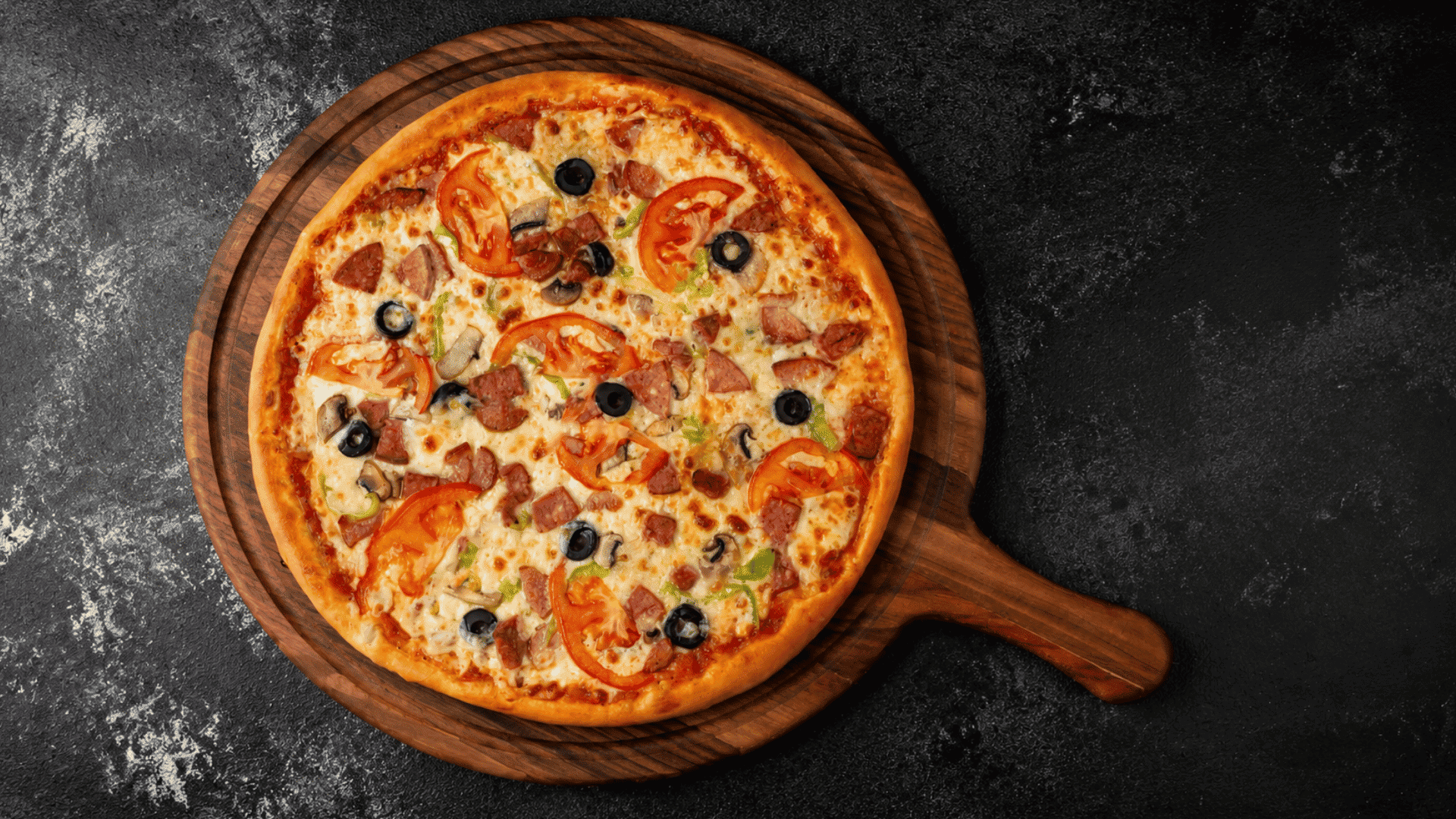
Pizza is one of the most popular comfort foods, but the calorie count can vary more than most people expect.
If you’re wonderinghow many calories are in a slice of pizza, the answer depends on the type of pizza, the size of the slice, and the toppings.
Even a small slice of pizza’s calories can differ between thin-crust, regular-crust, and deep-dish styles.
This guide provides easy calorie estimates, compares popular pizza types and slice sizes, and explains the factors that affect the total calories, helping make informed choices without giving up favorite pizza nights.
How Many Calories Are in a Slice of Pizza?
According to the National Library of Medicine, a slice of cheese pizza can vary widely in calories, ranging from approximately 220 to 370 calories per slice, depending on serving size and preparation style, with reported values
The exact calorie count also depends on the type of pizza, with cheese, pepperoni, deep-dish, and thin-crust varieties differing considerably in calorie content.
Nutritional Breakdown of a Slice of Pizza
Approximate values for one regular slice of cheese pizza. Nutrition varies by crust, toppings, and serving size.
| Nutrient | Approximate Amount (Per Slice) |
|---|---|
| Calories | 250–300 kcal |
| Protein | 10–12 g |
| Carbohydrates | 30–36 g |
| Total Fat | 9–12 g |
| Saturated Fat | 4–6 g |
| Sodium | 550–700 mg |
| Calcium | 180–250 mg |
| Fiber | 1–3 g |
| Sugars | 3–5 g |
Calories in Popular Pizza Styles
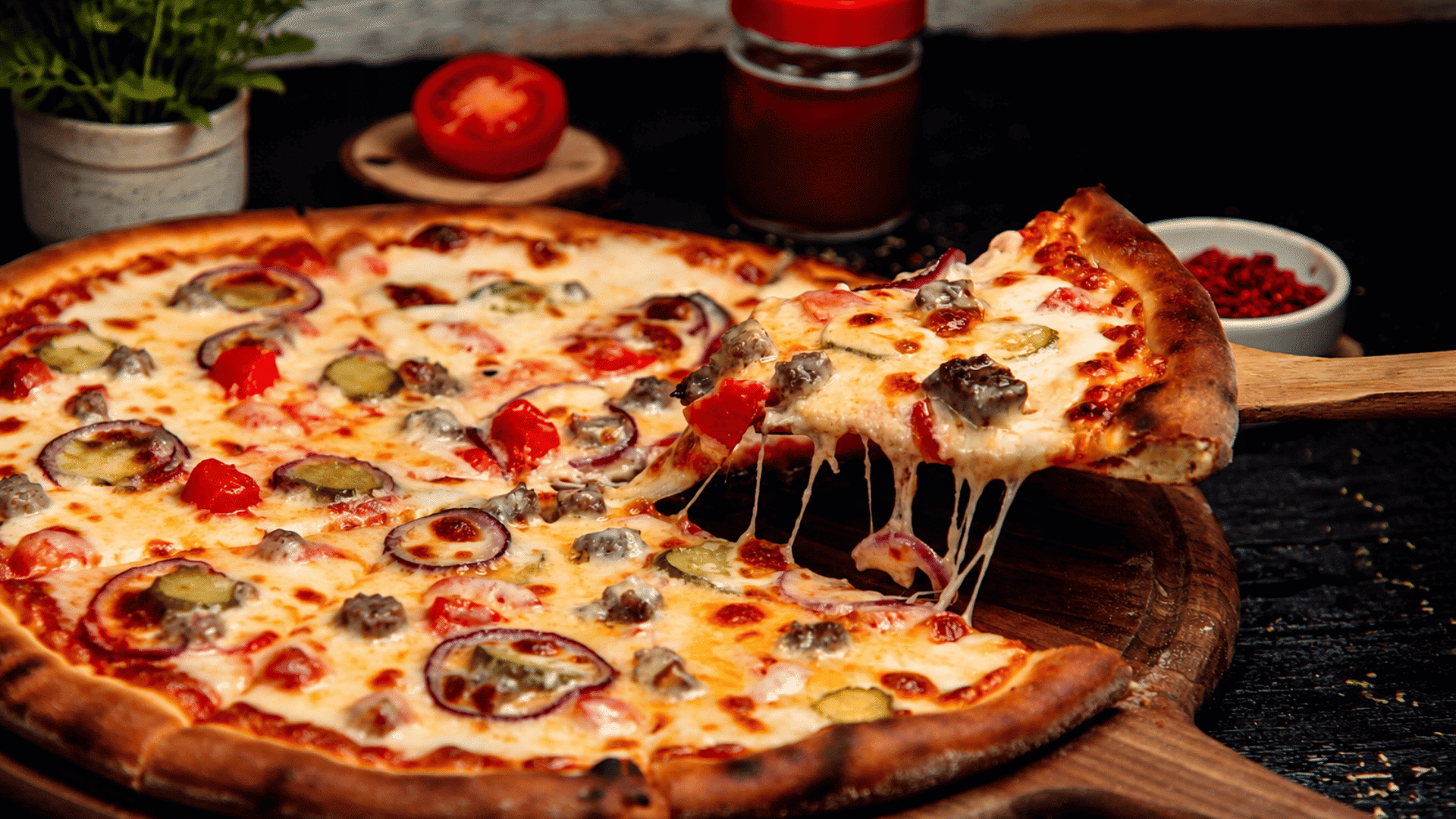
1. Thin Crust Pizza
(Calories: 170–250 per slice)
Thin crust pizza is one of the lowest-calorie pizza styles because it contains less dough than thick, pan, or stuffed crusts.
A plain cheese slice is usually a lighter choice, but adding extra cheese, pepperoni, sausage, or other high-calorie toppings can quickly increase the total calories in each slice.
2. New York Style Pizza
(Calories: 250–350 per slice)
New York-style pizza features a thin, foldable crust, but its oversized slices often contain more calories than a standard slice.
A plain cheese slice is moderate in calories, while extra cheese, pepperoni, sausage, or other toppings can noticeably increase the total calorie content of each serving.
3. Neapolitan Pizza
(Calories: 180–250 per slice)
Neapolitan pizza is typically lower in calories because it’s made with a thin crust, fresh mozzarella, tomato sauce, and simple toppings.
The lighter ingredients and smaller serving size help keep each slice lower in calories than many American-style pizzas loaded with extra cheese, meat, or thick crusts.
4. Margherita Pizza
(Calories: 200–280 per slice)
Margherita pizza is a moderate-calorie option thanks to its simple ingredients, including fresh mozzarella, tomatoes, basil, and olive oil.
Without processed meats or extra cheese, it usually contains fewer calories than loaded pizzas while still offering plenty of flavor in every slice.
5. Chicago Deep-Dish Pizza
(Calories: 400–600+ per slice)
Chicago deep-dish pizza is among the highest-calorie pizza styles because of its thick crust and generous layers of cheese, sauce, and toppings.
A single slice often contains enough calories to make a satisfying meal, especially when loaded with meat or extra cheese.
6. Sicilian Pizza
(Calories: 300–400 per slice)
Sicilian pizza is higher in calories because of its thick, airy crust and generous layer of cheese.
The larger amount of dough makes each slice more calorie-dense than thin-crust pizzas, and additional toppings like pepperoni or sausage can increase the calorie count even further.
7. Stuffed Crust Pizza
(Calories: 320–450 per slice)
Stuffed crust pizza contains cheese baked into the crust, making it higher in calories, fat, and sodium than regular crust pizza.
Even with the same toppings, the cheese-filled edge adds extra calories, making stuffed crust one of the richer and more indulgent pizza options.
How Many Calories Are in Various Pizza Toppings?
The toppings you choose can make a big difference in the total calories of your pizza. Let’s look into it:
- Extra Cheese: ~85 calories
- Pepperoni: ~50 calories
- Sausage: ~65 calories
- Bacon: ~55 calories
- Grilled Chicken: ~40 calories
- Ham: ~35 calories
- Black Olives: ~20 calories
- Pineapple: ~15 calories
- Mushrooms: ~8 calories
- Bell Peppers: ~5 calories
- Onions: ~5 calories
- Jalapeños: ~3 calories
What Affects the Calories in a Pizza Slice?
Adjusting even one or two of these factors, like swapping to a thinner crust or asking for light cheese, can meaningfully lower the calorie count of a slice without changing the flavor much.
- Crust Thickness: Thin crust usually contains fewer calories because it uses less dough, while thick, pan, and stuffed crusts add more calories.
- Slice Size: Larger slices contain more calories than smaller ones, even if they have the same toppings.
- Cheese Amount: Extra cheese increases calories, fat, and protein, while using less cheese helps lower the calorie count.
- Toppings: Vegetables add relatively few calories, whereas toppings like pepperoni, sausage, bacon, and extra cheese can significantly increase them.
- Sauce and Added Fats: Tomato sauce is generally lower in calories than creamy sauces, garlic butter, pesto, or extra olive oil.
Calories in Small vs Large Slices
The size of a pizza slice has a major impact on its calorie count.
| Slice Size | Average Calories | Typical Weight |
|---|---|---|
| Small | 250–300 calories | 90–120 g |
| Regular | 280–320 calories | 120–140 g |
| Large | 320–400 calories | 140–180 g |
| Jumbo | 400–550+ calories | 180–250 g |
Are Homemade Pizzas Lower in Calories than Restaurant Pizzas?
Yes, homemade pizzas are often lower in calories than restaurant pizzas because you have complete control over the ingredients and portion sizes.
By choosing a thin crust, using less cheese, adding plenty of vegetables, and selecting lean protein toppings, you can significantly reduce the calorie content of each slice.
Restaurant pizzas are often prepared with larger portions of cheese, processed meats, oils, and thicker crusts, which increase calories, fat, and sodium.
Homemade pizza also lets you control slice size and avoid unnecessary extras.
Calories in a Slice from Popular Pizza Chains
Calories in a pizza slice can vary by chain, crust type, and toppings. Here is an approximate calorie comparison of cheese slices from popular pizza brands.
| Pizza Chain | Approx. Calories Per Cheese Slice |
| Domino’s | 270–290 calories |
| Pizza Hut | 290–320 calories |
| Papa Johns | 280–310 calories |
| Little Caesars | 250–280 calories |
| Marco’s Pizza | 290–330 calories |
| Papa Murphy’s | 260–300 calories |
Quick Tip: Choosing thin crust, fewer high-calorie toppings, and smaller portions can save 50–150 calories per slice, even at the same pizza chain.
Simple Ways to Enjoy Pizza without the Calorie Overload
A few small swaps can lower the calorie count of a typical pizza night without making it feel restrictive. These work if you are ordering in or baking at home:
- Choose thin or Neapolitan crust
- Ask for light or half cheese
- Load up on vegetable toppings
- Pair pizza with a side salad
- Stick to tomato-based sauce
- Watch portion size, not just toppings
Adding low-calorie meal options like fruit-based smoothies can help balance your overall daily calorie intake.
Conclusion
There is no single answer to how many calories are in a slice of pizza because the total depends on the slice size, crust, toppings, and where the pizza comes from.
Comparing pizza calories by pizza type, understanding the calories in a small slice of pizza, and knowing how factors like extra cheese or meat affect nutrition can help estimate calorie intake more accurately.
Comparing nutrition values across pizza chains helps choose portions that match personal goals.
With mindful topping choices, sensible portions, and balanced meals, pizza can still be an enjoyable part of a healthy eating pattern.
Frequently Asked Questions
Can Eating Pizza Help with Weight Loss?
Yes, pizza can fit into a weight loss plan when eaten in moderation. Choosing thin crust, vegetable toppings, and controlled portions helps reduce calories while supporting your goals.
How Many Slices of Pizza Should I Eat in One Meal?
Yes, one or two slices are generally suitable for most balanced meals. Pairing pizza with a salad or vegetables helps increase fullness and manage calorie intake.
Which Pizza Topping Has the Fewest Calories?
Yes, vegetable toppings such as mushrooms, onions, spinach, peppers, and tomatoes are among the lowest-calorie options while adding fiber, nutrients, and flavor to your pizza.
Does Reheated Pizza Have More Calories than Fresh Pizza?
No, reheating pizza does not increase its calorie content. Calories remain the same unless extra cheese, oil, sauces, or other ingredients are added before reheating.
Is Frozen Pizza Higher in Calories than Fresh Pizza?
Yes, some frozen pizzas contain more calories due to extra cheese, processed meats, and thicker crusts, although calorie content varies depending on the brand and recipe.