

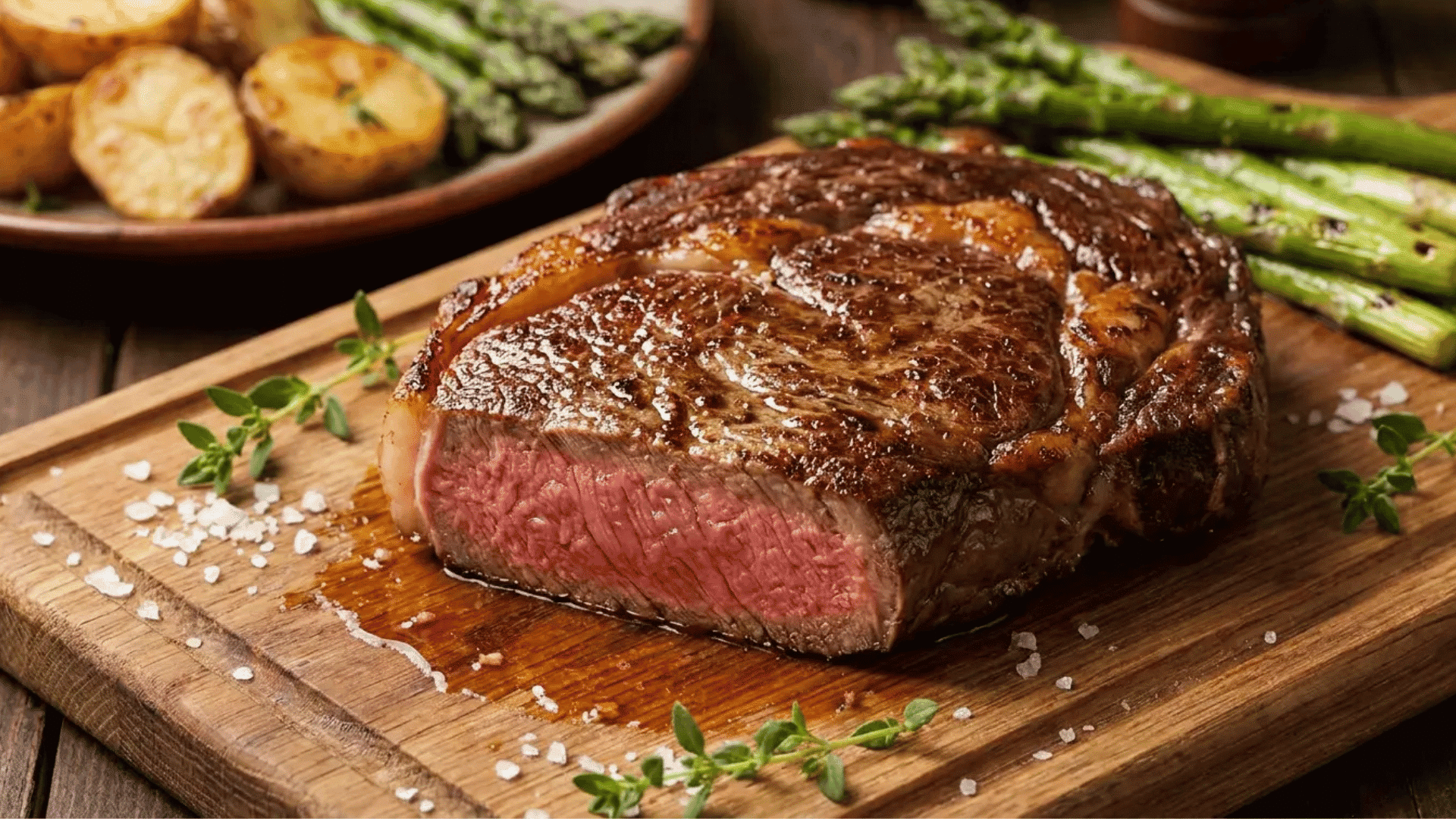
Steak often feels like an easy choice when protein is the priority, but the numbers on nutrition labels can quickly make things confusing.
One cut may look lean and protein-packed, while another of the same size comes with a very different nutritional profile.
When I look at how much protein is in an 8 oz steak, the serving size alone doesn’t tell the whole story. The cut, fat content, cooking method, and even when you weigh the steak can affect the numbers you see.
Knowing what causes these differences can make steak nutrition much easier to understand and track.
How Much Protein is in an 8 Oz Steak?
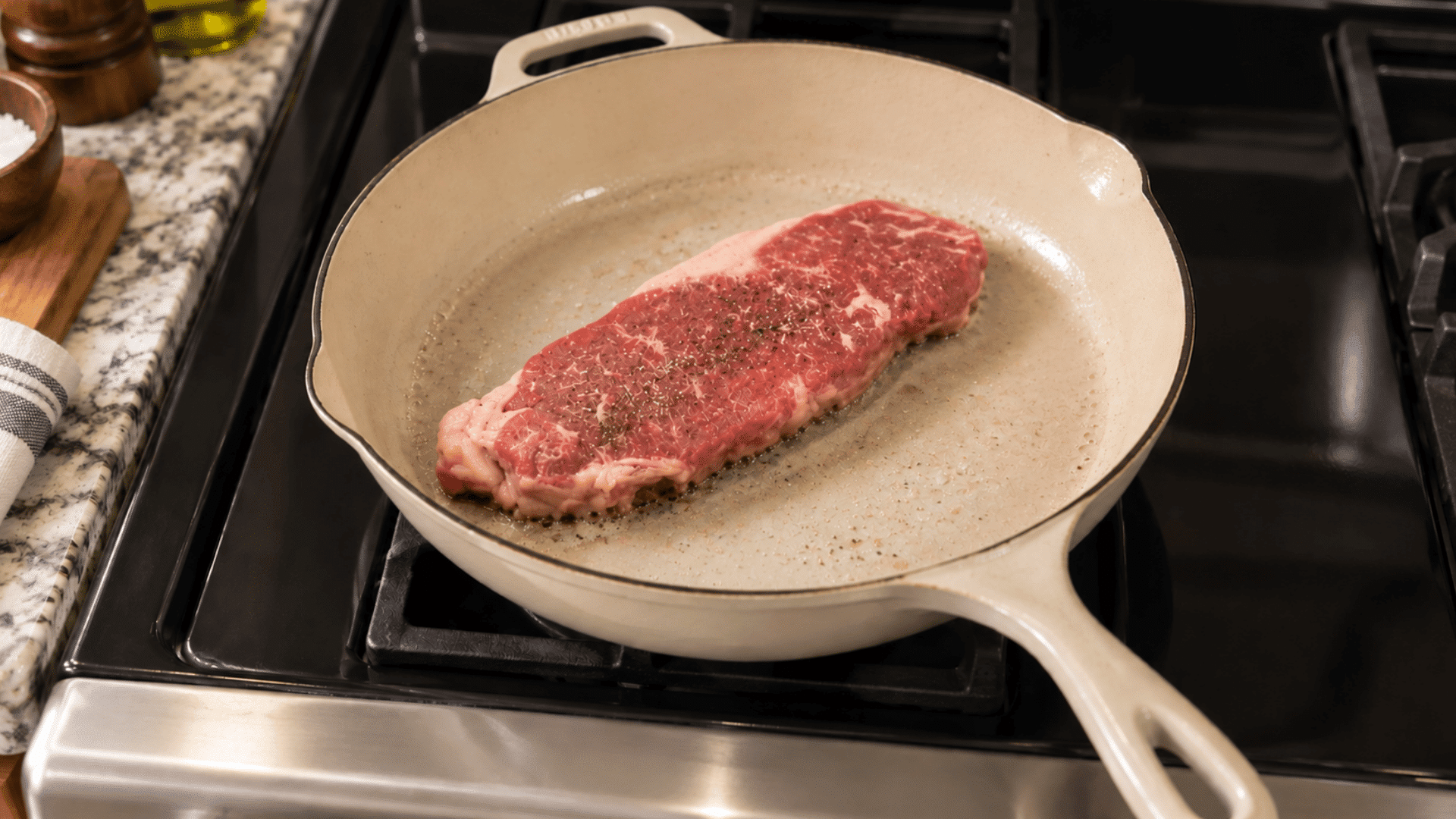
An 8 oz steak typically contains 45 to 65 grams of protein, depending on the cut and whether you weigh the portion raw or cooked.
Leaner cuts generally provide more protein relative to their calories, while fattier cuts such as ribeye tend to be higher in calories.
|
Cut Type |
Protein |
Calories |
Fat |
|---|---|---|---|
|
Filet Mignon |
58–65g |
450–550 kcal |
Low |
|
Sirloin |
55–62g |
500–600 kcal |
Moderate |
|
Strip Steak |
50–58g |
550–650 kcal |
Moderate |
|
Ribeye |
42–55g |
600–750 kcal |
High |
The exact nutrition can vary based on trimming, marbling, cooking method, and whether the 8 oz measurement refers to the steak before or after cooking.
Nutrition Facts for an 8 oz Steak
The nutritional profile of an 8 oz steak can vary widely depending on the cut and how it is prepared. Leaner and fattier cuts can differ noticeably in their overall nutritional values.
1. Calories
An 8 oz steak can contain roughly 450–750 calories, depending largely on the cut and its fat content.
Lean cuts generally fall toward the lower end of the range, while a well-marbled ribeye can contain considerably more calories. Added butter, oil, sauces, and marinades can increase the final calorie count.
2. Total Fat
The total fat in an 8 oz steak can range from approximately 15–55 grams. Lean cuts such as sirloin and filet mignon generally contain less fat, while ribeye is higher because of its marbling.
Trimming visible fat before eating can also change the amount of fat consumed.
3. Saturated Fat
Depending on the cut, an 8 oz steak may provide roughly 6–22 grams of saturated fat.
Fattier and more heavily marbled steaks usually contain more saturated fat than lean cuts. The exact amount also depends on how much visible fat is trimmed and eaten.
4. Carbohydrates
Plain steak contains 0 grams of carbohydrates because unseasoned beef does not naturally provide meaningful amounts of carbs.
However, the carbohydrate count can increase when steak is prepared with sugary marinades, barbecue sauce, glazes, breading, or other carbohydrate-containing ingredients.
5. Iron
An 8 oz cooked steak can provide approximately 4–6 mg of iron, although the amount varies by cut.
Beef contains heme iron, a form of iron found in animal foods. Iron supports normal red blood cell formation and helps transport oxygen throughout the body.
6. Zinc
An 8 oz steak may contain around 8–14 mg of zinc, making beef a notable dietary source of this mineral.
Zinc supports normal immune function, wound healing, DNA synthesis, and other important processes in the body. The exact amount varies depending on the steak cut and serving.
7. Vitamin B12
An 8 oz cooked steak generally provides about 4–6 mcg of vitamin B12, though amounts differ by cut.
Vitamin B12 supports normal red blood cell formation, DNA synthesis, and nervous system function. Beef is naturally rich in B12, so steak can provide a substantial amount in a single serving.
Protein in an 8 oz Steak by Cut
Protein content varies across steak cuts because each has a different balance of lean muscle and fat. For an 8 oz serving, leaner cuts generally provide more protein per calorie than heavily marbled options.
|
Steak Cut |
Protein in 8 oz |
Fat Level |
Protein Profile |
|---|---|---|---|
|
Sirloin |
55–65g |
Low |
High protein with less fat |
|
Filet Mignon |
55–62g |
Low |
Lean and protein-rich |
|
Flank Steak |
55–63g |
Low |
High protein-to-fat ratio |
|
New York Strip |
50–60g |
Moderate |
Balanced protein and fat |
|
Ribeye |
45–55g |
High |
More fat and slightly less protein per ounce |
How an 8 oz Steak Fits Your Daily Protein Needs
An 8 oz steak can provide a substantial portion of your daily protein in a single meal. Because protein needs vary by body weight, activity level, and personal goals, the amount it contributes to your daily target will differ.
With around 50–65 grams of protein, an 8 oz steak can cover a considerable share of the day’s intake. For higher protein goals, this 200-gram protein meal plan shows how steak can fit alongside other protein-rich foods.
The cut you choose also matters, as protein, fat, and calories vary across different steaks
Why Protein and Calories Vary Between Steaks?
Protein and calories vary between steaks mainly because each cut contains a different ratio of lean muscle to fat. Leaner cuts generally provide more protein for fewer calories, while heavily marbled cuts contain more fat and calories.
Marbling plays a major role because fat contains more calories per gram than protein. The amount of visible fat left on the steak can also change its overall nutritional profile.
Bone-in steaks may provide less edible meat within the same listed weight. Preparation also matters, since cooking with butter or oil can raise calories without significantly increasing the steak’s protein content.
How to Track Protein in Steak Accurately?
Accurate steak protein tracking starts with the right portion and nutrition information for the specific cut. Small differences in how you weigh or log your steak can lead to noticeably different numbers.
- Check the weight: Note whether you weighed the steak raw or cooked.
- Match the cut: Log sirloin, ribeye, filet, or another specific cut instead of generic steak.
- Consider the bone: For bone-in steak, count only the edible portion when possible.
- Track added ingredients: Log butter, oil, sauces, and marinades separately.
- Stay consistent: Use the same reliable nutrition source when tracking meals regularly.
Does Cooking Change the Protein in Steak?
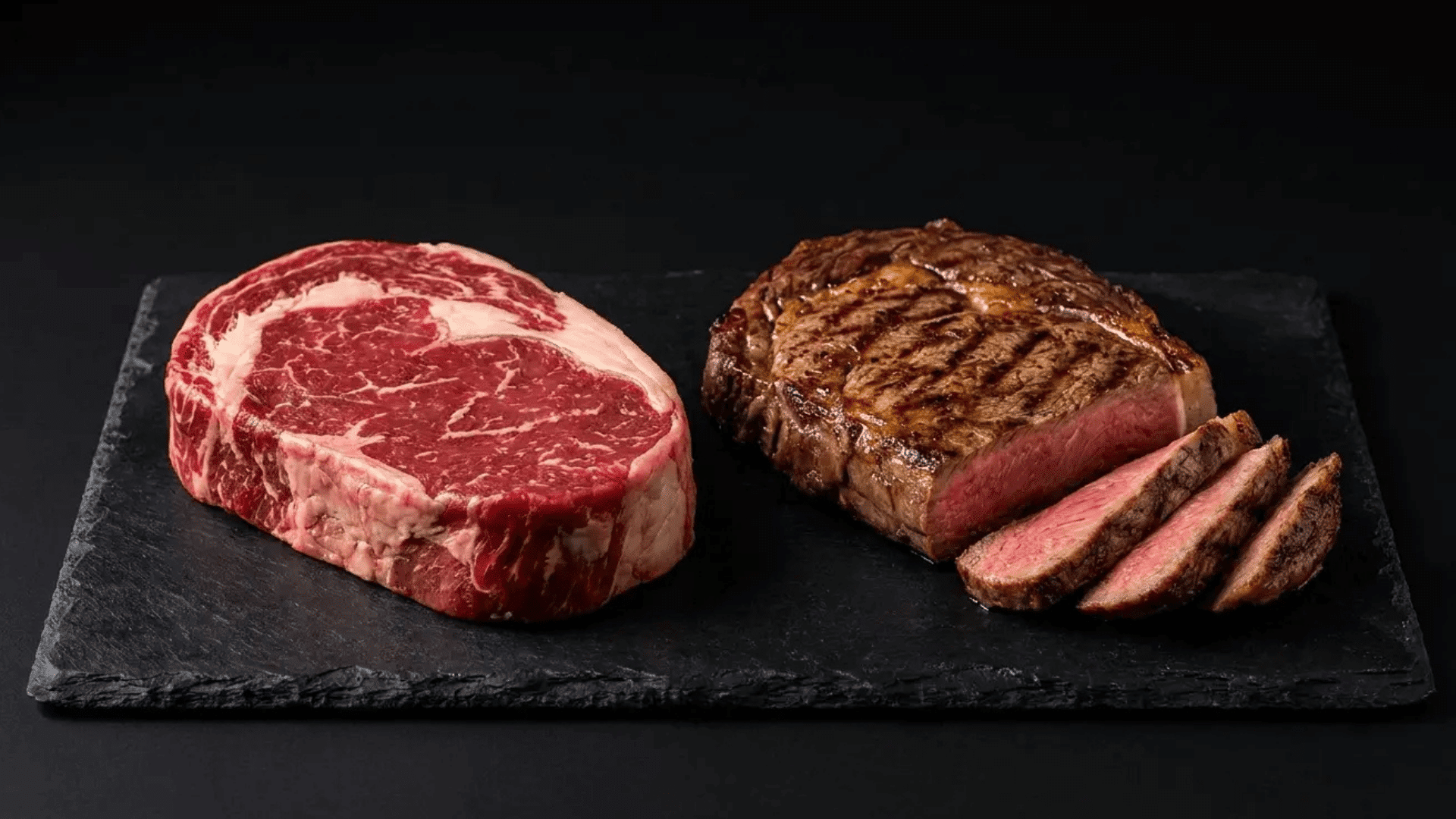
Cooking does not significantly increase or remove the total protein in a piece of steak. Instead, steak loses water as it cooks, making the protein more concentrated by weight.
The cooked portion contains less water, so more meat and protein fit into the same 8 oz weight. For accurate tracking, always check whether the serving weight refers to raw or cooked steak.
Frequently Asked Questions
Does Grass-Fed Steak Have More Protein than Grain-Fed?
No, both contain nearly equal protein per 8 oz serving. Differences are mainly in fat composition and micronutrient content, not in total protein content, which remains consistently similar across feeding types.
Can Freezing Steak Change Protein Content?
No, freezing does not change protein content. It only preserves the existing nutrients. Any slight variation after thawing is due to moisture loss, not reduced protein.
Does Overcooking Steak Destroy Protein?
No, overcooking does not destroy protein. It only denatures the protein structure, meaning it changes texture, while the total grams of protein in the steak remain essentially unchanged.
Is Steak a Complete Protein Source?
Yes, steak is a complete protein containing all essential amino acids needed for muscle repair, growth, and maintenance, making it comparable to other high-quality animal protein sources.
Does Aging Steak Affect Protein Levels?
No, dry-aging or wet-aging does not significantly change protein content. It primarily alters flavor and tenderness through moisture loss, while overall protein levels in the meat remain stable.
Final Takeaway
Getting the numbers right with steak does not have to make meal tracking complicated. Once you account for the cut, serving size, fat content, and whether the steak is weighed raw or cooked, the differences become much easier to understand.
I find that focusing on the specific steak in front of you is more useful than relying on one general nutrition value.
If your goal is to increase protein, manage calories, or simply understand what you are eating, these details can help you make choices that fit your needs.
We all prepare and enjoy steak differently. Share your favorite steak cut and how you usually prepare it in the comments below.