


Ever grabbed a quick snack and wondered what it actually adds up to? It’s easy to think simple foods stay simple, but that’s not always the case.
Many people searching for how many calories a hot dog with a bun has are surprised to find that the number varies by size, brand, and even toppings.
That confusion often leads to guessing instead of understanding, especially when a meal looks the same but behaves differently nutritionally.
Small choices like bun type, sausage variety, and sauces can quietly shift the total without changing the taste much.
In this guide, I break everything down in a clear way so you can see what really affects the calories. You’ll learn the typical range, what changes it, and how to make smarter choices without overthinking your meal.
How Many Calories in a Hot Dog with Bun?
Hot dogs are often seen as one of the simplest everyday meals, but their calorie content is more detailed than it first appears. While the serving looks straightforward, the total calories vary depending on the type of sausage, bun size, and preparation method.
A standard hot dog with a bun typically ranges from 270 to 350 calories. Lighter versions made with lean meat or smaller buns fall closer to the lower end, while richer or larger portions increase the total without changing the appearance of the meal.
Much of the confusion stems from inconsistent online sources, some calculate only the sausage, while others include the bun or toppings.
When all components are considered together, the calorie range becomes clearer and more practical for everyday understanding and tracking.
Hot Dog Calories Comparison with or Without Bun
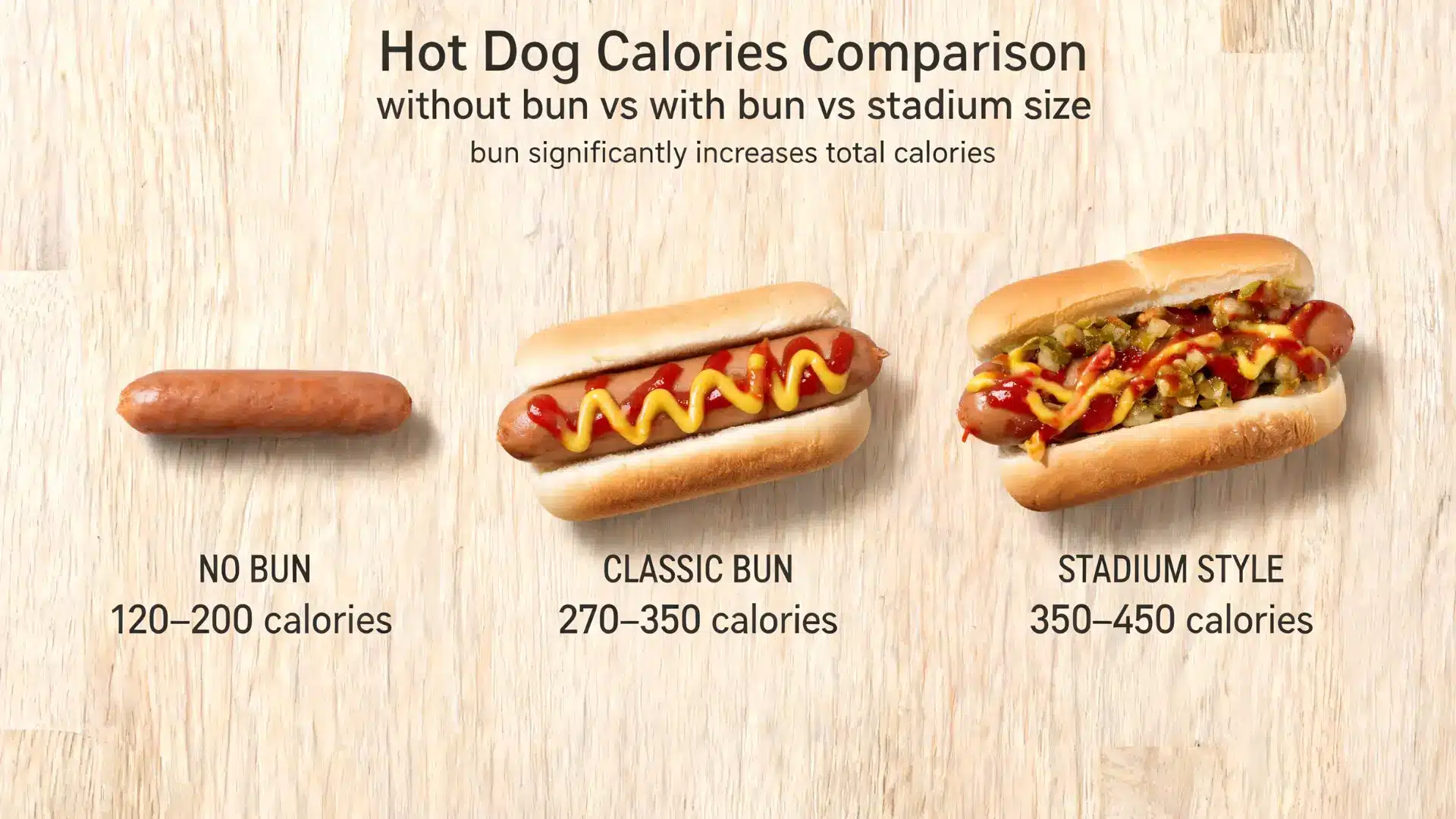
Understanding hot dog calories becomes easier when you compare versions with and without a bun, since the bun significantly changes total energy and carbohydrate content in each serving-size meal.
| Version | Calories (Approx.) |
|---|---|
| Hot dog without a bun | 120–200 |
| Hot dog with bun | 270–350 |
| Large stadium hot dog with bun | 350–450 |
This comparison shows that removing the bun significantly reduces hot dog calories, making it a lighter option for people tracking their intake or aiming for simpler daily meal choices overall.
Nutritional Breakdown of Hot Dog Calories
A hot dog with a bun is often seen as a simple snack, but its nutritional profile is more layered than it appears. Beyond calories, it contains a mix of protein, fats, carbohydrates, and sodium that together shape how filling and energy-dense the meal feels. Understanding these components helps put hot dog calories into better context instead of looking at a single number.
The values can vary slightly by brand and portion size, but the general breakdown remains fairly consistent across most standard servings. Here’s a clear look at the typical nutritional profile.
| Nutrient | Typical Amount (Per Hot Dog with Bun) | What It Means for the Body |
|---|---|---|
| Calories | 270–350 kcal | Total energy from sausage + bun combined |
| Protein | 5–11 g | Supports muscle repair and satiety, varies by meat type |
| Fat (Total) | 15–20 g | Main calorie contributor, especially from processed meat |
| Saturated Fat | 5–8 g | Higher levels can impact heart health if eaten often |
| Carbohydrates | 20–30 g | Mostly comes from the bun, provides quick energy |
| Sodium | 500–900 mg | High due to processing and seasoning |
This mix of nutrients explains why hot dogs feel filling quickly but are best enjoyed occasionally as part of a balanced eating pattern.
Why Hot Dog Calories Vary So Much
Calorie differences are not random; they stem from real ingredient variations that subtly but importantly affect the final number.
- Meat Composition Impact: The type of meat used significantly affects fat content, with beef and pork typically containing more calories than chicken or turkey.
- Bun Density Variation: Some buns are light and airy, while others are thicker and slightly sweetened, which increases carbohydrate content and total calories.
- Portion Size Differences: Larger servings at stadiums or fast-food outlets often contain heavier sausages and bigger buns, naturally raising the calorie count.
- Preparation Style Influence: Grilling, boiling, or pan-frying does not significantly alter calorie content, but adding butter or oil during cooking can increase fat content.
Each of these elements works together, which explains why two similar-looking meals can have noticeably different calorie totals.
Hot Dog Types: Calories and Key Nutrients
Hot dogs come in several varieties, and each type carries a different calorie range and nutrient profile. Understanding these differences helps you make better food choices based on protein, fat, and overall energy content in everyday meals.
| Hot Dog Type | Calories (Approx.) | Key Nutrients |
|---|---|---|
| Beef Hot Dogs | 250–300 kcal | High protein, high saturated fat, high calorie density |
| Pork Hot Dogs | 260–320 kcal | High fat, high saturated fat, moderate protein |
| Chicken Hot Dogs | 180–240 kcal | High lean protein, low fat, lower calories |
| Turkey Hot Dogs | 170–230 kcal | High lean protein, low fat, lower saturated fat |
| Mixed Meat Hot Dogs | 270–350 kcal | High fat, high sodium, moderate protein |
| Plant-Based Hot Dogs | 150–250 kcal | High sodium (varies), lower saturated fat, plant protein |
Hot dog calories vary widely depending on the meat type and processing, while nutrient profiles shift among protein, fat, and sodium. Choosing the right type can help balance taste, nutrition, and daily calorie goals more effectively.
Hot Dog Calories with Common Toppings

Toppings may look like small add-ons, but they can significantly change the total calorie count of a hot dog. While the base meal may seem light, sauces and extras often increase energy intake more than expected.
- Mustard (Low-Calorie Option): 3–5 kcal, strong flavor with minimal calorie impact
- Ketchup (Mild Increase): 15–20 kcal, adds sugar-based calories
- Relish (Moderate Addition): 15–20 kcal, slightly increases carbs and sweetness
- Onion (Light Addition): 5–10 kcal, low-calorie flavor boost
- Mayonnaise (High-Calorie Topping): 90–100 kcal, high fat content
- Cheese Sauce (Very High Impact): 80–120 kcal, quickly raises total calories.
Small topping choices can make a big difference in total hot dog calories, so lighter options help keep the meal balanced without losing taste.
Health Impact of Hot Dog Calories
Hot dogs can still fit into a balanced eating pattern, but understanding their nutritional impact helps make more mindful food choices. Instead of focusing only on calories, it is important to look at sodium, fat, and overall meal balance.
| Category | Key Impact | What It Means in Simple Terms |
|---|---|---|
| High Sodium Levels | Can raise blood pressure over time | Regular intake may affect heart health if not balanced with low-sodium foods |
| Saturated Fat Content | Increases calorie density | Makes the meal more energy-rich but less heart-friendly when eaten often |
| Processed Meat Factor | Should be eaten in moderation | Linked to higher health risks when consumed frequently over long periods |
| Low Fiber Content | Reduces fullness | May lead to quicker hunger compared to fiber-rich meals |
This breakdown shows that hot dogs are more about moderation than avoidance. When eaten occasionally and balanced with lighter foods, they can still fit into a varied diet without major concern.
Healthier Ways to Reduce Hot Dog Calories
Making hot dogs lighter does not require removing them from your diet. Small, consistent swaps in ingredients and habits can reduce total calorie intake while still keeping the meal enjoyable and familiar.
- Lean Protein Choice Shift: Choose chicken or turkey hot dogs instead of beef versions to reduce fat content and overall calorie load.
- Whole-Grain Bun Upgrade: Use whole-wheat buns instead of white buns to add fiber and increase fullness for better nutritional balance.
- Light Condiment Strategy: Replace mayonnaise or cheese-based sauces with mustard to significantly lower added fat and calories.
- Vegetable Addition Boost: Add onions, lettuce, or similar vegetables to increase volume without adding meaningful calories.
Frequently Asked Questions
How do I track hot dog calories accurately in fitness apps?
Log sausage, bun, and toppings separately in fitness apps for better accuracy, since combined entries often underestimate calories due to brand differences and portion size variations.
Are hot dogs suitable for a keto diet?
Hot dogs can fit into a keto diet if eaten without buns, but hidden carbs in fillers still matter, so label checking is important for staying within daily low-carb limits.
Do frozen and fresh hot dogs have different calories?
Frozen and fresh hot dogs usually have similar calorie counts because freezing doesn’t change nutrient content, but brand ingredients and additives can still cause small variations in totals.
Why are hot dogs so high in sodium compared to other meats?
High sodium content comes from processing methods used for preservation, flavor enhancement, and shelf-life extension, making hot dogs significantly saltier than fresh, unprocessed meat options.
Can hot dogs be included in a weight-loss diet safely?
Yes, occasionally, if portion size is controlled, leaner meats are chosen, and high-calorie toppings are avoided, pairing with vegetables instead of heavy sides or fries.
What is the difference between a frankfurter and a hot dog?
Frankfurter is the original German sausage, while hot dog refers to the American-style version served in buns, though both are similar processed meat products today.
Final Verdict
Understanding what goes into a simple meal can completely change how you look at everyday food choices. Now you’ve seen how ingredients, portion sizes, and toppings all influence overall energy intake and why small details matter more than expected.
You also know how different variations can shift totals and how easy it is to adjust meals without losing taste or satisfaction. I’ve broken down the key factors so you can make more informed choices in real situations, not just theory.
I hope you now feel more confident reading labels and balancing meals in your routine. If this helped you, explore more guides, try the tips in your daily meals, and share your thoughts on how you manage a hot dog with a bun in your own diet.