

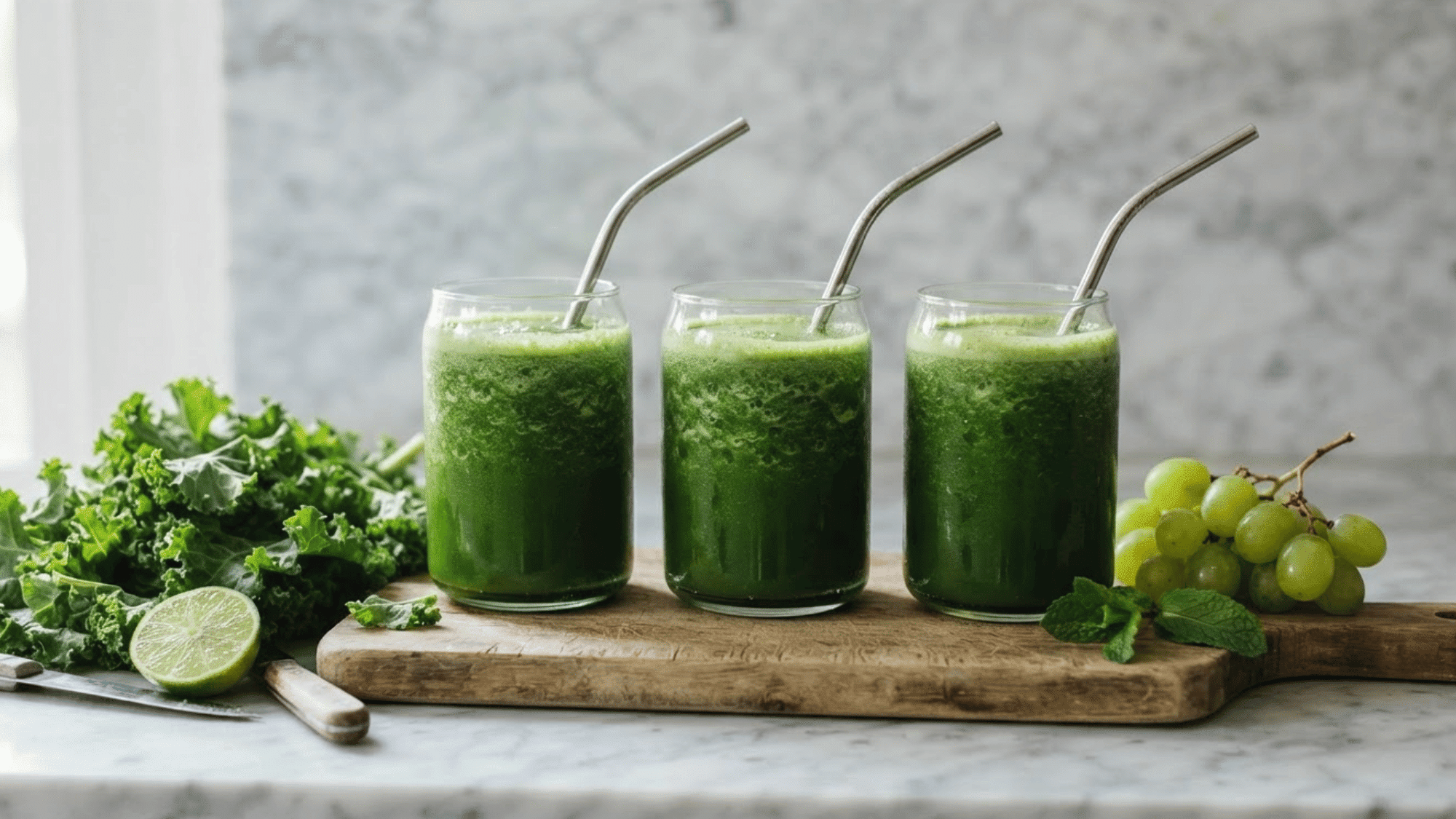
A refreshing glass of green juice is one of my favorite ways to add more fruits and vegetables to my day.
Thisgreen juice recipe is one I come back to when I want something fresh, simple, and flavorful without an overly bitter taste. I’ve found that using the right balance of greens, fruit, and herbs makes a big difference in the flavor.
You can make this juice with a juicer or blender and adjust the ingredients to suit your taste. Simple swaps can add more sweetness or freshness, while proper storage helps keep leftovers enjoyable.
Jump To Recipe
Green Juice Recipe Ingredients
Thisgreen juice recipe uses fresh fruits, vegetables, and herbs to create a balanced flavor without too much bitterness. The simple ingredient combination makes about three servings and works well with a juicer or blender.
- 2 medium cucumbers
- 4 celery stalks
- 2 green apples
- 2 cups spinach or kale
- 1 lemon
- 1-inch piece of fresh ginger
- ¼ cup fresh parsley or mint (optional)
If you’re curious how swapping in more or less fruit changes the numbers, this green juice nutrition breakdown walks through the calorie and sugar differences across a few common blends.
How to Make Fresh Green Juice at Home?
|
Serve: 3 | Prep Time: 15 mins |
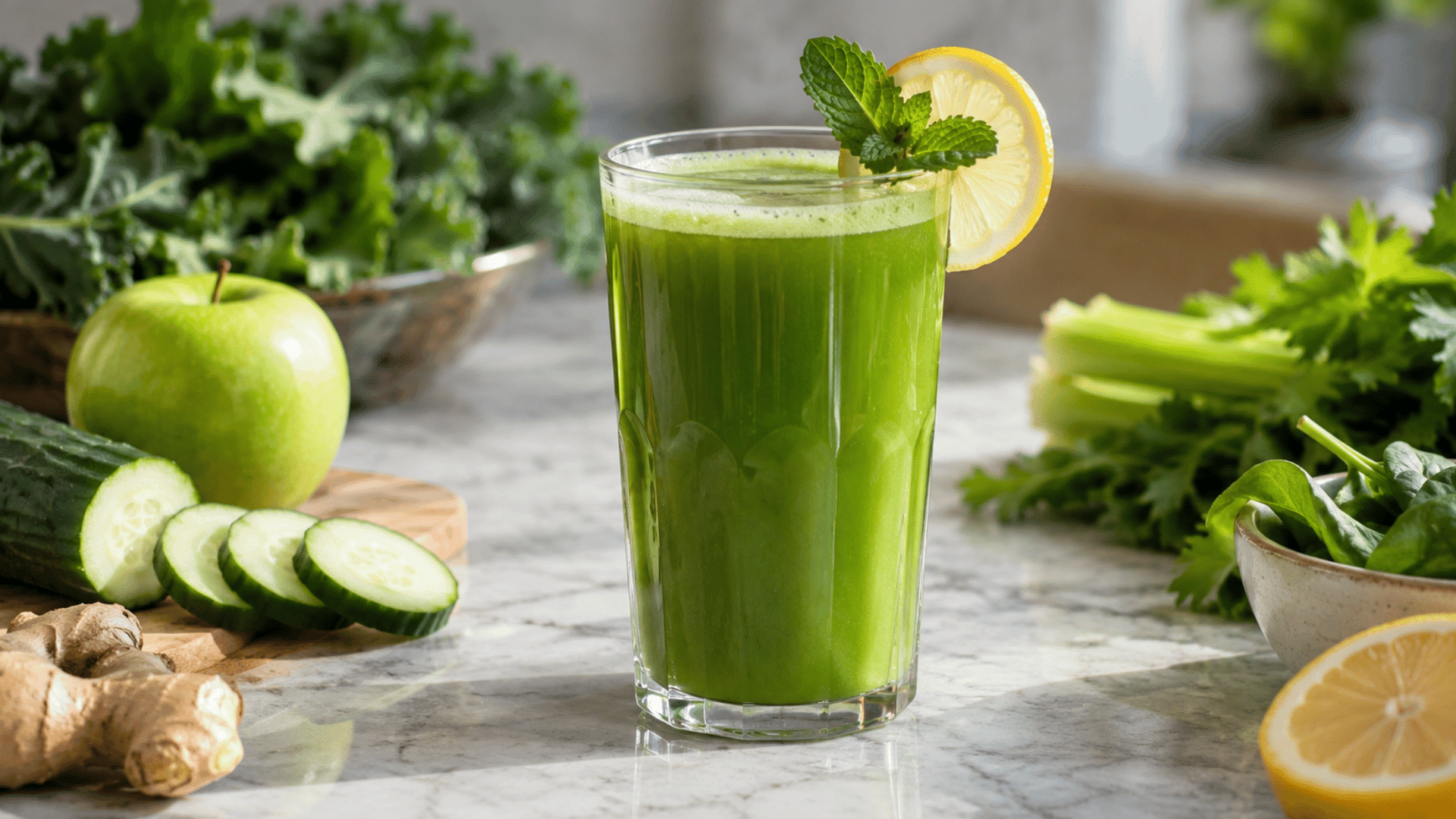
This simple method combines fresh produce into a balanced green juice that tastes crisp, lightly sweet, and refreshing. Follow the preparation steps below, then choose a juicer or blender based on the equipment you have.
Step 1: Wash and Prepare the Produce
The U.S. Food and Drug Administration (FDA) recommends washing fresh produce thoroughly under running water before preparing or eating it
Trim the celery ends and cucumber tips, core the apples, peel the lemon, and remove any tough ginger skin. Cut larger ingredients into pieces that fit comfortably into your juicer or blender.
Step 2: Juice the Ingredients
Start by feeding the prepared ingredients through your juicer, alternating softer produce like leafy greens with firmer pieces such as cucumber, celery, and apple.
Finish with lemon, ginger, and herbs. Stir the juice well after juicing, then pour it into three glasses and serve fresh.
Step 3: Blend the Ingredients
Add the prepared cucumber, celery, apple, greens, lemon, ginger, and herbs to a blender with about 1 cup of cold water.
Blend on high until smooth. If you prefer a thinner juice, add more water. Strain through a fine-mesh sieve or nut milk bag for a smoother consistency.
Tip: Stop the blender once the mixture is smooth to avoid unnecessary blending that can warm the juice.
Step 4: Strain and Serve
If you used a blender, strain the blended mixture through a fine-mesh sieve or nut milk bag to remove excess pulp.
Press gently to extract the liquid without forcing too much pulp through. Pour the finished juice into three glasses and serve immediately for the freshest taste.
Tip: Chill your serving glasses for a few minutes beforehand if you prefer your juice extra cold.
Green Juice Variations and Substitutions
You can easily adjust green juice based on the produce you have available or the flavor you prefer.
|
Variation |
Ingredients to Try |
Flavor |
|---|---|---|
|
Sweeter Green Juice |
Apple or pear |
Naturally sweet |
|
Citrus Green Juice |
Lemon, orange, or lime |
Bright and tangy |
|
Tropical Green Juice |
Pineapple or mango |
Sweet and tropical |
|
Extra Greens |
Spinach, kale, or romaine |
Fresh and earthy |
|
Refreshing Green Juice |
Cucumber, celery, and mint |
Light and refreshing |
|
Spicy Green Juice |
Ginger or a small piece of jalapeño |
Warm and zesty |
Why Should You Drink Green Juice?
Green juice can be an easy way to add nutrients from vegetables and fruits to your day, especially when your usual meals are short on produce. Ingredients such as spinach, kale, cucumber, celery, and citrus can provide vitamins, minerals, and beneficial plant compounds.
Depending on what goes into your glass, green juice may help you:
- Increase nutrient intake: Adds vitamins and minerals from fresh produce.
- Support hydration: Water-rich ingredients such as cucumber and celery contribute fluids.
- Get more vegetables: Offers another way to include greens in your diet.
- Support immune function: Vitamin C-rich ingredients contribute to normal immune function.
- Add antioxidants: Leafy greens and fruits contain plant compounds with antioxidant activity.
Keep in mind: The Centers for Disease Control and Prevention (CDC) recommends choosing whole fruits because they provide fiber that many fruit juices lack. Pairing green juice with whole produce can help you include more fiber.
Green Juice Nutritional Benefits
This green juice provides a mix of nutrients from fresh produce, with values based on one serving. Nutrition amounts are approximate and may vary with ingredient choices and preparation.
|
Nutrient |
Approximate Amount per Serving |
|---|---|
|
Calories |
117 kcal |
|
Carbohydrates |
29 g |
|
Protein |
3 g |
|
Fat |
0.7 g |
|
Fiber |
6 g |
|
Sugar |
18 g |
|
Vitamin A |
1,994 mcg RAE |
|
Vitamin C |
29 mg |
|
Vitamin K |
262 mcg |
Pairing green juice with fiber-rich foods that support digestion can help you round out what the juice itself leaves behind.
How to Store Green Juice and Use Leftover Pulp?
Pour leftover green juice into an airtight glass container and refrigerate it promptly. For the best flavor and freshness, enjoy it within 24–48 hours, as fresh juice can gradually lose quality after preparation.
If the juice separates, simply shake or stir it well before drinking. Don’t throw away the leftover pulp. You can mix it into smoothies such as a mango smoothie, soups, muffins, or other baked goods for added texture, or add it to your compost.
Using the pulp this way helps reduce kitchen waste while getting more from your produce.
You can pair a glass with a few other healthy breakfast ideas for busy mornings, enjoy it alongside a meal, or drink it as a refreshing pick-me-up any time of day.
There’s no specific time required to enjoy it, so choose a time that fits your routine.
Wrapping Up
Making green juice at home doesn’t have to be complicated. This green juice recipe offers a fresh, balanced drink with simple preparation and plenty of room to adjust the flavor to your liking.
I especially like that it works with both a juicer and a blender, so you can use whichever fits your kitchen.
You can also make simple substitutions based on your preferences or what you have available.
Green juice provides a convenient way to enjoy several fruits and vegetables, though whole produce offers more fiber. When I make a batch, I enjoy it fresh and save any extra for the next day.
Frequently Asked Questions
Can Green Juice Help with Constipation?
Green juice may contribute fluids and nutrients, but it contains less fiber than whole produce, which helps with regular bowel movements.
Can I Freeze Homemade Green Juice?
Yes, you can freeze green juice in an airtight, freezer-safe container, leaving some space for expansion. Thaw it in the refrigerator before drinking.
Can I Use Frozen Fruits or Vegetables to Make Green Juice?
Yes, frozen produce can work in a blender, but thawing it slightly first can make blending easier and produce a smoother consistency.
Can I Drink Green Juice on An Empty Stomach?
Yes, you can drink green juice on an empty stomach if it feels comfortable. Pairing it with food may make it more filling.
How Can I Reduce Foam in Homemade Green Juice?
Pour the juice slowly into a glass and let it sit briefly. A fine mesh strainer can also help remove excess foam.