
Many people enjoy Earl Grey for its refreshing citrus aroma and smooth taste, but the caffeine content is often less clear.
I know it can be difficult to tell if one cup is suitable for the morning, afternoon, or even later in the day.
Earl Grey tea caffeine content makes it easier to choose the right option for your routine. The amount of caffeine can change based on the tea variety, the brand, and even the brewing method.
A few simple details can make a noticeable difference. I’ll break down the caffeine levels, compare Earl Grey with other popular drinks, and share practical tips so you can enjoy every cup with confidence.
What is Earl Grey Tea?
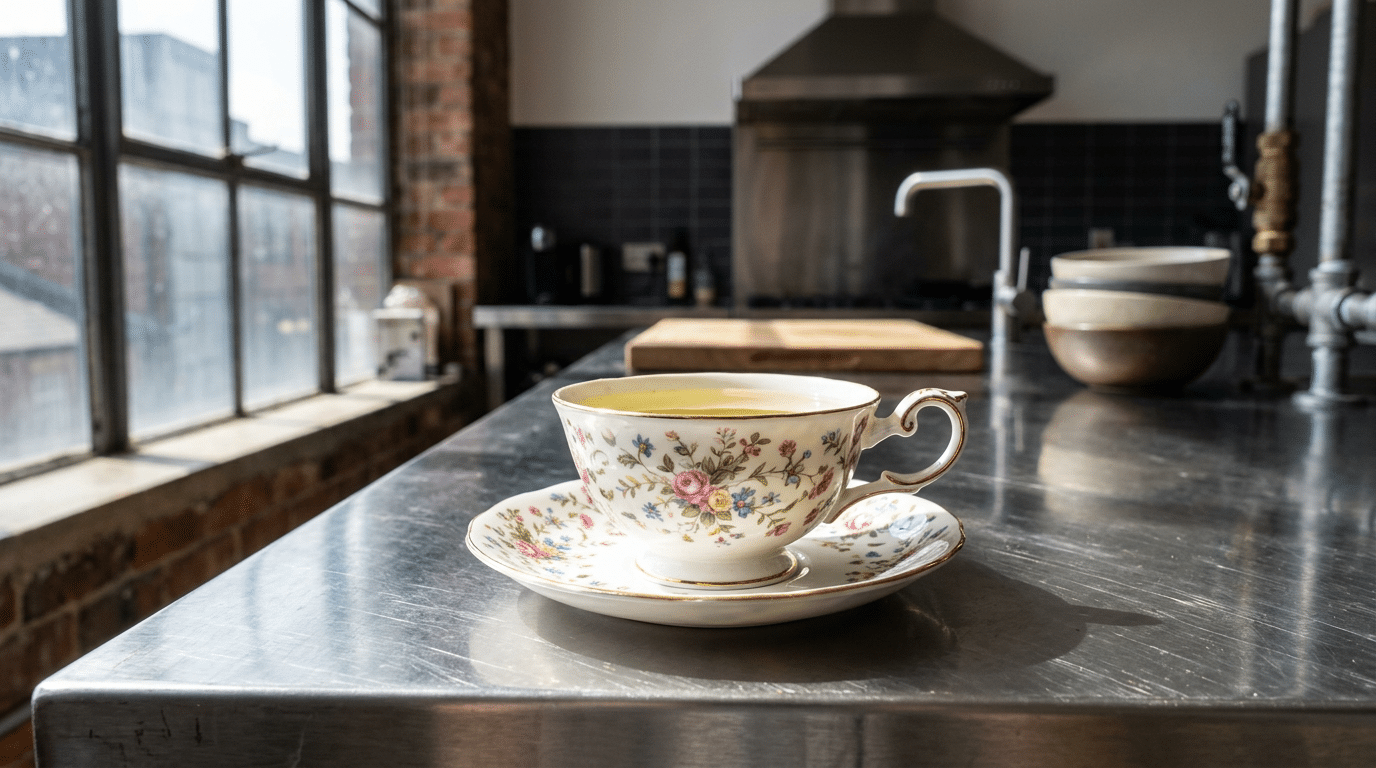
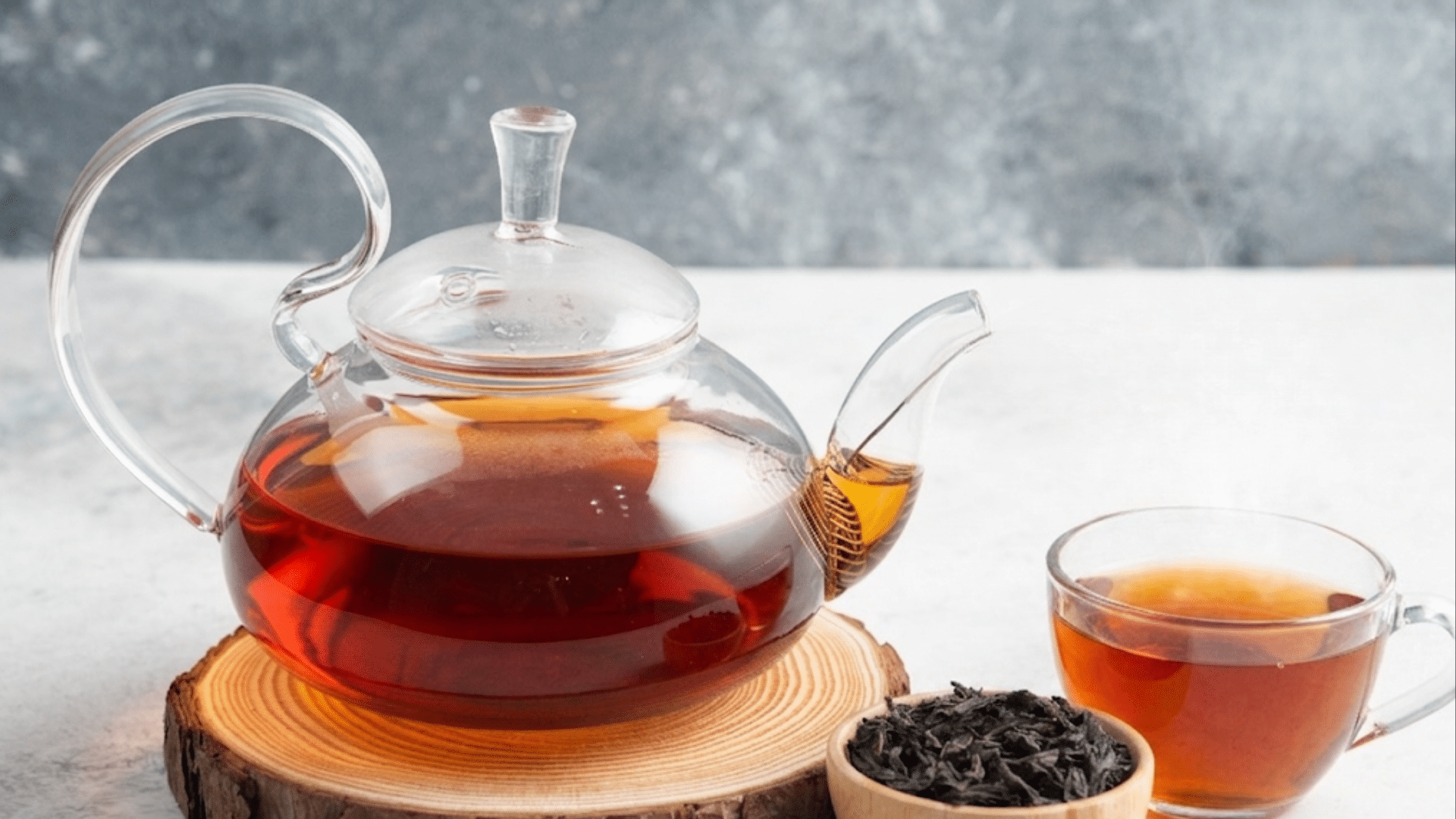
Earl Grey tea is a flavored tea made by combining tea leaves, usually black tea, with natural oil or flavoring from bergamot oranges. It is known for its citrus aroma, smooth taste, and moderate caffeine content.
Unlike herbal teas, Earl Grey is made from the Camellia sinensis plant, so it naturally contains caffeine unless it is specifically labeled as decaffeinated.
While traditional Earl Grey uses black tea as its base, some versions use green or white tea, which changes the flavor and caffeine level. The tea leaves used also make a difference. Earl Grey made with Assam usually has more caffeine than blends using Darjeeling tea.
The oxidation difference between black tea and green tea is the main reason their natural caffeine levels differ so widely, even before bergamot enters the picture.
It can be enjoyed plain or with milk, lemon, or sweetener, making it a versatile choice for tea drinkers around the world.
Does Earl Grey Tea Have Caffeine?
Yes, Earl Grey tea naturally contains caffeine because it is usually made from black tea leaves. Unless the label says “decaffeinated,” you can expect it to contain a moderate amount of caffeine.
Flavored blends don’t all follow the same rule, though; jasmine tea caffeine content depends on its green tea base in much the same way Earl Grey depends on black tea.
The bergamot flavor that gives Earl Grey its signature citrus taste does not add or remove caffeine. Instead, the caffeine comes entirely from the tea leaves used as the base.
A typical 8 ounce cup of traditional Earl Grey contains around 40 to 70 milligrams of caffeine, although this can vary by brand, leaf grade, and brewing time.
Green and white Earl Grey varieties usually contain less caffeine, while decaffeinated versions have only trace amounts.
How Much Caffeine Is Safe to Consume Each Day?
For most healthy adults, up to 400 mg of caffeine per day is generally considered safe.
According to the U.S. Food and Drug Administration (FDA), this is roughly equal to four 8-ounce cups of brewed coffee, though the exact amount varies by the type of coffee, tea, energy drink, or soda.
Some people are more sensitive to caffeine and may notice side effects at much lower amounts. Too much caffeine can cause nervousness, a fast heartbeat, trouble sleeping, headaches, or an upset stomach.
Pregnant or breastfeeding individuals should limit caffeine to about 200 mg per day, based on guidance from the American College of Obstetricians and Gynecologists (ACOG). Children and adolescents should also avoid high-caffeine drinks, especially energy drinks.
Keep in mind that caffeine comes from many sources, including coffee, tea, soft drinks, chocolate, energy drinks, and some medications. Adding up your intake throughout the day can help you stay within a safe range.
How to Reduce the Caffeine in Earl Grey Tea?
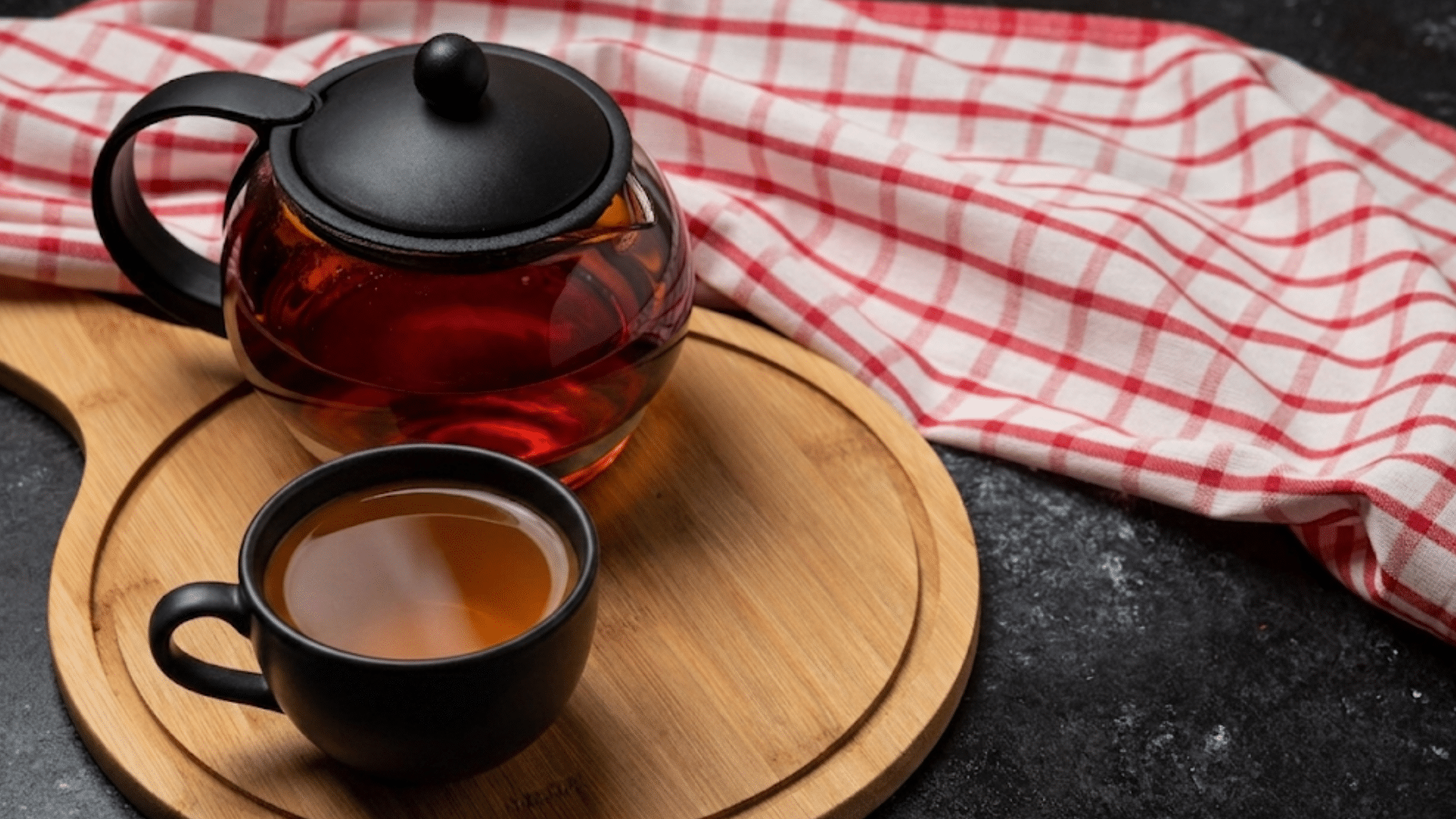
A few simple brewing adjustments can lower the amount of caffeine in Earl Grey tea without greatly affecting its flavor. These tips are helpful for anyone who wants to enjoy the tea while limiting caffeine intake.
- Choose Decaffeinated Earl Grey
- Use Cooler Water
- Shorten the Brewing Time
- Use Fewer Tea Leaves
- Try Green or White Earl Grey
Earl Grey Tea Caffeine Content by Type
Different Earl Grey tea varieties contain different amounts of caffeine because they use different tea bases.
| Earl Grey Tea Type | Tea Base | Average Caffeine (8 oz) | Flavor Profile | Best Time to Drink |
|---|---|---|---|---|
| Black Earl Grey | Black tea | 40–70 mg | Bold, citrusy, full-bodied | Morning or early afternoon |
| Green Earl Grey | Green tea | 20–45 mg | Light, fresh, slightly grassy | Morning or midday |
| Decaffeinated Earl Grey | Decaffeinated black tea | 2–5 mg | Similar citrus flavor with less caffeine | Afternoon or evening |
| Loose Leaf Earl Grey | Usually black tea | 30–70 mg | Richer and more aromatic | Depends on brewing strength |
| Earl Grey Tea Bags | Usually black tea | 30–60 mg | Consistent and convenient | Any time during the day |
Can Earl Grey Tea Keep You Awake?
Yes, Earl Grey tea can keep some people awake because it naturally contains caffeine. The effect depends on the amount consumed, the time of day, and an individual’s caffeine sensitivity.
A typical cup of traditional Earl Grey provides enough caffeine to increase alertness and reduce tiredness for several hours. People who are sensitive to caffeine may find that drinking it in the late afternoon or evening makes it harder to fall asleep or stay asleep.
Those with a higher caffeine tolerance may notice little or no effect from a single cup. If sleep is a concern, choose decaffeinated Earl Grey or enjoy regular Earl Grey earlier in the day.
Paying attention to serving size and brewing strength can also help reduce its impact on sleep.
Unlike decaffeinated tea, which still contains trace amounts of caffeine, 100 percent caffeine-free teas naturally contain no caffeine
What Reddit Users Say About Earl Grey Tea Caffeine?
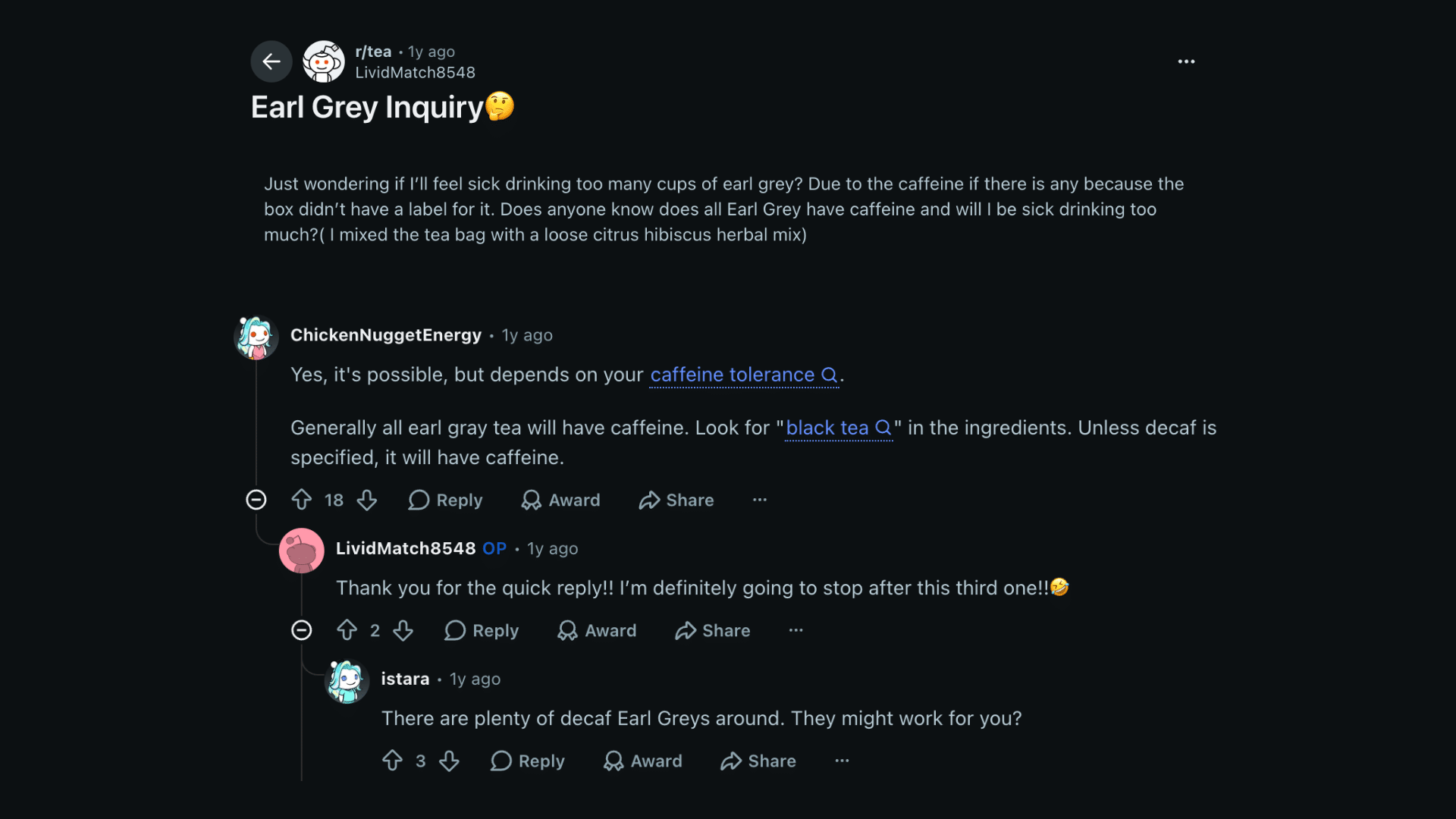
Reddit discussions show that most tea drinkers agree Earl Grey contains caffeine unless it is specifically labeled as decaffeinated.
Many comments also point out that caffeine’s effects vary from person to person, with factors like tolerance, brewing strength, and the amount consumed playing important roles.
Some users reported comfortably drinking several cups throughout the day, while others preferred to limit their intake due to sensitivity to caffeine or the citrusy bergamot flavor.
A few discussions recommended switching to decaffeinated Earl Grey or green Earl Grey for a lower-caffeine option. Overall, the community agrees that traditional Earl Grey should be treated like other black teas with moderate caffeine.
Most advice encourages paying attention to personal tolerance and choosing a tea variety that fits individual caffeine preferences.
Benefits of Earl Grey Tea Beyond Caffeine
Earl Grey tea offers more than just a gentle caffeine boost. Its combination of tea leaves and bergamot provides several potential wellness benefits when enjoyed as part of a balanced diet.
- Rich in Antioxidants
- May Support Heart Health
- Promotes Mental Alertness
- Supports Digestion
- May Help With Hydration
- Provides a Calorie-Free Beverage
Final Thoughts
From testing different Earl Grey blends, I’ve found that small details like the tea base, brewing time, and serving size can noticeably affect the caffeine content of each cup.
Traditional Earl Grey offers a moderate caffeine boost, while green and decaffeinated versions provide lighter options for different routines.
Knowing these differences helps make informed choices without missing out on the signature bergamot flavor. Whether you’re looking for a gentle morning pick-me-up, a balanced afternoon tea, or a lower-caffeine option, there’s an Earl Grey to match your preference.
Do you have a favorite Earl Grey brand or a tip for managing its caffeine? Share your experience in the comments below and join the conversation with fellow tea lovers!
Frequently Asked Questions
Is It OK to Drink Earl Grey Every Day?
Yes, moderate daily consumption is generally considered safe for most healthy adults when total caffeine intake stays within recommended limits.
What Is the Best Time to Drink Earl Grey Tea?
Morning or early afternoon is ideal because the caffeine may interfere with sleep if consumed late in the day.
Is Earl Grey Tea Good for Blood Pressure?
Unsweetened Earl Grey may support heart health as part of a balanced diet, but it should not replace medical treatment for high blood pressure.
Can I Drink Earl Grey on an Empty Stomach?
Some people can, but others may experience stomach discomfort due to the tea’s caffeine and bergamot content, so it’s best to drink with food.
Is Earl Grey Better for You Than Coffee?
Earl Grey may be a better choice for those seeking less caffeine and added L-theanine, while coffee provides a stronger caffeine boost.