
When setting up a functional kitchen, choosing the right cookware is one of the most important decisions you can make.
A question that comes up time and again among home cooks is skillet vs pan: which one is the better choice for everyday cooking? And when you understand the skillet vs frying pan debate, things get even more interesting.
The right cookware can simplify your cooking routine, improve your results, and save you from unnecessary frustration.
But with so many options available, it’s easy to feel overwhelmed. Here is designed to break it all down in simple terms, helping you make informed decisions and build a kitchen that’s equipped for success. Let’s learn together.
What Is a Skillet?
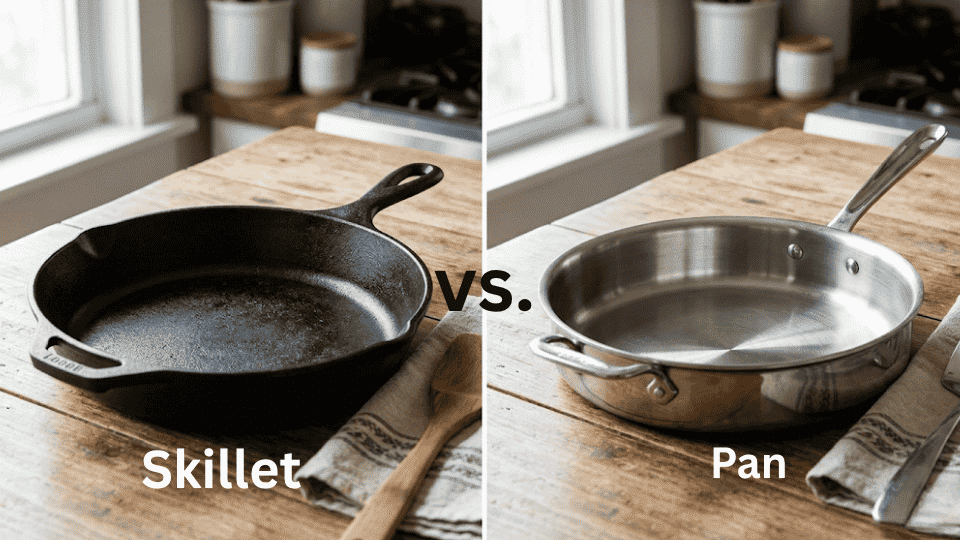
A skillet is a versatile, flat-bottomed frying pan designed for high-heat cooking on the stovetop. Its defining features include a wide, flat cooking surface that maximizes contact with food, slightly sloped sides that make tossing and stirring effortless, and a long handle for safe maneuvering.
Skillets are most commonly made from cast iron, stainless steel, or nonstick materials, each offering distinct cooking benefits. This workhorse pan is ideal for frying eggs, searing steaks, sautéing vegetables, and making golden pancakes.
Whether you reach for a rugged cast-iron skillet that retains heat exceptionally well, a nonstick version for delicate foods, or a stainless steel skillet for professional-style browning, this pan earns its permanent place on every cook’s stovetop.
What Is a Pan? (And Why the Term Gets Confusing)
The word “pan” is a broad, umbrella term that covers a wide range of cookware, and that’s exactly where the confusion begins. Unlike a skillet, which refers to a specific tool, “pan” can describe a frying pan, saucepan, sauté pan, grill pan, or even a roasting pan, each built for entirely different cooking tasks.
A saucepan has tall, straight sides for boiling and simmering, while a sauté pan features a flat base with higher vertical walls for tossing food in sauces.
In everyday conversation, most people casually say “grab a pan” when they actually mean a frying pan or skillet, which is why the two terms are so frequently and understandably used interchangeably in home kitchens worldwide.
Skillet vs Pan: Key Differences Explained
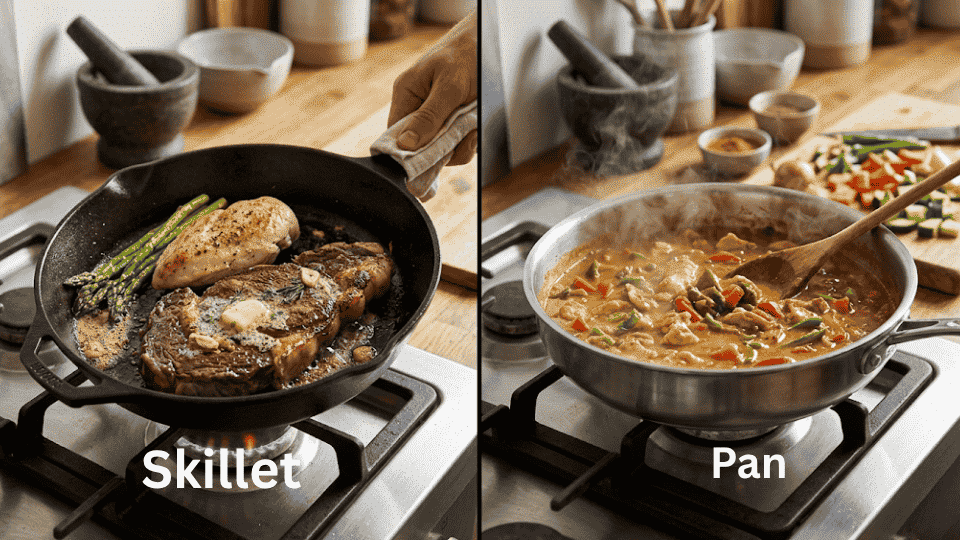
Now that you know what each one is, let’s place them side by side so the differences are easy to see and understand below:
1. Shape and Structure
Skillet: A skillet has a wide, flat base and gently sloped sides. That shape makes it simple to flip food, stir without effort, and keep full control while cooking.
Other Pans: Most other pans come with straight or taller sides. This design is intentional; it keeps liquids, sauces, and larger amounts of food right where they need to be.
2. How You Use Them
Skillet: Reach for a skillet when speed matters. It’s built for high-heat tasks like frying, searing, and browning jobs that need quick results and a good finish on food.
Other Pans: These shine when cooking takes more time. Boiling pasta, simmering a soup, or slow-cooking a sauce that’s where other pans step in and do their best work.
3. Heat Performance
Skillet: A skillet handles high heat really well. Once it gets hot, it holds that heat evenly, which is exactly what you need to build a solid crust or get a perfect sear.
Other Pans: Heat performance depends heavily on the type and material. Some pans warm up quickly but struggle to hold a steady temperature, which can affect how evenly your food cooks.
4. Flexibility in Cooking
Skillet: A skillet moves easily from stovetop to oven without missing a beat. That kind of flexibility makes it one of the most useful and reliable pans in any kitchen.
Other Pans: Most other pans are designed for a single cooking method. A saucepan stays on the burner, a roasting pan lives in the oven; they rarely do both jobs at once.
Skillet vs Frying Pan: What’s the Difference?
The terms “skillet” and “frying pan” are often used interchangeably. Both are shallow pans with flat bottoms and sloped sides, designed for similar tasks like frying and sautéing.
However, the word “skillet” is more commonly associated with cast iron cookware, known for its ability to retain heat and develop a nonstick surface over time.
On the other hand, “frying pan” is a more general term that can refer to any material, including aluminum, stainless steel, or nonstick. Frying pans typically heat up faster but don’t hold heat as long as skillets.
What to Consider When Choosing a Pan
When selecting the right pan for your needs, consider factors like material, size, and coating. These elements will help you find the best option for your cooking style:
- Material: Cast-iron skillets retain heat and are great for high-heat tasks, but they require maintenance. Frying pans made of stainless steel or nonstick materials are easier to clean and heat up quickly.
- Size: A 10–12-inch diameter pan is typically perfect for everyday cooking. Both skillets and frying pans come in this size, so choose based on your cooking needs.
- Coating: Nonstick coatings make cleanup easier, especially with delicate foods, while uncoated cast-iron skillets develop a natural nonstick surface over time.
In short, whether you choose a skillet or a frying pan, focus on the material, size, and coating that best match your cooking style.
When to Use a Skillet vs Other Pans: Best Situations for Each
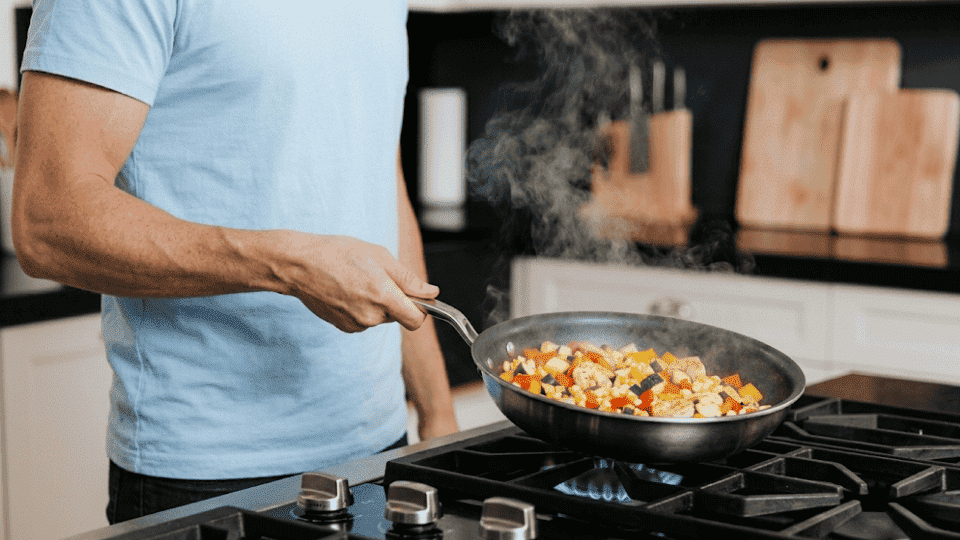
Choosing the right pan can make all the difference in how your meal turns out. Here’s a quick overview of when to use a skillet versus other types of pans: Best Situations for a Skillet
- High-heat cooking: Skillets are perfect for tasks like searing and frying, where high heat is essential.
- Searing meat: A skillet’s heat retention delivers a perfect, crispy sear.
- Frying foods: Ideal for frying, giving you a crispy exterior and a tender interior.
- Quick meals: Skillets heat up quickly, making them ideal for quick cooking.
When to Use Other Types of Pans:
- Use a Saucepan For: Boiling pasta or making sauces, where you need deeper sides and steady heat.
- Use a Sauté Pan For: Cooking with liquids or making one-pan meals.
Choosing the right pan ensures your meals cook evenly and turn out great every time. Whether it’s a skillet for searing or a saucepan for simmering, using the right tool makes all the difference.
Common Mistakes When Cooking with Skillets and Pans
Avoiding simple mistakes can improve your cooking results. Here are some common mistakes when using skillets and pans and how to prevent them:
- Not Preheating the Skillet or Pan Properly: Failing to preheat can cause food to stick or cook unevenly. Always heat your pan for a few minutes before adding food.
- Overcrowding the Pan: Overcrowding causes food to steam rather than fry or sear. Cook in batches to ensure even cooking and crispy results.
- Using the Wrong Type of Oil: Low-smoke-point oils can burn, ruining your dish. Use oils like vegetable or avocado oil for high-heat cooking.
- Not Caring for Your Cast Iron Skillet: Cast iron needs regular seasoning to stay nonstick. Clean, dry, and re-oil your cast-iron skillet after each use.
- Using a Nonstick Pan with High Heat: Nonstick pans aren’t meant for high heat. Stick to medium-low heat to protect the coating and keep yourself safe.
Taking these steps will help you avoid mistakes and cook like a pro, getting the most out of your skillets and pans.
Drawbacks of Using Individual Pans (Skillets and Frying Pans)
While skillets and frying pans are essential tools, they do have some limitations. Here are some drawbacks to keep in mind:
- Limited Versatility: Skillets and frying pans are great for frying and searing, but aren’t ideal for boiling or deep frying. Consider using other pans when you need versatility.
- They Can Be Heavy (Especially Cast Iron Skillets): Cast iron skillets are heavy and may be hard to handle, especially during transfers. Lighter pans may be better for longer cooking sessions.
- Cleaning Can Be a Hassle (Especially with Cast Iron): Cast iron requires special care to avoid rust and maintain seasoning. If you want low-maintenance cookware, nonstick or stainless steel might be better.
- They Can Be Expensive: High-quality skillets, especially cast iron, can be pricey. If you’re on a budget, consider using more affordable pans for casual cooking.
- Not Ideal for Cooking Large Quantities: Skillets have a limited cooking capacity. For large batches, a wok or sauté pan might be more practical and efficient.
By understanding these drawbacks, you can make more informed decisions about when to use individual pans versus other cookware.
Final Words
By now, the skillet vs pan debate should feel much simpler than it did before. Every piece of cookware serves a real purpose, and once you understand that, choosing the right one becomes second nature.
Whether you were stuck on the skillet vs. frying pan question or just trying to figure out which pan fits your cooking style, the answer always comes down to what you cook most and how you cook.
The right cookware won’t just save you time, it’ll make the whole experience more enjoyable.
No matter where you are in your cooking journey, a smart pan choice always pays off. Now I’d love to hear from you, which pan do you reach for most? Drop a comment below.