
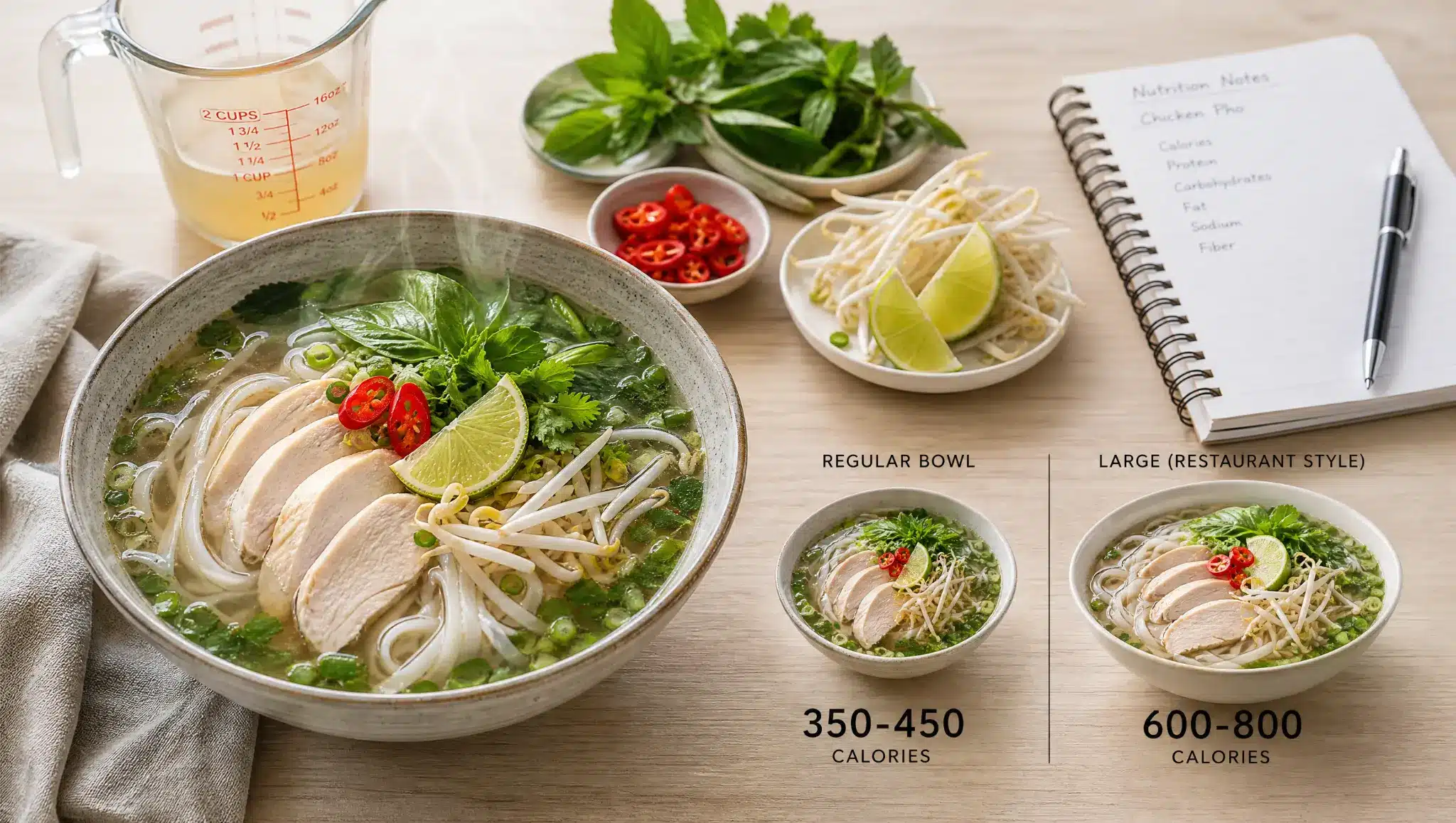
Ever order chicken pho and wonder whether it counts as a light soup or a full meal? That question comes up because the bowl can look simple, while noodles, chicken, broth, and sauce all change the total.
Chicken pho calories are easier to estimate when you start with serving size, then check what was added. If you are asking how many calories in pho, this breakdown gives you quick numbers for regular bowls, restaurant portions, takeaway containers, and a lighter home version.
Use the tables as your starting point, then adjust your bowl before you log, order, or cook.
Chicken Pho Calories by Serving Size
Serving size is the most important factor when estimating chicken pho calories. A small homemade bowl with measured ingredients can contain significantly fewer calories than a large restaurant serving packed with noodles and meat.
| Serving Size | Estimated Calories |
|---|---|
| 1 cup serving | 150 to 170 |
| Small bowl | 300 to 400 |
| Regular bowl | 350 to 500 |
| Restaurant bowl | 450 to 550 |
| Large restaurant bowl | 600 to 800+ |
| 32 oz takeaway bowl | 550 to 700 |
| Bowl without noodles | 150 to 300 |
These serving-size ranges give you the quickest starting point for tracking chicken pho calories. Once you choose the closest bowl size, adjust the number based on noodles, chicken, sauce, and toppings.
What Changes Chicken Pho Calories?
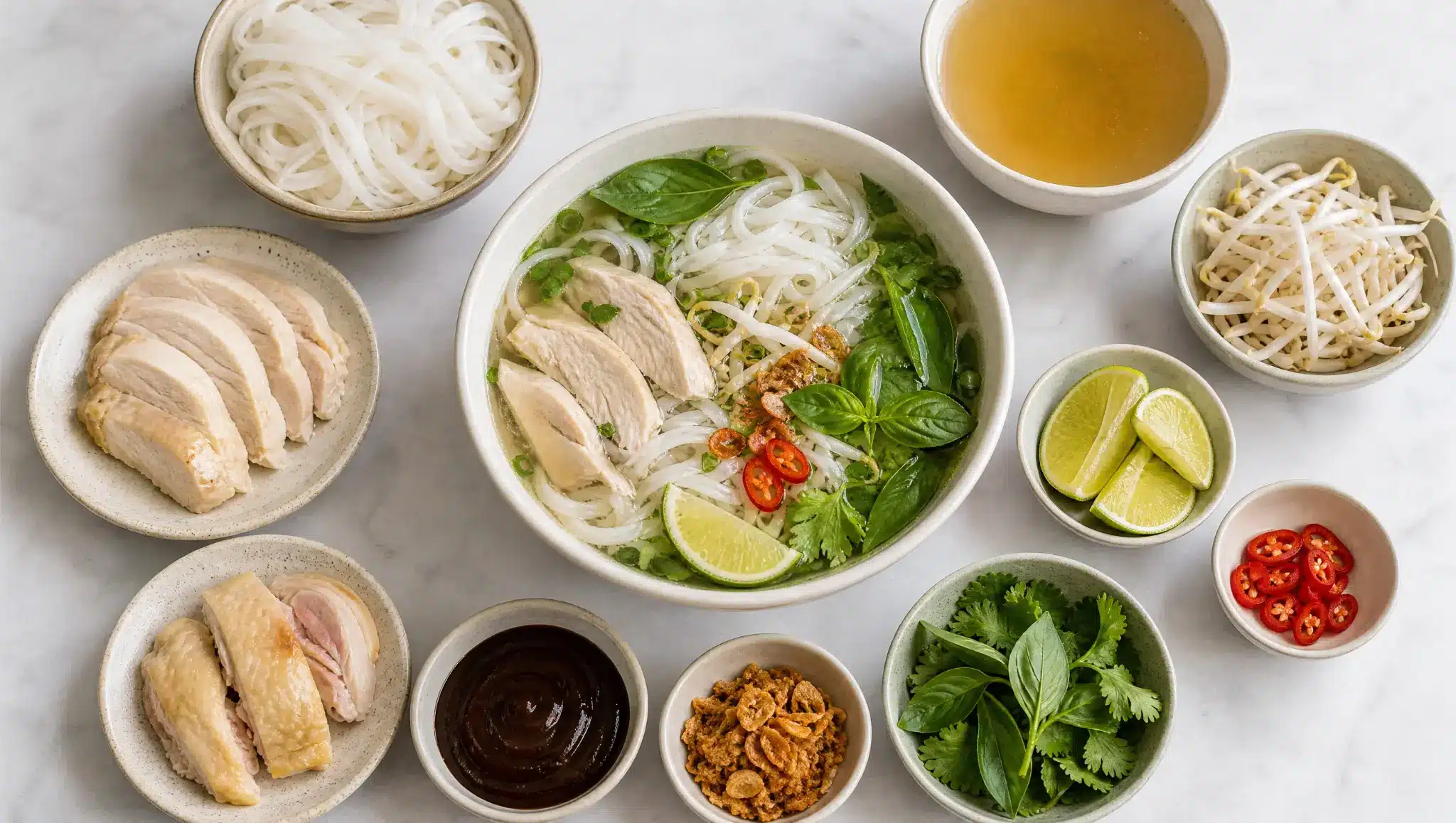
Not every bowl is built the same. These are the parts that usually change the calorie count most.
| Calorie Driver | Impact |
|---|---|
| Rice noodles | Can add 150 to 250 calories |
| Extra chicken | Adds about 100 to 180 calories |
| Thigh or skin-on chicken | Adds more fat than lean breast |
| Hoisin sauce | Adds about 30 to 40 calories per tablespoon |
| Fried shallots | Adds about 40 to 80 calories |
| Broth | Usually lighter in calories, but higher in sodium |
| Herbs, lime, sprouts, chili | Very low calorie |
These small changes explain why two chicken pho bowls can log differently. Check the noodles first, then adjust for chicken, sauce, and toppings.
Chicken Pho Nutrition Breakdown
Chicken pho calories matter for tracking, but the nutrition breakdown also helps you understand what the bowl gives you. Most bowls include protein from chicken, carbohydrates from rice noodles, and sodium from broth or sauces.
- Protein: A regular bowl often provides around 20 to 30 grams of protein, mostly from chicken.
- Carbohydrates: Rice noodles provide most of the carbs and are usually the biggest calorie source.
- Fat: Chicken breast keeps the bowl leaner, while thigh meat, chicken skin, oily broth, and fried toppings can raise fat.
- Sodium: Broth and sauces can be high in sodium, especially in restaurant servings.
- Fiber and micronutrients: Bean sprouts, herbs, lime, mushrooms, and other vegetables can add small amounts of fiber, vitamins, and minerals while contributing very few calories.
This makes it easier to see why chicken pho can feel filling, why noodles affect the calorie count most, and why broth matters even when it is not the main calorie source.
Restaurant, Takeaway, and Tracking Estimates
Restaurant and takeaway pho portions are harder to track because the bowl size, noodle amount, chicken portion, and sauce can vary from place to place.
When exact nutrition details are not available, use the closest real-world estimate and adjust only if the bowl looks heavier than usual.
| What You Ordered | What to Log |
|---|---|
| Light bowl with fewer noodles | 400 to 500 calories |
| Regular restaurant bowl | 500 to 550 calories |
| Large restaurant bowl | 650 to 800 calories |
| 32-ounce takeaway bowl | 550 to 700 calories |
| Sauce-heavy serving | Add 30 to 80 calories |
| Extra-heavy bowl with noodles and chicken | 850+ calories |
For calorie apps, choose the closest bowl type first. If the serving looks packed with noodles, extra chicken, or heavy sauce, use the higher end of the range instead of adding several separate estimates.
This keeps tracking simple while still giving you a realistic number.
Lower-Calorie Chicken Pho Recipe at Home
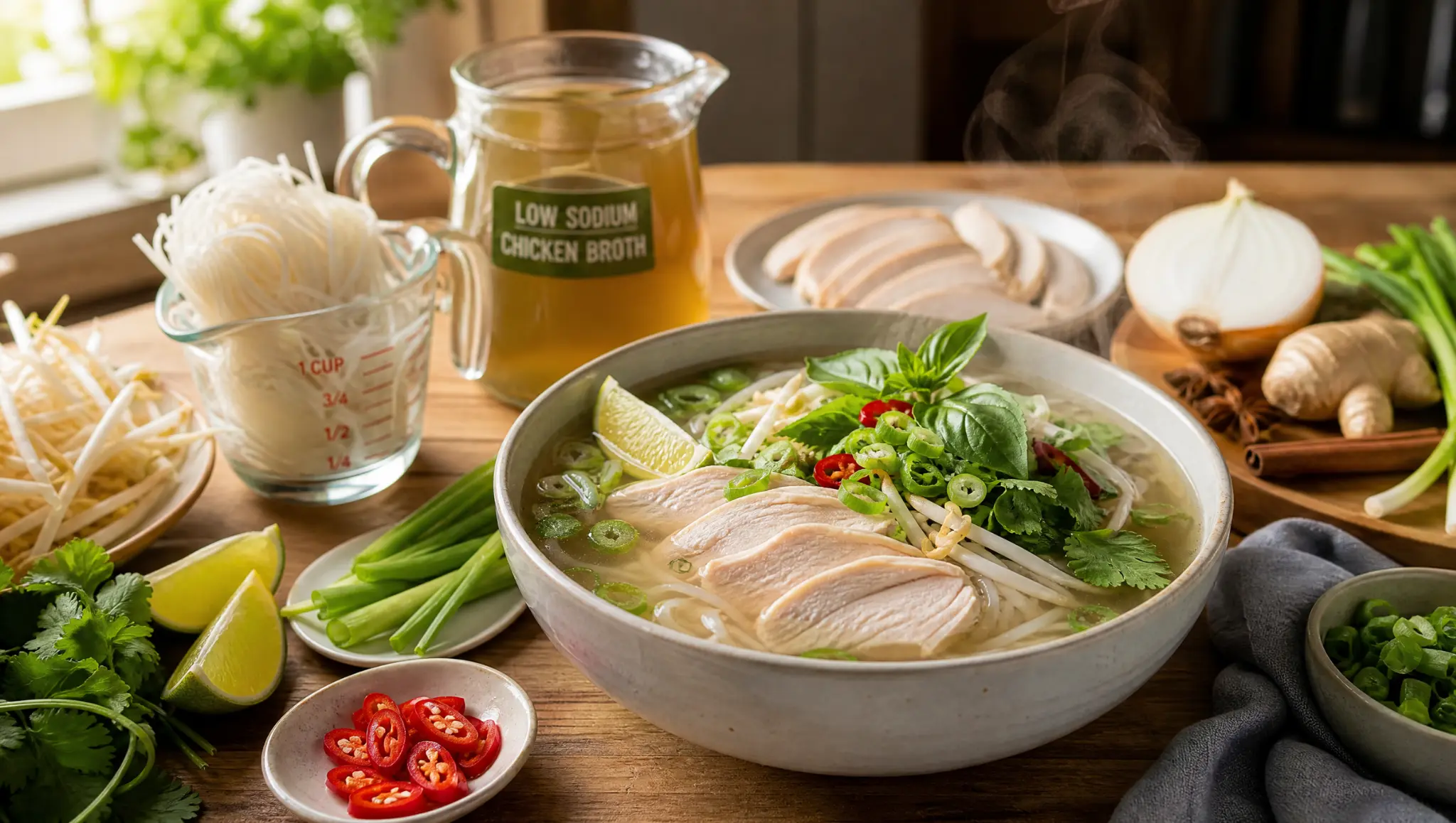
Making chicken pho at home gives you complete control over ingredients, portions, and sodium levels. This lighter version keeps the classic flavors while making calorie tracking easier.
Ingredients
- 1 chicken breast
- 1 serving rice noodles, or 1/2 serving for fewer calories
- 3 to 4 cups low-sodium chicken broth
- 1 small onion, halved
- 1 piece ginger, sliced
- 1 star anise
- 1 small cinnamon stick
- 1 cup bean sprouts
- 1 green onion, sliced
- Fresh cilantro or Thai basil
- Lime wedges
- Chili or jalapeños
- 1 teaspoon hoisin sauce (optional)
Servings: 1 to 2
Total Time: 25 minutes
Step 1: Simmer the Broth
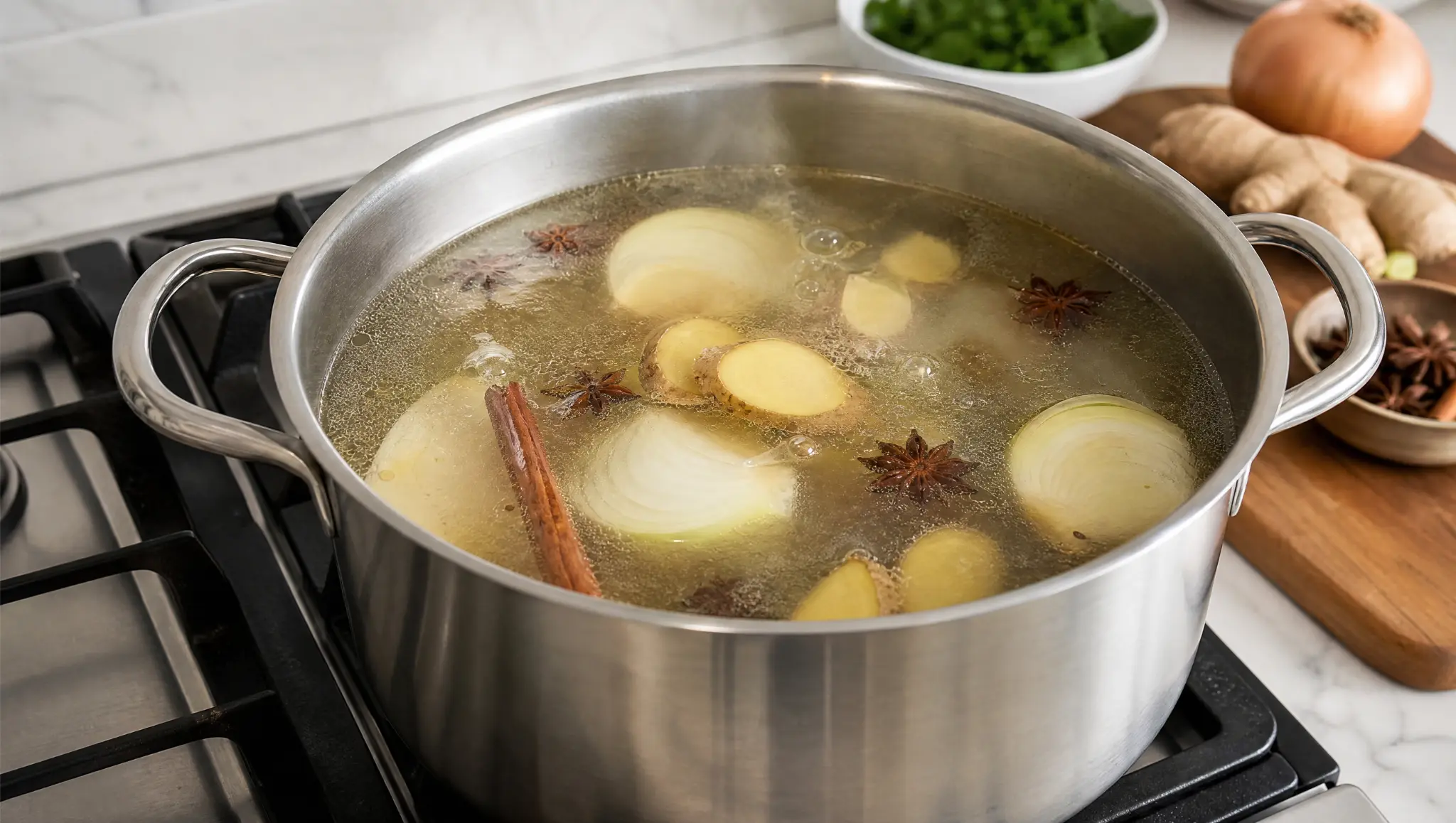
Add the broth, onion, ginger, star anise, and cinnamon stick to a pot. Simmer for about 15 minutes to develop flavor. Using low-sodium broth helps reduce salt while allowing the spices and aromatics to shine.
Step 2: Cook the Chicken
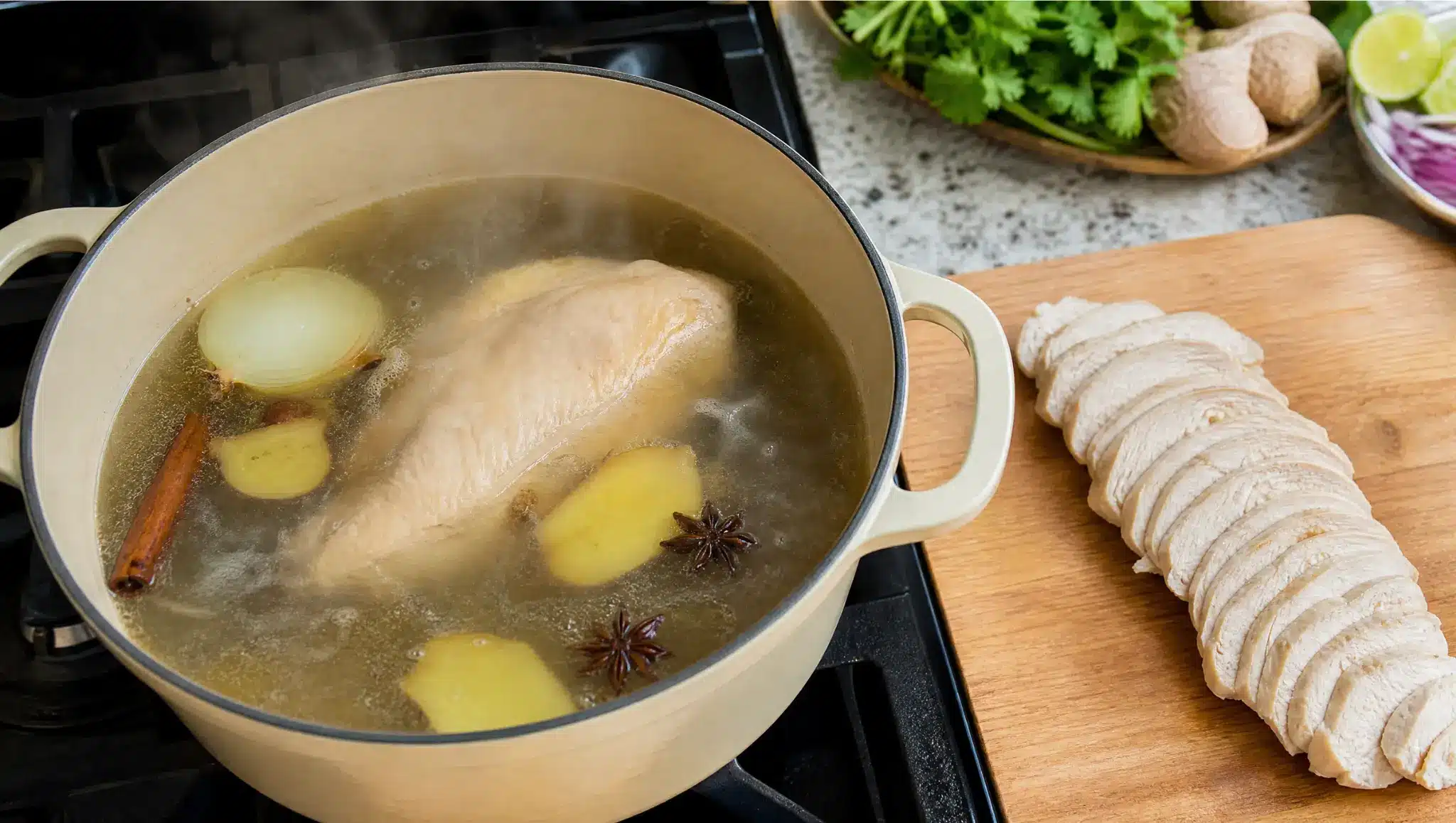
Add the chicken breast to the broth and cook until fully cooked and tender. Remove it from the pot and slice or shred it. Chicken breast provides lean protein while keeping the calorie count moderate.
Step 3: Prepare the Noodles
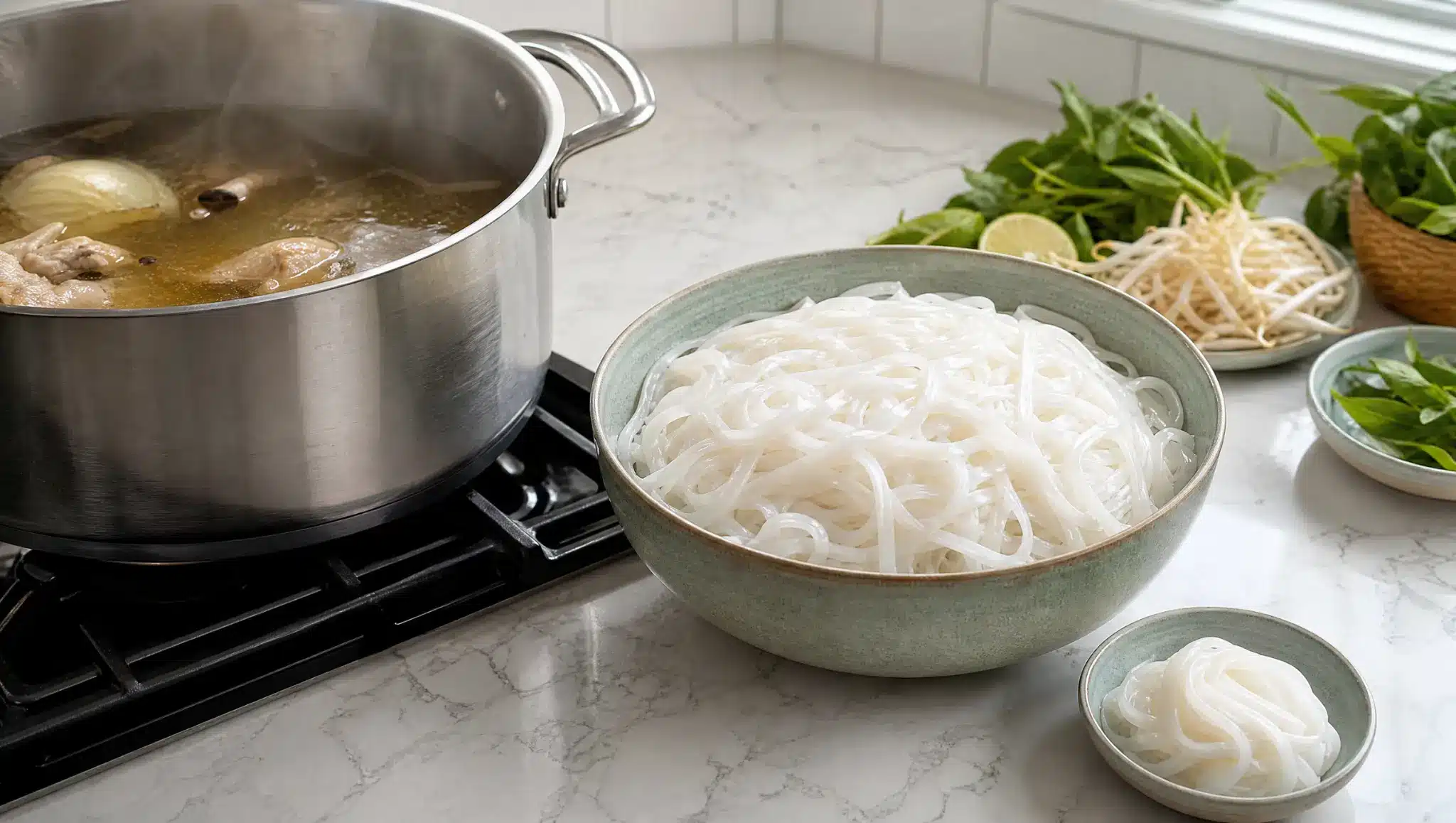
Cook the rice noodles according to package directions. Preparing noodles separately helps maintain texture and makes portion control easier.
Step 4: Assemble the Bowl
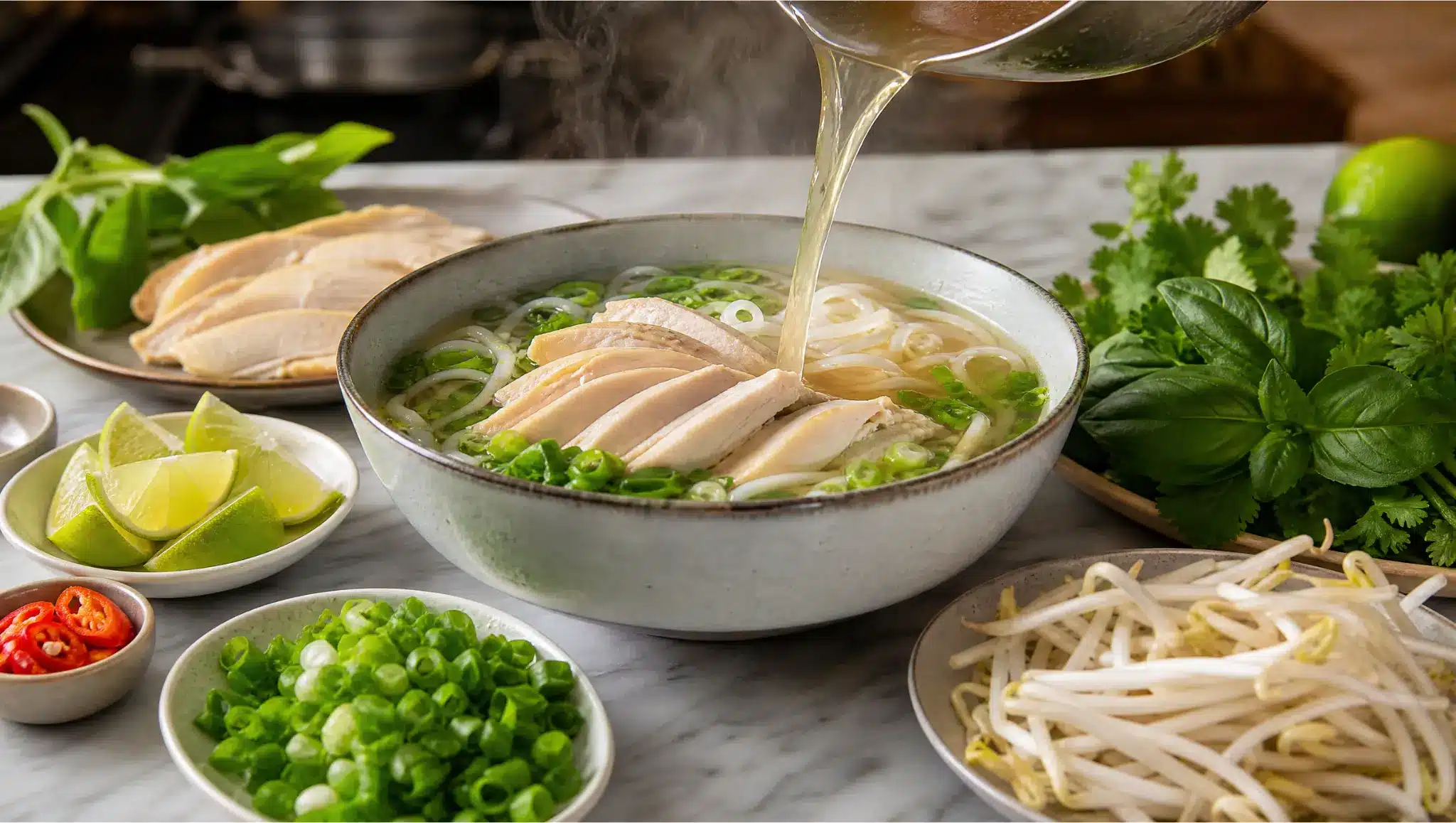
Place the noodles in a bowl, top with chicken, and pour the hot broth over everything. Finish with bean sprouts, green onion, herbs, lime, and chili.
Step 5: Add Sauce Sparingly
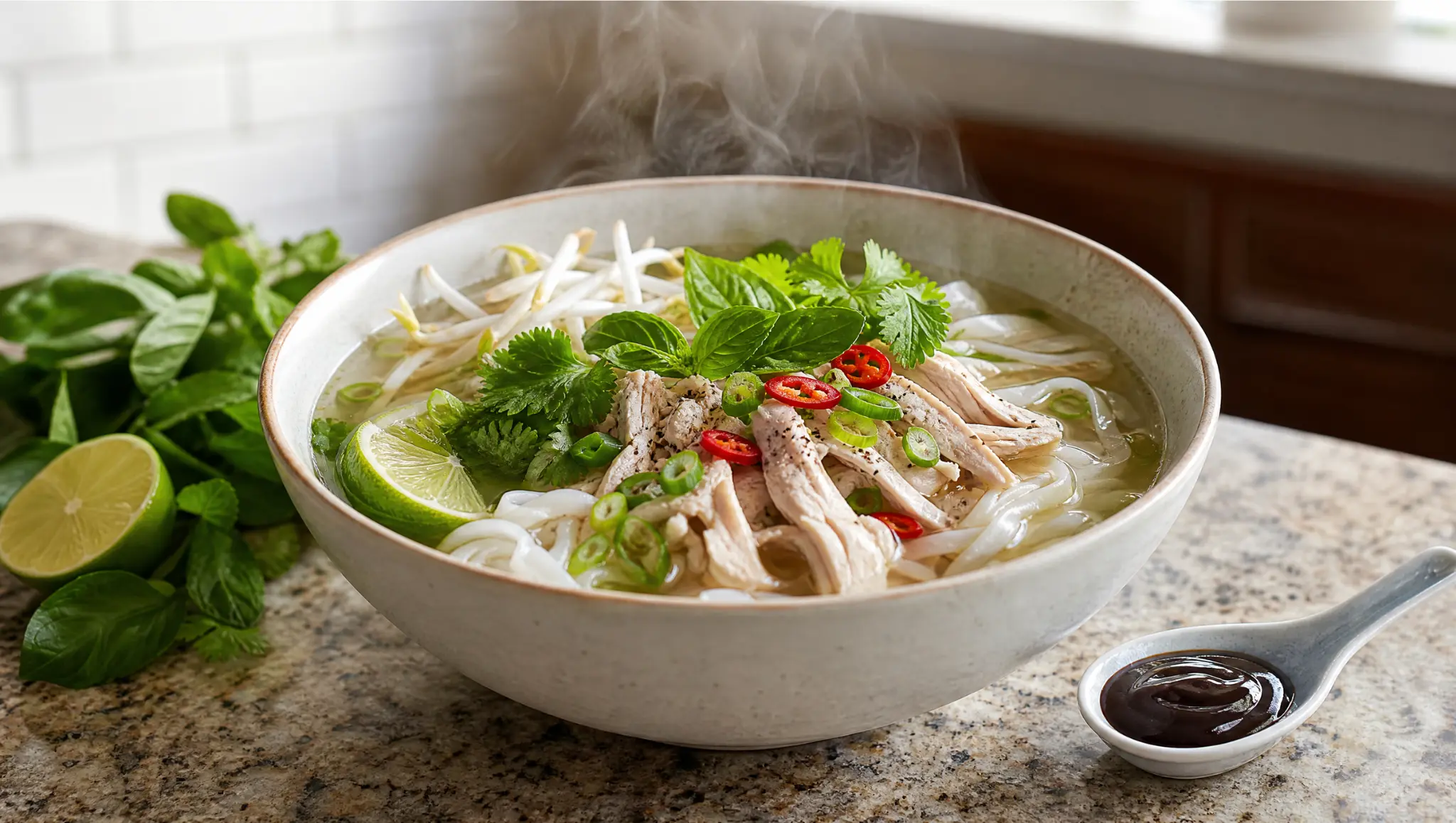
If desired, add about 1 teaspoon of hoisin sauce. Using herbs, lime, and chili first can provide plenty of flavor without relying heavily on sauces.
Estimated Calories: This homemade version typically falls between 350 and 500 calories per serving, depending on the noodle portion and toppings used.
Making pho at home is one of the easiest ways to enjoy the dish while keeping calories and sodium under control.
How Chicken Pho Fits Into Your Day
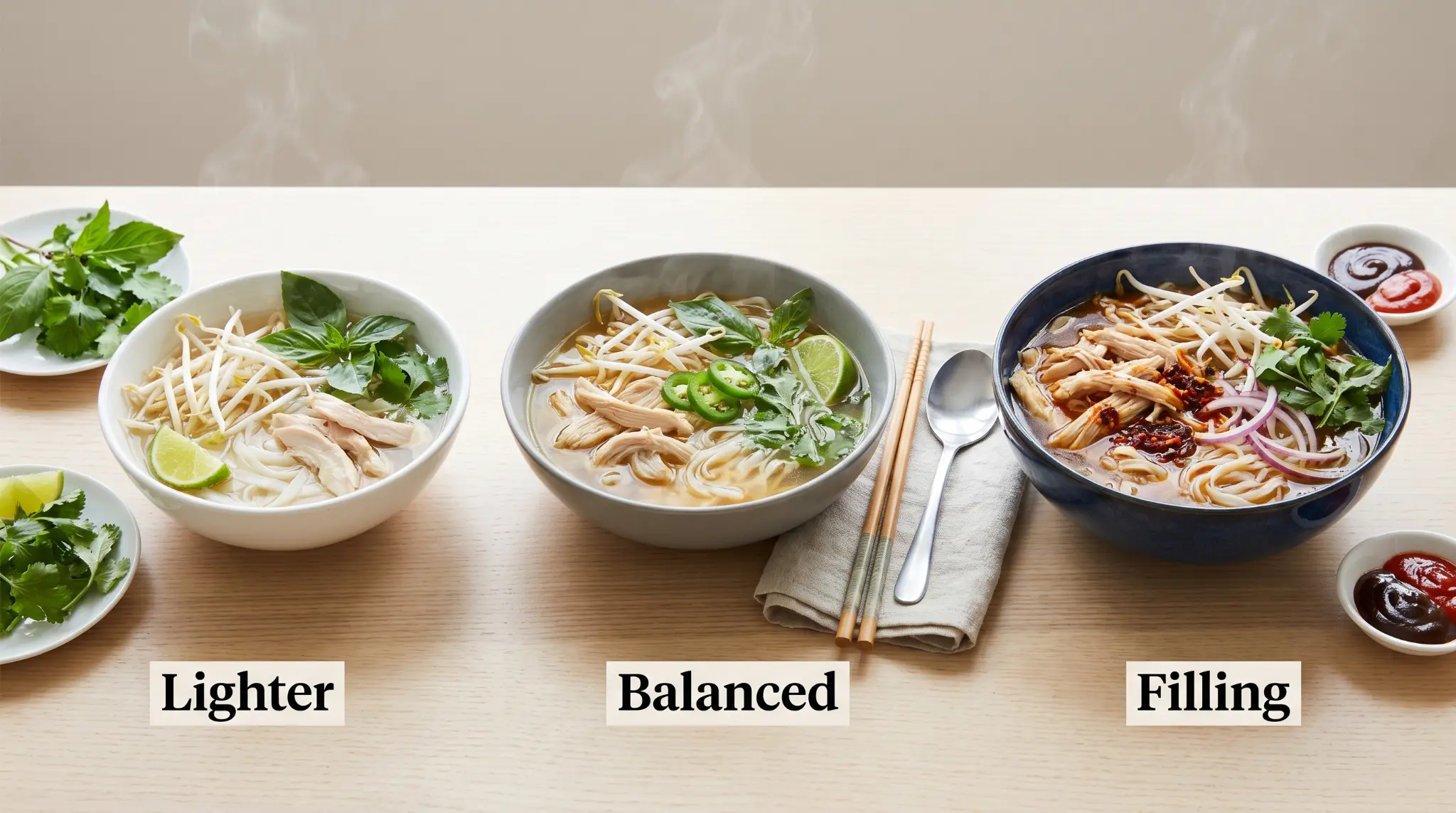
Chicken pho can fit into many eating styles because it combines lean protein, carbohydrates, broth, and vegetables in a single meal. Small adjustments can make it lighter, more filling, or better suited to specific nutrition goals.
| Goal | Best Choice |
|---|---|
| Lighter meal | Half noodles, lean chicken, light sauce, extra sprouts |
| Balanced meal | Standard noodles, lean chicken, broth, herbs, and vegetables |
| More filling meal | Add extra lean chicken before adding extra noodles |
| Lower sodium meal | Use less broth and keep sauces on the side |
| Restaurant meal | Log a regular bowl at approximately 500 calories |
Chicken pho is often lower in calories than beef pho, although portion size remains important.
| Type | Estimated Calories |
|---|---|
| Chicken pho | 350 to 500 |
| Beef pho | 450 to 650 |
| Large beef pho | 700 to 1,000+ |
| Vegetarian pho | 300 to 500 |
| No-noodle pho | 150 to 300 |
| Extra-noodle pho | 550 to 800+ |
Comparing different pho styles can help you choose the option that best fits your calorie and nutrition goals.
Common Mistakes When Estimating Chicken Pho Calories
Many people undercount chicken pho because it looks lighter than other restaurant meals. Most errors come from missing the parts that quietly raise the total.
- Counting it as only soup: Pho has broth, but rice noodles and chicken make it a full meal.
- Ignoring the noodle portion: Extra noodles can add 150 to 250 calories, so a noodle-heavy bowl needs a higher estimate.
- Forgetting sauces and fried toppings: Hoisin, sweet sauces, fried shallots, and oily toppings can raise the total quickly.
- Logging every restaurant bowl the same way: A small dine-in bowl and a large takeaway bowl should not use the same estimate.
- Overlooking extra chicken: More chicken adds protein, but it also adds calories.
- Ignoring sodium: Broth and sauces can be high in salt, even when the calorie count feels moderate.
Avoiding these mistakes makes your estimate closer to the bowl you actually ate. It also keeps the tracking process simple without adding another separate tips section.
Frequently Asked Questions
Can I use leftover chicken?
Yes. Use plain cooked chicken that is not heavily seasoned. Shred or slice it, then warm it in the broth near the end so it stays tender and does not overcook.
Can the broth be made ahead of time?
Yes. Prepare the broth up to three days ahead and store it in the refrigerator. Keep the noodles, chicken, and toppings separate until serving so the bowl tastes fresher.
How do I keep noodles from getting soft?
Cook the noodles separately and add them right before serving. For leftovers, store noodles away from the broth, then warm them briefly before eating to keep a better texture.
What can I add for more flavor without many calories?
Use lime juice, fresh herbs, chili, jalapeños, ginger, green onion, or extra bean sprouts. These add brightness, heat, and volume without relying on extra hoisin or oily toppings.
Final Takeaway
Your bowl does not need to be hard to track once you know what to check first.
Start with the serving size, look at the noodles, then adjust for chicken, sauce, and toppings. That simple order makes chicken pho calories feel much easier to manage in a real food log.
If you still ask how many calories in pho when ordering out, use the restaurant and takeaway tables instead of guessing from looks alone. For more control, try the homemade version with measured noodles, lean chicken, and lighter toppings.
Save the chart before your next pho order, or use the recipe section to build a bowl that fits your day.