
Every patient seeking our orthodontic treatment, whether it be braces or Invisalign, has some understanding that they will need to change the way they eat seemingly overnight.
Foods that were safe and easy to eat before treatment are suddenly hard to chew, awkward, or simply cannot be eaten due to the treatment. Snacks that never seemed like a problem can get stuck around brackets, and drinks that are normally part of your routine may become harder to manage with aligners.
The good news is that orthodontic treatment does not require an absolutely perfect diet, and there are actually foods that can help.
With that being said, the foods you choose to eat directly play into:
- Comfort while eating
- How easy it is to clean your teeth
- How irritated your gums become during treatment
- How manageable is the soreness after adjustments
Why Food Matters More During Orthodontic Treatment
As anyone who has received corrective orthodontics will tell you, the concerns behind diet are directly tied to the fact that there are more places for plaque, sugar, and food particles to sit throughout the day.
With Braces
Brackets and wires create small areas where food can collect, especially after snacks or meals that are sticky, crunchy, or sugary.
With Invisalign
Aligners sit tightly against the teeth, meaning that if someone drinks soda, juice, sweet tea, or coffee with trays in, sugar and acid can stay trapped against the enamel much longer than they should.
Foods That Can Help Support Oral pH Balance
One of the most overlooked aspects of proper oral health during braces or Invisalign treatment is, surprisingly enough, pH balance.
After eating acidic or sugary foods, the mouth temporarily becomes more acidic. Over time, that can make enamel more vulnerable and make plaque harder to manage.
According to Dr. Thomas Dobie, board-certified orthodontist and owner of Dobie Revolution Orthodontics, certain foods can help support a healthier balance in the mouth after meals or acidic drinks. Dr. Dobie explains that “foods such as cheese, yogurt, or drinking milk are ideal for this,” meaning they help restore normal oral pH balance. Leafy greens, nuts, and water can also help in the same way.
Foods That May Be Easier on Teeth During Treatment
- Yogurt
- Cheese
- Milk
- Leafy greens
- Water-rich foods
- Nut butters
- Smoothies with low added sugar
These foods are not going to be magical fixes, but they are often easier on sensitive teeth and gums compared to highly acidic or sugary snacks.
Best Foods to Eat During the First Week of Braces or Invisalign

The first week of treatment is usually when eating habits change the most, and can be the hardest stretch of treatment for some patients.
Teeth may feel sore. Gums may feel tender. Chewing can suddenly take more effort than expected.
That is why many orthodontic patients naturally shift toward softer foods early on.
Softer Foods That Are Easier to Eat
- Oatmeal
- Eggs
- Yogurt
- Soup
- Rice bowls
- Mashed potatoes
- Smoothies
- Cooked vegetables
- Soft fish
- Soft fruits
Since these foods require less chewing, they are far easier to tolerate while teeth start to adjust.
They also help patients eat balanced meals instead of relying entirely on snacks or processed comfort foods.
Why Yogurt and Smoothies Work Well
Yogurt is one of the easiest foods to eat during orthodontic soreness because it is:
- Soft
- Filling
- Easy on sensitive teeth
- Less acidic than many processed snacks
Milk-based smoothies can play the same role, especially when combined with fruit, protein, or nut butter. The goal is not to eat bland food forever, but to simply to reduce irritation while the mouth adjusts.
Foods That Are Harder to Manage With Braces
There is a long list of foods that orthodontists recommend patients stay away from, but some foods consistently create more problems with braces because they are difficult to clean around brackets and wires.
Sticky Foods
Sticky foods will cling to braces and stay trapped around the teeth.
The biggest offenders here are:
- Caramel
- Gummies
- Taffy
- Chewy candy
- Sticky dried fruit
Hard or Crunchy Foods
Hard foods can pose the risk of irritation or broken brackets.
Foods that commonly cause problems include:
- Popcorn kernels
- Ice
- Crunchy candy
- Hard chips
- Whole nuts
That does not mean every crunchy food is automatically off-limits. In many cases, it comes down to preparation.
- Cooked carrots are easier to eat than raw carrots.
- Nut butter is easier than whole almonds.
- Softer fruits are easier to bite into than hard apples.
Small adjustments like these can make braces much easier to manage without making meals feel overly restrictive.
Foods and Drinks to Be Careful With During Invisalign
While similar, Invisalign comes with a different set of required food habits.
The biggest rule is simple: Aligners should come out before eating or drinking anything besides water.
That matters because aligners sit directly against the teeth, meaning that is someone slowly sips coffee, sports drinks, juice, or soda with trays in, sugar and acid can stay trapped against the enamel.
Invisalign Habits That Commonly Cause Problems
- sipping sugary drinks with trays in
- constant snacking throughout the day
- putting trays back in without brushing
- drinking acidic beverages too frequently
For many Invisalign patients, the easiest routine is:
- regular meals
- water between meals
- fewer all-day sipping habits
- cleaning teeth before trays go back in
What to Eat When Your Mouth Feels Sore
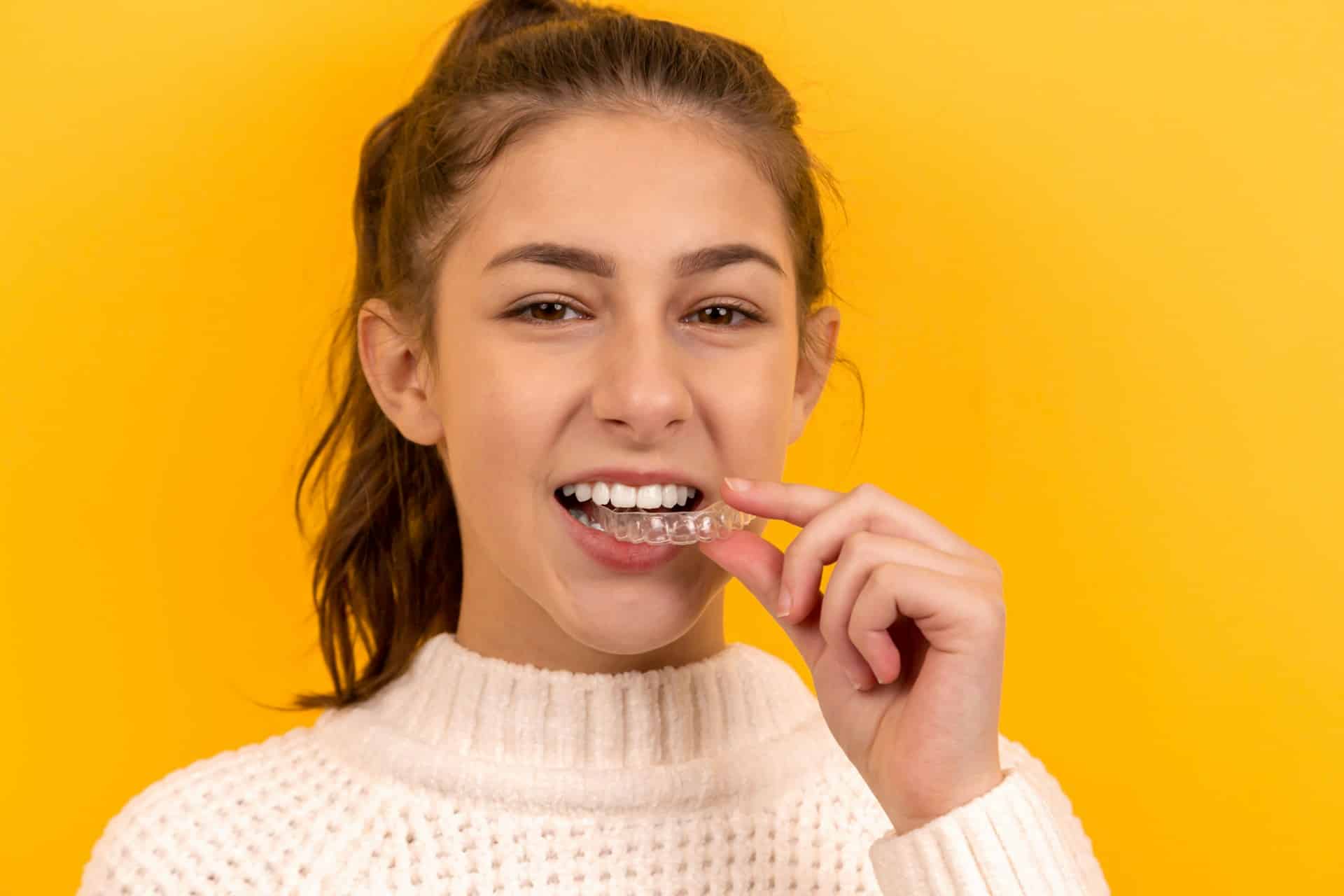
If you are experiencing soreness, that is completely normal during orthodontic treatment, especially after adjustments or switching to a new Invisalign tray.
When teeth feel tender, texture matters just as much as nutrition.
Better Foods for Sore Teeth
Soft meals are usually the best options as opposed to foods that require heavy biting or chewing.
For example:
- Soup is easier than a crunchy salad
- Scrambled eggs are easier than toast
- Rice bowls are easier than sandwiches
- Smoothies are easier than chewy snacks
Smoothies can be especially useful because they can be filling without forcing sore teeth to do all the heavy lifting.
A smoothie made with yogurt, fruit, and protein can replace a full meal while still being easy on the mouth, just be mindful of added sugars, and rinse with water afterward if brushing is not possible right away.
Why Brushing Harder Is Not the Answer
When food gets stuck around braces or aligners, many patients instinctively think that brushing harder is the best answer.
The truth is that it usually creates more problems than it solves. Trying to scrub away plaque, food buildup, or staining aggressively can irritate the gums and wear down enamel over time.
According to Dr. Dobie, this can have a negative impact beyond enamel issues, stating that “brushing too hard is one of the leading causes of gum recession.”
This is extremely important during orthodontic treatment because patients are often brushing more frequently than usual.
A Better Approach
Instead of brushing harder:
- Brush gently, but thoroughly
- Take your time
- Focus on consistency
Dr. Dobie also notes that patients “should only be brushing with SOFT bristles so that you do not damage your gums and enamel.”
It’s about consistency and diligence, not force and speed.
Simple Eating Habits That Help During Treatment
Most orthodontic patients will need to adjust their diets, but do not need a complete reset.
Rather, they need a routine that is realistic and easy to follow for the long term.
Small Habits That Make a Big Difference
- Rinse with water after meals
- Choose softer foods during soreness
- Limit sticky foods with braces
- Remove Invisalign before eating or drinking
- Avoid constant sugary drinks
- Brush gently after meals
- Give your mouth time between snacks
These habits help reduce how often teeth are exposed to sugar, acid, and trapped food particles throughout the day.
So, Can Food Actually Protect Your Teeth?
Food alone will not protect teeth during braces or Invisalign, but smarter food choices can absolutely make treatment easier to manage.
Cheese, yogurt, milk, leafy greens, water, and softer low-acid foods can help support a healthier oral environment while reducing unnecessary irritation during treatment.
At the same time, limiting sticky foods, sugary drinks, and constant snacking can make oral hygiene much easier throughout the process.
The best orthodontic diet usually comes down to a mixture of what the patient is already eating, softer and easier variations of food they enjoy that might be problematic, and simply maintaining an oral hygiene routine they can stick to.