

Are you standing in the tea aisle, thinking which option deserves a spot in your kitchen cupboard? Black tea vs green tea is one of the most common questions tea drinkers face when choosing between the two.
I’ve been there myself, staring at shelves full of colorful boxes and feeling totally overwhelmed by choices. Picking the proper tea can change your daily routine and make you feel so much better overall.
Your personal needs, lifestyle habits, and what you hope to gain from tea all matter here. Black tea vs green tea might seem like a simple choice, but it affects your entire day. Let me walk you through everything you need to make the perfect decision for yourself today.
What is Black Tea?
Black tea is a type of tea made from the leaves of the Camellia sinensis plant. It gets its dark color and bold flavor from a process called oxidation.
When tea leaves are picked, they’re left to dry and turn brown as they’re exposed to air. This changes their taste and appearance completely, creating the strong flavor we know today.
Black tea originated in China centuries ago, but it quickly spread worldwide and became incredibly popular.
Today, common varieties include Assam from India, floral Darjeeling, citrusy Earl Grey, and robust English Breakfast. Each type has its own unique flavor profile. Black tea contains caffeine, making it perfect for mornings.
What is Green Tea?
Green tea is a light, refreshing beverage made from fresh Camellia sinensis leaves that haven’t been oxidized much. The leaves are heated quickly after harvesting to prevent them from turning brown and losing freshness.
This heating process, done through steaming or pan-frying, locks in the natural green color and mild flavor. Green tea has roots in ancient China, where people first learned its unique taste thousands of years ago.
It later spread to Japan and other Asian countries before gaining worldwide popularity in recent decades.
Popular types you might recognize include Sencha from Japan, ceremonial Matcha powder, tightly rolled Gunpowder, and sweet Jasmine tea. Green tea has less caffeine than coffee, but enough to give you a nice lift.
Black Tea vs. Green Tea: Side-by-Side Comparison
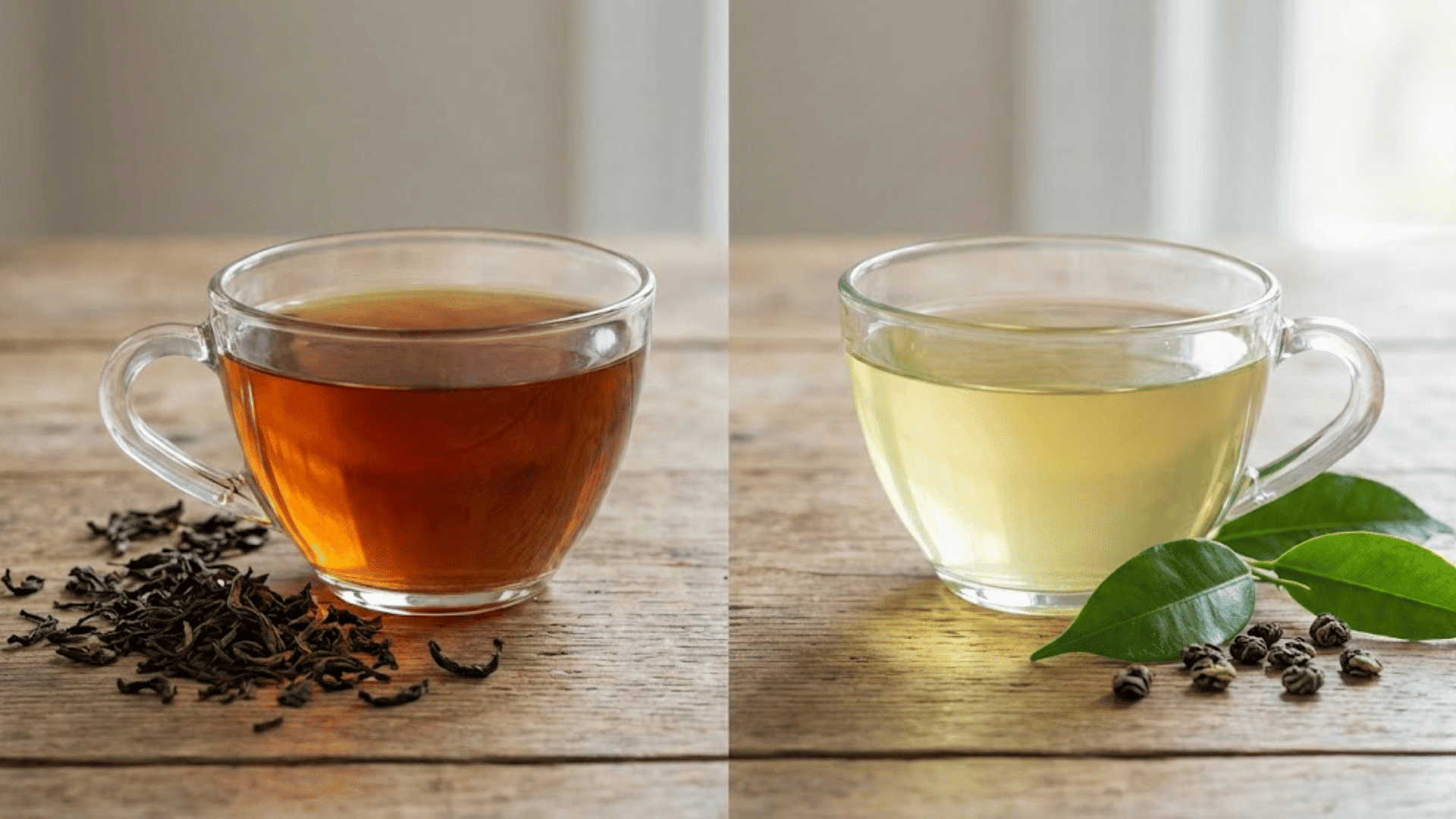
Black tea and green tea come from the same plant, but I’m always surprised by how different they actually are. Here’s what you need to know about how they compare:
1. Taste Differences
Black Tea: Black tea has a bold, robust flavor that’s much stronger and maltier than green tea. It can be not very pleasant if over-brewed, but is generally smooth and full-bodied, pairing well with milk and sugar for improved taste.
Green Tea: Green tea offers a subtle, delicate taste with vegetal, grassy notes that refresh your palate gently. It can turn slightly astringent if the water gets too hot, and it typically doesn’t pair well with milk, as black tea usually does.
2. Caffeine Content
Black Tea: Black tea contains 40 to 70 milligrams of caffeine per cup, more than green tea overall. Smaller, broken leaves release more caffeine due to increased surface area, and steeping time significantly affects the final caffeine levels too.
Green Tea: Green tea has 20 to 45 milligrams per cup, making it gentler for sensitive people throughout the day. Whole leaf varieties contain less caffeine than powdered matcha, and water temperature plus steeping time influence the final caffeine amount significantly.
3. Color and Appearance
Black Tea: Black tea brews into deep amber, reddish-brown, or dark brown colors that look rich and inviting. Before brewing, the leaves appear dark brown or black and are often twisted or broken into smaller pieces from processing.
Green Tea: Green tea produces pale yellow to light green brews, depending on the specific variety you choose today. The leaves stay green before brewing and can be flat, needle-shaped, or tightly rolled into small balls or pellets for storage purposes.
| Feature | Black Tea | Green Tea |
|---|---|---|
| Source plant | Camellia sinensis | Camellia sinensis |
| Processing | Fully oxidized, leaves darken | Lightly heated to stop oxidation |
| Flavor | Bold, rich, and malty | Light, grassy, and fresh |
| Color when brewed | Deep amber to dark brown | Pale yellow to light green |
| Caffeine per cup | About 40–70 mg | About 20–45 mg |
| L-theanine | Present, but lower due to oxidation | Higher levels remain |
| Best time to drink | Morning or early day | Late morning or afternoon |
| Stomach feel | Can feel strong on an empty stomach | Generally gentler |
| Pairs with milk | Yes | No, usually not |
| Popular types | Assam, Darjeeling, Earl Grey | Sencha, Matcha, Jasmine |
How to Brew Black Tea and Green Tea Properly
Brewing matters more than most people think. I learned this the hard way after making cups that tasted bitter or weak. If you get the water and timing right, both teas taste much better and feel easier on your body.
How to Brew Black Tea
Black tea handles heat well and needs more time to steep.
-
Water temperature: Very hot water, just under boiling
-
Steep time: 3 to 5 minutes
-
Leaf amount: 1 teaspoon per cup
If black tea tastes harsh, it usually steeped too long. I pull the leaves early and taste as I go.
How to Brew Green Tea
Green tea needs gentler heat or it turns bitter fast.
-
Water temperature: Warm, not boiling
-
Steep time: 1 to 3 minutes
-
Leaf amount: 1 teaspoon per cup
I let the kettle cool for a minute before pouring. That single step makes a huge difference.
Quick Brewing Tips
-
Longer steeping means stronger flavor and more caffeine
-
Hotter water pulls bitterness faster, especially with green tea
-
Loose leaves give better control than bags
Once you dial this in, both teas taste smoother and feel better throughout the day.
Health Benefits of Black Tea and Green Tea
Black tea and green tea both offer impressive health benefits that can improve your daily life in different ways.
While they come from the same plant, their unique processing creates distinct compounds that support your body differently.
Black Tea
Black tea contains theaflavins and thearubigins that protect cells from damage and reduce inflammation — research shows these bioactive compounds are linked with improved heart health and reduced disease risk (ScienceDirect: Tea in cardiovascular health and disease).
Black tea may lower bad cholesterol and reduce heart disease risk while feeding good gut bacteria.
Black tea provides smooth energy and mental clarity without jitters or crashes like coffee can cause.
Green Tea
Green tea is packed with catechins, especially EGCG, which fight free radicals and support overall health — studies link these catechins with antioxidant effects that help protect heart and metabolic health (The Science Behind Tea’s Health Benefits: Understanding Catechins, Theanine, and Antioxidants).
Green tea boosts metabolism and helps burn fat more efficiently when combined with healthy habits.
Green tea contains L-theanine for calm focus and compounds that support your immune system naturally.
Both teas can be part of a healthy lifestyle when you drink them regularly. The best choice depends on which specific health benefits matter most to you and your goals.
Black Tea vs. Green Tea for Specific Goals

Choosing between black tea and green tea really comes down to what you need from your cup. I’ve found that matching the right tea to your goals makes a big difference in how you feel.
1. For Energy and Morning Use
Black tea makes a superior morning beverage due to its higher caffeine levels that wake you up quickly. The bold, rich taste feels more substantial alongside your breakfast and gets you moving for the day.
Most people find the stronger kick more effective at fighting grogginess. Green tea works if you want a gentler start without intense stimulation.
2. For Weight Loss
Green tea takes the lead for shedding pounds because its catechins actively help your metabolism run faster. Studies show that drinking it regularly improves how efficiently your body breaks down fat cells for energy.
The EGCG compound specifically targets fat stores and encourages your system to use them as fuel. Black tea helps too, but research favors green tea for weight goals.
3. For Relaxation and Stress
Green tea stands out for managing stress thanks to its L-theanine content that soothes your mind naturally. This amino acid creates peaceful alertness, letting you concentrate without feeling tense or overwhelmed during busy times.
People often report feeling simultaneously energized and relaxed throughout their afternoon with green tea drinking habits. Black tea still contains L-theanine, but in lower amounts due to oxidation during processing.
Green tea keeps more of this compound, which is why it feels calmer and smoother for many people.
4. For Sensitive Stomachs
Green tea proves easier to digest because its lower acidity and lighter processing make it stomach-friendly. Black tea’s tannins can trigger discomfort or queasiness in people with delicate digestive systems, especially before meals.
Those prone to stomach troubles typically handle green tea better and experience fewer issues after drinking. Adding food helps minimize irritation, though green remains safer overall.
How to Choose Between Black Tea and Green Tea?
Picking the right tea doesn’t have to be complicated or overwhelming for you at all. The best choice depends on your personal preferences, daily routine, and what you want from your cup. Here’s what to consider when deciding:
- Taste Preference: Choose black tea if you enjoy bold, robust flavors or green tea for lighter, delicate tastes. I personally reach for Assam when I want something strong, but Sencha is my go-to when I want something lighter.
- Caffeine Tolerance: Go for black tea when you need stronger energy or green tea for gentler stimulation. I notice black tea keeps me focused during busy mornings, while green tea feels better later in the day.
- Health Goals: Pick black tea for heart and gut health or green tea for weight loss and metabolism.
- Time of Day: Black tea works best in the morning, while green tea suits afternoon drinking perfectly.
I always recommend trying both types to see which one makes you feel your best. There’s no wrong choice here, so experiment and find what works perfectly for your lifestyle and taste. I’ve had consistent results with loose-leaf Assam over bagged blends.
Can You Drink Both Black and Green Tea?
Yes, you can absolutely drink both black and green tea on the same day without any problems. Many tea lovers rotate between both types to enjoy different flavors and get varied health benefits throughout the week.
Switching between them keeps your taste buds interested and lets you experience the unique advantages each tea offers. I recommend limiting your total tea intake to about three to five cups daily to avoid too much caffeine.
Both teas count toward your daily fluid intake and help keep you hydrated, though plain water remains essential too. Listen to your body and adjust based on how the caffeine affects your sleep and energy levels.
What Changed When I Drank Both for 14 Days
I wanted a real answer, not another list of pros and cons. So I drank black tea and green tea every day for two weeks and paid attention to how I actually felt.
Days 1–7: Black Tea in the Morning
I started each morning with black tea instead of coffee. The first thing I noticed was how fast it kicked in. Within twenty minutes, my head felt clear and sharp. I could focus right away, especially on tasks that needed quick thinking.
But by early afternoon, I felt a drop. Not a crash, but a noticeable dip. On an empty stomach, black tea also felt a little rough. Eating first made a big difference.
Days 8–14: Green Tea in the Afternoon
I kept black tea in the morning and switched to green tea after lunch. The change was subtle but clear. Green tea didn’t hit fast, but it stayed steady. I felt alert without feeling tense, and my focus lasted longer into the evening.
Sleep improved too. On days I stuck with green tea after lunch, I fell asleep faster and woke up feeling less groggy.
My Findings
I expected green tea to feel weak. It didn’t. On long workdays, it actually felt more reliable. Black tea felt powerful. Green tea felt steady. Once I noticed that difference, choosing became easier.
Now I don’t ask which tea is better. I ask what kind of day I’m having — and pick based on that.
Summing Up
Now you have everything you need to make the best black tea vs green tea decision for yourself. I hope this helped clear up any confusion and showed you what each tea can do for you.
Your perfect tea is out there waiting to become your new daily favorite drink you look forward to. Black tea vs green tea isn’t about choosing sides forever; you can switch things up whenever you want.
Start exploring different varieties and pay attention to how each one makes you feel throughout your day.
The proper tea is simply the one that fits your lifestyle and tastes amazing to you. Craving more tea content? Browse Yishi’s blog and drop your favorite tea in the comments below!